Pergamon Turkey: How to Explore the Ancient City
Updated: August 2026
Pergamon makes more sense when you stop expecting it to behave like one archaeological site.
Arrive in modern Bergama and the ancient city is not waiting neatly behind a single entrance. Its remains occupy different parts of the landscape, reflecting a city whose political, religious, cultural and healing institutions were never confined to one compact visitor zone. The famous Acropolis rises dramatically above the modern town, while the Asklepion lies elsewhere below, connected historically to Pergamon but offering an entirely different experience.
That separation is not an inconvenience to work around. It is one of the keys to understanding the city.
Ancient Pergamon became the center of the Attalid Kingdom, developed into one of the most important Hellenistic cities of Asia Minor and continued to prosper under Roman rule. Its rulers used architecture, scholarship and monumental urban design to project power from a steep hilltop that still dominates the surrounding plain.
Yet Pergamon was more than its royal Acropolis.
It became associated with a renowned library, major sanctuaries and the Asklepion, an important healing center of the ancient world. Later Roman development added another layer to a city whose geography had already forced architects to build in unusually dramatic ways.
The best visit therefore begins with a different question from “What ruins should I see?”
Ask instead:
Which part of Pergamon's ancient identity am I looking at right now?
Pergamon Is a City You Understand Vertically
The Acropolis occupies a commanding hill above Bergama, and that elevation explains much of Pergamon's personality.
This was not a city laid comfortably across a broad plain. Monumental architecture had to negotiate steep terrain, while the royal center's elevated position made political authority visible from the surrounding landscape.
That geography becomes especially clear once you reach the upper city and look outward.
The view is not merely scenic.
It tells you why the location mattered.
A fortified royal center positioned high above surrounding territory communicated security and control, while terraces allowed major public and sacred buildings to occupy terrain that would otherwise appear hostile to monumental urbanism.
Pergamon's architecture cannot be separated from that hill.
The city was designed with the slope rather than despite it.
The Acropolis Was Pergamon's Statement of Power
The upper city contained some of Pergamon's most important royal, religious and cultural institutions.
Remains associated with temples, palaces, the theatre and other monumental structures occupy the Acropolis, although visitors need imagination because many buildings survive only partially.
This is where understanding the Attalid dynasty becomes useful.
Pergamon emerged as an independent Hellenistic kingdom after the fragmentation of Alexander the Great's wider political world. Under rulers including Attalus I and Eumenes II, the kingdom became wealthy and influential, and the capital's monumental development reflected that ambition.
The Acropolis was therefore not simply where important buildings happened to stand.
It was a carefully developed political landscape.
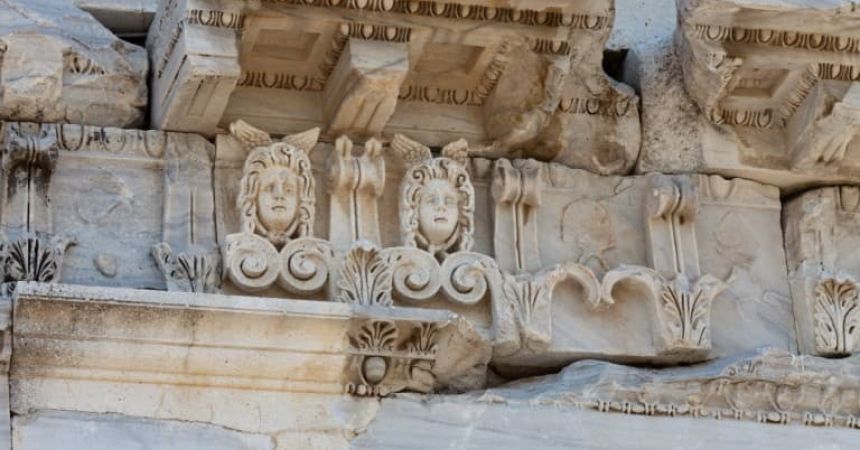
Temples, royal structures, cultural institutions and monumental terraces collectively presented Pergamon as a sophisticated Hellenistic capital capable of competing symbolically with older centers of Greek culture.
The Theatre Makes Pergamon's Terrain Impossible to Ignore
Pergamon's ancient theatre is one of those monuments whose setting is almost as important as the architecture itself.
Built into the steep hillside, its seating descends sharply toward a narrow performance area with the landscape opening beyond.
Photographs convey the steepness only partially.
Standing there changes your sense of scale.
Rather than asking whether it is larger than another ancient theatre, notice what its construction says about Pergamon. The builders were working with severe topography and still created a monumental performance space integrated into the Acropolis.
The theatre also provides a useful lesson for visiting ancient sites generally.
Do not evaluate monuments solely according to how much stone survives.
Sometimes location, engineering and relationship with the surrounding city tell the more interesting story.
Four Pergamon Experiences That Should Not Be Merged
A useful visit separates Pergamon into different historical experiences rather than treating every ruin as equivalent.
| Pergamon layer | Core question | What gives it value | How to approach it |
|---|---|---|---|
| Acropolis | How did Pergamon display power? | Royal landscape, temples, theatre | Read architecture with the terrain |
| Asklepion | How did ancient healing work? | Sanctuary, treatment environment | Slow down and consider function |
| Bergama Museum | What has archaeology recovered? | Sculpture and regional material | Use objects to restore missing detail |
| Modern Bergama | How does the ancient city relate to today? | Living town beneath archaeological landscape | Do not treat it only as a transfer point |
This distinction prevents the common mistake of leaving the Acropolis and thinking you have “finished Pergamon.”
You have finished one chapter.
The Altar of Zeus Requires an Honest Explanation
Pergamon is strongly associated with the monumental Great Altar, often called the Altar of Zeus.
Visitors who have seen photographs of its extraordinary sculptural frieze can understandably arrive expecting to encounter the monument in anything approaching that form on the Acropolis.
They will not.
Major architectural and sculptural components of the altar were excavated in the nineteenth century and are today associated with the Pergamon Museum collection in Berlin. At the original site, visitors encounter the altar's archaeological setting rather than the reconstructed monument familiar from museum imagery.
This can initially feel disappointing.
It should instead encourage a different kind of attention.
Look at where the altar stood.
Consider its relationship with the Acropolis and surrounding monumental architecture. Archaeology is not always about encountering intact objects where antiquity left them; it also involves understanding absent material through its surviving context.
A credible Pergamon guide should prepare visitors for that reality rather than allowing an old photograph to create the wrong expectation.
The Library Is Important Even Though You Cannot Walk Into It
Ancient Pergamon became famous as a center of scholarship, and its library was traditionally regarded as one of the great libraries of the Hellenistic world.
The surviving archaeological remains do not provide the kind of visually reconstructed library interior that visitors sometimes imagine.
Again, context matters more than spectacle.
A major royal library belonged naturally within the Attalids' wider cultural ambition. Collecting texts and supporting intellectual life helped position Pergamon not merely as a militarily successful kingdom but as a center of Greek learning and prestige.
Pergamon is also famously associated with parchment, although simplified stories claiming that parchment was simply “invented here because Egypt stopped sending papyrus” should be treated cautiously rather than repeated as unquestioned fact.
Historical complexity is preferable to a memorable myth.
Athena's Sanctuary Helps Connect Culture and Royal Identity
The Sanctuary of Athena occupied an important position on the Acropolis and belonged to the city's religious and political landscape.
Athena carried associations with wisdom and military strength that fitted Pergamon's self-presentation particularly well.
When moving through this area, try to reconstruct proximity.
The theatre, library tradition, sanctuaries and royal spaces were not independent tourist attractions separated by ticket desks. They formed part of a connected urban environment where religion, culture and political authority overlapped.
This is one reason guided archaeological interpretation can add substantial value at Pergamon.
The surviving stones become more meaningful when someone restores the relationships between them.
Travelers interested in placing Pergamon within a wider chronology can use Aegean Turkey heritage tours to connect it with other ancient landscapes without turning this article into another generic archaeological-sites list.
Then Leave the Acropolis Mentally Behind
The Asklepion requires a reset.
Do not arrive thinking you are simply visiting another set of Pergamon ruins.
This was a sanctuary associated with Asclepius, the god of healing, and developed into an important ancient healing center. Its function produced an environment fundamentally different from the political and monumental character of the Acropolis.
Patients came seeking treatment in a setting where religion and medicine were not separated according to modern assumptions.
Sacred practices, water, sleep, physical treatments and medical observation could all belong to the experience.
The Roman physician Galen, born in Pergamon, is closely associated with the city's medical history and became one of antiquity's most influential medical figures.
Suddenly Pergamon's story is no longer primarily about kings.
It is about bodies, illness and attempts to heal.
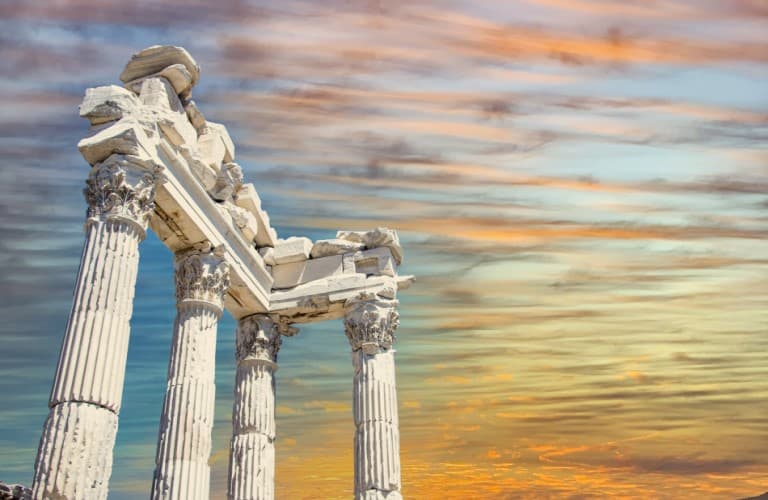
The Asklepion Becomes Better When You Stop Calling It an Ancient Hospital
Describing the Asklepion as a “hospital” is convenient but incomplete.
Modern hospitals operate according to concepts of medicine, diagnosis and institutional care that do not map neatly onto an ancient sanctuary.
The Asklepion belonged to a world in which healing could involve both practical treatment and religious belief.
That difference is what makes it interesting.
Visitors can consider how patients approached the sanctuary, how sacred water fitted into healing practices and why the environment itself may have mattered.
The remains of treatment spaces, sacred areas and passageways invite a more intimate kind of historical imagination than the Acropolis.
Above, Pergamon communicates power.
Here, it communicates vulnerability.
Seeing both is what makes the ancient city unusually multidimensional.
Do Not Rush the Sacred Way
The Asklepion was approached through a ceremonial route traditionally known as the Sacred Way.
This transition matters because ancient sanctuaries were experiences before they were buildings.
Approaching a healing center, entering sacred space and participating in its rituals would have carried psychological as well as physical significance.
Modern visitors naturally move differently, often thinking about the next photograph or departure time.
Try to resist that.
The Asklepion rewards slower observation because its significance is functional rather than dominated by one spectacular monument.
Ask what each space might have contributed to the experience of someone who arrived here because they were unwell.
That question humanizes the ruins in a way architectural statistics never can.
Bergama Museum Can Repair What Time Removed
After extensive archaeological sightseeing, some travelers are reluctant to visit another museum.
At Pergamon, that can be a mistake.
An archaeological landscape often preserves walls and foundations while the objects that once animated those spaces survive elsewhere. Sculpture, smaller artifacts and regional finds can restore scale and human detail that the ruins themselves no longer communicate easily.
The Bergama Museum therefore performs a useful interpretive function.
If you visit before the archaeological sites, it provides context.
If you visit afterward, objects can answer questions created by the ruins.
Which sequence is better depends on your travel style, but archaeology-focused visitors should avoid automatically treating the museum as optional simply because the Acropolis is more famous.
Pergamon and Ephesus Should Not Compete for the Same Role
Pergamon is frequently combined with Ephesus, which inevitably produces comparison.
Ephesus often feels easier to read. Its monumental streets and surviving Roman architecture allow visitors to imagine urban life relatively quickly.
Pergamon asks for something different.
Its Acropolis is defined by topography and Hellenistic royal ambition, while the Asklepion introduces a separate healing landscape. The city feels distributed rather than concentrated.
If Ephesus helps you walk through a monumental Roman city, Pergamon encourages you to think about how different institutions occupied different parts of a landscape.
Travelers with enough time should not ask which site makes the other unnecessary.
They complement each other precisely because they do not tell the same story.
Bergama Is Not Izmir, and That Matters to Your Schedule
Pergamon's archaeological sites are near modern Bergama in western Turkey, north of Izmir.
Travelers sometimes see “Izmir region” in tour descriptions and mentally convert Pergamon into a quick attraction on the edge of the city.
That creates poor planning.
Road travel must be included in the day's logic, particularly if you are combining Pergamon with another destination or continuing south toward places such as Ephesus and Kuşadası.
A good route minimizes backtracking.
For travelers moving through western Turkey, Pergamon can work extremely well as part of a north-to-south archaeological progression rather than an isolated return excursion.
This is where Pergamon and Ephesus itineraries can be particularly efficient: the two sites belong to a coherent Aegean route while retaining completely different archaeological identities.
How Much Time Should Pergamon Receive?
If you care enough about Pergamon to travel there, avoid reducing it to the Acropolis alone.
The Acropolis requires time because the site is spread across uneven terrain and because views, monuments and archaeological context reward pauses.
The Asklepion deserves its own mental and physical space rather than being squeezed into the final minutes of the day.
Add the museum and a relaxed meal in Bergama, and the destination begins to justify a substantial allocation.
The precise number of hours matters less than the principle:
do not make the journey and then visit only the photograph you already knew.
Pergamon's value lies in the relationship between its parts.
Footwear Is an Archaeological Decision Here
This sounds mundane until you reach the Acropolis.
Ancient stone, gradients, uneven surfaces and exposed areas make sensible footwear important. The site should not be approached as though you were visiting a flat urban museum.
Sun protection and drinking water also deserve attention during warmer periods, while wind and changing conditions on elevated terrain can alter how the Acropolis feels.
Travelers with limited mobility should assess current access conditions and decide which parts of the archaeological landscape are realistic for them rather than assuming every famous viewpoint will be equally straightforward.
Practical preparation protects the quality of the visit.
It also leaves more attention available for the archaeology.
Where Pergamon Fits in a Longer Turkey Journey
Pergamon becomes especially valuable when the itinerary already has a reason to move through western Turkey.
It can follow Troy when traveling south, precede Ephesus, or form part of a broader Aegean archaeological journey.
This route logic is stronger than flying across Turkey simply to collect another ancient site.
A longer itinerary can also reveal chronological contrast. Troy introduces one archaeological world, Pergamon highlights Hellenistic royal culture, and Ephesus presents an extraordinarily rich Greco-Roman urban environment.
For travelers motivated by history, western Turkey discovery tours can make those transitions part of the journey rather than treating each site as an unrelated excursion.
Pergamon Is Worth the Extra Effort for the Right Traveler
Pergamon is not the archaeological site I would recommend merely because someone wants one famous ruin during a beach holiday.
Its strength is more specific.
Come because you want to understand how a Hellenistic capital used a mountain to project royal authority. Come because an ancient theatre built against a steep hillside interests you as much as a perfectly preserved façade. Come because the relationship between religion and medicine at the Asklepion opens another window into ancient life.
Most importantly, come prepared to move between different versions of the same city.
Pergamon's Acropolis tells you how rulers wanted power to look.
Its cultural institutions reveal what they wanted their capital to represent.
The Asklepion shows what people hoped for when power and wealth could not protect them from illness.
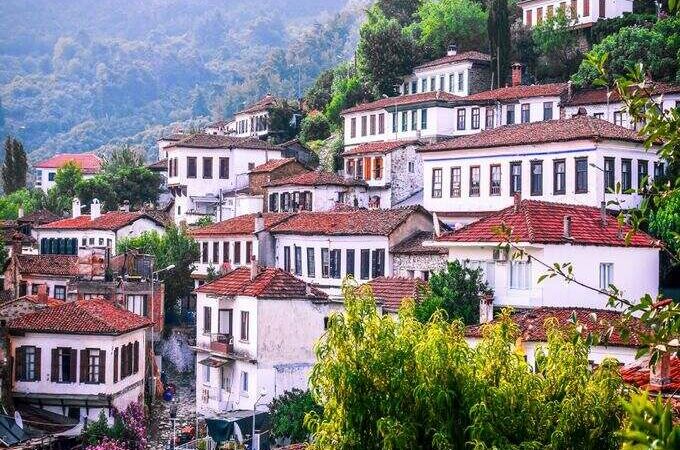
Modern Bergama sits beneath all of it.
Once those layers are allowed to remain distinct, Pergamon stops being another collection of ancient ruins and becomes something considerably more interesting: a city whose surviving landscape still explains what its people valued.
Frequently Asked Questions About Visiting Pergamon
1. Is Pergamon the same place as Bergama?
Pergamon is the ancient city associated with modern Bergama in western Turkey. Visitors normally use Bergama as the contemporary geographical reference, while the principal ancient remains are divided between areas including the hilltop Acropolis and the Asklepion below.
2. Is the Pergamon Acropolis worth visiting if the Great Altar is no longer there?
Yes. The Great Altar is only one element of Pergamon's historical significance. The Acropolis still reveals the city's extraordinary topography, theatre, sanctuaries, royal landscape and defensive position, allowing visitors to understand how the Attalid capital used architecture to express authority.
3. Why is Pergamon's ancient theatre unusual?
Its dramatic setting on the steep Acropolis slope distinguishes the theatre immediately. Rather than existing on relatively gentle terrain, it is integrated into Pergamon's hillside architecture, making the relationship between engineering, urban planning and the natural landscape unusually visible to modern visitors.
4. Where is the famous Pergamon Altar today?
Major architectural and sculptural elements excavated from the Great Altar became part of the Pergamon Museum collection in Berlin. Visitors at the original Acropolis therefore experience its archaeological location and surviving foundations rather than the reconstructed monument familiar from museum photographs.
5. Is the Asklepion part of the Pergamon Acropolis?
No. The Asklepion is a separate archaeological complex associated with ancient Pergamon and lies away from the hilltop Acropolis. This physical separation reflects its different function as a sanctuary of Asclepius connected with healing, treatment and religious practice.
6. Who was Galen and why is he connected with Pergamon?
Galen was an influential physician born in Pergamon during the Roman period. His medical writings profoundly affected later medical thought, making his connection with a city already famous for the Asklepion especially significant when exploring Pergamon's long association with ancient healing.
7. Should I visit the Acropolis or Asklepion first?
Either sequence can work, although they should be understood as different experiences. Beginning with the Acropolis establishes Pergamon's political and monumental scale, after which the Asklepion provides a more human perspective centered on illness, healing, religion and medical practice.
8. Can Pergamon and Ephesus be visited as part of the same route?
Yes. They fit naturally into a wider western Turkey itinerary, although trying to understand both properly within an excessively rushed schedule reduces their value. Pergamon's hilltop royal landscape and Ephesus's monumental urban remains offer complementary rather than repetitive archaeological experiences.
9. Is Pergamon difficult to explore on foot?
Parts of the Acropolis involve gradients, ancient surfaces and uneven terrain, so comfortable footwear is important. Individual mobility requirements vary, and visitors with physical limitations should review current access arrangements rather than assuming every section of the archaeological landscape is equally straightforward.
10. Is Bergama Museum worth adding after the ruins?
For travelers interested in archaeology, yes. Museum objects can restore artistic and human detail that architectural foundations no longer provide. Visiting afterward is particularly rewarding because material from the wider region can be understood in relation to spaces and historical periods already encountered.
11. How is Pergamon different from Hattusa?
They belong to entirely different historical worlds. Hattusa was the Bronze Age capital of the Hittite Empire, while Pergamon became a major Hellenistic kingdom and later Roman center. Their chronology, architecture, political context and surviving archaeological landscapes therefore require separate interpretation.
12. What is the biggest mistake when planning a Pergamon visit?
The biggest mistake is assuming Pergamon means only the hilltop Acropolis. A meaningful visit should recognize the distinct role of the Asklepion and, when time allows, Bergama Museum, because together they reveal political, cultural, religious and medical dimensions of the ancient city.

A travel professional specializing in tailor-made travel planning, guest experience management, and multi-destination tourism operations.
With over 23 years of experience in the travel industry, he designs and manages private and cultural tours for international travelers across Türkiye, Greece, Egypt, Jordan, Morocco, and other destinations.
He has strong expertise in both online and face-to-face guest communication, sales processes, and end-to-end travel operations.
Working closely with hotels, travel agencies, and local partners, he ensures smooth coordination and high-quality travel experiences at every stage of the journey.
His focus is on delivering personalized, reliable, and seamless travel experiences for international guests worldwide.