
Heritage Sites in Turkey: Where Thousands of Years of History Come Alive
Some countries preserve history in museums.
Turkey preserves it in entire landscapes.
You can walk through a Roman city in the morning, explore a Byzantine masterpiece after lunch, and watch the sunset from an Ottoman palace in the evening.
That's not unusual here.
It's simply part of traveling in Turkey.
What surprises many visitors is the sheer depth of history they encounter. Civilizations have lived, traded, worshipped, fought, and built across this land for thousands of years. Each left something behind.
Sometimes it's a grand monument.
Sometimes it's an ancient city.
Sometimes it's an entire cultural landscape.
Together, they form one of the richest collections of heritage sites anywhere in the world.
If you're interested in history, culture, and remarkable places that tell extraordinary stories, Turkey belongs near the top of your travel list.
Why Turkey Has So Many Important Heritage Sites
Few countries sit at such a significant crossroads.
For centuries, Turkey connected Europe, Asia, and the Middle East.
As a result, countless civilizations passed through or established powerful empires here.
Among them were:
- Hittites
- Greeks
- Romans
- Byzantines
- Seljuks
- Ottomans
Each civilization added another layer to Turkey's cultural landscape.
The result is a country where history isn't limited to one period.
It's everywhere.
Istanbul's Historic Areas: Where Empires Once Ruled
When most travelers think about heritage sites in Turkey, Istanbul usually comes to mind first.
And that's understandable.
For more than 1,600 years, the city served as the capital of powerful empires.
Walking through Istanbul often feels like moving between different eras of history.
Hagia Sophia
Few buildings in the world carry such historical significance.
Built in 537 AD, Hagia Sophia has served as a church, mosque, museum, and mosque again.
Even today, visitors step inside and immediately look upward toward its enormous dome.
The sense of scale remains astonishing.
Topkapi Palace
For nearly four centuries, this palace served as the administrative heart of the Ottoman Empire.
Its courtyards, collections, and Bosphorus views provide a fascinating glimpse into imperial life.
Basilica Cistern
Hidden beneath the city streets lies one of Istanbul's most atmospheric sites.
Ancient columns rise from shallow water, creating a setting unlike anywhere else in Turkey.
Ephesus: One of the World's Greatest Ancient Cities
Many travelers arrive expecting ruins.
They leave feeling as though they've walked through history itself.
Located near the Aegean coast, Ephesus remains one of the best-preserved ancient cities in the Mediterranean.
Its marble streets still reveal the grandeur of Roman urban life.
Highlights include:
- Library of Celsus
- Great Theatre
- Temple of Hadrian
- Ancient marketplaces
What makes Ephesus special is how complete it feels.
You don't need much imagination to picture life here nearly 2,000 years ago.
Göbeklitepe: The Site That Changed History
Before Göbeklitepe was discovered, historians believed complex religious structures appeared much later in human history.
Then archaeologists uncovered something extraordinary.
Dating back roughly 11,000 years, Göbeklitepe is widely considered the world's oldest known temple complex.
Think about that for a moment.
This site was built thousands of years before Stonehenge.
Thousands of years before the pyramids.
Its discovery forced researchers to rethink what they knew about early human civilization.
For many visitors, it's one of Turkey's most fascinating heritage sites.
Cappadocia: A Cultural Landscape Unlike Anywhere Else
Cappadocia is famous for its fairy chimneys and hot air balloons.
But its heritage value goes much deeper.
For centuries, communities carved homes, churches, monasteries, and entire underground cities into the volcanic rock.
Today, visitors can explore:
- Göreme Open-Air Museum
- Underground cities
- Ancient cave churches
- Rock-cut monasteries
The combination of human creativity and natural landscapes makes Cappadocia one of Turkey's most unique heritage destinations.
Pamukkale and Hierapolis: Nature Meets History
Pamukkale often attracts visitors because of its famous white terraces.
But the heritage story extends beyond the travertines.
Above the terraces sits Hierapolis, an ancient Roman city founded around thermal springs.
Visitors can explore:
- Roman theatre
- Ancient streets
- Necropolis
- Thermal baths
It's one of the rare places where natural beauty and archaeological significance exist side by side.
Troy: The City of Legend
Even people who have never visited Turkey usually recognize the name Troy.
The city became famous through Homer's epic tales.
For centuries, many believed Troy existed only in legend.
Archaeologists eventually proved otherwise.
Today, visitors can explore the remains of a settlement occupied for thousands of years.
While the site may appear modest compared to Ephesus, its historical importance is enormous.
After all, few places have inspired stories that survived for more than three millennia.
Sumela Monastery: A Heritage Site in the Clouds
Hidden among the mountains of northeastern Turkey, Sumela Monastery seems almost impossible.
Built directly into a steep cliff face, it overlooks a forested valley deep within the Black Sea region.
The monastery's location alone makes it unforgettable.
Add centuries of religious history, remarkable architecture, and dramatic scenery, and it's easy to understand why visitors often rank it among Turkey's most impressive heritage sites.
Many travelers describe the first view of Sumela as one of the most memorable moments of their trip.
Mount Nemrut: The Mountain of Giant Statues
At sunrise, Mount Nemrut feels almost surreal.
Massive stone heads sit scattered across the summit, watching over the landscape as they have for more than 2,000 years.
Built by King Antiochus I of Commagene, the site combines:
- Monumental sculptures
- Ancient tomb structures
- Panoramic mountain views
The sunrise experience alone makes the journey worthwhile.
It's one of Turkey's most unusual archaeological sites.
Safranbolu: Preserving Ottoman Heritage
Not all heritage sites are ancient ruins.
Some preserve everyday life from centuries past.
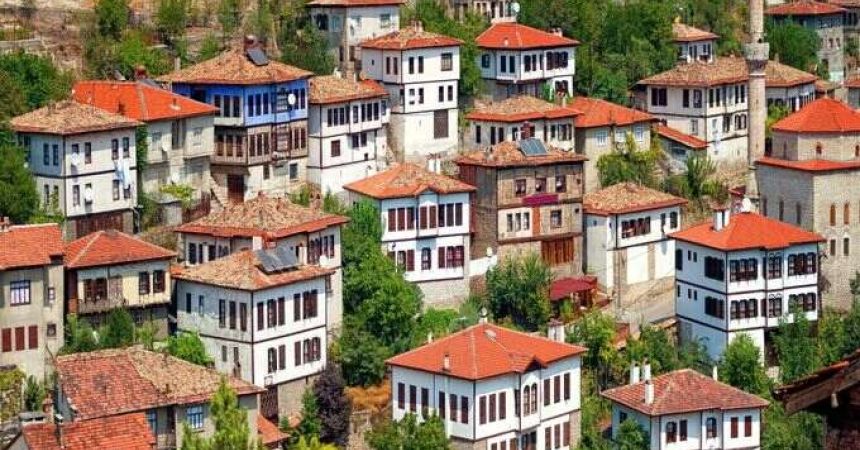
Safranbolu is one of the best examples.
This charming town is famous for its well-preserved Ottoman houses, narrow streets, and traditional architecture.
Walking through the historic district feels like stepping back in time.
Many visitors come expecting a quick stop and end up staying much longer than planned.
Hattusa: Capital of the Hittite Empire
Long before the Greeks and Romans, the Hittites controlled much of Anatolia.
Their capital was Hattusa.
Today, visitors can explore:
- Massive city walls
- Ancient gates
- Temples
- Royal structures
Although less famous than Ephesus or Troy, Hattusa offers incredible insight into one of the ancient world's most influential civilizations.
Why UNESCO Matters
Several Turkish heritage sites hold UNESCO World Heritage status.
This recognition highlights their global cultural significance.
Sites such as:
- Istanbul Historic Areas
- Cappadocia
- Ephesus
- Göbeklitepe
- Troy
- Pamukkale-Hierapolis
- Hattusa
- Nemrut Dağı
attract visitors from around the world each year.
Their inclusion reflects not only national importance but also their value to humanity as a whole.
A Common Mistake Travelers Make
Many visitors focus exclusively on Istanbul and Cappadocia.
Those destinations are wonderful.
But they represent only part of Turkey's heritage story.
Some of the country's most fascinating sites lie beyond the typical tourist route.
Places like Hattusa, Nemrut, and Sumela often become unexpected highlights.
Sometimes the lesser-known destinations leave the strongest impressions.
What Makes Turkey's Heritage Sites Special?
It's not simply the number of sites.
It's the variety.
In a single country, you can experience:
- Prehistoric temples
- Ancient Greek cities
- Roman architecture
- Byzantine masterpieces
- Ottoman palaces
- Monasteries carved into mountains
Few destinations offer such an extraordinary timeline of human history.
That's why heritage enthusiasts often return to Turkey again and again.
There is always another story waiting to be discovered.
Exploring the Layers of Turkey's Past
Turkey's heritage sites reveal more than historical facts.
They tell the story of how civilizations evolved, interacted, and shaped the modern world.
Visitors researching Historic Places in Turkey, planning a Cultural Tour of Turkey, or searching for Hidden Gems of Turkey often discover that the country's greatest treasure is its incredible historical depth.
Magnificent Travel specializes in tailor-made journeys throughout Turkey, helping travelers experience ancient cities, UNESCO landmarks, cultural treasures, local traditions, and unforgettable historical sites through thoughtfully designed itineraries.
Frequently Asked Questions
What are the most famous heritage sites in Turkey?
Some of the most famous heritage sites include Hagia Sophia, Ephesus, Cappadocia, Pamukkale, Göbeklitepe, Troy, Mount Nemrut, and Sumela Monastery. These destinations represent different periods of Turkey's rich cultural history.
How many UNESCO World Heritage Sites does Turkey have?
Turkey has numerous UNESCO World Heritage Sites, including Istanbul's Historic Areas, Cappadocia, Ephesus, Göbeklitepe, Hattusa, Troy, and Pamukkale-Hierapolis. The list continues to grow as more sites gain international recognition.
Why is Göbeklitepe important?
Göbeklitepe is considered the world's oldest known temple complex, dating back approximately 11,000 years. Its discovery transformed our understanding of early human civilization and religious practices.
Is Ephesus worth visiting?
Absolutely. Ephesus is one of the best-preserved ancient cities in the world. Visitors can walk through remarkably intact Roman streets and see iconic structures such as the Library of Celsus and the Great Theatre.

A travel professional specializing in tailor-made travel planning, guest experience management, and multi-destination tourism operations.
With over 23 years of experience in the travel industry, he designs and manages private and cultural tours for international travelers across Türkiye, Greece, Egypt, Jordan, Morocco, and other destinations.
He has strong expertise in both online and face-to-face guest communication, sales processes, and end-to-end travel operations.
Working closely with hotels, travel agencies, and local partners, he ensures smooth coordination and high-quality travel experiences at every stage of the journey.
His focus is on delivering personalized, reliable, and seamless travel experiences for international guests worldwide.


