
February in Sharm El Sheikh: Why Your Beach Location Matters
Updated: August 12, 2026
Two travelers can spend the same February week in Sharm El Sheikh and return home with surprisingly different descriptions of the weather.
One remembers calm afternoons beside a protected beach, snorkeling almost every day and eating lunch outside in the sunshine. Another remembers a persistent breeze, choppier water and reaching for a cover-up whenever they left the sea.
Neither account necessarily tells you more about February than the other.
They may simply have stayed in different places.
Sharm El Sheikh stretches along a coastline shaped by bays, headlands, reefs and resort developments rather than one continuous, uniformly exposed beach. During February, when wind can have a noticeable influence on comfort, that geography becomes particularly important.
Typical daytime temperatures are often in the low-to-mid 20s°C, while the Red Sea remains considerably warmer than many European seas in winter. Rain is scarce and sunshine is common. Yet those averages miss the variable that can decide whether 23°C feels beautifully comfortable or unexpectedly fresh:
How exposed are you to the wind?
The Forecast Is Only Half the Story
A weather app may show 23°C and sunshine.
That sounds straightforward.
At a sheltered hotel terrace with direct sun and little moving air, conditions may feel distinctly warm. Walk onto an exposed jetty or spend twenty minutes on an open boat deck, and the same 23°C can produce a completely different sensation.
Air temperature has not changed.
Your exposure has.
This is why February deserves a different planning method from January. Rather than asking only whether Sharm is warm enough for a winter holiday, February travelers should pay closer attention to where their resort sits and how they expect to use the coast.
Sharm Is Not One Beach
When first-time visitors look at a map, resorts can appear interchangeable because they all occupy roughly the same Red Sea destination.
At ground level, they are not.
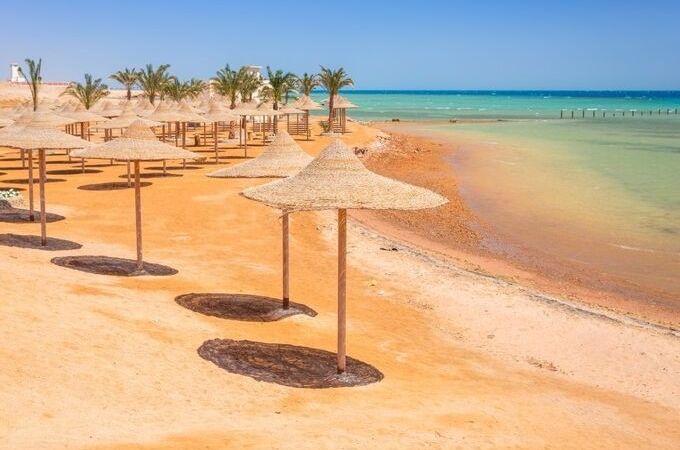
Some beaches sit inside naturally protected bays. Others face more open water. Buildings, cliffs and surrounding terrain can interrupt moving air, while exposed sections of coastline receive more of it.
That creates microclimates at resort scale.
The differences are not dramatic enough to turn winter into summer, but they can strongly affect how much time you actually want to spend stationary on a beach.
February Comfort Is About Exposure
| Situation | Wind Influence | What Changes |
|---|---|---|
| Sheltered resort beach | Lower | Sun warmth is easier to feel |
| Open beachfront | Higher | Lounging can feel fresher |
| Protected swimming area | Variable | Water may remain relatively calm |
| Long jetty | Higher | Exposure increases away from shore |
| Open boat deck | High | Moving air becomes more noticeable |
| Sheltered pool terrace | Lower | Can feel warmer than forecast suggests |
The useful question is therefore not simply, “Will it be windy?”
It is:
“Where will I be when the wind matters?”
Resort Selection Becomes Part of Weather Planning
Most people choose a Sharm hotel according to room quality, food, reviews, pools, reef access or price.
February adds another criterion that deserves attention: beach orientation and shelter.
This matters most for travelers whose idea of a Red Sea holiday involves several hours every day on a sun lounger.
If you mainly plan to dive, explore Sinai or use the resort as a base, beach exposure may matter less. But if the holiday is primarily about winter sunshine beside the water, a protected setting can have more practical value than an additional restaurant or slightly larger room.
Travelers considering a Sharm El Sheikh resort holiday should therefore look beyond photographs of sand and sun loungers. Resort descriptions, recent winter reviews and information about whether the beach is naturally sheltered can tell you something a monthly temperature average cannot.
Wind Matters Most When You're Doing Nothing
This sounds counterintuitive, but February wind can be easier to tolerate while active.
Walking around the resort, swimming or preparing for a snorkeling entry keeps you moving. Lying still on a sun lounger for an hour gives the breeze much more opportunity to influence how warm you feel.
That is why two guests at the same hotel can disagree about the day's weather.
The diver who spent the morning active may describe conditions as excellent. The traveler who wanted three uninterrupted hours of sunbathing may have found the same breeze irritating.
Weather comfort is partly about activity level.
February makes that relationship particularly visible.
The Jetty Can Feel Like Another Location
Many Sharm resorts use jetties or pontoons to provide access beyond shallow reef areas.
Walking from the beach toward open water can reveal just how much protection the coastline was providing.
Near the resort, buildings and terrain may reduce wind exposure. Farther along the jetty, that protection disappears. Conditions can suddenly feel fresher even though you have only moved a few hundred metres.
This matters when waiting for other swimmers, putting on equipment or standing wet after leaving the sea.
It also explains why judging the day's snorkeling conditions from your balcony can be unreliable.
The water-access point may have a different exposure profile from the resort itself.
Calm Beach Doesn't Guarantee a Calm Boat Day
A protected resort can create another misleading assumption.
You wake up, look outside and see relatively calm water. Perfect boat weather, you think.
Once a vessel leaves the protected coastline, conditions may be different.
Offshore exposure changes the experience, particularly while the boat is moving or when passengers sit outside between snorkeling stops. This does not automatically make February a poor month for boat excursions, but it does mean the beach and the open sea should not be treated as identical environments.
For travelers planning a Red Sea reef adventure, excursion operators' daily assessment matters more than trying to predict offshore comfort solely from what is happening beside the hotel.
February Is Not a “Windy Month” in One Simple Sense
Calling February windy without qualification would create exactly the kind of shallow weather content we are trying to avoid.
Wind speed varies by day.
Exposure varies by location.
Personal tolerance varies by activity.
What February does is make these differences more relevant to the resort experience.
A breezy day does not automatically ruin a beach holiday, just as a calm morning does not guarantee identical conditions everywhere along the coast.
The useful skill is knowing where to place yourself.
Change Location Before You Change the Whole Day
Suppose the beach feels breezier than expected.
The immediate response does not need to be abandoning the outdoor day.
First consider whether another part of the resort offers greater protection. A pool enclosed by buildings, a sheltered terrace or another beach section may feel substantially more comfortable.
This is one of February's advantages as a resort holiday: you often have options within a relatively small area.
A traveler following a Sinai Red Sea getaway can therefore respond to conditions locally rather than rebuilding an entire itinerary because the first sun lounger was badly positioned.
Wind Can Affect the Water Without Changing Its Temperature
The sea does not suddenly become colder because the afternoon is breezy.
But the experience surrounding the swim changes.
Surface conditions may become less calm, visibility close to shore can vary depending on location, and the period immediately after leaving the water can feel much fresher.
That distinction matters.
A traveler may say, “The sea was warm but I felt cold snorkeling.”
What they often mean is that the complete snorkeling cycle—entry, time in the water, exit and recovery—was not equally comfortable.
February is best understood as a month when the environment around the Red Sea can matter almost as much as the temperature of the Red Sea itself.
The February Question Isn't “How Hot?”
January asked whether winter sunshine and a relatively warm sea could produce a genuine beach holiday.
February moves somewhere else.
It asks how coastal geography modifies weather.
A protected bay, exposed jetty, sheltered pool and offshore boat can produce four different experiences within a single afternoon, even though every weather app displays the same temperature.
That is February's exclusive place in this cluster:
Don't choose your February beach experience from the forecast alone. In Sharm El Sheikh, where you stand can matter almost as much as what the thermometer says.
Read Winter Resort Reviews Differently
February hotel reviews become much more useful when you stop searching for generic comments such as “great weather.”
Look for observations about the physical beach.
Guests may mention that a bay felt protected, a particular pool area received good sunshine, the jetty became breezy, or one section of the resort was more comfortable than another. Those details reveal much more about a February stay than a reviewer simply saying it was warm or cold.
Be careful with individual opinions, however. Someone who normally spends winter in northern Europe may describe 22°C as glorious, while another traveler accustomed to tropical resorts may find it cool.
The most useful reviews describe conditions and location, not just personal reactions.
Your Resort Can Have Its Own Wind Map
Large Sharm properties often contain several distinct outdoor environments.
The beachfront may be exposed while a pool surrounded by buildings feels calm. A restaurant terrace can remain comfortable while an elevated bar catches considerably more moving air. Even neighboring sections of the same beach may differ if one sits closer to a headland or protected corner.
Instead of deciding at breakfast that it is either a “beach day” or “not a beach day,” explore the property.
February rewards travelers who are willing to move twenty metres rather than cancel four hours.
A Better Way to React to a Breezy Day
| What You Notice | First Adjustment | Before Changing Plans |
|---|---|---|
| Breeze on beach | Find protected section | Test another part of the resort |
| Exposed sun lounger | Move closer to shelter | Compare pool area |
| Choppy water access | Ask resort staff | Check alternative entry conditions |
| Wind on jetty | Minimize waiting wet | Prepare before walking out |
| Breezy boat forecast | Ask excursion operator | Confirm actual operating conditions |
The principle is simple: adapt locally before abandoning the activity entirely.
Beach or Pool? February Can Decide for You
Normally, choosing between the hotel pool and Red Sea beach is a matter of preference.
In February, exposure can influence the decision.
A sheltered pool terrace receiving direct sunshine may provide a better lounging environment on a breezy day, even when the sea remains perfectly suitable for swimming. You might spend the warmest hours around the pool, then visit the reef when conditions become more appealing.
On a calmer day, reverse the plan.
This flexible approach is more useful than deciding before the holiday that every day must follow the same resort routine.
Ask About Conditions Before Booking a Boat Excursion
Weather averages cannot tell you whether a particular February morning will suit a particular excursion.
Local operators work with actual marine conditions.
If wind or sea state is relevant, ask what conditions are expected for the planned route and whether any adjustments are being made. The answer on the ground shortly before departure has far more practical value than a monthly climate chart read weeks earlier.
This is particularly important because different excursions may involve different levels of offshore exposure.
February does not mean avoiding boats.
It means allowing current marine conditions to influence the final decision.
Shore Snorkeling Gives You More Control
One advantage of a resort with direct reef access is flexibility.
If conditions are comfortable, enter the water. If the breeze strengthens or you simply feel less enthusiastic about another session, return to the beach. There is no requirement to remain outside until an excursion schedule says otherwise.
That freedom can be particularly valuable in February.
Boat snorkeling offers access to different locations and can be a highlight of the trip, but shore access gives travelers control over timing, duration and recovery between swims.
Neither is universally better.
They solve different holiday needs.
Don't Confuse Wind With Lack of Sun
A breezy February afternoon can still be very sunny.
That combination sometimes causes travelers to underestimate sun exposure because the moving air prevents them from feeling particularly hot.
Spending several hours beside the Red Sea still calls for sensible sun protection, even when the breeze makes the temperature feel mild.
This is especially relevant on boats, jetties and open beaches where shade may be limited.
Wind changes how warmth feels.
It does not switch off the sun.
Keep One Dry Layer Near the Water
February packing does not need to become complicated, but one small habit can make water activities considerably more comfortable.
Have something dry and easy to put on immediately after swimming or snorkeling.
The period when wet skin or swimwear meets moving air is often when travelers notice February conditions most strongly. Reducing that transition can matter more than carrying heavy clothing you will rarely use during the main part of the day.
This is practical resort packing rather than winter packing.
February Works Best When You Stop Demanding Identical Days
One morning may be calm enough that you barely think about wind.
The next may encourage you to choose the sheltered pool before moving to the beach later. Another might still be excellent for snorkeling but make the time spent outside the water more noticeable.
That variation is not necessarily a problem.
A resort holiday already provides multiple environments within a compact area, which makes adapting relatively easy.
The mistake is expecting every February day to reproduce the one before it.
February in Sharm El Sheikh FAQs
1. Is Sharm El Sheikh windy in February?
February can bring noticeable breezes, but conditions vary considerably by day and location. Resort geography matters because protected bays, open beaches, jetties and offshore areas can experience the same regional weather very differently.
2. Does wind make Sharm El Sheikh cold in February?
Wind can make conditions feel fresher than the recorded air temperature suggests, particularly when you are stationary or wet after swimming. Sheltered areas receiving direct sunshine may simultaneously feel considerably warmer, which explains apparently conflicting visitor experiences.
3. Which type of Sharm resort is better for February?
Travelers prioritizing sunbathing may value a resort with a naturally sheltered beach or protected outdoor areas. Reef access, hotel quality and location still matter, so wind shelter should be considered alongside your other priorities rather than becoming the only selection criterion.
4. Can I still sunbathe when it is breezy?
Often, yes. A protected sun lounger in direct sunshine can feel comfortable even when more exposed areas are breezy. Moving to another section of the resort may therefore solve the problem without requiring you to abandon the beach entirely.
5. Is February suitable for snorkeling?
Snorkeling remains possible and can be rewarding, but comfort depends on the day's conditions, exposure and length of time in the water. Shore-based snorkeling provides more timing flexibility, while organized excursions should be assessed according to current marine conditions.
6. Are boat trips cancelled because of wind?
Operators make decisions according to actual marine and safety conditions, which can vary by day and route. Do not assume either that every breezy day causes cancellation or that every excursion will operate regardless of conditions; check locally before departure.
7. Does a sheltered beach also mean calm snorkeling conditions?
Not automatically. Beach shelter can improve comfort on land, while water conditions depend on several factors including location and current marine conditions. Ask resort or dive-center staff about the specific reef access rather than judging solely from the sun-lounger area.
8. Is a pool better than the beach during February?
Neither is consistently better. On a breezier day, a protected pool terrace may be excellent for lounging while the sea remains suitable for a shorter swim. Calm days may make the beach the obvious place to spend most of your time.
9. Should I bring warmer clothing because of the wind?
A lightweight dry layer is useful, especially after water activities and later in the day. Heavy winter clothing is generally unnecessary for normal resort hours, but travelers who feel cold easily may want something slightly warmer for exposed or evening situations.
10. Can two nearby Sharm hotels have different weather experiences?
Yes, particularly in terms of perceived comfort. They share the same broader climate, but beach orientation, surrounding terrain, buildings and bay geography can alter exposure enough for guests at nearby resorts to describe the same day's conditions differently.
11. How should I plan a windy February day?
Start by changing position rather than changing the entire itinerary. Look for a protected beach section, sheltered pool or terrace, then check local advice before deciding about snorkeling or boating. Often only part of the day's original plan needs adjustment.
12. What makes February different from January in Sharm El Sheikh?
January's central travel question is how winter sunshine, sea temperature and the shorter beach-day window work together. February shifts attention toward exposure: resort geography, sheltered bays, open water and wind can determine how the same forecast actually feels.

A travel professional specializing in tailor-made travel planning, guest experience management, and multi-destination tourism operations.
With over 23 years of experience in the travel industry, he designs and manages private and cultural tours for international travelers across Türkiye, Greece, Egypt, Jordan, Morocco, and other destinations.
He has strong expertise in both online and face-to-face guest communication, sales processes, and end-to-end travel operations.
Working closely with hotels, travel agencies, and local partners, he ensures smooth coordination and high-quality travel experiences at every stage of the journey.
His focus is on delivering personalized, reliable, and seamless travel experiences for international guests worldwide.