You Probably Need Less Guiding in Egypt Than You Think
Updated: August 2026
There is a version of an Egypt trip in which a guide appears after breakfast every morning, accompanies you through every monument, waits during lunch, continues into the afternoon and eventually becomes the person you spend more waking hours with than your travel companion.
For some itineraries, that level of support works beautifully.
For many others, it is unnecessary.
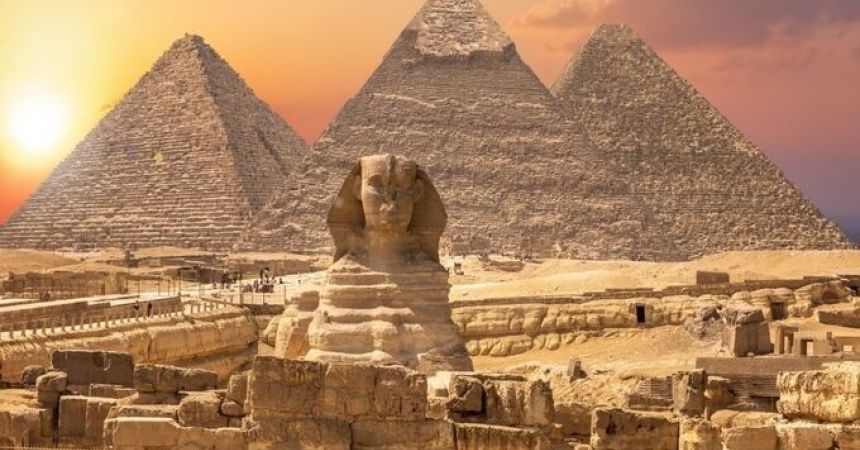
Egypt is one of those destinations where a knowledgeable guide can transform a visit to an archaeological site because the difference between looking at a wall and understanding what happened there can be enormous. Karnak becomes easier to read when somebody explains why its architecture accumulated over centuries. The Valley of the Kings becomes more than a collection of decorated chambers when the rulers, funerary beliefs and tomb choices have context. Giza becomes more interesting once the pyramids stop being three famous shapes and become part of an Old Kingdom landscape.
That does not mean somebody needs to explain dinner to you.
A Red Sea afternoon does not improve because a guide is standing beside the swimming pool, while a free evening in Cairo can be more enjoyable when you choose your own restaurant and stop following a schedule.
The best answer is therefore rarely guided or independent.
It is usually guided where interpretation matters, independent where freedom matters more.
A Guide Is Most Valuable When the Place Is Difficult to Read on Your Own
Some monuments communicate immediately.
The Great Pyramid does not require much explanation before its scale becomes obvious.
Historical meaning is different.
Ancient Egyptian sites often contain architectural layers, reused spaces, damaged reliefs, inscriptions, religious symbolism and changes made by rulers separated by centuries. A traveler can certainly research all of this independently, but doing so while physically moving through the site is another matter.
Karnak is a good example.
Without context, it can become a succession of pylons, courts, columns and carved surfaces that are individually impressive but difficult to connect. An Egyptologist can help organize that visual information into a story, making it easier to understand why one part looks different from another and why several rulers appear across the same enormous complex.
This is where guiding provides genuine value.
Not because travelers are incapable of reading.
Because the monument is asking them to process architecture, chronology, religion and geography simultaneously while also remembering where the vehicle is parked.
Giza Benefits From a Guide for a Reason That Has Nothing to Do With Finding the Pyramids
Nobody needs help locating the Great Pyramid once they reach the Giza Plateau.
It is difficult to miss.
What a knowledgeable guide can add is context.
Why are the pyramids arranged as they are? Which king does each major pyramid belong to? How does the Sphinx relate to the wider complex? Why does the Great Pyramid represent a particular moment in Old Kingdom royal building rather than simply “ancient Egypt”?
These questions change Giza from a famous photograph into an archaeological landscape.
Guiding also helps with the practical flow of a visit, particularly when several areas of the plateau are involved and the traveler wants to avoid wasting time deciding what comes next.
However, the guide does not need to remain beside you for every photograph.
Good guiding should create understanding and then allow enough silence for the place itself to do some work.
There is a difference between interpretation and continuous narration.
The best guides usually understand it.
Museums Reward a Different Kind of Guide
Museums present the opposite problem from open archaeological sites.
There is too much information rather than too little.
A substantial Egyptian collection can contain objects spanning enormous periods of history, which means travelers often begin enthusiastically and reach visual exhaustion long before the galleries do.
A knowledgeable guide can solve this by making the visit selective.
Instead of attempting to explain every case, the guide can connect a smaller number of significant objects to places you have already seen or will visit later in the journey.
That connection matters.
A royal statue becomes more memorable when the ruler later appears again at Luxor. A funerary object makes more sense after you have seen a tomb. An Old Kingdom sculpture becomes easier to place after Giza or Saqqara.
The guide's job is not to turn a museum into a lecture hall.
It is to stop two thousand objects from becoming one continuous display of “interesting ancient things.”
The Valley of the Kings Is Where Context Prevents Tomb Fatigue
The first decorated royal tomb tends to receive complete attention.
By the fifth, even highly motivated travelers can find themselves admiring walls while remembering remarkably little about whose walls they are.
Guiding can help by giving the tombs individuality.
Different rulers, periods, decoration programs and preservation conditions mean the experience is not simply a repetition of painted corridors. Understanding why particular tombs matter allows travelers to choose more intelligently and recognize what changes from one to another.
There is also a practical advantage.
Tomb access can vary, while certain entrances may require separate arrangements or tickets. A guide familiar with current site operations can help structure the visit around what is available rather than relying on an old online list.
That does not mean you should enter every tomb the guide can name.
A good guide should also know when three carefully chosen visits are more useful than six hurried ones.
Karnak May Be the Strongest Argument for an Egyptologist
If somebody told me they could afford guided interpretation at only one major archaeological complex in Egypt, Karnak would make a very strong case.
Its scale alone creates confusion.
The complex developed over a long period, multiple rulers contributed to it, architectural spaces changed and expanded, and the visitor is trying to understand all of this while walking through one of the largest religious complexes of the ancient world.
Without interpretation, the Hypostyle Hall is still extraordinary.
With interpretation, the relationship between the hall, surrounding spaces, royal inscriptions and the wider development of the temple begins becoming intelligible.
This is a useful distinction when deciding whether Egypt Private Tours are worth the additional cost.
The value of private guiding should not be measured by whether somebody accompanies you from breakfast until dinner.
It should be measured by whether the places that are hardest to understand receive enough expert attention.
Abu Simbel Needs Less Explanation Than Karnak but More Context Than a Photograph Gives It
Abu Simbel has enormous visual impact before anybody says a word.
The colossal seated figures of Ramesses II make the basic point rather effectively.
However, understanding why such monumental temples were created in Nubia, what political and religious messaging they carried, and how they relate to Ramesses II's wider building program adds considerably more depth.
The site's modern rescue and relocation also create another remarkable historical layer.
This is where guiding shifts from explaining what you can see to explaining why the place exists where and how it does.
Still, Abu Simbel does not require constant narration.
After the historical context is clear, travelers should have time to look.
A guide who fills every quiet moment can accidentally compete with the monument.
Ramesses II already built something capable of holding your attention.
A Driver and a Guide Are Not the Same Service
This distinction causes unnecessary confusion in Egypt planning.
A driver is responsible for transportation.
A guide interprets historical and cultural sites.
One person may occasionally perform different professional roles depending on the arrangement and qualifications involved, but travelers should not assume that booking a private vehicle automatically provides specialist archaeological guiding.
This matters when comparing prices.
A transportation-only day and a privately guided sightseeing day are not equivalent products, even when both use a private vehicle.
If historical interpretation matters to you, ask specifically what the service includes.
If all you need is transportation between your hotel and an airport or resort, paying for guiding would make little sense.
Clear roles prevent mismatched expectations.
The most disappointing guide is sometimes a driver who was never supposed to be one.
The More Archaeology You Have in One Day, the More a Guide Can Help
A traveler visiting one temple independently can prepare beforehand, read signs and explore at their own pace.
Three major archaeological sites in one day create a different problem.
Historical periods begin overlapping. Pharaoh names accumulate. Gods reappear under different contexts. The explanation you read that morning is competing with several hours of new information by afternoon.
Guiding can create continuity.
Instead of learning every site from zero, the traveler begins recognizing relationships:
“This ruler came later than the one we discussed yesterday.”
“This temple belongs to the period we encountered at Luxor.”
“This is why the burial practice here differs from Giza.”
That continuity is one of the strongest advantages of an Egyptologist on an archaeology-heavy route.
The guide becomes less valuable as a walking encyclopedia and more valuable as the person keeping Tuesday connected to Thursday.
Red Sea Days Usually Do Not Need a Guide
Hurghada, Sharm El Sheikh and other Red Sea stays change the equation completely.
If the purpose of several days is swimming, resort relaxation, snorkeling or independent leisure, full-time guiding adds little.
Specific excursions may naturally include appropriate local staff or specialist guidance, but your day beside the pool does not require historical interpretation.
This sounds obvious, yet fully guided packages sometimes create the expectation that every day should contain organized activity simply because the traveler paid for a tour.
That is not necessary.
An Egypt itinerary can become better when the guiding stops.
After Cairo, Luxor and several archaeology-heavy days, waking without anyone waiting in the lobby can be exactly the experience the trip needs.
Guided travel and free time are not competing philosophies.
A good itinerary uses both.
Cairo Evenings Often Improve When Nobody Has Planned Them
Daytime Cairo can benefit greatly from guiding, particularly when the schedule involves Giza, museums or historic areas that require interpretation and transportation.
Evenings are different.
Travelers may want to return to the hotel, find a restaurant nearby, meet friends, take a walk where appropriate or simply decide nothing until they know how tired they are.
Trying to organize every evening can make a holiday feel institutional.
This is especially true after a full sightseeing day.
The traveler has already absorbed history, traffic, monuments, lunch, another museum and perhaps a domestic flight tomorrow. An unscheduled dinner is not wasted cultural potential.
It is dinner.
When building Egypt Cultural Tours, one of the easiest mistakes is assuming cultural value rises directly with the number of organized hours.
It does not.
Independent Time Lets You Notice Things a Guide Cannot Schedule
There is another reason not to over-guide.
Travelers sometimes need unstructured time to develop their own relationship with a destination.
Perhaps they notice a café they want to return to. Maybe they want twenty minutes longer in a museum gallery that interests them personally. They may prefer browsing a market without anybody explaining where to stand or what comes next.
These small decisions matter because they make a trip feel like travel rather than attendance.
A guide can open the destination.
Independent time lets the traveler enter it on their own terms.
The balance depends on personality.
Some people find freedom energizing.
Others find a completely unstructured day stressful and would rather know that transportation, timing and major visits have already been organized.
Neither travel style is superior.
The useful question is how much uncertainty you actually enjoy.
Private Guiding Is Most Valuable When Your Interests Are Uneven
A standard group program must satisfy multiple travelers simultaneously.
That is reasonable.
Private guiding becomes more valuable when your interests are unusually specific.
Perhaps you care deeply about Old Kingdom archaeology but have limited interest in shopping. Maybe one person in the family wants to spend longer at Karnak while everyone else would prefer to move on. Perhaps photography matters and you want more time at particular locations without reorganizing an entire group.
Private guiding allows the pace and explanation to follow those interests more closely.
This is different from assuming a private tour means more luxury.
The more useful advantage is control.
You can ask more questions where something matters and move faster where it does not.
Personalization is not adding three optional attractions.
It is changing how time is distributed.
Small Groups Solve a Different Problem
Small-group guiding can provide a useful middle ground between complete independence and private touring.
Transportation and major sightseeing are organized, the guide supplies context, and the cost is shared across the group.
The compromise is flexibility.
The program must move according to a common schedule, which means the group cannot reorganize itself every time one traveler discovers a new fascination.
For many first-time visitors, that is perfectly acceptable.
They want the major sites explained, logistical decisions handled and enough free time outside the organized program to do their own thing.
For someone with highly specific interests or limited mobility, private guiding may make more sense.
The decision is therefore less about which format is “better” and more about how much control you want over time.
Where Does a Guide Add the Most Value?
A better comparison than “guided versus independent” is to ask how difficult each experience is to interpret without help.
| Experience | Typical Value of a Guide | Why |
|---|---|---|
| Giza Plateau | High | Historical context and understanding the wider archaeological landscape |
| Karnak | Very high | Large, multi-period complex whose architecture is difficult to read quickly |
| Valley of the Kings | High | Historical context helps differentiate tombs and avoid visual repetition |
| Major Egyptian museums | High for history-focused travelers | A guide can connect selected objects instead of overwhelming the visitor |
| Philae | High | Religious and later historical context adds depth to the island setting |
| Islamic Cairo | High when history is a priority | Architecture and urban history benefit from interpretation |
| Red Sea resort days | Low | Leisure usually gains little from continuous guiding |
| Free evenings | Usually low | Independence often provides more value than additional structure |
| Airport transfers | None as historical guiding | Reliable transportation is the actual requirement |
This is not an absolute scoring system.
A traveler who has studied Egyptology for twenty years will use a guide differently from someone seeing these sites for the first time.
You Do Not Need a Guide Simply Because Egypt Is Unfamiliar
There is an outdated style of travel advice that treats unfamiliar countries as though visitors are incapable of functioning independently once they leave the hotel.
That is not a useful reason to hire a guide.
Use guidance where it improves understanding, logistics or accessibility.
Do not hire one because you think independent movement itself would somehow be improper.
Likewise, travelers should not avoid a guide simply because independent travel feels more adventurous.
Paying somebody who spent years learning Egyptian history to explain a complicated archaeological complex is not a failure of independence.
Sometimes expertise saves hours of mediocre self-research.
The trick is using that expertise where it matters.
A Guide Should Save You Questions, Not Prevent You From Asking Them
The best guided experiences are conversations.
Travelers should feel comfortable asking why two monuments look different, whether a particular ruler came before another, why a tomb was designed in a certain way or how the site connects with something visited yesterday.
A guide who delivers the same memorized speech regardless of the group's interests is providing information without much interpretation.
That distinction matters.
Dates and pharaoh names are available online.
The useful human layer is adapting those facts to what the traveler is seeing, remembering what has already been discussed and answering the question that arose because somebody noticed something unexpected.
This is also why strict schedules can reduce guiding quality.
If the group has only twenty minutes before the vehicle must leave, every spontaneous question becomes a logistical threat.
Enough time improves explanation.

More Guiding Does Not Automatically Mean More Learning
There is a limit to how much historical information most travelers can absorb in one day.
An Egyptologist may know hundreds of relevant details about Karnak.
You do not need all of them before lunch.
Good guiding is selective.
It gives the traveler enough context to understand what matters, then allows the monument to remain memorable rather than burying it beneath information.
This becomes particularly important across multi-day Ancient Egypt Tours, where every morning brings new rulers, dynasties, temples and religious concepts.
The objective is not to finish the journey knowing everything.
Nobody does.
The objective is to finish understanding more than when you started and remembering enough relationships that the monuments have not merged into one enormous archaeological afternoon.
The Best Guided Day Usually Contains Some Silence
This is not something tour brochures mention often.
Silence matters at major historical sites.
After explaining a temple court or tomb chamber, a guide does not need to continue speaking until the traveler physically exits the site.
People need time to look, photograph, notice detail and sometimes simply experience the scale of where they are.
That freedom is also a sign of confidence.
A knowledgeable guide does not need to prove expertise continuously.
The information has already done its job.
This is one reason private touring can work particularly well for travelers who dislike being rushed. The schedule can include interpretation without turning every minute into commentary.
Guiding should sharpen attention.
It should not occupy all of it.
So, Do You Need a Guide for Your Entire Egypt Trip?
Usually, no.
For most first-time cultural journeys, I would prioritize professional guiding for the archaeology-heavy and historically complex parts of the trip: Giza, major Cairo museums when deeper interpretation matters, Luxor's principal temple and tomb landscapes, Philae and similar cultural sightseeing.
I would leave substantial freedom around resort stays, leisure days and many evenings.
The exact balance depends on the traveler.
Someone with a strong background in Egyptian history may want less interpretation and more independent time. Someone arriving with little prior knowledge may find a guide dramatically improves the first several days because each new monument then attaches to something already understood.
The ideal Egypt itinerary therefore does not ask:
“How many guided days can we include?”
It asks:
“Which days become significantly better because a guide is there?”
That is a much more useful way to spend both money and time.
Questions to Ask Before You Pay for Another Guided Day
1. Do first-time visitors need a guide at the Pyramids of Giza?
You can visit Giza without one, but first-time travelers often gain substantially from historical interpretation and help understanding the relationship between the pyramids, Sphinx and wider plateau. A guide is most valuable when you want more than photographs and basic monument identification.
2. Is an Egyptologist guide worth having in Luxor?
For many travelers, yes. Luxor contains several complex archaeological landscapes, and interpretation helps connect temples, tombs, rulers and different historical periods. The benefit becomes particularly noticeable when multiple major sites are visited across one or two intensive sightseeing days.
3. Can I visit Egyptian museums without a guide?
Certainly. Independent museum visits work especially well for travelers who enjoy reading displays and setting their own pace. A guide becomes more valuable when the collection feels overwhelming or when you want selected objects connected directly with sites and historical periods elsewhere in your itinerary.
4. Do I need a private guide or is a small group enough?
A small group can work very well when you are comfortable following a common schedule. Private guiding is more valuable when your interests, pace, mobility needs or preferred visit duration differ substantially from a standard program and you want greater control over the day.
5. Should a guide stay with me during free evenings in Cairo?
Usually there is little reason unless you have planned a specific guided evening activity. Many travelers appreciate deciding dinner and evening plans independently after structured daytime sightseeing, particularly once they are familiar with the area around their accommodation.
6. Do I need a guide during a Red Sea resort stay?
Not for ordinary resort leisure. Specific excursions may include local guides, instructors or other appropriate staff depending on the activity, but continuously guided resort days generally provide little value when the purpose of the stay is swimming, relaxation or independent downtime.
7. Is a private driver the same thing as having a tour guide?
No. Transportation and historical interpretation are separate services. A private driver gets you between locations, while a professional guide interprets the sites. When comparing arrangements, confirm exactly what is included rather than assuming that private transportation automatically provides specialist guiding.
8. Is a guide worthwhile at Karnak if I have already researched it myself?
Often, yes, particularly because Karnak's development across multiple periods is difficult to absorb from reading alone while moving through the complex. Well-prepared travelers can also benefit from asking more specific questions rather than receiving only a basic introduction.
9. Can I hire guides only for selected days instead of the whole trip?
Yes, and for many travelers this produces the best balance. Guided archaeological days can provide historical continuity, while leisure days, free evenings and simpler experiences remain independent. The exact arrangement depends on the itinerary and services available for your travel dates.
10. Will having a guide make sightseeing faster?
It can reduce time lost to orientation and help focus large sites or museums, but a good guide should not simply rush you through more attractions. The real efficiency comes from knowing what matters, organizing the sequence intelligently and avoiding unnecessary confusion during complex sightseeing days.
11. How do I know if I am booking too much guided time?
If days with no significant historical or logistical complexity are still fully guided, or if you have no opportunity to make independent decisions throughout the trip, you may be over-structuring the itinerary. Free time should be included deliberately rather than appearing only when something gets cancelled.
12. What is the biggest mistake travelers make when choosing a guide in Egypt?
Assuming that more guiding automatically produces a better trip. The strongest arrangements use expert interpretation where it changes understanding, then allow independent time where structure adds little. The quality and relevance of guided hours matter considerably more than simply increasing their number.

A travel professional specializing in tailor-made travel planning, guest experience management, and multi-destination tourism operations.
With over 23 years of experience in the travel industry, he designs and manages private and cultural tours for international travelers across Türkiye, Greece, Egypt, Jordan, Morocco, and other destinations.
He has strong expertise in both online and face-to-face guest communication, sales processes, and end-to-end travel operations.
Working closely with hotels, travel agencies, and local partners, he ensures smooth coordination and high-quality travel experiences at every stage of the journey.
His focus is on delivering personalized, reliable, and seamless travel experiences for international guests worldwide.