Crete Greece: Choose the Right Region Before Planning the Trip
Updated: August 2026
Crete has a habit of looking easier on a map than it feels once you begin planning a real journey.
At first, the logic seems straightforward. Stay somewhere attractive, visit Chania, see Knossos, add Balos or Elafonissi, spend time on a few beaches and perhaps explore the eastern side before leaving. It is only when driving times, mountain roads and the distance between regions enter the conversation that many travelers realize they have approached Crete as though it were another compact Greek island.
It is not.
Crete is Greece's largest island, with enough geographical and cultural variety to support an entire holiday without requiring another island at all. Western Crete has its own rhythm, landscapes and famous beaches; Heraklion places travelers closer to Knossos and important archaeological history; Rethymno can provide a useful middle ground; farther east, the island changes again around Agios Nikolaos, Elounda and Lasithi.
The most important Crete planning decision therefore comes surprisingly early.
Before asking what you want to see, decide which Crete you actually have enough time to experience properly.
Crete Punishes the Checklist Approach More Than Most Greek Islands
On a smaller island, an ambitious sightseeing list may simply create a busy day.
On Crete, it can create a holiday spent inside a vehicle.
Distances are only part of the explanation. Roads, mountainous terrain, seasonal traffic and the location of particular beaches mean that journeys cannot always be understood by looking at straight-line distance on a map.
This matters because Crete contains several places that appear repeatedly on first-time wish lists, yet they are not conveniently concentrated in one corner of the island.
Chania and Balos naturally belong to a western-Crete conversation. Knossos is associated with the Heraklion region. Agios Nikolaos and Elounda belong farther east. Southern Crete introduces another coastline and another set of access considerations.
Trying to visit all of them during a short stay is technically possible in some combinations.
That does not make it a good holiday.
The Best Crete Base Is Determined by the Days Around It
Hotel searches encourage travelers to choose according to room quality, beach access, reviews and price.
Those things matter, but in Crete the surrounding geography matters just as much.
A wonderful hotel becomes less wonderful if every place you want to visit requires a substantial cross-island drive. Conversely, paying slightly more for the right location can save hours of unnecessary transportation over the course of a week.
Instead of asking “Where is the best place to stay in Crete?”, begin with:
What do we want most of our days to contain?
That question produces a much better answer.
Crete's Main Bases Solve Different Travel Problems
Rather than ranking Crete's regions, compare what each one allows you to do naturally.
| Base Area | Best When Your Priority Is | What It Makes Easier | Main Planning Limitation |
|---|---|---|---|
| Chania | Atmosphere + western exploration | Old Town, western coast, western excursions | Eastern Crete becomes distant |
| Rethymno | Central balance | Historic town and access in both directions | Still not genuinely close to everything |
| Heraklion | Archaeology + practical connections | Knossos, museum, central-north access | Different atmosphere from Chania |
| Agios Nikolaos | Eastern Crete + coast | Lasithi region, eastern exploration | Western highlights require long journeys |
| Elounda | Resort relaxation | Luxury-oriented coastal stay | Poor base for comprehensive island touring |
| South-coast base | Quieter Crete | Different beaches and slower atmosphere | North-coast transport becomes more complicated |
There is deliberately no winner in this table.
Crete does not have one universally correct base because different regions answer different travel intentions.
Chania Works Best When the West Is the Holiday, Not Just One Day of It
Chania is one of the easiest places in Crete to fall for.
The Venetian harbor, old lanes, waterfront and layers of architecture create an atmosphere that encourages travelers to stay out after sightseeing rather than simply returning to a resort.
For first-time visitors, it is also a natural base for western Crete.
The mistake is staying in Chania because it looks beautiful and then designing most sightseeing around Heraklion and eastern Crete.
If Chania is your base, allow western Crete to justify that decision.
Explore the town at different times rather than treating the harbor as a one-hour attraction. Use the location to reach western landscapes and beaches. Allow a day to remain relatively unstructured instead of turning every morning into a long-distance departure.
Chania is not merely somewhere to sleep while touring Crete.
For many travelers, it can be the emotional center of the entire trip.
Rethymno Makes Sense for Travelers Who Value Balance Over Extremes
Rethymno occupies an interesting position in Crete planning because it can work as a compromise without necessarily feeling like one.
Its historic center gives travelers an atmospheric place to return to, while its location between Chania and Heraklion can reduce some of the geographical imbalance created by choosing either end of the central northern corridor.
That does not mean Rethymno makes the whole island close.
Nothing does.
Instead, it can work well for travelers who want a mix of town atmosphere, surrounding exploration and flexibility without making either far-western or far-eastern Crete the exclusive focus.
This distinction matters because “central” can be misleading.
A central base does not remove distance.
It simply distributes it differently.
Heraklion Is Stronger When You Understand Why You Are Staying There
Heraklion is sometimes treated unfairly in island comparisons because travelers contrast its urban character with Chania's postcard appeal.
That misses what Heraklion contributes.
The city provides practical access to one of Crete's most important archaeological stories, with Knossos nearby and the Heraklion Archaeological Museum adding essential context to the Minoan civilization.
For travelers whose interest in Crete extends beyond beaches and Venetian harbors, that historical relationship can justify meaningful time here.
The important planning decision is whether Heraklion should be your principal base or one component of a longer journey.
Someone spending four nights primarily exploring western Crete may gain little by sleeping here. A history-focused traveler or someone arriving through Heraklion and continuing east may find the location extremely logical.
Crete works best when accommodation follows purpose.
Knossos Is More Valuable When It Is Not Treated as an Isolated Ruin
Knossos is among the best-known archaeological sites in Greece, but visiting it simply to photograph reconstructed architectural elements leaves much of the story disconnected.
The site's significance becomes stronger when travelers understand its relationship with Minoan civilization and the archaeological material preserved in Heraklion.
This is where thoughtful scheduling improves the experience.
Rather than inserting Knossos into a random beach day because it happens to be famous, history-oriented travelers can treat the archaeological site and museum as complementary parts of the same cultural chapter.
A licensed guide can add particular value here because the visible remains, reconstruction history, mythology and archaeological interpretation require context.
That approach belongs naturally within Crete history and culture journeys, where archaeological sightseeing is given enough time to mean something rather than functioning as another stop between beaches.
Western Crete's Famous Beaches Require More Planning Than Their Photographs Suggest
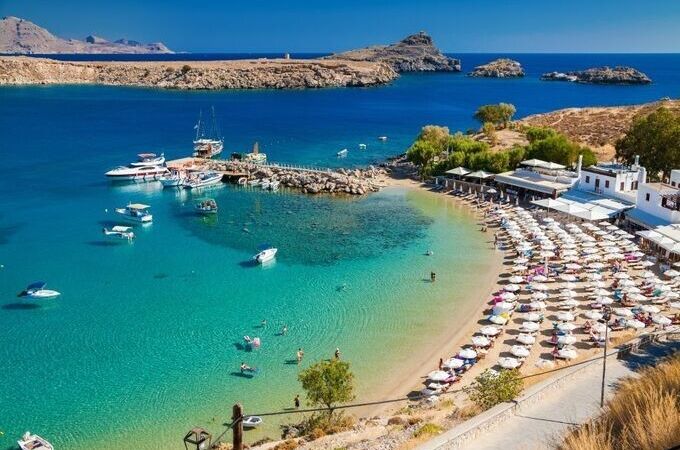
Balos and Elafonissi frequently appear in Greece beach imagery, which can create the impression that visiting them is simply a matter of driving over after breakfast.
Reality deserves more attention.
Access, road conditions, parking, walking, seasonal visitor volume and boat options can all affect how a beach day unfolds. The most famous beach is therefore not automatically the most convenient beach for every traveler.
This is particularly important for families, travelers with limited mobility and anyone visiting during busy summer periods.
A beach day should still feel like a beach day.
If reaching a particular location requires an early start, substantial transportation and a complicated return, decide whether the scenery justifies that effort for you personally.
There are many ways to enjoy the Cretan coast.
Not every traveler needs to reproduce the same photograph.
Eastern Crete Rewards Travelers Who Give It Its Own Space
The eastern side of Crete is often added after the west because travelers discover Agios Nikolaos, Elounda and the Lasithi region while researching.
That can create an awkward itinerary if the accommodation has already been fixed around Chania.
Eastern Crete deserves to be approached as a region rather than an excursion from the opposite side of the island.
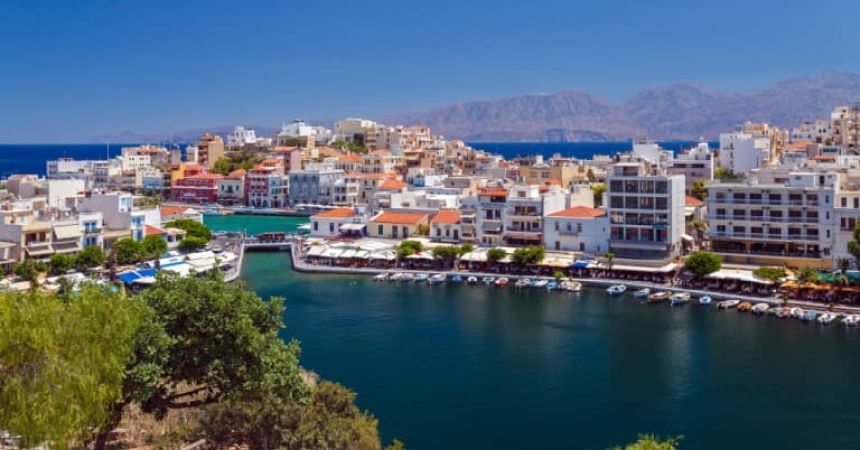
Agios Nikolaos provides a different coastal base, while Elounda is associated with a more resort-oriented experience. Spinalonga adds a historical dimension to the region, and the wider Lasithi landscape gives travelers another perspective on Crete beyond the major north-coast cities.
If both western and eastern Crete genuinely matter, changing bases may be more sensible than repeatedly crossing the island.
A hotel change consumes time once.
Poor geography can consume time every day.
The South Coast Changes the Island Again
Crete's northern coast contains the principal cities, airports and much of the infrastructure first-time visitors encounter.
Cross the island toward the south and the experience changes.
Mountain landscapes shape the journey, communities can feel more isolated, and coastal destinations often develop at a different rhythm from the busier northern corridor.
This is where Crete begins to reward travelers with more time.
A four-night first visit may reasonably prioritize the north and one region. With a longer stay, southern Crete can provide the contrast that makes the island's scale genuinely understandable.
The temptation is to interpret quieter places as “hidden Crete.”
They are not hidden.
They simply require more commitment to reach, which naturally changes who visits and how long people stay.
Renting a Car Changes What Crete You Can Experience
Crete can certainly be visited without driving, particularly when travelers stay in established towns or resorts and use organized excursions and transfers.
However, independent road transportation changes the possibilities considerably.
Villages, less accessible beaches and rural areas become easier to incorporate, while the day's timing is no longer dictated entirely by excursion schedules.
The question is not whether a rental car is universally necessary.
It is whether independence is part of the experience you want.
A couple spending several nights at a resort near Elounda with arranged sightseeing may have little reason to drive every day. Travelers wanting to move through villages and choose beaches spontaneously may feel restricted without one.
Crete makes both travel styles possible.
They simply create different versions of the island.
One Base or Two? Use Geography Rather Than Hotel Variety to Decide
Changing hotels during a holiday creates friction, so it should solve a real problem.
In Crete, it often can.
For a short stay concentrated around western Crete, one base is usually more sensible. Packing again simply to save a modest amount of driving rarely improves a four-night holiday.
Once the journey extends to a week or longer and interests spread across genuinely different regions, a second base can transform the experience.
| Your Crete Plan | Better Structure | Why |
|---|---|---|
| 3–4 nights, western focus | One base | Preserve limited time |
| 5 nights, Chania + nearby region | Usually one base | Hotel change offers limited benefit |
| 7 nights, west + central Crete | One or two bases | Depends on sightseeing priorities |
| 8–10 nights, west + east | Two bases | Reduces repeated cross-island travel |
| 10+ nights with south coast | Two or three strategic bases | Regional exploration becomes worthwhile |
| Resort-focused week | One base | Touring is secondary to relaxation |
This is a very different calculation from hopping between smaller Greek islands.
In Crete, changing hotels can sometimes mean traveling less.
Crete Is One of Greece's Best Islands for Travelers Who Want Food to Belong to the Place
Cretan food is not simply a local version of a generic Greek menu.
The island's agricultural traditions, olive oil, cheeses, greens, vegetables, herbs and regional dishes give food a strong connection with landscape and village life.
Travelers interested in cuisine therefore gain more from moving beyond restaurants designed exclusively around visitor traffic.
A village lunch, local produce and a meal chosen according to what is actually prepared well in that area can reveal more about Crete than repeatedly ordering the same familiar Greek dishes.
This is also why food experiences fit naturally into longer stays.
When every day is dominated by major sightseeing, meals become functional.
When the itinerary breathes, food becomes part of understanding where you are.
Crete Works Extremely Well for Families—If the Geography Is Controlled
Families are often attracted to Crete because the island offers beaches, history, resort facilities and enough variety for different generations.
Its size is simultaneously the main risk.
A schedule involving long drives on consecutive days can make an otherwise excellent family destination unnecessarily tiring. Choosing a base close to the activities that matter most is therefore particularly important when children are traveling.
Families should also distinguish between beaches that look spectacular and beaches that are operationally easy.
Shade, facilities, access, walking distance and journey time can matter more with children than a beach's position on an international ranking.
Crete gives families enormous choice.
The objective is not to use all of it.
Crete Can Replace Island Hopping Rather Than Being Added to It
There is a persistent assumption that a Greece holiday should contain several islands.
Crete provides a strong alternative.
Instead of Athens followed by three short island stays, travelers can combine Athens with a substantial Crete stay and still experience several different landscapes, historical periods, towns and beaches.
This reduces ferry movements and hotel changes while creating more regional depth.
For travelers who prefer this approach, Athens and Crete vacation combinations can be particularly coherent because Athens supplies the concentrated classical-city experience before Crete provides enough diversity for the slower second half of the journey.
More islands do not automatically produce more Greece.
Sometimes staying longer produces considerably more.
How Many Days in Crete Is Really Enough?
Three or four nights can introduce one region.
A week begins to feel like an actual Crete holiday.
Ten days allow regional contrast without requiring every journey to become a race against the clock.
There is no need to establish a universal minimum because the correct duration depends on what Crete is doing within the wider trip.
If it follows Athens and another island, four nights around Chania may be entirely satisfying. If Crete is the principal destination, allocating only four nights while trying to reach both ends of the island creates unnecessary pressure.
The useful question is not “Can we see Crete in four days?”
Of course you can see part of it.
Ask instead whether the amount of Crete you can experience in four days matches the reason you chose the island.
Who Should Choose Crete Over a Smaller Greek Island?
Crete is particularly compelling for travelers who dislike feeling confined to one type of holiday.
History matters here. So do beaches. Food has depth. Cities and villages coexist with mountains and coastal resorts. Couples can create a romantic journey without relying entirely on one famous sunset location, while families can alternate cultural days with easier coastal time.
The trade-off is scale.
If your dream is walking everywhere from one compact island village and never thinking about transportation, another Greek island may suit you better.
If you enjoy the idea that a week can contain several genuinely different environments without boarding another ferry, Crete becomes much harder to beat.
That is the island's real competitive advantage.
Not that it has everything.
It is that its different parts feel substantial enough to reward being experienced separately.
How Magnificent Travel Approaches a Crete Journey
Since 1997, Magnificent Travel has arranged Greece journeys ranging from first-time cultural programs to island combinations and privately customized trips.
With Crete, we begin with geography.
Arrival airport, departure point, number of nights, preferred hotel style and the places travelers genuinely want to see need to be considered together. Only then does it make sense to decide whether one base is enough or whether the journey should move across the island.
For travelers interested in tailor-made southern Greece escapes, Crete can also function as the substantial final component of a longer Greece trip rather than another short island stop.
The operational objective is straightforward: avoid paying for a beautiful itinerary on paper that becomes exhausting once distances are experienced in real life.
A good Crete itinerary should make the island feel large in an interesting way.
Not in an inconvenient one.
Frequently Asked Questions About Crete
1. Can I fly into Chania and leave from Heraklion?
Yes, and for some itineraries this can be considerably more efficient than returning to the original airport. An open-jaw structure is particularly useful when the trip naturally moves from western toward central or eastern Crete, provided suitable flights operate on your dates.
2. Is Chania Old Town practical if we have a rental car?
It can be, but parking and vehicle access should be considered before choosing the hotel. Historic pedestrian areas are wonderful for walking yet not necessarily designed around convenient car access, so confirm parking arrangements rather than discovering the limitation after arrival.
3. Can Balos and Elafonissi comfortably be visited on the same day?
They are better treated as separate experiences for most travelers. Combining famous locations simply because both appear on a western Crete wish list can create an unnecessarily demanding day and leave too little time to enjoy either coastal environment properly.
4. Should archaeology lovers stay in Heraklion rather than Chania?
Heraklion can be the more logical choice when Knossos and the archaeological museum are major priorities, particularly during a shorter stay. Chania provides a different historical atmosphere, so travelers with enough time may prefer dividing the trip rather than choosing solely between them.
5. Is Spinalonga worth changing a Crete itinerary for?
It makes most sense when eastern Crete is already part of the journey. Traveling across the island solely to add one attraction can distort a short itinerary, whereas travelers staying around Agios Nikolaos or Elounda can incorporate it far more naturally.
6. Why do driving times in Crete sometimes feel longer than expected?
Crete's terrain and road network mean distance alone does not describe travel time. Mountain routes, local roads, seasonal traffic and access to particular beaches can all affect journeys, making geographic grouping more useful than simply calculating kilometers between attractions.
7. Can we enjoy traditional villages without driving ourselves?
Yes, through private transportation or organized excursions, although the degree of flexibility will differ. Travelers who want to stop spontaneously and explore several rural locations usually gain more independence from a car, while planned village visits can work perfectly well without self-driving.
8. Is southern Crete suitable for a first visit?
Yes, particularly for travelers seeking quieter coastal environments, but it requires a different logistical approach from a conventional north-coast itinerary. First-time visitors with limited days may find one northern region easier, while longer stays can incorporate the south more naturally.
9. Does Crete make sense for travelers who are not interested in beaches?
Absolutely. Minoan archaeology, Venetian and Ottoman architectural layers, mountain landscapes, villages, food traditions and historic towns provide substantial reasons to visit. Crete is one of the Greek islands least dependent on beach weather to justify a meaningful trip.
10. Should we book one resort and take day trips across Crete?
That works when sightseeing is occasional and the resort experience is the priority. It becomes inefficient when your wish list covers several distant regions, in which case changing base once may reduce total driving and create more time for actual exploration.
11. What should we check before booking a remote Crete hotel?
Look beyond room photographs and confirm driving distance to restaurants, beaches, towns and the places you intend to visit. A remote hotel can create wonderful privacy, but only when isolation is something you actively want rather than an accidental consequence of booking.
12. Is Crete better at the beginning or end of a longer Greece trip?
Crete often works beautifully toward the end because travelers can settle into a longer stay after faster-paced Athens or island hopping. However, flight connections ultimately matter more than narrative perfection, so the most efficient international and domestic transport sequence should influence the final order.

A travel professional specializing in tailor-made travel planning, guest experience management, and multi-destination tourism operations.
With over 23 years of experience in the travel industry, he designs and manages private and cultural tours for international travelers across Türkiye, Greece, Egypt, Jordan, Morocco, and other destinations.
He has strong expertise in both online and face-to-face guest communication, sales processes, and end-to-end travel operations.
Working closely with hotels, travel agencies, and local partners, he ensures smooth coordination and high-quality travel experiences at every stage of the journey.
His focus is on delivering personalized, reliable, and seamless travel experiences for international guests worldwide.