Family-Friendly Destinations in Greece: Choosing the Right Place for Your Family
Author: Kenan Ungur
Article Date: 20.11.2024
Reading Time: 19 min

Family-Friendly Destinations in Greece: Choosing the Right Place for Your Family
Updated: August 2026

Planning Greece with children becomes much easier once you stop asking which Greek destination is “best for families.”

There is no single answer because a family traveling with a four-year-old needs something quite different from parents bringing teenagers, while a multigenerational group may care more about simple transfers and walkable evenings than children's activities. Greece offers an unusually broad range of possibilities, from Athens and major islands with extensive infrastructure to smaller Cycladic destinations where the appeal lies precisely in having less to organize.

For most families, Crete, Rhodes, Corfu and Naxos are among the strongest all-round choices, while Athens becomes especially valuable when history and culture matter. The Peloponnese can work extremely well for families preferring mainland travel, whereas Santorini and Mykonos are better treated as deliberate choices rather than automatic additions simply because they are famous.

The most useful question is therefore not “Where can children go in Greece?” Children can travel almost anywhere in the country.

A better question is: Which destination removes the kinds of friction that matter most to our particular family while still giving the adults the Greece experience they came for?

Start With the Family You Actually Have, Not the Holiday You Saw Online

A beautiful photograph rarely shows the transfer required to reach the hotel, the stairs between the room and the restaurant, the midday heat during an archaeological visit or the luggage being moved from a ferry to another island after two nights.

Those details matter disproportionately when children are involved.

Families with babies and toddlers often benefit from fewer accommodation changes, straightforward transfers and destinations where beaches, restaurants and hotels can be combined without elaborate daily planning. Once children reach school age, history and mythology can become much more engaging, making destinations such as Athens, Crete and Rhodes attractive for reasons beyond the beach. Teenagers may tolerate longer sightseeing days and can appreciate destinations offering water activities, lively towns, shopping and more independence in the evening.

Before choosing islands, decide which description sounds most like your family:

We want one easy base and very little movement.

We want culture and beaches in roughly equal measure.

Our children are old enough to enjoy an active multi-stop trip.

We need variety because several generations are traveling together.

Those answers narrow Greece far more effectively than a generic ranking of “kid-friendly islands.”

Crete Gives Families the Most Room to Build Different Kinds of Holidays

Crete's greatest family advantage is not one particular beach or attraction; it is the island's scale and variety.

Families can create a largely resort-oriented holiday, combine beaches with historic towns and archaeological sites, or use one region as a comfortable base for day trips. Heraklion and Knossos introduce Minoan history, while Chania and Rethymno offer different urban atmospheres, and the island contains enough coastline that families are not dependent on a single resort experience.

The same size that creates variety, however, also requires sensible planning.

Crete should not be approached as though everything is twenty minutes away. Families who choose accommodation in one area and then create a wish list scattered across the island can spend far more time driving than anticipated.

It works particularly well when parents accept that one Crete vacation does not need to cover all of Crete.

Choose the region according to the experiences you value, establish a comfortable base and let the island's size work in your favor rather than against you.

Best suited to: families wanting variety, longer stays and a mixture of beaches, history and local exploration.

Rhodes Makes History Easy to Combine With Holiday Time

Rhodes offers a different kind of balance.

Its medieval heritage gives children and adults something visually immediate to explore, particularly around Rhodes Old Town, while the island also provides established beach areas and enough tourism infrastructure to make family logistics relatively straightforward.

This is valuable because successful family sightseeing often depends on contrast. Several consecutive museum or archaeological days can become difficult for younger travelers, whereas a morning exploring historic streets followed by swimming changes the rhythm completely.

Rhodes allows that alternation relatively naturally.

Families should still choose their accommodation area carefully. Staying for a beach-focused holiday and staying primarily to explore Rhodes Town are different decisions, and daily transportation becomes unnecessarily repetitive when the hotel location does not match the family's priorities.

Best suited to: school-age children, mixed-interest families and parents wanting history without sacrificing substantial beach time.

Naxos Is Often the Cycladic Island Families Were Actually Looking For

Many families begin Greece planning with Mykonos and Santorini because those are the islands they already know. Naxos frequently enters the conversation later, once parents start asking practical questions about beaches, pace and how much of the holiday they want to spend navigating crowds.

Naxos combines recognizable Cycladic character with a more relaxed family rhythm. Its beaches, town life and inland villages allow families to experience more than a resort without requiring the island to become an intensive sightseeing destination.

The island is particularly appealing when parents want children to have genuine beach time while still feeling that the family has traveled somewhere with its own character rather than remaining within a self-contained resort.

Naxos also illustrates an important family-planning principle: the most famous island is not automatically the island that provides the best ratio of experience to effort.

For families exploring relaxed Greek island holidays with children, that ratio often matters more than the number of iconic photographs associated with the destination.

Best suited to: families prioritizing beaches, slower days and a relatively uncomplicated Cycladic stay.

Corfu Works Particularly Well When Green Landscapes Matter as Much as Blue Water

Corfu feels different from the dry, whitewashed image many travelers associate with the Aegean.

The Ionian landscape is greener, Venetian influences are visible in Corfu Town, and the combination of beaches, countryside and historic atmosphere gives families several ways to structure their days.

That variety can work especially well for multigenerational travel because not everybody needs to want the same thing simultaneously. One day can revolve around the sea, another around Corfu Town, while other periods can remain deliberately unstructured.

As with Crete, accommodation geography matters. Corfu is not an island where every beach, village and attraction sits conveniently beside every hotel, so families planning frequent exploration should think carefully about transportation before choosing a base solely from photographs.

Best suited to: families wanting scenery, beaches and a destination that feels noticeably different from the Cyclades.

Athens Can Be Surprisingly Successful With Children When You Do Less

Athens sometimes gets treated as the difficult part families must complete before reaching the islands.

That can be a mistake.

Children who have encountered Greek mythology at school may find the Acropolis far more engaging than another conventional city attraction, while teenagers can appreciate the city's street life, food and scale alongside its ancient monuments.

The problem usually appears when adults try to reproduce an intensive adult sightseeing itinerary.

Athens becomes more family-friendly when the day contains fewer headline attractions and more breathing room. One major archaeological experience, a neighborhood walk, a meal and some unscheduled time can be more successful than attempting to cover every important ancient site before dinner.

Summer heat also changes what is realistic, particularly with younger children. Early sightseeing followed by a slower afternoon can transform the experience.

Best suited to: school-age children and teenagers, particularly when Athens is paired with a less structured coastal or island stay.

The Peloponnese Deserves More Attention From Families Who Dislike Ferry Logistics

Not every Greek family holiday needs to revolve around islands.

The Peloponnese can be an excellent choice for parents who want ancient sites, coastal scenery and beaches while keeping more of the journey on land. Depending on the route, families can explore places associated with Mycenae, Epidaurus, Nafplio and Olympia while avoiding repeated ferry boarding and island hotel changes.

This can be particularly attractive for families comfortable with road travel.

A car-based journey introduces its own practical considerations, but it also gives parents more control over stops, luggage and departure times than a tightly connected ferry itinerary.

The Peloponnese therefore deserves consideration not because it imitates an island holiday, but because it offers a different solution to the same family desire for history plus the sea.

Best suited to: road-trip families, history-focused parents and travelers who prefer flexible mainland movement.

Santorini Is Family-Friendly in Some Ways and Awkward in Others

Santorini should neither be dismissed as a couples-only island nor automatically recommended to every family.

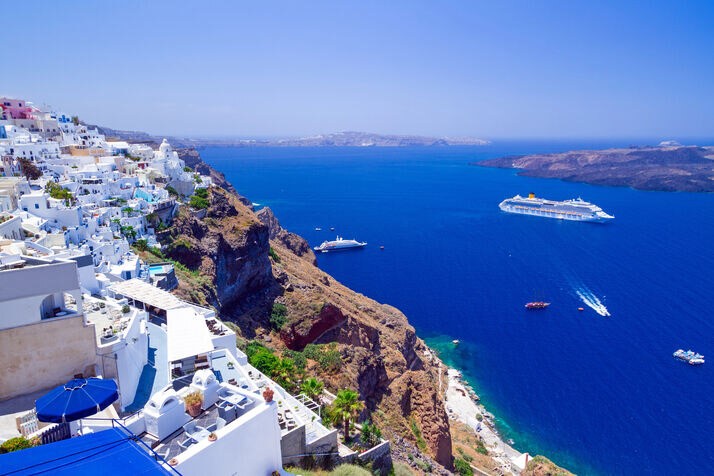
Its caldera landscape is extraordinary, and older children or teenagers can appreciate the volcanic geography, boat experiences and distinctive villages. Families can absolutely enjoy the island.

The practical considerations are simply different.

Steep terrain, steps, busy pedestrian areas and accommodation built dramatically into the cliffs can make certain locations less convenient with strollers or very young children. Some of the island's most celebrated hotels are designed around views and romantic atmosphere rather than conventional family-resort facilities.

That does not make Santorini unfriendly to families; it means hotel and location selection carry more weight here.

Families visiting primarily because Santorini is personally important should keep it. Those adding it only because “everyone goes” should consider whether another island better matches their children and travel style.

Best suited to: older children and teenagers, or families specifically motivated by Santorini itself.

Mykonos Should Be Chosen for a Reason Beyond Its Reputation

Mykonos has excellent beaches, attractive Cycladic architecture and easy name recognition, yet its nightlife reputation sometimes creates confusion around family suitability.

Families do visit Mykonos successfully. The question is whether what the island offers justifies its place in your itinerary.

Parents interested in beaches, Mykonos Town and nearby Delos may find the island rewarding, especially with older children who can appreciate the archaeological excursion. Families seeking a quiet, value-conscious beach base may find another Cycladic island better aligned with their priorities.

This is not a judgment about whether Mykonos is “good” or “bad” for children.

It is a reminder that family destination selection should be based on fit rather than fame.

Best suited to: families who specifically want Mykonos, beach time and potentially Delos rather than those simply seeking the easiest family island.

Younger Children Change the Geography of a Greek Holiday

When children are very young, destinations that look different on a map can become remarkably similar from a planning perspective.

Parents start valuing shade, short transfers, nearby food, predictable sleep opportunities and the ability to return to the hotel without turning the journey into an expedition.

This changes what “best destination” means.

A smaller island is not automatically easier if reaching it requires complicated connections, while a large island can be extremely simple if the family remains in one well-chosen area.

For babies and toddlers, I would place base quality above destination quantity. A comfortable five-night stay with a beach and restaurants nearby generally creates more family value than two attractive islands separated by packing, port transfers and another check-in.

Teenagers Can Handle More Greece — But They Need Ownership

Families with teenagers can consider a broader range of destinations because transport and sightseeing are generally less physically demanding than they are with toddlers.

The challenge changes from logistics to engagement.

Teenagers often respond better when part of the trip belongs to them: choosing a beach, trying a water activity, having time to explore a town, selecting somewhere to eat or understanding why a historical site matters rather than simply being taken there.

Athens, Rhodes and Crete can perform particularly well because they provide enough variety to prevent every day from feeling structurally identical.

Island combinations also become more realistic, although parents should still resist assuming older children enjoy constant hotel changes merely because they can tolerate them.

Which Greek Destination Fits Which Family Problem?

Rather than ranking destinations from first to eighth, it is more useful to identify the problem each destination solves particularly well.

Your Family's Main Concern Destination to Consider Why It Enters the Shortlist
We need variety without changing islands Crete One large destination can support beaches, culture and exploration
Our children need beach/history alternation Rhodes Historic environment and holiday infrastructure coexist naturally
We want a relaxed Cycladic experience Naxos Strong beach appeal without needing an intensely scheduled stay
Adults want scenery and town culture too Corfu Beaches, green landscapes and Corfu Town create contrasting days
Our children genuinely enjoy history Athens Ancient Greece becomes immediate rather than abstract
We prefer road travel to ferries Peloponnese Mainland routing gives families more control over movement
Santorini is personally important Santorini Unique landscape can justify the extra logistical considerations
We want beaches plus Delos/Mykonos Town Mykonos Works when its specific experiences match family priorities

This table deliberately does not declare a universal winner because family suitability is conditional.

The strongest destination is the one that solves the family's actual travel problem.

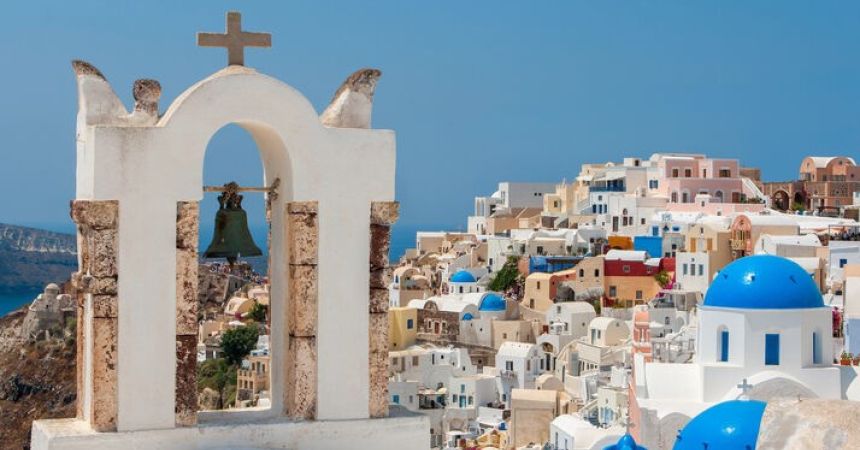
Santorini’s windmills stand tall against dazzling Mediterranean sunset skies.

One Island Done Properly Can Be More Family-Friendly Than Three “Easy” Islands

Island hopping sounds attractive because distances appear manageable and ferry travel feels like part of the Greek experience.

With children, however, every additional island creates more than a ferry ride.

There is packing, checkout, port transportation, waiting, boarding, luggage management, arrival transportation and another period of settling into unfamiliar accommodation. Even when everything operates smoothly, that is still a substantial transition.

For a seven- or eight-night island component, one or two bases may therefore create considerably more usable family time than three or four.

This does not mean families should avoid island hopping. Older children may enjoy it, and well-connected combinations can work beautifully.

The important distinction is between movement that adds experience and movement that merely adds another hotel name.

Family-Friendly Beaches Are About More Than Sand

Parents understandably look for sandy beaches and shallow water, particularly with younger children, but beach suitability extends beyond shoreline type.

Consider how the family will reach the beach, whether facilities are available nearby, how exposed the location may feel during the hottest part of the day, and whether returning to the accommodation is easy when somebody has had enough.

A spectacular beach requiring a long drive and complicated access may be perfect for an adventurous family with teenagers but a poor everyday choice for parents managing a toddler.

For this reason, accommodation location and beach choice should be planned together rather than independently.

A family does not need Greece's objectively “best” beach.

It needs a beach that is easy enough to enjoy repeatedly.

Multigenerational Greece Requires a Different Definition of Convenience

Grandparents, parents and children traveling together can create one of the most rewarding ways to experience Greece, but destination selection needs to account for different energy levels.

The ideal location should allow some family members to rest without forcing everybody else to stop.

A walkable town, accessible restaurants, nearby beach and optional excursions can be more useful than a remote property that requires the entire group to move together every time someone wants to do something.

Crete, Rhodes and Corfu can all provide good multigenerational options when the base is chosen carefully, while Athens can work well as the cultural component before the family settles somewhere slower.

For private Greece vacations designed for families, this is also where flexible transfers and privately arranged sightseeing can provide genuine value rather than merely luxury, because the day's pace can respond to the people actually traveling.

Do Not Choose a Hotel Until You Understand What the Family Will Do Every Day

A family resort with impressive facilities may be exactly right if most days will be spent there.

The same property can become inconvenient if parents intend to explore towns, beaches and historical sites every day.

Reverse the usual booking process.

First decide what an ordinary day should feel like. Will you walk to dinner? Will the children want the beach every afternoon? Will you rent a car? Are several sightseeing days planned? Do you expect to return to the room after lunch?

Then evaluate accommodation.

This approach prevents a common family-travel mistake: booking the “best family hotel” before realizing it is geographically wrong for the holiday you intended to have.

Build the Trip Around Energy, Not Just Geography

The best family itineraries have a rhythm.

An intensive Athens morning can be followed by an easier afternoon. A historical day in Rhodes can sit beside a beach day. A Crete excursion can be followed by a day when nobody needs to be ready at a particular hour.

This alternating rhythm matters more than creating an impressive destination count.

Adults can often tolerate six consecutive structured sightseeing days because they consciously chose them. Children experience the same schedule differently, particularly when heat, unfamiliar food, late evenings and changing beds are added.

When planning custom Greece tours for parents and children, the itinerary should therefore consider recovery time as deliberately as sightseeing time.

A free afternoon is not missing content.

Sometimes it is the reason the next day's content works.

How to Make the Final Destination Decision

Once you have narrowed Greece to three or four possible destinations, ignore photographs for a moment and compare them operationally.

Ask how you will arrive, how long the transfer takes, whether you need a car, what happens on a non-beach day, whether the children will enjoy the principal sightseeing, and how many times the family must repack before flying home.

Then ask one final question:

What would we actually lose by choosing this destination instead of the others?

If the answer is mostly a list of attractions you were unlikely to visit anyway, you have probably found the better fit.

Greece works remarkably well for families precisely because there is no need to force one type of holiday onto everybody. History can coexist with swimming, islands can be paired with Athens, and a family can travel extensively or establish one comfortable base and explore slowly.

The best family-friendly destination in Greece is therefore not necessarily the island with the most children's facilities, the easiest beach or the largest number of attractions.

It is the place where parents spend less time managing the holiday and the whole family spends more time actually having one.

Frequently Asked Questions About Choosing Greece for a Family Holiday

1. Is Crete or Rhodes better for a first family holiday in Greece?

Crete offers greater regional variety and works particularly well for longer stays, while Rhodes makes it relatively easy to combine beaches with a visually engaging historic environment. The better choice depends on whether your family values variety or a more compact holiday structure.

2. Which Greek island works well for families that do not want to rent a car?

The answer depends heavily on the accommodation location rather than the island name alone. Families should choose a base where beaches, restaurants and essential services are conveniently accessible, then treat excursions elsewhere as optional rather than building every day around transportation.

3. Is Naxos a good alternative to Mykonos for children?

Naxos can be an excellent choice when families prioritize beaches, a relaxed pace and Cycladic character. Mykonos may suit families specifically interested in its town, beaches and Delos, so the decision should reflect desired experiences rather than simply comparing popularity.

4. Should we take young children to Athens or go directly to an island?

Athens can be rewarding with children when sightseeing is kept selective and heat is managed sensibly. Families interested in mythology and ancient history may appreciate a short Athens stay before the islands, whereas a purely restorative holiday may justify going directly to the coast.

5. Is Santorini difficult with a stroller?

Some caldera-side areas contain steep paths and numerous steps, making stroller use less straightforward than on flatter islands. Families with babies should examine the exact hotel access and surrounding terrain carefully rather than assuming that every Santorini property offers similar accessibility.

6. Are Greek ferries manageable with children and luggage?

They can be, particularly when the route is simple and families allow enough time around departures. The challenge usually comes from repeating the process across several islands, so reducing unnecessary hotel changes can matter more than avoiding ferry travel altogether.

7. Which Greek destination is strongest for children interested in mythology?

Athens is an obvious starting point because the Acropolis makes ancient Greece tangible, while Crete adds the Minoan world and Rhodes offers another historical layer. Children often engage more deeply when historical visits are balanced with less structured activities rather than scheduled consecutively.

8. Is the Peloponnese suitable for a family beach holiday?

Yes, particularly for families who want beaches alongside mainland exploration and prefer road travel to repeated ferry connections. Its strength is the ability to combine coastal time with archaeological and historic destinations while maintaining greater control over daily transportation.

9. How many Greek islands should a family visit in one week?

For many families, one or two islands provide a better balance than three or four because each additional stop creates another packing and transportation cycle. Older children may handle faster itineraries well, but the extra movement should add genuine value.

10. Which destination works best for grandparents traveling with children?

Crete, Rhodes and Corfu can all work well when accommodation is chosen around accessibility and daily convenience. Multigenerational groups benefit from destinations where some travelers can rest independently while others explore, rather than requiring the entire group to move together constantly.

11. Do families need an all-inclusive resort in Greece?

Not necessarily. Resorts can be convenient for families wanting most facilities in one place, while independent hotels or apartments may suit those who enjoy eating locally and exploring. The right format depends more on expected daily behavior than on children's ages alone.

12. What is the biggest mistake families make when choosing Greek destinations?

Choosing too many places because each one looks easy to add can quietly turn the holiday into repeated transfers and hotel changes. Families usually gain more from selecting destinations that complement one another and allowing enough time for children to settle into each place.

Kenan Ungur
Author

A travel professional specializing in tailor-made travel planning, guest experience management, and multi-destination tourism operations.

With over 23 years of experience in the travel industry, he designs and manages private and cultural tours for international travelers across Türkiye, Greece, Egypt, Jordan, Morocco, and other destinations.

He has strong expertise in both online and face-to-face guest communication, sales processes, and end-to-end travel operations.

Working closely with hotels, travel agencies, and local partners, he ensures smooth coordination and high-quality travel experiences at every stage of the journey.

His focus is on delivering personalized, reliable, and seamless travel experiences for international guests worldwide.
Join The Newsletter

To receive our best monthly deals

Magnificent Travel Logo

Magnificent Travel
Usually responds the same day

Magnificent Travel
Welcome to the Magnificent Travel

How may i help you?
Today
+905324935198
X