Thessaloniki Greece: The City You Add for a Different Greece
Updated: August 2026
There is a particular kind of Greece itinerary in which Thessaloniki makes enormous sense, and another in which adding it simply creates another flight, another hotel and another city that the traveler does not have enough time to understand.
Knowing the difference matters.
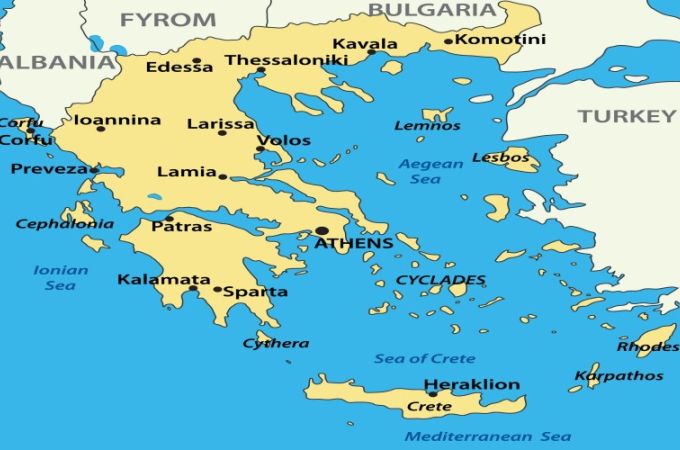
Thessaloniki is Greece's second-largest city, but that description does not explain why someone who has already visited Athens should travel north. It is not a reduced version of the capital, nor does it need to compete with Athens through a longer list of monuments. Its appeal comes from a different combination: a waterfront that functions as part of everyday city life, archaeological remains embedded between contemporary streets, powerful Byzantine and Ottoman layers, a Jewish history fundamental to understanding the city's past, and a food culture that feels inseparable from the experience of being here.
The city is also unusually good at allowing serious history and an unhurried city break to coexist.
You can spend a morning inside monuments spanning different centuries, eat lunch for longer than planned, walk along the Thermaic Gulf in late afternoon and discover that you have still experienced Thessaloniki properly without filling every hour.
That is the version of the city worth traveling north for.
Thessaloniki Makes More Sense When You Stop Comparing It With Athens
Athens naturally dominates a first journey to Greece because the Acropolis alone gives the capital an archaeological importance that no responsible itinerary should pretend Thessaloniki reproduces.
Fortunately, Thessaloniki does not need to.
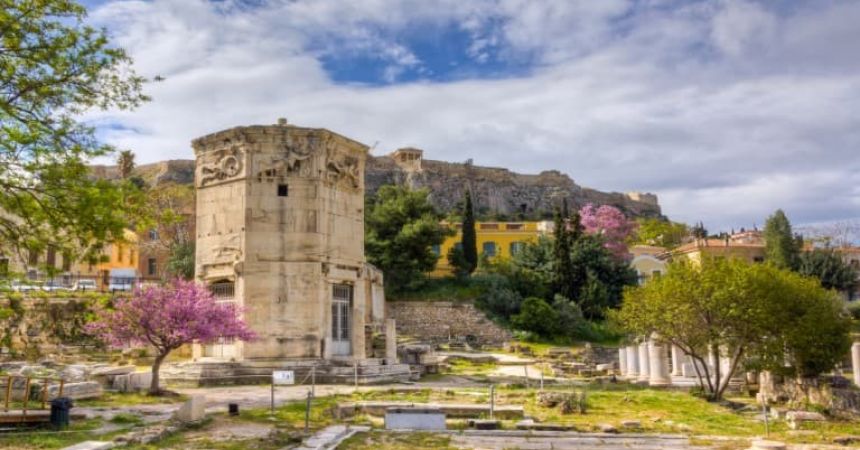
Its historical experience is less concentrated around one globally dominant monument and more dispersed through the contemporary city. Roman remains, Byzantine churches, Ottoman traces and buildings connected with the city's Jewish heritage appear within neighborhoods people still use every day.
That creates a different relationship with history.
In Athens, a first-time visitor may organize an entire morning around reaching a major archaeological complex. In Thessaloniki, historical layers often interrupt an ordinary walk. You turn a corner and encounter a Roman structure, continue toward lunch and pass a Byzantine church, then finish the afternoon beside a waterfront that feels completely contemporary.
The distinction sounds subtle on paper.
On the ground, it changes the pace of the trip.
The City's History Is Easier to Understand Vertically Than Chronologically
Trying to “complete” Thessaloniki century by century is a good way to make the city exhausting.
A better approach is to recognize that different periods occupy the same urban landscape.
The Roman-era Galerian complex, including the Arch of Galerius and Rotunda, introduces one layer. Byzantine Thessaloniki survives through churches and monuments that explain why the city became so significant within the Byzantine world. Ottoman rule reshaped its architecture and social fabric over centuries, while the city's Sephardic Jewish community became so important that Thessaloniki was once widely associated with a predominantly Jewish urban identity.
Then came catastrophic disruption: the 1917 fire transformed large sections of the city, and the Holocaust devastated Thessaloniki's Jewish population.
These histories deserve more than a paragraph when studied individually. This destination page should not attempt to replace specialist historical content.
What a traveler needs to understand is that Thessaloniki's character comes precisely from these periods occupying the same city rather than existing as isolated attractions.
Once you see it that way, walking becomes part of historical interpretation.
The Waterfront Is Not Where You Go After Sightseeing
Many European cities have attractive waterfronts that tourists visit for photographs.
Thessaloniki's waterfront performs a more important role: it helps regulate the day.
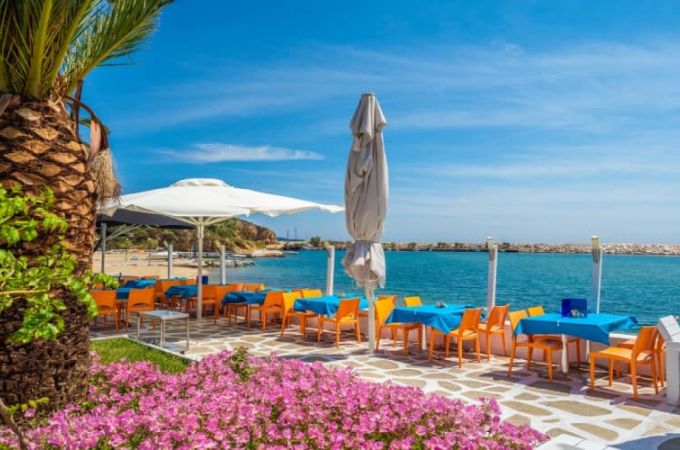
The White Tower provides the obvious landmark, but continuing along the Nea Paralia—the newer waterfront promenade—changes the experience from sightseeing into ordinary city movement. Locals walk, exercise, meet friends and spend time beside the gulf, while the city opens physically after the denser streets behind it.
This is especially valuable after several hours inside museums or historic monuments.
Instead of adding another attraction because there is still time before dinner, walk.
The waterfront allows the city to breathe.
For travelers arriving after an intensive classical Greece itinerary, that can be one of Thessaloniki's greatest strengths. It provides cultural depth without demanding that every available hour become educational.
Ano Poli Should Change Your Perspective, Not Just Your Photograph
Upper Town, or Ano Poli, survived the 1917 fire more substantially than the lower city and retains a different physical character, with narrower streets, traditional buildings, remnants of fortifications and elevated views.
The obvious temptation is to treat it as a viewpoint excursion.
Go up, photograph the city, come down.
That wastes the transition.
Moving between the lower city and Ano Poli reveals how Thessaloniki's topography changes. Streets become steeper, the urban texture shifts and the relationship between the historic walls, neighborhoods and sea becomes much easier to understand.
Walking uphill is perfectly reasonable for many travelers, but the gradient should not be underestimated, particularly in warm weather. Using transportation uphill and walking gradually downward can be a much more pleasant strategy for travelers who want the experience without turning it into an endurance exercise.
That small operational decision often matters more than adding another stop.
Thessaloniki's Food Culture Deserves Time, Not a Checklist
There is a predictable way to write about food here: name bougatsa, koulouri and several meze dishes, then declare Thessaloniki Greece's culinary capital.
That is not enough.
The city's food identity developed through geography and population movement. Balkan, Ottoman, Sephardic Jewish, Anatolian and wider Mediterranean influences interacted over generations, while the arrival of Greek refugees from Asia Minor after the population exchanges of the early twentieth century added another profound layer.
The result is not something travelers understand by ordering six foods from a list.
It is better experienced through the structure of the day.
Have breakfast somewhere people actually linger. Visit a market area before lunch. Allow lunch to become a social event rather than a refueling stop. Notice how pastry shops, tavernas, contemporary restaurants and traditional establishments coexist.
Thessaloniki rewards appetite, certainly, but it rewards curiosity even more.
A Market Visit Is More Useful Before You Are Hungry
Markets can easily become another sightseeing checkbox, particularly when visitors arrive, take photographs of produce and leave without understanding how the surrounding commercial district functions.
Thessaloniki's central market areas make more sense when incorporated into a wider walk through the lower city.
Kapani and the surrounding streets offer a way to observe ingredients, small businesses and the commercial rhythm that sits behind the city's culinary reputation. The experience works particularly well before lunch because what you see begins influencing what you want to eat afterward.
This is a small example of a broader Thessaloniki planning principle:
sequence experiences so that one changes how you understand the next.
A market before lunch has context.
A Byzantine church before Ano Poli changes how you read the upper city.
The waterfront after a museum gives your attention somewhere to rest.
Good city planning is often about sequence rather than quantity.
Two Nights, Three Nights or Four? Count Unhurried Meals
Thessaloniki is compact enough to tempt travelers into assigning it one night.
That is rarely the best measure.
Instead, consider how many unhurried periods the itinerary contains.
With one night, arrival and departure logistics dominate disproportionately. You may see the waterfront and central area, but the city risks becoming a stopover.
Two nights can produce a worthwhile introduction if transport timings are favorable. A full day allows the principal historic center, food and waterfront to coexist without serious rushing.
Three nights is considerably more comfortable. Ano Poli can have its own space, museums become choices rather than sacrifices, and meals no longer compete directly with monuments.
Four nights makes sense when Thessaloniki is being used as an actual city break or when a nearby experience is incorporated without repeatedly changing hotels.
The right duration therefore depends less on the number of attractions than on whether you want Thessaloniki to function as a destination or a logistics base.
The “Worth Adding?” Test Is Different for Every Greece Itinerary
Rather than comparing Thessaloniki with other Greek destinations by star rating, test what it contributes to the journey you already have.
| Your Existing Trip Already Has... | Thessaloniki Adds... | Planning Verdict |
|---|---|---|
| Athens + classical sites | Byzantine, Ottoman and modern urban layers | Strong contrast |
| Several Cycladic islands | Food, city life and northern identity | Valuable if enough nights remain |
| Meteora | An urban counterpoint and transport hub | Naturally complementary |
| Very short first trip | Another major relocation | Usually protect Athens first |
| Long mainland journey | Northern cultural anchor | Strong fit |
| Beach-heavy holiday | History and dining contrast | Useful if intentionally desired |
Notice what this table does not attempt to do.
It does not rank Thessaloniki against Athens, Santorini or Meteora.
The relevant question is whether Thessaloniki introduces something the itinerary does not already contain.
That is a much better test of destination value.
Thessaloniki Becomes More Valuable When Meteora Is Already in the Plan
Travelers heading toward northern mainland Greece often discover that Thessaloniki can fit naturally into the broader geography.
That does not mean this page should absorb Meteora's planning intent. Meteora has its own questions involving monasteries, overnight strategy, access and sightseeing.
The connection here is structural.
If the journey already extends north, Thessaloniki may stop being a major detour and become a logical urban counterpoint. Several days of landscapes, monasteries or road travel can be followed by restaurants, museums and evening walks without immediately adding another flight to an island.
Within Northern Greece cultural journeys, that contrast is often more valuable than visiting another destination with similar characteristics to one already completed.
Itinerary diversity should come from experience, not destination count.
Halkidiki Is Close Enough to Tempt Bad Planning
Thessaloniki is commonly associated with Halkidiki because the city provides a practical gateway toward the peninsula.
That geographical relationship does not make them one destination.
Halkidiki deserves its own beach, resort, peninsula-selection and transport planning. Compressing those subjects into this article would immediately weaken cluster separation.
The relevant Thessaloniki decision is whether travelers should use the city as a gateway or give it dedicated nights before continuing toward the coast.
If the schedule contains only one evening between arrival and onward travel, Thessaloniki is functioning primarily as a transit point.
There is nothing wrong with that.
The mistake is claiming to have “visited Thessaloniki” because you slept near the center before leaving for the beach the next morning.
The White Tower Is More Useful as an Orientation Point Than a Finish Line
The White Tower has become Thessaloniki's visual symbol, and first-time visitors naturally want to see it.
Yet the city's identity does not concentrate there.
Its position beside the waterfront makes it a useful geographical reference connecting the historic center with the long promenade. From there, travelers can understand how close the sea sits to much of central Thessaloniki and how easily walking can replace repeated short vehicle journeys.
This matters because first-time visitors often overestimate the need for transportation within the central sightseeing area.
A well-positioned hotel allows substantial parts of Thessaloniki to unfold on foot.
The exception is elevation.
Ano Poli changes the calculation, as do travelers with mobility concerns. Transport should therefore solve specific geographical problems rather than become the default method of moving three streets.
Hotel Choice Should Follow Your Evening, Not Your Morning Tour
Thessaloniki does not require the same accommodation logic as Santorini or Mykonos, and applying those island rules here would be template thinking.
There is no caldera premium to decode and no beach-versus-town lifestyle decision dominating the entire stay.
Instead, think about the end of the day.
Where do you want to be after dinner? Would you enjoy walking back through an active central neighborhood, or do you prefer a quieter edge? How important is immediate access to restaurants? Are you comfortable with street noise? Will you be leaving early for onward transportation?
A central property around the broader Aristotelous Square and waterfront environment can make a short stay exceptionally easy, while other neighborhoods may provide a more residential feel.
The correct choice is not the hotel closest to tomorrow's monument.
Morning sightseeing can be organized.
Repeatedly inconvenient evenings are harder to fix.
Do Not Schedule Thessaloniki Like an Archaeological Tour
There are enough monuments and museums to fill the day completely.
Resist that temptation.
Thessaloniki is particularly good at revealing itself between planned visits: walking through Ladadika, moving around the central commercial streets, stopping for coffee, watching the waterfront change toward evening or discovering that lunch has quietly occupied two hours.
Those moments are not gaps in the itinerary.
They are the itinerary's connective tissue.
Travelers who need every hour attached to a named attraction may leave with a great deal of historical knowledge but surprisingly little feeling for the city.
A better approach is to establish one or two serious cultural priorities each day and allow the urban environment to connect them.
This is where private Thessaloniki city experiences can add genuine value when they are designed around interpretation rather than simply transporting visitors between monuments.
Sunday Morning Can Feel Different From Friday Night
Short city breaks are influenced by days of the week more than travelers sometimes expect.
Retail activity, markets, restaurants, nightlife and monument schedules do not necessarily operate with identical rhythms every day. Religious sites are also functioning places of worship rather than museum exhibits existing solely for visitors.
That means a three-night Thessaloniki itinerary should not be copied mechanically onto every calendar.
Check what your priority sites are doing on the actual dates of travel and arrange the rest around them. If a specific museum matters enormously, protect it first. If food and neighborhood life matter more, allow the schedule to remain looser.
Operational planning should support the city rather than force the city to behave like the itinerary.
Thessaloniki Works Especially Well for Travelers Who Have Already Seen “Classic Greece”
A first Greece trip often revolves around the Acropolis, Delphi, perhaps Meteora and the islands.
There is good reason for that.
On a second journey, however, Thessaloniki can expand the traveler's understanding of Greece substantially because northern history, Balkan geography, Byzantine heritage and twentieth-century urban experience become more visible.
That makes the city especially useful within customized mainland Greece itineraries where the purpose is not merely adding more ancient ruins.
It also explains why some travelers respond more strongly to Thessaloniki on a return trip than they might have during a hurried first visit.
The city does not need to be Greece's first introduction.
It can be the place that makes an existing understanding of Greece more complicated—and more interesting.
Leave Thessaloniki With One Part Unfinished
The instinct behind most travel planning is completion.
See the monument. Visit the museum. Try the food. Photograph the waterfront. Move on.
Thessaloniki is better when it resists that process slightly.
Perhaps you never make it to one museum because lunch became too enjoyable. Maybe you walk the waterfront twice rather than adding another monument. Perhaps Ano Poli occupies an afternoon that originally contained three separate stops.
Nothing has gone wrong.
The city works because its cultural importance does not require constant formal sightseeing. History remains around you while ordinary urban life continues, and the boundary between the two is often less obvious than expected.
For travelers combining the capital with the north through Athens and Thessaloniki private travel, that difference is precisely what justifies visiting both cities.
Athens does not need to lose for Thessaloniki to win.
Thessaloniki earns its place by showing you a Greece that the rest of the itinerary may not have shown you yet.
Frequently Asked Questions About Thessaloniki
1. Is Thessaloniki worth adding if my Greece trip is only seven days?
Usually only when northern Greece is already central to your plans. For a first seven-day journey focused on Athens and the islands, adding Thessaloniki may create unnecessary transit. Its value rises considerably when you can protect at least two meaningful nights.
2. Why does Thessaloniki feel different from southern Greek cities?
Its geography and history connect it strongly with the Balkans, Byzantine world, Ottoman period and population movements across the eastern Mediterranean. These influences remain visible in architecture, food and urban history, giving Thessaloniki an identity that cannot be explained through classical Greece alone.
3. Can I explore central Thessaloniki mostly on foot?
Yes, many central areas and major landmarks can be connected comfortably on foot. Ano Poli introduces steeper gradients, however, so travelers who dislike uphill walking can use transportation upward and explore gradually downhill rather than avoiding the upper city completely.
4. Is Thessaloniki a good destination for travelers who are not interested in ancient ruins?
Very much so. Food culture, the waterfront, Byzantine heritage, markets, neighborhoods and modern city life provide substantial reasons to visit. Thessaloniki is particularly rewarding when travelers are interested in how several historical periods continue to shape a living contemporary city.
5. Should I book a food tour or explore Thessaloniki's food independently?
Independent exploration works well for confident travelers, while a knowledgeable local food experience can explain the migration, ingredients and cultural influences behind what you are tasting. The value should come from interpretation and access, not merely being escorted between several restaurants.
6. What is the smartest way to visit Ano Poli in hot weather?
Consider traveling uphill by taxi or other available transport and exploring on foot while gradually descending. This preserves the neighborhood experience and views without using the hottest part of the day for a demanding climb through Thessaloniki's steep upper streets.
7. Does Thessaloniki work well as a winter city break?
Its museums, historic monuments, restaurants and café culture give the city substantial appeal beyond summer. Cooler weather changes the waterfront experience but can make intensive walking and cultural sightseeing comfortable, so Thessaloniki is less dependent on beach conditions than island destinations.
8. How important is Thessaloniki's Jewish history to understanding the city?
It is fundamental rather than peripheral. Thessaloniki once had one of Europe's most significant Sephardic Jewish communities, which profoundly influenced its social and commercial life before the Holocaust. Travelers interested in the city's history should not treat this heritage as an optional footnote.
9. Should I rent a car while staying in Thessaloniki?
Not for ordinary central sightseeing. A vehicle becomes more useful when Thessaloniki is the starting point for a wider northern Greece journey. Keeping a rental car parked throughout a city-focused stay can add cost and parking considerations without providing meaningful daily value.
10. Can Thessaloniki work for travelers who prefer evenings to nightlife?
Absolutely. The city has an active nightlife scene, but enjoying Thessaloniki does not require clubs or late nights. Long dinners, waterfront walks, cafés and busy central streets provide evening atmosphere for travelers whose preferred social experience is considerably more relaxed.
11. Is one full day enough between arriving and continuing to Halkidiki?
One full day can provide a worthwhile introduction, but it will require selective priorities. If Thessaloniki itself matters to you rather than merely serving as an arrival gateway, two or three nights allow its history, food and evening atmosphere to develop more naturally.
12. What should I deliberately leave unscheduled in Thessaloniki?
Protect at least one substantial period around lunch or late afternoon. Thessaloniki's character emerges through markets, cafés, spontaneous food stops and waterfront walking, so filling every available hour with ticketed attractions can remove precisely the urban rhythm that makes the city distinctive.

A travel professional specializing in tailor-made travel planning, guest experience management, and multi-destination tourism operations.
With over 23 years of experience in the travel industry, he designs and manages private and cultural tours for international travelers across Türkiye, Greece, Egypt, Jordan, Morocco, and other destinations.
He has strong expertise in both online and face-to-face guest communication, sales processes, and end-to-end travel operations.
Working closely with hotels, travel agencies, and local partners, he ensures smooth coordination and high-quality travel experiences at every stage of the journey.
His focus is on delivering personalized, reliable, and seamless travel experiences for international guests worldwide.