6 Days in Jordan: Balancing Amman, Petra & Wadi Rum
Updated: August 2026
Six days in Jordan presents a planning problem that is easy to miss because, at first glance, the trip seems comfortably long. Petra can have a proper day, Wadi Rum is within reach, Amman deserves some attention, and there appears to be enough room around them for another experience or two. Once road time, hotel changes and the different physical demands of each place are added, however, six days can become surprisingly uneven.
The difficulty is rarely deciding what deserves to be included. Most first-time travelers already know that Petra matters, while Wadi Rum and Amman naturally appear in almost every initial plan. The harder decision is determining how much time each place deserves relative to the others.
Giving every destination the same number of hours is not the answer because they do not consume time in the same way. Amman can be experienced selectively, Petra rewards uninterrupted time and physical energy, while Wadi Rum becomes more interesting when the schedule allows the desert to continue beyond a short daytime excursion.
A well-designed six-day journey therefore depends less on adding attractions and more on distributing attention intelligently.
Why Six Days Should Not Be Divided Equally
It is tempting to begin with simple arithmetic.
Six days and three principal destinations might suggest two days for each, but Jordan does not cooperate with that kind of symmetry.
Amman is a living capital where travelers can spend several days if they enjoy urban exploration, food and contemporary culture, although a first-time highlights journey does not necessarily require that depth. Petra behaves differently because entering the archaeological city, walking through it and exploring beyond the Treasury naturally consumes a substantial part of a day. Wadi Rum has another rhythm entirely; the difference between visiting for several daylight hours and remaining through sunset and overnight can be more significant than the difference between four and six hours of conventional sightseeing elsewhere.
Travel time complicates the calculation further.
Moving south is not empty time, particularly when the route contains places you genuinely want to visit, but neither should every transfer become an excuse to add another attraction. Once that happens, the journey between Amman and Petra can become busier than either destination.
Six days works best when the allocation follows the character of each experience rather than an artificially equal distribution.
Amman Needs Enough Time to Become More Than an Airport
Amman is frequently squeezed at both ends of Jordan itineraries. Travelers arrive, sleep, travel south and perhaps return for another hotel night before flying home.
Logistically, this works.
Experientially, it can leave the capital almost invisible.
Giving Amman meaningful time does not require turning a six-day trip into a city break. A well-used part of a day can introduce the Citadel, Roman Theatre and the city's contemporary atmosphere, while additional time can be directed toward neighborhoods, food or simply walking through a place where modern Jordanian life is considerably more visible than inside the country's archaeological sites.
This matters because Petra and Wadi Rum can dominate the visual memory of Jordan so strongly that travelers risk experiencing the country primarily through ancient history and landscape.
Amman provides another layer.
The balance is important, though. If extending the capital stay means cutting Petra significantly or reducing Wadi Rum to a hurried excursion, Amman has probably taken more than this particular six-day itinerary can comfortably give.
Jerash Changes the Amman Calculation
Travelers interested in Jerash need to decide whether they consider it part of their Amman time or a separate priority.
Geographically, combining the two seems natural. In practical terms, Jerash is substantial enough that the visit should not be treated as a minor extension before lunch.
Roman urban planning, colonnaded streets, temples, theatres and public spaces give Jerash a scale that rewards proper exploration, particularly when accompanied by historical interpretation. Adding it means that the northern portion of the trip becomes more archaeologically focused and will probably require a larger share of one day.
For some travelers, that is exactly right.
Someone fascinated by Roman history may prefer a substantial Jerash visit and a selective Amman experience rather than spending the same hours on another landscape stop elsewhere.
Others may prefer keeping the north lighter so they can begin moving toward Petra without turning the first part of the journey into a sequence of archaeological sites.
The six-day format gives you the choice, but not unlimited capacity.
The Journey South Can Be Fast, Scenic or Historical, but Not Everything at Once
The road between northern Jordan and Petra is one of the most consequential planning choices in a six-day trip because it can function either as transportation or as a sightseeing day.
A more direct journey protects time.
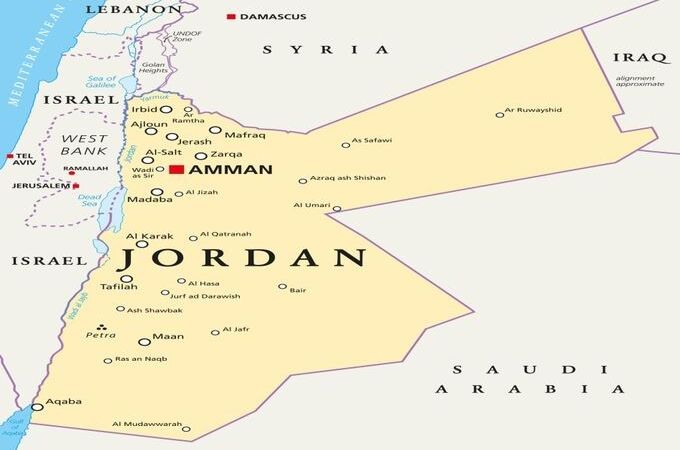
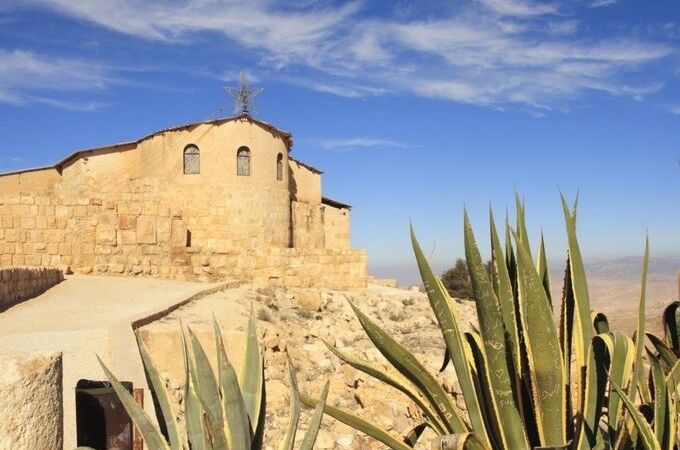
A slower route can incorporate selected places such as Madaba, Mount Nebo, the Dead Sea, Kerak or portions of the King's Highway, depending on the chosen direction and interests.
Trying to combine all of them is where the balance begins to deteriorate.
A scenic road becomes a schedule of arrival times, historical visits become progressively shorter, lunch becomes something to fit between stops, and Petra may receive travelers considerably later than expected.
The more useful approach is to select the reason for taking the slower route.
If biblical history is particularly important, Madaba and Mount Nebo may deserve attention. If Crusader history is a priority, Kerak changes the day in another direction. If the landscape and journey itself are the attraction, the King's Highway can receive more breathing room.
Six days permits a meaningful route south.
It does not require turning that route into a Jordan sampler platter.
Petra Deserves the Largest Unbroken Block of Time
The difference between allocating Petra “a day” and protecting a genuine Petra day can be substantial.
A schedule might describe both versions identically.
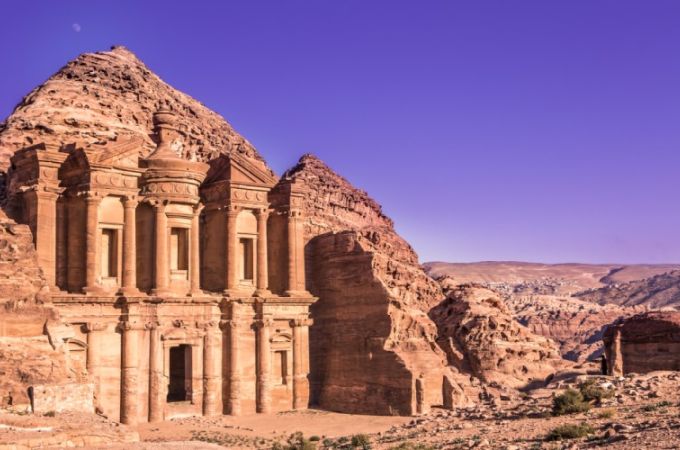
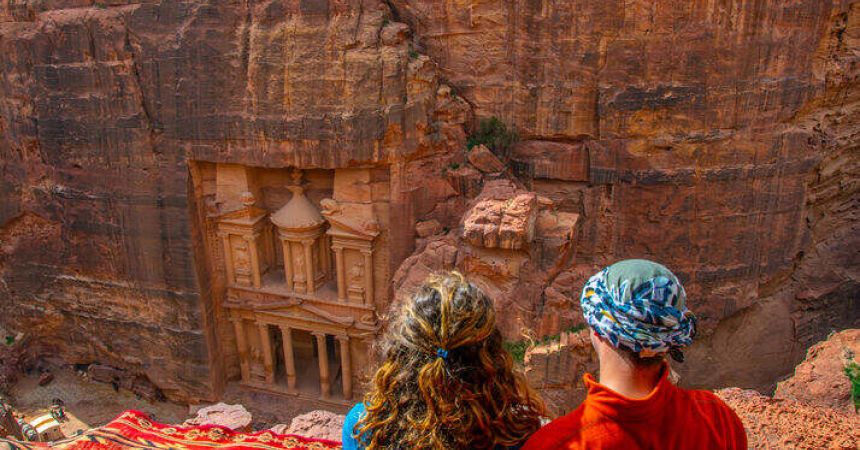
In one, travelers wake nearby, enter with good energy, move through the Siq without pressure, spend time with their guide beyond the Treasury and decide later whether the Monastery or another extended route suits their remaining strength.
In the other, the morning begins with a road transfer, entry happens later than planned, lunch divides the visit awkwardly and the Monastery becomes a race against both fatigue and the clock.
Both itineraries technically contain Petra.
Only one gives the site control over its own day.
For a six-day journey, I would normally protect Petra from unrelated morning sightseeing because the site already provides more than enough content and physical activity. Travelers interested in longer walks or detailed photography may want even greater flexibility.
This is one place where the itinerary should become less ambitious, not more.
The Night Before Petra Is Part of the Petra Plan
Where you sleep before visiting Petra has consequences the following morning.
Arriving in Wadi Musa at a sensible hour allows travelers to have dinner, rest and approach Petra without beginning the day with a substantial transfer. Arriving very late after an overloaded sightseeing route technically preserves more attractions on the previous day, but it may also deliver tired travelers to the most physically demanding part of the trip.
This trade-off often disappears from itinerary descriptions because hotel arrival is treated as administration rather than travel experience.
It should not be.
A good six-day plan considers the quality of the following morning when deciding how much sightseeing to place on the previous afternoon.
This is especially important for travelers who want to reach the Monastery or explore Petra beyond the principal route. The energy required for those experiences cannot be added to the itinerary later.
It has to arrive with you.
Petra Does Not Need Wadi Rum on the Same Sightseeing Clock
Petra and Wadi Rum are often paired because they sit relatively close together in southern Jordan.
That pairing makes geographical sense, although it can create a misleading expectation that the two experiences should share a day equally.
A morning departure from Petra toward Wadi Rum can work very well after the archaeological visit has been completed the previous day. The landscape then changes naturally, and the desert receives the afternoon and evening rather than being inserted as an excursion between other obligations.
What I would avoid is attempting an ambitious Petra visit in the morning and expecting Wadi Rum to become meaningful later that same day simply because the driving distance appears manageable.
The physical and emotional transitions matter.
After several hours of walking through Petra, travelers may appreciate reaching the desert without immediately beginning another tightly controlled sightseeing program.
A six-day itinerary has enough room to avoid that compression.
Use it.
Wadi Rum Becomes More Valuable When You Stop Counting Attractions
The desert can initially confuse travelers accustomed to conventional sightseeing.
There is no equivalent of entering Petra with a map full of major monuments, and the experience is not improved simply by accumulating more named stops.
Wadi Rum is more dependent on the quality of the route, the landscape, the time of day and how long travelers remain inside the desert environment.
For this reason, an overnight can be particularly valuable within a six-day journey. Arriving during the day, continuing through sunset and remaining after darkness changes the experience without requiring another destination.
That distinction is important.
The itinerary becomes richer without becoming geographically busier.
Travelers considering professionally arranged desert and cultural combinations can continue naturally toward Jordan Desert & Culture Tours, while this article retains its informational purpose of deciding how six available days should be distributed.
The Camp Decision Is Really About the Following Morning
Most discussions about Wadi Rum camps concentrate on the evening: sunset, dinner, stars and sleeping in the desert.
The following morning deserves equal attention.
If travelers wake in Wadi Rum and immediately begin a long transfer north, the overnight still provides value, but the departure timing needs to fit the wider journey. If another southern destination is planned, the sequence may work differently.
Accommodation preferences also matter.
Some travelers enjoy the simplicity and atmosphere of desert camps, while others sleep poorly outside conventional hotels and would rather experience Wadi Rum during the day.
There is no planning benefit in insisting on an overnight that leaves somebody exhausted for the remainder of a six-day trip.
The right balance considers both experience and recovery.
Wadi Rum should alter the journey pleasantly, not become an accommodation test that travelers feel obliged to pass.
The Dead Sea Has to Compete With Time, Not With Wadi Rum
Comparing the Dead Sea and Wadi Rum as attractions is not especially useful because their experiences are fundamentally different.
Within six days, however, they compete for available hours.
A Dead Sea visit can work particularly well toward the beginning or end of the trip depending on routing, and it offers a lower-intensity contrast to the walking and sightseeing elsewhere. An overnight can add resort time, although the value of that night depends on whether relaxation is an important part of the trip.
If the itinerary already contains an overnight in Wadi Rum and substantial Petra time, adding a Dead Sea overnight may begin reducing the hours available in Amman or northern Jordan.
This is where personal preference should override generic recommendations.
Travelers who enjoy spa and resort time may consider the Dead Sea essential to the balance of the trip. Someone who prefers archaeology may use those same hours in Jerash.
Six days gives enough room to make that choice meaningful.
It does not give enough room to avoid choosing.
What About Aqaba?
For most conventional six-day first trips, Aqaba sits just outside the strongest core route.
The reason is not distance alone.
Aqaba works best when travelers can actually use the Red Sea, whether through swimming, snorkeling, diving or relaxed resort time. A single night squeezed between Wadi Rum and a return north may provide relatively little of that experience.
Travelers who place marine activities high on their priorities should absolutely reconsider the structure. Aqaba may then replace another component rather than being added after it.
This distinction matters for the cluster because the dedicated Aqaba page owns the question of whether the Red Sea deserves one, two or three nights.
Within a six-day itinerary, we only need to decide whether coastal time outranks something already present.
Usually, for a first cultural trip, it does not.
For a diver, the answer could be completely different.
Day Four Should Not Feel Like Day Three With Different Rocks
One of the easiest ways to judge a six-day itinerary is to examine whether consecutive days demand the same kind of energy.
A full Petra day involves extensive walking, concentration and historical interpretation. Following it with another highly structured day containing several stops can make the middle of the trip feel relentlessly active.
Wadi Rum naturally solves part of this problem because the environment and mode of exploration change.
The same principle can be applied elsewhere.
If one day contains extensive archaeological guiding, the next does not necessarily need another long historical tour. If a road day contains several cultural stops, the evening may be better left relatively free.
Balance is not achieved merely by dividing nights correctly.
It also comes from alternating the way travelers use their attention and bodies.
That is particularly relevant for couples or families where enthusiasm for history differs between travelers.
Six Days Is Long Enough to Have a Free Evening
This sounds like a minor luxury until you examine how many itineraries remove it.
A free evening gives travelers room to choose a restaurant without watching the clock, walk around the neighborhood, rest at the hotel or simply process what they have already experienced.
No attraction needs to be attached to those hours for them to contribute to the trip.
Amman is particularly suitable for this because restaurants and city life can provide an experience without requiring another formal tour. Wadi Musa may offer a quieter version after Petra, while a Dead Sea resort naturally creates its own downtime.
The important point is resisting the urge to monetize every empty line in the itinerary.
Travelers do not need six consecutive evenings containing activities to receive value from six days.
A well-designed Jordan Private Travel Experience should include enough flexibility that personal time does not feel like an accidental cancellation.
Where the Sixth Day Creates the Most Value
The sixth day should not automatically become another destination.
Its greatest contribution may be allowing the existing route to breathe.
Perhaps Amman gains enough time to become a real city experience rather than an airport hotel.
Perhaps the journey south can include a historical stop without delivering travelers to Petra exhausted.
Perhaps Wadi Rum receives an overnight rather than a brief afternoon.
Perhaps the Dead Sea fits naturally near the end without forcing an anxious airport transfer.
This is what separates six days from five.
The additional value is not necessarily visible as another name on the itinerary. It can appear as better arrival times, longer site visits, fewer consecutive early mornings and a more sensible relationship between driving and sightseeing.
Travel planners sometimes underestimate this because “less rushed” is difficult to display in a brochure.
Travelers notice it immediately.
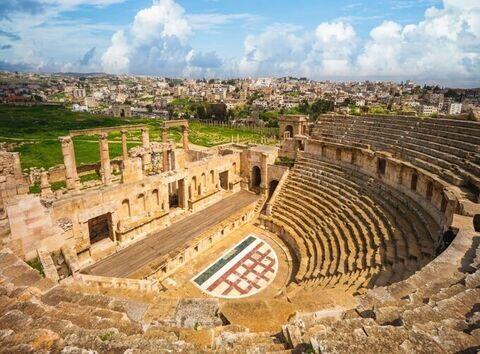
A Six-Day Journey Can Have Two Different Centers
Not everybody needs the same balance, and this is where the itinerary becomes genuinely customizable.
A traveler whose strongest interest is archaeology might emphasize Amman/Jerash + Petra, using Wadi Rum as a shorter but still meaningful landscape contrast.
Someone drawn primarily to scenery could give less time to northern archaeology, protect Petra and allow Wadi Rum a fuller overnight experience.
A traveler interested in religious history might use the north-to-south journey differently, placing greater weight on Madaba and Mount Nebo.
A couple wanting culture followed by relaxation might reduce northern sightseeing and preserve time for the Dead Sea.
All of these can be legitimate six-day Jordan journeys because balance does not mean allocating identical time to identical destinations.
It means ensuring the itinerary reflects what the traveler values most.
Commercially, this is where Tailor-Made Jordan Tours become relevant: the six-day framework has enough flexibility for personalization to make a visible difference without becoming an entirely different length of trip.
The Return North Is Where Poor Planning Usually Reveals Itself
Southbound travel often receives considerable attention because travelers are excited about reaching Petra.
The return toward Amman can be treated as a logistical afterthought.
That is risky, especially when an international departure is involved.
Wadi Rum to Amman requires real road time, and inserting several additional experiences before a flight can turn the final day into a chain of dependencies. Traffic, a delayed departure or a longer lunch suddenly affects the airport margin.
A better six-day plan considers the return journey before finalizing the middle of the itinerary.
If the final flight leaves early, returning north the previous day may be sensible. If departure is late enough, the final day can potentially carry more travel without creating unnecessary pressure.
This decision may also determine whether the Dead Sea fits comfortably.
The route should close naturally rather than forcing the traveler to sprint from the final attraction toward airport security.
What Six Well-Balanced Days Might Actually Feel Like
Rather than prescribing six identical calendar boxes, imagine the trip as a sequence of changing experiences.
You arrive and meet contemporary Jordan before heading south. The journey toward Petra introduces another layer of the country rather than becoming a frantic collection of roadside attractions. Petra receives your strongest walking day while you are rested enough to appreciate it. Wadi Rum then changes the scale and tempo, giving the desert its own afternoon, evening or overnight. The final section moves back toward northern Jordan with enough flexibility for the Dead Sea, additional Amman time or another carefully selected experience according to flight timing and personal interests.
Notice what is missing from that description.
There is no requirement to visit everything.
That absence is deliberate.
A six-day itinerary becomes balanced when the traveler no longer feels that every available hour must defend its existence with another attraction.
Jordan provides enough variety that fewer, better-connected experiences can make the journey feel considerably larger than the schedule suggests.
Before You Finalize Six Days in Jordan: 12 Questions Worth Asking
1. If my international flight arrives after 8:00 PM, should I change the whole itinerary?
You do not necessarily need to redesign the entire journey, but you should treat that evening primarily as arrival time rather than Day 1 sightseeing. Protecting sleep may allow the following morning to function properly, while pretending those evening hours are usable can create unrealistic expectations throughout the schedule.
2. Is it better to visit Jerash at the beginning or end of six days?
For many routes, visiting Jerash while based around Amman can be more logical than trying to attach it to a final airport day. The best position depends on flight timing and your southern route, but major archaeological sightseeing should not be placed where a minor delay threatens an international departure.
3. Do I need a guide for the entire six-day trip?
Not necessarily. Some travelers value continuous accompaniment, while others prefer licensed local guiding at historically complex sites and greater independence elsewhere. The right arrangement depends on how much interpretation you want, your transportation plan and whether having one consistent guide improves the style of journey you prefer.
4. How much walking should I expect across six days?
Petra will usually create the greatest concentration of walking, although Amman, Jerash and other archaeological sites can add substantially to the total. Instead of considering each day's distance separately, examine consecutive active days and make sure footwear, fitness and recovery time suit the complete itinerary.
5. Can I use public transport for a six-day Jordan itinerary?
Public transportation may suit some routes and independent travelers, but a short multi-stop itinerary can become more complicated when schedules do not align with sightseeing priorities. Compare the time cost and flexibility carefully against rental car or private transport options before building the entire journey around public connections.
6. Should I visit Petra immediately after a long-haul flight?
When possible, giving yourself proper rest first is usually preferable because Petra rewards both physical energy and concentration. If flight timing forces a rapid transition south, consider whether the following morning should begin more gently rather than insisting on the earliest possible entrance simply because the itinerary is short.
7. Does a six-day trip need two nights near Petra?
Two nights can be useful when they protect a full sightseeing day between arrival and departure, particularly for travelers planning extensive exploration. Whether both are necessary depends on the route before and after Petra, so evaluate the usable site time they create rather than the number of hotel nights alone.
8. Can vegetarian travelers manage easily during a six-day Jordan trip?
Jordanian cuisine includes many naturally meat-free dishes, although dietary requirements should still be communicated clearly, particularly when meals are included at camps or hotels with set arrangements. Travelers with allergies or stricter dietary needs should provide specific information in advance rather than relying solely on broad labels such as vegetarian.
9. How much cash should I carry while traveling around Jordan?
The appropriate amount depends on your included services and spending habits. Cards may be practical in many hotels and established businesses, while cash remains useful for smaller purchases, tips and places where electronic payment is less convenient. Avoid carrying the entire trip budget in cash unnecessarily.
10. Is six days suitable for travelers who dislike early mornings?
Yes, but the itinerary needs to acknowledge that preference from the beginning. Removing unnecessary stops and staying close to major sightseeing areas can reduce the need for repeated early departures, while attempting a very dense highlights route will naturally create more pressure to start each day early.
11. Should I reserve one afternoon with nothing planned?
For many travelers, yes. A free period can absorb fatigue, allow spontaneous exploration or simply provide rest before another active day. Six days is long enough that a deliberately unscheduled afternoon can improve the overall journey without meaningfully reducing what you experience.
12. How can I tell whether my six-day itinerary is properly balanced?
Look beyond the destination names and examine how each day feels. If several consecutive days combine early departures, long drives, hotel changes and major sightseeing, the route is probably too dense. A balanced itinerary should vary physical intensity, preserve meaningful time at priority destinations and contain some margin for ordinary travel delays.

A travel professional specializing in tailor-made travel planning, guest experience management, and multi-destination tourism operations.
With over 23 years of experience in the travel industry, he designs and manages private and cultural tours for international travelers across Türkiye, Greece, Egypt, Jordan, Morocco, and other destinations.
He has strong expertise in both online and face-to-face guest communication, sales processes, and end-to-end travel operations.
Working closely with hotels, travel agencies, and local partners, he ensures smooth coordination and high-quality travel experiences at every stage of the journey.
His focus is on delivering personalized, reliable, and seamless travel experiences for international guests worldwide.