March in Amman Is When the City Starts Moving Outside Again
Updated: August 12, 2026
The first sign of spring in Amman is not necessarily a temperature reading.
It may be a lunch that unexpectedly remains outdoors, a neighborhood walk that continues well beyond its original destination, or the realization that you have spent most of the afternoon moving through the city without repeatedly looking for somewhere warm to stop.
March begins changing the way Amman is inhabited.
Winter has not disappeared. Cool mornings remain entirely possible, rain can still interrupt the month, and individual weather systems may temporarily restore conditions that feel closer to February than spring. Daytime temperatures commonly move into the mid-to-upper teens Celsius as the month progresses, while nights remain substantially cooler.
Yet reducing March to a collection of improving averages misses its most interesting characteristic.
The city begins becoming easier to experience continuously.
January encouraged shorter chapters between outdoor and indoor spaces. February rewarded an itinerary capable of changing when the forecast changed. March starts loosening both constraints, allowing Amman's streets, neighborhoods and public life to become a larger part of the journey itself.
The Walk Starts Becoming the Experience
During winter, walking often has a practical purpose. You move between attractions, restaurants, cafés and viewpoints, paying attention to conditions along the way.
March can make the movement itself more enjoyable.
You may leave somewhere intending to take a taxi to the next stop, then decide that walking part of the route sounds better. A ten-minute wander through a neighborhood can stretch naturally because the street ahead looks interesting. Lunch does not need to mark the end of the morning itinerary because returning outside afterward feels straightforward.
This is an important distinction for a city such as Amman.
The capital does not reveal itself exclusively through a checklist of major attractions. Its hills, shops, residential streets, food, cafés and changing urban views contribute to the experience between formal stops.
March begins giving those spaces more room.
Don't Schedule Every Walk Before You Arrive
The temptation with a city break is to identify every place worth visiting and connect them into efficient routes before departure.
March encourages something less controlled.
Choose the neighborhoods and major places that matter, certainly, but leave enough unstructured time for a route to change once you are there. Amman is precisely the kind of city where an interesting street can pull you away from the most direct path.
For travelers on a spring Amman discovery, this freedom can be more valuable than adding another scheduled attraction.
It also separates March clearly from February. February required flexibility because weather might force a change. March begins introducing another kind of flexibility: changing the plan simply because being outside has become enjoyable enough to keep going.
A March Afternoon Can Outgrow Its Itinerary
Imagine that you planned an hour outdoors after lunch.
The weather remains pleasant, you are already comfortable walking, and the area ahead contains more cafés, shops and streets than you expected. There is no particular reason to stop simply because the itinerary says the next activity should begin.
That is a very March kind of decision.
It does not mean every afternoon will behave this way. A passing weather system can still remind visitors that spring is transitional, particularly earlier in the month. What changes is the frequency with which outdoor time can extend organically rather than being carefully protected or broken into smaller sections.
How March Begins Changing an Amman City Day
| Part of the Experience | Winter Habit | March Possibility |
|---|---|---|
| Morning departure | Dress for persistent winter conditions | Start layered, adjust later |
| Neighborhood walking | Often divided into shorter sections | May extend naturally |
| Lunch | Useful indoor reset | Can become part of outdoor city life |
| Afternoon | More deliberately structured | Increasingly open-ended |
| Café stop | Often a warming break | Becomes social rather than necessary |
| Evening transition | Strong move toward indoor warmth | Still cool, but follows a fuller outdoor day |
This table does not claim that March behaves identically every day. It shows how the purpose of different parts of the city day begins changing.
Outdoor Lunch Becomes More Than a Weather Decision
There is something revealing about eating outside in a city.
During colder weather, the decision is usually practical: Is the table sheltered? Is there enough sun? Will we become uncomfortable before the meal is finished?
March starts allowing the question to become simpler: does sitting outside look enjoyable?
When conditions cooperate, lunch can become part of the street experience rather than a retreat from it. You remain connected to the neighborhood, watch the city move around you and continue exploring afterward without feeling that the day has been divided into outdoor and indoor halves.
A March city stay in Amman can therefore acquire a more social rhythm than the preceding winter months.
The significance is subtle but important. The city is no longer merely somewhere you travel through between protected interiors.
Spring Doesn't Arrive Equally at 9 a.m. and 2 p.m.
March can produce one of the easiest packing mistakes of the year: dressing according to the afternoon you expect while forgetting the morning you actually have.
Early hours can remain cool enough to make additional layers useful, while a brighter afternoon may encourage you to remove much of what seemed necessary at breakfast.
The solution is not complicated, but it should reflect how the month works.
Wear layers that can disappear into a bag rather than clothing that leaves you committed to one temperature. Comfortable walking shoes become increasingly important because March may tempt you to cover more of the city on foot than you originally planned.
Evenings still deserve respect as well. A pleasant afternoon should not persuade you that the entire day has moved permanently into spring warmth.
March Rain Has a Different Psychological Effect
Rain remains possible, but by March it can feel more disruptive precisely because travelers have begun expecting to spend longer outside.
This is where the month needs to remain distinct from February.
February's article was about building an itinerary around weather uncertainty. March does not need to repeat that strategy. If a wet period arrives, adapt sensibly, but do not make rain management the organizing principle of the trip.
The larger March story is what happens between those interruptions.
A bright afternoon after rain can restore the street remarkably quickly, and travelers who have comfortable footwear and sensible layers may find themselves outside again rather than writing off the remainder of the day.
Amman's Neighborhoods Begin Competing With Its Attractions
When outdoor conditions become easier, the question “What should we see next?” gradually becomes less important than “Where should we walk next?”
This can change the hierarchy of a city break.
A formal historical attraction may still anchor the morning, but the afternoon can belong to contemporary Amman: a commercial street, a residential neighborhood, somewhere to eat, a café discovered without research or simply the process of moving between places without treating every kilometre as dead transit time.
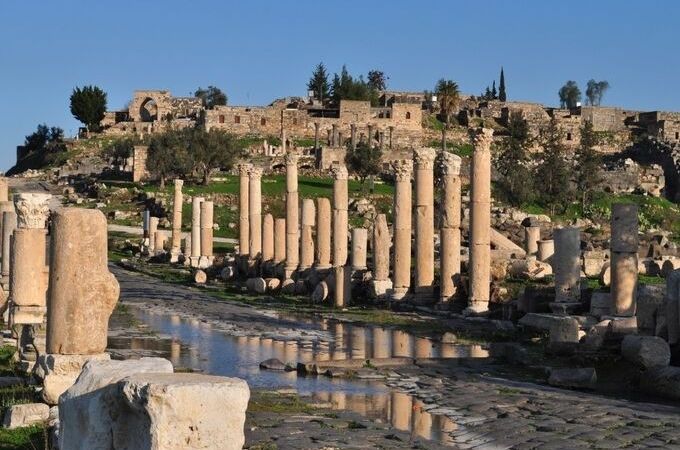
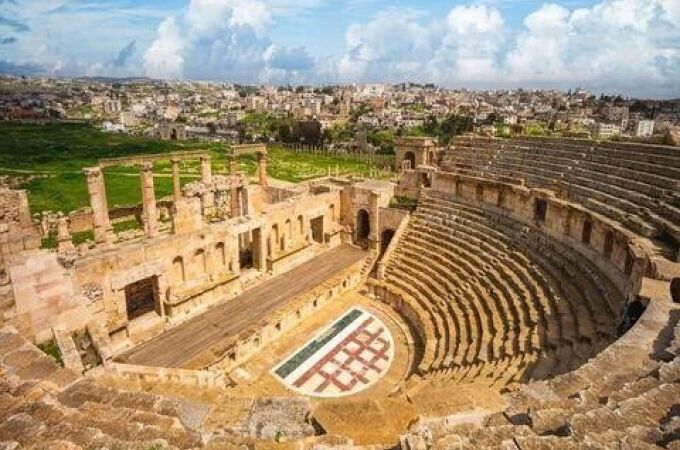
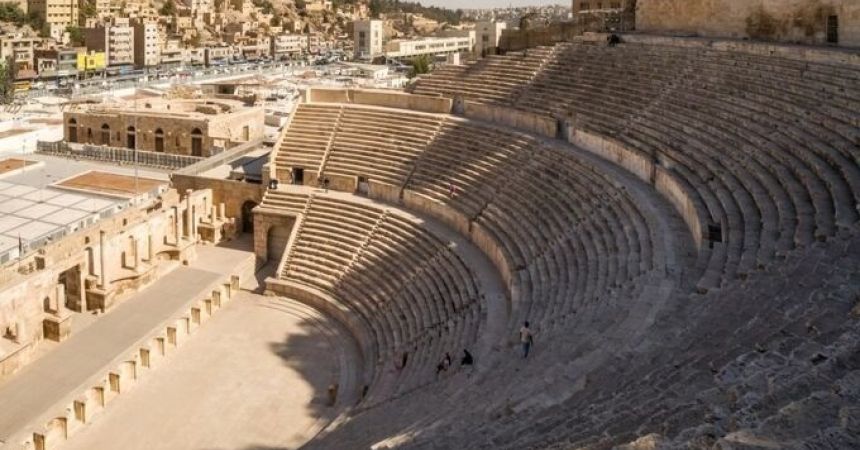
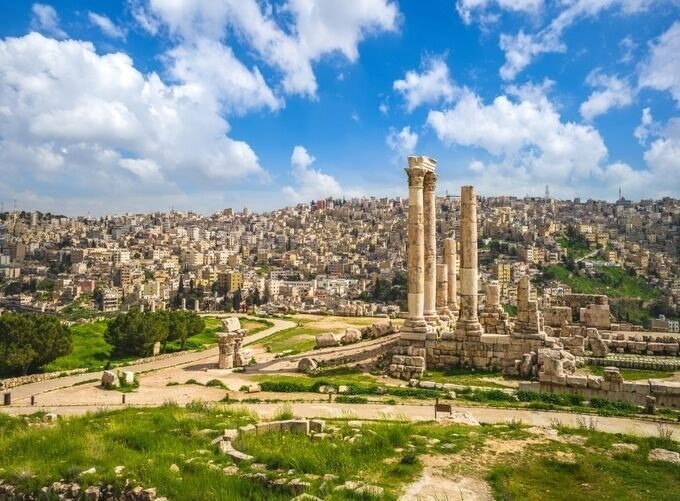
This is where an Amman heritage and city tour can gain depth. History remains important, but March increasingly allows the modern capital surrounding those historical sites to become part of what the traveler remembers.
We deliberately stop there. Petra's archaeological walking experience, trail conditions and sandstone landscape remain entirely outside this article's semantic territory.
March Is Not Yet April
Because March contains increasingly spring-like periods, there is a risk of writing it as though the transition has already finished.
That would weaken both March and April.
March's character depends on incompleteness. The morning can still feel wintery. A rain system can interrupt several pleasant days. Layers remain important, and travelers should not assume every outdoor plan will unfold under settled conditions.
What makes the month distinctive is that the city is beginning to invite longer participation outdoors despite those remaining traces of winter.
April will own a different stage, when sustained outdoor exploration can become a more confident default rather than something that emerges progressively through the month.
The Most Valuable March Hour May Be the One You Didn't Plan
Weather content often focuses on helping travelers control uncertainty. March in Amman suggests that a little unplanned time can be equally valuable.
When conditions are pleasant, you may discover that the best response is not adding another attraction but allowing the current neighborhood to keep your attention longer.
Stay for another coffee. Walk another street. Continue toward the next area rather than immediately calling a car. Sit outside when the afternoon gives you a reason to.
This is March's exclusive position within the Amman cluster.
January belonged to the physical experience of winter across a highland city. February belonged to flexible planning under changeable winter conditions.
March is when that defensive relationship with weather begins to disappear.
The capital starts opening outward again, and the most meaningful change is not simply that the thermometer rises. It is that Amman's streets begin reclaiming enough of the day for walking, eating, wandering and contemporary city life to become experiences in themselves rather than transitions between the places you came to see.

A travel professional specializing in tailor-made travel planning, guest experience management, and multi-destination tourism operations.
With over 23 years of experience in the travel industry, he designs and manages private and cultural tours for international travelers across Türkiye, Greece, Egypt, Jordan, Morocco, and other destinations.
He has strong expertise in both online and face-to-face guest communication, sales processes, and end-to-end travel operations.
Working closely with hotels, travel agencies, and local partners, he ensures smooth coordination and high-quality travel experiences at every stage of the journey.
His focus is on delivering personalized, reliable, and seamless travel experiences for international guests worldwide.