Jordan in March: When the Journey Moves Outdoors
Last Updated: August 9, 2026
March changes the way you travel through Jordan.
Winter does not disappear neatly on the first morning of the month, and anyone arriving with a suitcase prepared entirely for warm spring sunshine may discover that fairly quickly. Amman can still produce cool or unsettled days, rain remains possible, and Petra's mornings may require more clothing than its afternoon temperatures suggest.
Yet the direction of the season is unmistakable.
Daylight is expanding, walking becomes increasingly central to the journey, and landscapes in parts of the country begin showing a side of Jordan that visitors who know it only through desert photographs may not expect. The north can become greener, valleys respond to winter rainfall, and longer outdoor days begin making archaeological sites and hiking routes feel less constrained by the season.
March is therefore not simply February with slightly warmer temperatures.
It is when Jordan begins inviting you to spend more of the journey outside.
Spring Does Not Arrive Everywhere Together
Jordan's geography prevents March from having one clean seasonal identity.
Northern and elevated areas can retain cooler conditions, while the Jordan Valley and Aqaba generally feel warmer. Petra sits at altitude and can move through noticeable temperature changes during a single day, while Wadi Rum follows its own desert rhythm.
That variation becomes particularly useful in March because the itinerary can move between different stages of spring.
| Destination | March Character | Best Use |
|---|---|---|
| Amman | Early spring, still variable | Culture and city exploration |
| Jerash & North | Increasingly green | Archaeology and landscapes |
| Petra | Strong walking season begins | Full-day exploration |
| Wadi Rum | Comfortable outdoor potential | Desert activities |
| Dead Sea | Warmer low elevation | Relaxation and nature |
| Aqaba | Mild-to-warm southern conditions | Red Sea extension |
These are broad travel patterns rather than a forecast for a particular date. March can still produce surprises, which is why layers remain useful.
The difference is that weather becomes less about managing winter and increasingly about taking advantage of spring.
Northern Jordan Deserves More Attention in March
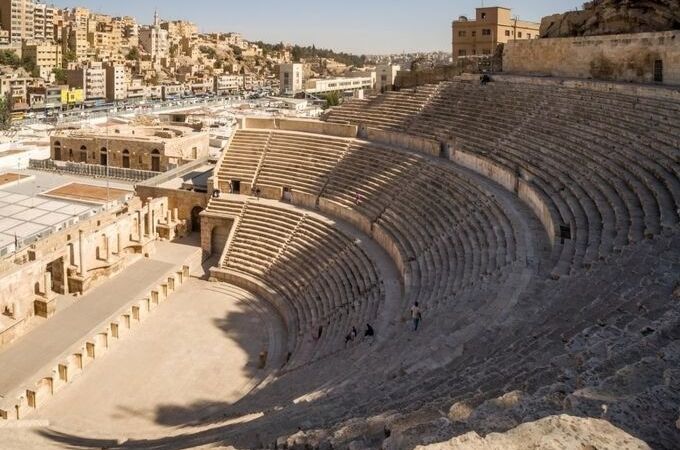
Many first-time routes move quickly south from Amman.
March gives you a reason to look north first.
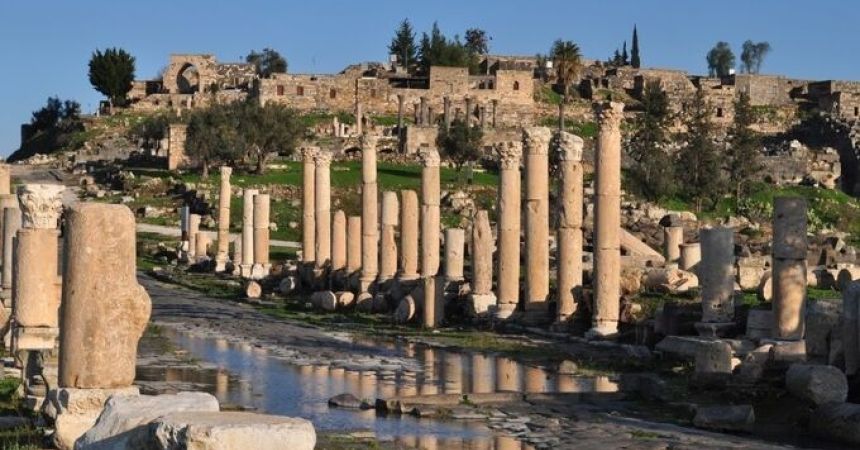
Jerash is the obvious archaeological highlight, but northern Jordan's appeal extends beyond ancient stone. Depending on seasonal rainfall and the timing of your visit, the landscape can become greener than the stereotypical image of Jordan suggests.
That contrast matters.
Seeing greener hills and agricultural landscapes before travelling towards Petra and eventually Wadi Rum makes the country's geographical transformation much more apparent. Instead of experiencing Jordan as one continuous desert environment, you watch the landscape change beneath you.
Travellers interested in this side of the country can explore Northern Jordan tours, particularly when archaeology and spring scenery matter as much as reaching Petra quickly.
Petra Becomes a Walking Destination Again
Petra is always an archaeological destination.
In March, it becomes increasingly important to think of it as a walking destination too.
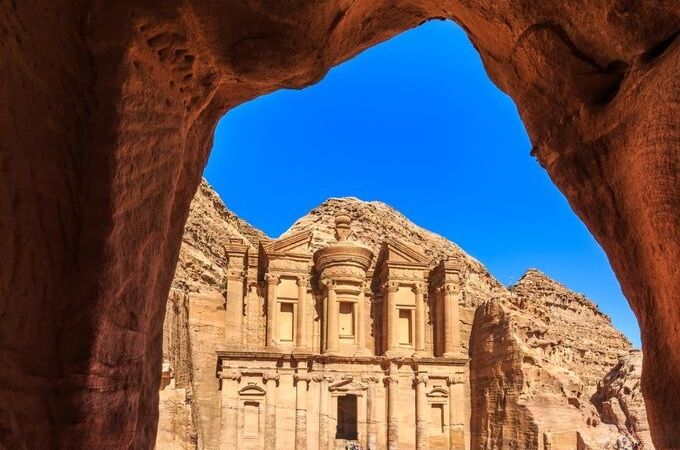
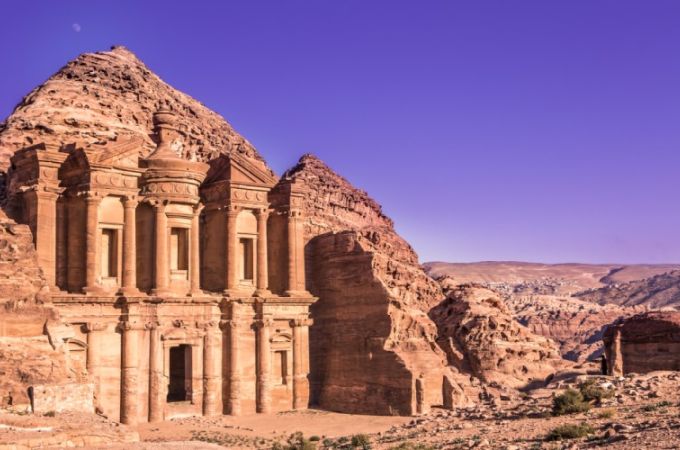
The famous route through the Siq to the Treasury is only the introduction. Once conditions become more favourable for longer outdoor days, the wider site begins competing for your attention: royal tombs, elevated viewpoints, the central archaeological area and the long approach towards the Monastery.
You do not need to complete every trail.
In fact, trying to do so usually misses the point.
March's advantage is that you can choose a longer experience because walking itself is becoming enjoyable, rather than simply trying to reach another famous monument before the day ends.
For travellers who want Petra to anchor the journey, Petra adventure trips can provide more time for the archaeological landscape rather than reducing the site to its most photographed façade.
March Makes Hiking Part of the Conversation
Jordan's walking possibilities extend far beyond Petra.
Spring begins bringing hiking more naturally into trip planning, particularly for travellers who want landscapes and local environments alongside archaeological sites.
This does not mean every trail is automatically suitable throughout March. Rainfall, terrain and current local conditions still matter, and some routes require experienced guidance or appropriate organisation.
The important shift is conceptual.
Walking is no longer merely how you get from one monument to another.
It can become one of the reasons you came.
Travellers interested in a more active journey can look at Jordan hiking trips, choosing routes according to current seasonal conditions, difficulty and available time rather than simply selecting the longest trail on a map.
Wadi Rum Gains Longer Outdoor Days
Wadi Rum benefits from March in a different way.
The desert remains dramatically open and exposed, but the combination of increasing daylight and generally improving daytime conditions can support a broader range of activities. A 4x4 excursion may be combined with walking, sunset can be enjoyed without the same midwinter schedule, and an overnight stay gives the landscape time to change rather than compressing it into a few hours.
Nights can still feel cool.
That contrast should not be underestimated simply because spring has arrived on the calendar.
What March gives Wadi Rum is not guaranteed warmth.
It gives the desert more usable time.
The Dead Sea Becomes More Than a Rest Stop
The Dead Sea often appears near the end of Jordan itineraries as the place where travellers finally stop walking.
That remains an excellent use of it.
In March, however, the surrounding environment can also encourage a broader interest in landscape and outdoor experiences. The lower elevation creates a very different climate from Petra and Amman, while the descent itself makes Jordan's geography unusually tangible.
Travellers combining active touring with slower days can consider Dead Sea escapes, allowing enough time to appreciate the setting rather than arriving, floating briefly and immediately returning to the road.
After several days of walking, doing very little can be a perfectly respectable activity.
Aqaba Gives Spring a Red Sea Option
Aqaba becomes increasingly attractive as March progresses, particularly for travellers who want to combine cultural touring with diving, snorkelling or several relaxed days beside the Red Sea.
It should not be included automatically.
A seven-day Jordan itinerary can become unnecessarily rushed when every major region is treated as compulsory. If Petra, hiking and Wadi Rum are the priorities, Aqaba may deserve another trip or a longer itinerary.
If marine experiences genuinely matter, however, Aqaba Red Sea can create a completely different final chapter after the archaeological and desert portions of the journey.
That contrast is one of Jordan's strengths.
Use it when you have time to enjoy it.
March Is When Jordan Starts Asking You to Walk
That is the month's place within this cluster.
February introduced the uncertainty of late winter and the first signs of seasonal change. April will bring a more established spring identity and its own travel dynamics.
March sits at the moment when the outdoors begins taking over.
Northern landscapes start challenging the idea that Jordan is simply desert. Petra invites longer exploration. Hiking becomes a genuine itinerary choice, Wadi Rum offers more daylight for active experiences, and the Dead Sea or Aqaba can provide a warmer counterpoint after days spent on foot.
The strongest March itinerary therefore does not simply add more sightseeing because the days are getting longer.
It uses that extra time differently.
Walk farther when the landscape deserves it. Stay outside longer when conditions are good. Leave enough room for the north instead of racing immediately towards Petra, and allow Jordan's changing geography to become part of the journey.
Spring is beginning.
The best way to notice is to get out of the vehicle.
An Active Jordan Trip Still Needs Slow Days
March creates a particular kind of itinerary temptation.
The weather begins opening possibilities, daylight gives you more room, and suddenly almost every destination seems to deserve a walk. Jerash involves several hours on your feet. Petra can easily occupy an entire day. Wadi Rum offers hiking as well as 4x4 exploration, while nature reserves and valleys introduce completely different terrain.
Put all of those experiences into consecutive days and something predictable happens.
By the time you reach the walk you were most excited about, your legs are negotiating their resignation.
An active March itinerary works better when physical effort rises and falls throughout the journey.
Not Every Walking Day Is a Hiking Day
This distinction is easy to overlook when planning from home.
A day at Petra may not be described as hiking, yet it can involve substantial distances, uneven surfaces, steps and elevation changes. Jerash looks straightforward on an itinerary, but exploring its archaeological area properly still means spending hours walking outdoors.
Even Amman adds more physical effort than expected because the city is famously hilly.
These days count.
If you plan a serious trail immediately after a long Petra day, you are not beginning fresh simply because yesterday's itinerary was labelled “sightseeing.”
Think about accumulated effort rather than activity names.
Give Petra Its Own Physical Space
If you want to explore beyond Petra's central route, avoid placing another demanding activity immediately before or after it.
The archaeological city rewards energy.
Arriving already tired can quietly change your decisions. The Monastery suddenly feels optional. A viewpoint that looked exciting during trip planning begins to seem unnecessarily high. Instead of exploring because you are curious, you start calculating the shortest route back.
A lighter evening before Petra and a less demanding programme afterwards can therefore improve the visit without adding a single extra hour inside the site.
March gives you good walking opportunities.
Protect the one that matters most.
Use Wadi Rum to Change the Type of Movement
An active itinerary does not require walking continuously.
Wadi Rum provides a natural change.
A 4x4 journey lets you explore a much larger area while giving your legs a partial break after Petra. Short walks can then be added at selected locations according to interest and conditions rather than turning the entire desert day into another endurance exercise.
This combination works particularly well because the landscape is experienced at different speeds.
From the vehicle, you understand scale.
On foot, you notice texture.
Stop somewhere quiet and you begin noticing sound—or the surprising lack of it.
The best Wadi Rum days usually contain all three.
Recovery Does Not Have to Mean Doing Nothing
Some travellers dislike scheduling a “rest day” because they imagine losing precious holiday time inside a hotel room.
Recovery can be more interesting than that.
A slower Dead Sea afternoon after several active days can include floating, spa time, lunch and enjoying the landscape without requiring another long walk. Aqaba can provide a similar change of pace for travellers whose itinerary continues south, particularly when the Red Sea is a genuine interest rather than a compulsory checklist stop.
Even a long lunch followed by a short city visit can reset the rhythm.
The objective is not inactivity.
It is variation.
Choose One Walk You Will Remember
Jordan offers enough trails to create an entire hiking holiday, but most visitors are building a broader cultural journey.
If that describes you, choose quality over quantity.
Select one significant walk according to your fitness, interests, current trail conditions and available time. Let it become one of the journey's main experiences rather than squeezing several hikes between Petra, Wadi Rum and archaeological visits.
This approach also helps distinguish an active cultural trip from a dedicated trekking itinerary.
You are not trying to prove how many kilometres you can cover.
You are using walking to experience Jordan differently.
Spring Weather Does Not Remove the Need for Flexibility
March is more favourable for outdoor activity than the heart of winter, but it remains a transitional month.
Rain can still affect plans. Temperatures vary with elevation, and conditions in northern Jordan may differ considerably from those near Aqaba. Trails should be evaluated according to current local information rather than assumptions based on a monthly average.
That flexibility should be built into the itinerary before you travel.
If one major outdoor day can move, or if a lighter activity can exchange places with a longer walk, changing conditions become easier to manage without reorganising the entire route.
Measure the Trip in Experiences, Not Steps
An active holiday can become strangely competitive with itself.
Twenty thousand steps yesterday.
Twenty-three thousand today.
A longer trail tomorrow.
But the most memorable part of March in Jordan may be standing still.
Watching light move across Petra's sandstone. Sitting above a valley after a climb. Drinking tea in Wadi Rum after the vehicle has stopped. Looking north across a landscape far greener than you expected Jordan to be.
Walking gets you to those moments.
It is not the purpose of them.
March gives travellers the opportunity to move through Jordan more actively as spring develops, but the strongest itineraries know when to stop.
Use the longer days.
Enjoy the cooler walking conditions.
Just don't turn every kilometre into a target.
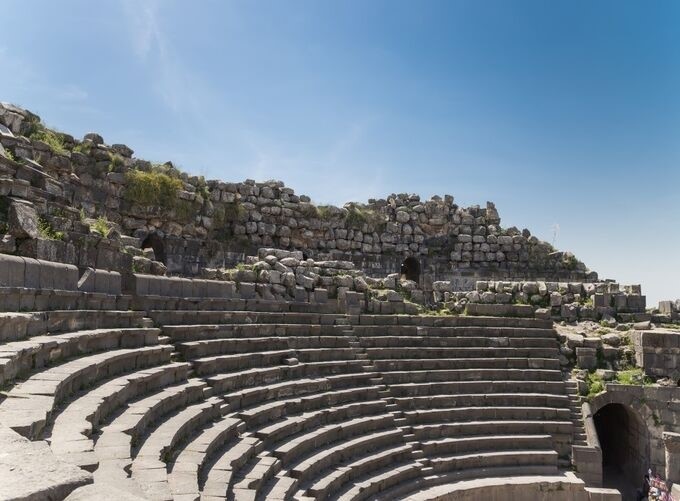
March Lets You Watch Spring Move Across Jordan
One of the most interesting things about travelling through Jordan in March is that the season seems to move with you.
Spend time north of Amman and the landscape may feel increasingly green after winter rainfall. Descend towards the Jordan Valley and conditions change noticeably. Continue to Petra and elevation alters the experience again, before Wadi Rum replaces greener northern scenery with an enormous desert landscape that appears to belong to another country entirely.
All of this can happen within a relatively compact journey.
That geographical progression is one reason March deserves more than a simple description such as “pleasant spring weather.” The month allows travellers to see how strongly elevation, latitude and landscape influence Jordan's climate, sometimes within the space of a single day's drive.
Northern Jordan Challenges the Desert Stereotype
If your image of Jordan comes mainly from photographs of Petra and Wadi Rum, the north may be the surprise.
Winter rainfall can leave parts of northern Jordan considerably greener during the early spring period, although the exact appearance varies according to rainfall and seasonal conditions each year. Hills, agricultural areas and valleys can create a landscape that feels far removed from the desert scenery awaiting farther south.
This makes March particularly rewarding for travellers who enjoy the road between attractions rather than treating it as dead time.
Look outside.
The landscape is explaining the country.
A journey from northern Jordan towards the south becomes almost a geographical cross-section, showing why describing Jordan simply as a desert destination misses so much of its character.
The Jordan Valley Changes the Season Quickly
Elevation becomes especially noticeable when descending towards the Jordan Valley and Dead Sea.
You may leave cooler conditions around Amman and find the lower landscape distinctly warmer, even though relatively little time has passed. This difference is more than an interesting weather fact; it can influence how you structure the day.
A morning spent walking around an archaeological site in cooler highland conditions can be followed by a considerably softer afternoon near the Dead Sea. The contrast creates a natural change of pace without requiring a flight or a long journey across the country.
March is particularly good at making these transitions visible because winter has not disappeared evenly across every elevation.
Petra Has Its Own Version of Spring
Petra should not be expected to match either Amman or the Dead Sea.
Its elevation gives the archaeological landscape a separate seasonal rhythm, and March can still produce cool mornings even when daytime walking conditions become increasingly attractive. Layers remain useful precisely because a full Petra day exposes you to different environments: shaded sections of the Siq, open archaeological areas, elevated trails and long periods outdoors.
The landscape also rewards attention beyond the monuments.
Once you move farther into the site, Petra stops feeling like a collection of façades and begins making sense as a vast mountainous environment in which architecture was carved, built and connected across difficult terrain.
Spring makes that broader landscape easier to explore.
Then Wadi Rum Removes Almost Everything
After the complexity of Petra, arriving in Wadi Rum creates an extraordinary visual reset.
Buildings disappear.
Roads become less dominant.
The horizon expands.
March conditions can encourage travellers to spend more time outside experiencing that scale, but the greatest contrast may simply be visual. Northern greenery and the cultivated Jordan Valley have vanished, replaced by sandstone formations, broad desert floors and immense open sky.
This is where a well-designed north-to-south itinerary becomes more than a sequence of famous attractions.
You have watched the country transform.
The fact that Jordan is relatively compact makes the change even more striking.
Wildflowers Are a Bonus, Not a Booking Guarantee
Spring in Jordan is associated with seasonal vegetation and wildflowers in some regions, but this needs careful wording.
Nature does not work from a fixed tourism timetable.
The timing and intensity of spring growth depend on rainfall, temperature, elevation and local conditions. March travellers may encounter seasonal flowers and greener landscapes, particularly in suitable northern or western areas, but a trip should not be sold around a guarantee that a specific hillside will be covered in flowers on a specific date.
Treat them as a seasonal reward rather than an appointment.
If wildflowers appear, stop and enjoy them.
If they do not, Jordan has not failed to deliver spring.
The Road Becomes Part of March
This is perhaps the strongest reason not to rush the month.
Jordan's headline attractions are powerful enough to dominate any itinerary, but March encourages you to pay attention between them. The drive from Amman towards the Jordan Valley, the changing terrain on the road south, the approach to Petra and the eventual transition into Wadi Rum all reveal something about how the country fits together.
You begin understanding why one place feels cooler than another and why vegetation changes so quickly. Geography stops being information you read before travelling and becomes something visible through the window.
That experience is easy to lose when every transfer is treated merely as the time required to reach the next attraction.
March Is a Moving Season
There is no single moment when you can point at Jordan in March and declare that spring has fully arrived everywhere.
That is exactly what makes the month interesting.
The north may already be changing visibly while elevated areas retain cooler conditions. The Jordan Valley feels different again, and the southern desert follows its own seasonal rhythm. Over the course of one itinerary, you can encounter several versions of early spring without travelling particularly far.
Rather than searching for one perfect March temperature, pay attention to those transitions.
They explain Jordan better than an average ever could.
Who Will Enjoy Jordan Most in March?
March suits travellers who want to spend a meaningful part of their journey outdoors but do not require perfectly predictable weather.
It is particularly appealing if Petra means more to you than simply seeing the Treasury, if you enjoy discovering a country on foot, or if the changing landscape between northern Jordan and Wadi Rum is part of the attraction.
The month still rewards flexibility because early spring does not arrive uniformly across the country. Rather than seeing that variation as a complication, build the journey around it.
Frequently Asked Questions About Jordan in March
1. Is March a good time to visit Jordan?
Yes. March can be particularly rewarding for travellers interested in archaeology, walking and changing spring landscapes. Daylight is increasing and outdoor travel becomes more appealing, although temperatures and rainfall can still vary significantly between Amman, Petra, the Jordan Valley, Wadi Rum and Aqaba.
2. What is the weather like in Petra in March?
Petra can have cool mornings followed by more comfortable daytime conditions, although weather varies throughout the month and between years. Layers remain useful because visitors may spend many hours outdoors across shaded passages, open archaeological areas and elevated walking routes.
3. Is March good for walking in Petra?
March can provide excellent opportunities for substantial Petra exploration when conditions are favourable. Cooler temperatures can make longer distances appealing, while increasing daylight provides more flexibility. Travellers planning demanding routes should still check current trail conditions and allow enough time for a comfortable return.
4. Is Jordan green in March?
Parts of northern and western Jordan can become noticeably greener following winter rainfall, but the extent varies each year. March can reveal landscapes quite different from Jordan's familiar desert imagery, although visitors should treat greenery and seasonal flowers as natural possibilities rather than guaranteed attractions.
5. Can I see wildflowers in Jordan in March?
Seasonal wildflowers may appear in suitable areas depending on winter rainfall, elevation, temperature and the timing of spring growth. March can offer opportunities, particularly in greener regions, but flowering periods vary and should not be expected to occur on identical dates every year.
6. Is March suitable for hiking in Jordan?
Yes, but route choice should reflect current conditions, fitness and local guidance. March increasingly supports active travel, yet rain can still affect some trails. Travellers planning serious hiking should distinguish between ordinary sightseeing walks and routes requiring appropriate preparation or experienced local guidance.
7. Is Wadi Rum warm in March?
Daytime conditions can become increasingly comfortable as spring develops, making desert exploration appealing. However, evenings and nights may remain cool, particularly during overnight stays. Bring layers rather than assuming pleasant afternoon sunshine will continue after the sun has disappeared.
8. Can I visit the Dead Sea in March?
Yes. The Dead Sea's low elevation generally creates warmer conditions than Jordan's higher regions, making it a useful contrast after active sightseeing. Swimming comfort depends on actual weather and personal preference, while resort facilities and the landscape can justify staying even without spending hours in the water.
9. Is Aqaba good in March?
Aqaba can work particularly well for travellers wanting Red Sea time after a cultural or active journey. Its southern location generally provides warmer conditions than the highlands. Diving, snorkelling and other marine activities should be planned according to current local conditions.
10. What should I pack for Jordan in March?
Pack adaptable layers rather than clothing for one assumed spring temperature. Comfortable walking shoes are particularly important if Petra or hiking forms a major part of the itinerary. A light rain layer, sun protection and warmer clothing for cooler mornings or Wadi Rum evenings are also useful.
11. Is March suitable for families?
Yes, particularly for families who enjoy outdoor sightseeing and can maintain a flexible pace. Petra involves substantial walking, so routes should reflect children's ages and energy levels. Mixing archaeological days with Wadi Rum, the Dead Sea or Aqaba can create useful variety.
12. Is March or April better for visiting Jordan?
March offers an earlier, more transitional version of spring, with variable weather and landscapes still responding to winter rainfall. April moves further into the established spring travel period and has its own advantages. The better month depends on whether you prefer early-season change or a more developed spring experience.
March Is Better Experienced at Walking Speed
There are months when Jordan can be understood largely through its major landmarks.
March encourages something broader.
The Treasury still matters. So do Jerash, Wadi Rum and the Dead Sea. Yet the spaces connecting them become unusually relevant because the landscape itself is changing.
Northern hills can look greener than expected, the Jordan Valley introduces a sudden shift in elevation and temperature, Petra combines archaeology with a vast walking environment, and Wadi Rum removes almost everything from the horizon except desert, rock and sky.
Moving through those places on foot whenever practical changes your relationship with them.
You notice the distance inside Petra rather than simply remembering the façade of the Treasury. You understand the scale of Wadi Rum differently after stepping out of the vehicle. Even an archaeological site such as Jerash becomes more coherent when you have enough time to walk through it rather than photographing its most recognisable structures and leaving.
March is not perfectly predictable, and that is important to acknowledge. Rain remains possible, mornings can be cool and spring develops at different speeds across the country. Travellers who want guaranteed warmth every day have other periods to consider.
For those who enjoy active travel, however, that transition has character.
Build the itinerary with enough flexibility for weather to change. Give Petra a full day if longer exploration matters to you. Avoid scheduling demanding walks back-to-back simply because conditions are comfortable, and leave enough energy to notice the country rather than concentrating entirely on the number of kilometres completed.
Jordan in March is beginning to open outdoors.

A travel professional specializing in tailor-made travel planning, guest experience management, and multi-destination tourism operations.
With over 23 years of experience in the travel industry, he designs and manages private and cultural tours for international travelers across Türkiye, Greece, Egypt, Jordan, Morocco, and other destinations.
He has strong expertise in both online and face-to-face guest communication, sales processes, and end-to-end travel operations.
Working closely with hotels, travel agencies, and local partners, he ensures smooth coordination and high-quality travel experiences at every stage of the journey.
His focus is on delivering personalized, reliable, and seamless travel experiences for international guests worldwide.