Jordan in May: The Month When the Daily Rhythm Changes
Last Updated: August 9, 2026
May is when Jordan begins asking travellers to look at the clock again.
Not obsessively. This is not yet the part of the year when heat needs to dominate every itinerary decision, and conditions can still be excellent for cultural touring, walking and desert experiences. Yet the easy flexibility of April begins to change as temperatures rise, particularly later in the month and in Jordan's lower or southern regions.
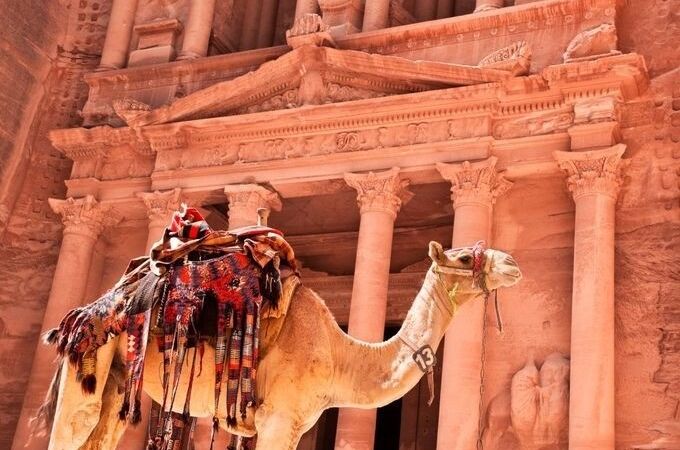
Petra still invites long exploration, but starting earlier becomes increasingly worthwhile. Wadi Rum remains an outstanding outdoor destination, although the middle of the day gradually becomes less attractive for strenuous activity. The Dead Sea feels distinctly warmer, while Aqaba moves closer to its summer personality.
May therefore occupies an important position in Jordan's weather calendar.
Spring has not disappeared.
Summer has started influencing how you travel.
May Is Not Simply a Hotter April
Monthly weather guides often describe seasonal change as a temperature progression.
April is warm.
May is warmer.
June is hot.
Technically useful, perhaps, but it tells travellers almost nothing about how the journey actually changes.
The important May difference is timing.
| Destination | May Character | Better Daily Rhythm |
|---|---|---|
| Amman | Warm spring conditions | Broad sightseeing days |
| Jerash | Increasing sunshine and warmth | Earlier outdoor exploration |
| Petra | Warmer walking conditions | Protect the morning |
| Wadi Rum | Desert warmth increasing | Activity around cooler hours |
| Dead Sea | Noticeably warmer | Pool and relaxation gain value |
| Aqaba | Moving towards summer | Marine activities become central |
These are seasonal patterns rather than fixed promises. An early-May journey can feel different from one near the end of the month, while elevation continues to produce substantial regional variation.
May is best understood as a month in motion.
Petra Makes the Morning More Valuable
During the cooler months, the main Petra question is often how much of the archaeological city you want to explore.
In May, another question becomes increasingly relevant:
When do you want to explore it?
Starting earlier gives you several advantages. Temperatures are generally more comfortable, the light can be attractive inside the Siq and you gain more time before the warmer part of the day.
That matters because Petra is not a short attraction.
Even the main route involves considerable walking, while the Monastery and elevated viewpoints add substantially to the physical demands. A traveller who begins late may still complete an ambitious route, but there is little benefit in voluntarily moving the hardest walking into the warmest part of the day.
Those wanting more than the standard highlights can build Petra discovery tours around an earlier rhythm, leaving the afternoon for slower archaeological exploration or a less physically demanding programme.
The objective is not to race through Petra before lunch.
It is to use your energy where it matters.
Amman Keeps More of Spring
Elevation gives Amman a different relationship with May.
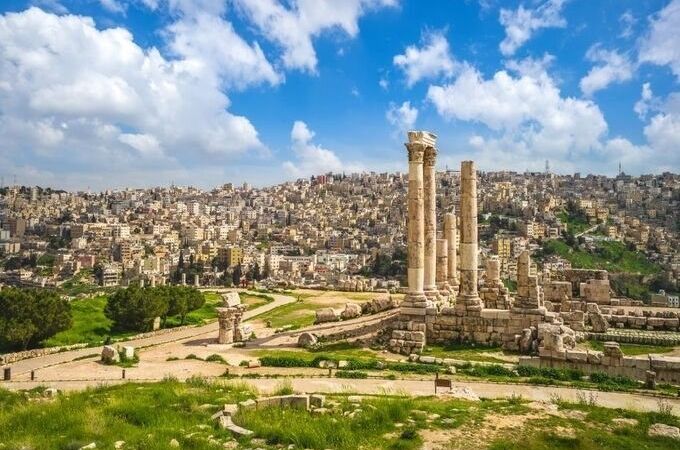
While lower destinations are moving more decisively towards summer conditions, the capital can retain a comparatively comfortable spring character. This makes May a good month to avoid rushing through Amman simply because Petra receives more international attention.
The Citadel, downtown areas and neighbourhood exploration can fit comfortably into a broader cultural day, while nearby archaeological experiences add another dimension before the route moves south.
Travellers interested in spending more time in the capital can consider Amman city experiences, allowing modern Jordan and ancient history to share the beginning of the journey.
That balance matters.
Jordan is more interesting when Petra is the centrepiece rather than the entire story.
Wadi Rum Begins Dividing the Day
May changes Wadi Rum gradually rather than dramatically.
Morning exploration can be excellent. Late afternoon and sunset remain appealing, while evenings at camp continue to provide one of Jordan's most distinctive experiences.
The middle of the day becomes the part worth considering more carefully.
Instead of scheduling continuous physical activity from morning until sunset, allow the desert to dictate the rhythm. Use cooler periods for walking or more active experiences, then slow down when the sun is stronger.
A 4x4 journey makes this particularly easy because distance can be covered without turning every hour into physical effort.
Travellers looking for deeper desert time can explore Jordan desert stays, combining activity with enough stillness to experience Wadi Rum as a landscape rather than an adventure park.
The Dead Sea Starts Feeling Like a Reward
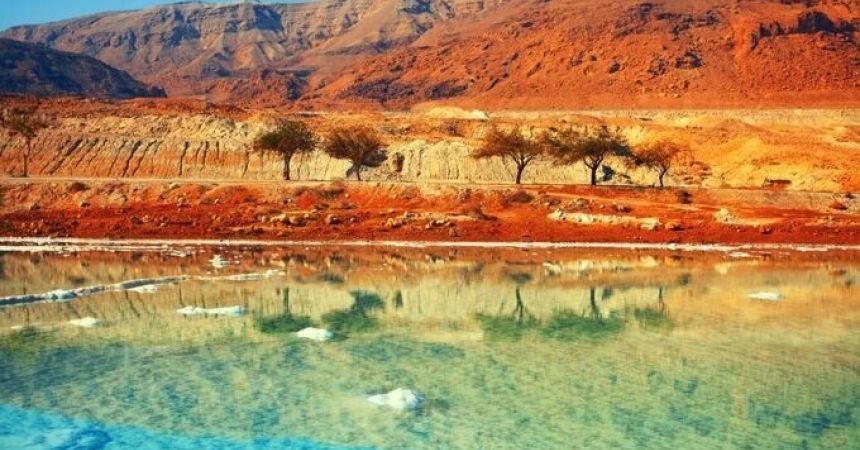
The Dead Sea works throughout much of the year, but its role changes as May becomes warmer.
After several days of cultural touring, the idea of an afternoon built around water, shade and very little walking becomes increasingly attractive.
This is particularly useful after Petra.
You may have spent hours climbing steps, crossing uneven terrain and convincing yourself that one final viewpoint was absolutely necessary. Arriving somewhere that does not require another archaeological achievement can feel surprisingly satisfying.
A Dead Sea stay should therefore not be dismissed as empty itinerary space.
For travellers wanting that slower contrast, Dead Sea retreats can provide a deliberate break between active sightseeing days.
Sometimes the smartest May activity is stopping.
Aqaba Moves Into the Warm-Weather Conversation
Aqaba becomes increasingly relevant in May because the Red Sea is no longer simply a mild winter alternative.
Marine activities, swimming, diving and resort time can form a genuine warm-weather extension to the journey. For travellers arriving from cooler climates, several coastal days after Petra and Wadi Rum can create a strong finish.
The usual warning still applies:
Do not add Aqaba because a Jordan checklist tells you to.
Add it because you want the Red Sea.
If diving or snorkelling matters, Aqaba diving holidays can justify several nights. If you have only a week and archaeology is the priority, the extra movement may not improve the trip.
Good weather does not make every destination compulsory.
May Rewards Travellers Who Shift the Day Earlier
This is the month's real cluster identity.
April gives travellers enormous freedom to combine nature and culture throughout the day. June will require a more deliberate early-summer strategy.
May sits between them.
You can still walk extensively, explore archaeological sites and spend substantial time outdoors, but the itinerary becomes better when mornings carry more responsibility.
Visit Petra earlier. Use the first part of a Wadi Rum day for active exploration. Allow lunch to become longer when the afternoon is warm, then return outdoors as conditions soften.
This is not yet a summer survival strategy.
It is simply intelligent seasonal travel.
May gives you most of spring's freedom while quietly introducing summer's rules.
Listen early, and the journey remains remarkably easy.
A Longer Day Does Not Need to Become a Fuller Day
May gives Jordan travellers plenty of daylight, and that can create a misleading sense of opportunity.
If the sun stays up longer, surely there is room for another archaeological site, another walk or another stop before the hotel.
There usually is.
Whether you should use that room is a different question.
As temperatures begin rising, the best May itineraries often divide the day rather than filling it continuously. Morning carries the more demanding outdoor activity, midday becomes slower, and late afternoon brings you outside again when the light and temperature are often more appealing.
This rhythm is not necessary every day or in every region, but it becomes increasingly useful as you travel south or later in the month.
Petra Should Begin Before You Feel Rushed
There is an important difference between starting early and rushing.
An earlier Petra entrance gives you time.
You can walk through the Siq without mentally calculating how many hours remain for the rest of the site, continue beyond the Treasury and decide later whether the Monastery or a longer route still feels appealing.
That freedom matters because Petra has a way of changing your original plan.
You may spend longer at the Royal Tombs than expected. A viewpoint might justify the climb. Lunch may become more attractive than the trail you confidently planned from home.
Starting earlier allows those decisions to happen naturally.
The goal is not to complete Petra before the temperature rises.
It is to avoid making the warmest part of the day responsible for the hardest part of your visit.
Jerash Needs a Different Kind of Morning
Jerash is less physically demanding than the longest Petra routes, but the archaeological site is broad and exposed.
May sunshine can therefore make an earlier visit increasingly sensible.
Arrive with enough time to walk rather than moving quickly between the Oval Plaza, Cardo, theatres and major monuments. Jerash becomes much more coherent when you experience how the ancient city fits together instead of treating each structure as a separate photo stop.
Then let lunch interrupt the sightseeing.
A long meal after several hours outdoors is not inefficient scheduling. It is what allows the afternoon to remain enjoyable rather than becoming the point when everyone quietly stops listening to the guide.
Midday Can Have a Purpose
Travel itineraries often treat the middle of the day as valuable space that must be occupied.
May gives it another job.
Lunch can take longer. A hotel check-in can happen without frustration. A road transfer can absorb part of the warmer period, or an indoor visit can replace another exposed archaeological site.
This does not mean returning to the hotel every afternoon for several hours.
The idea is simply to stop assuming that the most physically demanding activity belongs at 1:30 p.m. because that is the empty box on the itinerary.
Move the boxes.
The day will survive.
Wadi Rum Is Better When You Stop Fighting the Desert Clock
The desert makes May's changing rhythm especially obvious.
A morning 4x4 exploration can combine longer drives with selected walks while conditions are comfortable. The middle of the day can become slower around camp or in shaded stops, followed by another period of activity as the afternoon progresses towards sunset.
This pattern suits Wadi Rum because the landscape changes with the light anyway.
Sandstone that appears flat and pale under stronger midday sun can gain depth later in the afternoon. Shadows stretch across the desert floor, rock formations become more pronounced and the approach to sunset creates its own natural conclusion.
You do not lose anything by slowing down in the middle.
The desert is not going anywhere.
Use Transfers Instead of Fighting Them
May also rewards intelligent placement of road journeys.
If you need to travel between major destinations, consider whether part of the transfer can occupy a less desirable outdoor period. A journey that might feel like lost sightseeing time in April can become useful pacing in May.
This works particularly well when moving after a substantial morning visit.
Explore early, have lunch and continue to the next destination during part of the afternoon. By the time you arrive, conditions may be softer and there is no pressure to complete another major attraction immediately.
Not every transfer needs an excursion attached to it.
Sometimes getting to the hotel at a sensible hour is the better plan.
Late Afternoon Deserves Its Own Identity
The second half of a May day should not simply contain whatever failed to fit before lunch.
Late afternoon can be one of the most enjoyable periods for viewpoints, city walks, desert experiences and slower outdoor sightseeing. Temperatures begin easing, light becomes softer and the pressure to “complete” a full day has usually disappeared.
This is particularly valuable when travelling with families or mixed-age groups.
Rather than asking everyone to maintain the same energy from breakfast until dinner, divide the day naturally. A demanding morning followed by a quieter middle and an enjoyable late-afternoon experience can feel much richer than ten uninterrupted hours of touring.
May Gives You Time; You Decide Where to Spend It
Long daylight is an advantage only when you resist the urge to occupy every minute.
May works beautifully when the itinerary has waves.
Activity.
Pause.
Movement.
Another experience.
Dinner.
That rhythm allows Petra to receive serious exploration, Jerash to remain enjoyable and Wadi Rum to be experienced according to the desert rather than according to a spreadsheet created months earlier.
Summer will eventually require stronger adjustments.
May does not.
It simply rewards travellers who notice that the day has started changing and change with it.
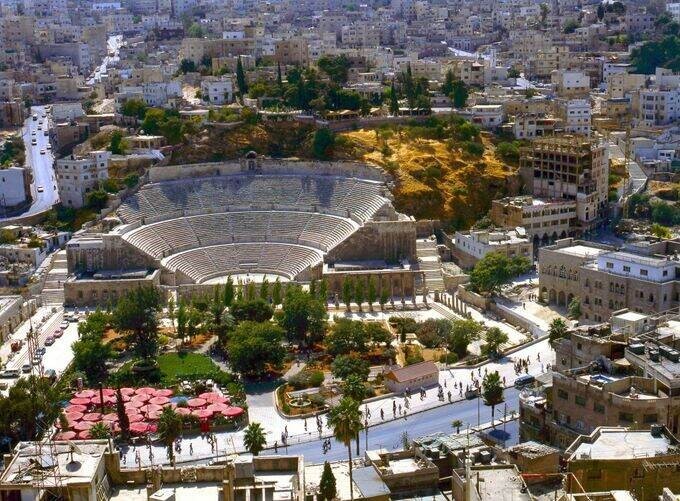
In May, You Can Travel Towards Summer
Jordan's elevation changes are easy to understand on a map and much more interesting to experience in person.
Spend the morning in Amman, travel towards the Dead Sea, and the difference is not merely scenic. The air changes. The landscape changes. What felt like a comfortable late-spring day in the highlands can begin feeling much closer to summer as you descend.
Continue south over the course of the journey and that contrast becomes one of May's defining characteristics.
This is why the direction of your itinerary matters. A north-to-south route can feel as though the season itself is progressing with you.
Amman Holds Onto Spring Longer
Amman's elevation helps the capital retain a different character from Jordan's lowest and southern destinations.
May days can be warm and sunny, but the city generally remains easier to explore throughout a broader portion of the day than places at much lower elevations. This makes the capital particularly useful at the beginning of an itinerary.
You can spend time outside without immediately adopting the stronger warm-weather rhythm that becomes increasingly useful elsewhere.
There is also a psychological advantage to beginning here.
Amman introduces Jordan gradually. Modern neighbourhoods, Roman remains, viewpoints, restaurants and everyday city life provide context before the journey becomes increasingly dominated by archaeological landscapes and desert.
Starting at the Dead Sea and finishing in Amman can work perfectly well.
But in May, travelling the other direction lets you feel the seasonal transition more clearly.
Petra Sits Between Two Experiences
Petra occupies an interesting middle position.
Its elevation prevents it from behaving like the Dead Sea, yet long hours of walking across exposed archaeological terrain make sunshine increasingly important to itinerary planning.
This is why May Petra days can feel deceptively comfortable at the beginning.
You enter early, perhaps wearing an extra light layer, and the walking feels easy. Several hours later, the day has changed and you are much deeper inside an enormous site.
That progression makes hydration, pacing and route selection increasingly important even before summer arrives.
Petra is not yet asking you to redesign the entire journey around heat.
It is beginning to remind you that June is next.
Descending to the Dead Sea Changes the Rules
The journey towards the Dead Sea produces one of Jordan's most dramatic environmental transitions.
As the road descends, vegetation and terrain change, and the lower elevation generally brings noticeably warmer conditions. By May, this can feel less like a small regional difference and more like entering another stage of the season.
That changes what you want from the destination.
A long exposed afternoon excursion may sound less appealing than it did in Amman. Water, shade, a pool and an unhurried evening suddenly gain importance.
This is why the Dead Sea fits naturally after more active destinations.
The route has already changed the climate.
Allow the itinerary to change with it.
Aqaba Can Feel Like the Beginning of Summer
Travel farther south and Aqaba strengthens that impression.
By May, the Red Sea coast is increasingly entering its warm-weather season. For travellers interested in diving, snorkelling or resort time, that can be an advantage because the coastal portion of the trip now has a clear identity rather than functioning simply as a mild-weather escape.
It also changes how much time Aqaba deserves.
If you are including the city only to say you visited the Red Sea, one night may add more logistics than experience. If the water is genuinely part of your holiday, several nights allow the pace to change properly after Petra and Wadi Rum.
A cultural journey does not become less meaningful because it ends beside a swimming pool.
Sometimes that is exactly where it should end.
Direction Can Create a Better Ending
There is a natural logic to beginning with Amman and northern Jordan, moving through Petra and Wadi Rum, then finishing at the Dead Sea or Aqaba.
It is not the only possible route, but May gives it an additional seasonal advantage.
The journey becomes progressively warmer while the physical demands can progressively decrease.
Early days contain city exploration and archaeological walking. Petra becomes the major active centrepiece. Wadi Rum changes the landscape and rhythm. The final portion then moves towards water, relaxation and fewer ambitious walking plans.
The itinerary gradually exhales.
That feels considerably better than spending several relaxed days on the Red Sea and then asking your body to complete the Monastery steps immediately before flying home.
May's Geography Can Do Some of the Planning for You
Good itineraries often feel natural because the route and the traveller's energy move in the same direction.
May makes that easier.
Start higher and cooler. Move through the archaeological heart of the journey while energy is still high. Let Wadi Rum provide a transition, then descend towards the warmer landscapes when a slower pace begins making sense.
You do not have to follow this sequence.
But if you do, Jordan's geography starts working for the itinerary rather than merely providing scenery between destinations.
By the end of the journey, the change can be remarkable.
You began in a capital that still carried something of spring.
You finish somewhere that already feels as though summer has arrived.
Who Will Enjoy Jordan Most in May?
May suits travellers who still want substantial outdoor sightseeing but are comfortable shifting some of the day's effort towards the morning.
It is particularly attractive for first-time visitors combining Amman, Petra and Wadi Rum with the Dead Sea or Aqaba because the route can progress naturally from relatively comfortable highland touring towards warmer, slower destinations.
The month requires more awareness of timing than April, but it does not yet demand a summer-style itinerary. For many travellers, that middle ground is precisely the attraction.
Frequently Asked Questions About Jordan in May
1. Is May a good time to visit Jordan?
Yes. May can be excellent for cultural sightseeing, Petra exploration and Wadi Rum, particularly for travellers willing to begin active days earlier. Temperatures are rising as summer approaches, with lower areas such as the Dead Sea and Aqaba generally feeling warmer than Jordan's highlands.
2. Is Jordan too hot in May?
Not usually across the entire country, although conditions vary considerably by region, date and elevation. Amman can remain relatively comfortable while the Dead Sea and Aqaba feel much warmer. Later-May travellers should pay greater attention to activity timing, hydration and sun exposure.
3. What is Petra like in May?
Petra can still provide very good walking conditions, especially when visitors start earlier and pace longer routes sensibly. As temperatures rise, exposed sections may feel considerably warmer later in the day, making morning particularly valuable for demanding walks such as the route towards the Monastery.
4. What should I wear in Jordan in May?
Lightweight, breathable clothing works well during warmer periods, together with comfortable walking shoes and effective sun protection. A light additional layer may remain useful in some elevated areas or evenings. Clothing should also be appropriate for religious sites and local cultural settings.
5. Is Wadi Rum too hot in May?
Wadi Rum can still be very rewarding in May, but increasingly warm daytime conditions make activity timing more important. Earlier exploration and later-afternoon experiences can be preferable for active travellers, while the middle of the day can support a slower desert rhythm.
6. Can I swim in the Dead Sea in May?
May generally makes water-based relaxation increasingly attractive at the Dead Sea. Actual comfort depends on the day's conditions, but warmer weather means travellers often appreciate resort facilities, pools and time in the water after several physically active cultural days.
7. Is Aqaba good in May?
Yes, particularly if swimming, diving, snorkelling or resort time forms a genuine part of your holiday. Aqaba is moving towards its summer character by May, making the Red Sea a strong warm-weather extension after Petra and Wadi Rum rather than merely a brief sightseeing stop.
8. Is May good for hiking in Jordan?
Hiking remains possible, but route selection and timing become increasingly important as temperatures rise. Longer or more exposed walks should be evaluated according to current conditions, elevation and local advice rather than assuming all trails remain equally comfortable throughout the month.
9. Should I start sightseeing early in May?
Earlier starts become increasingly useful, particularly for Petra, exposed archaeological sites and active Wadi Rum experiences. The purpose is not to rush through the itinerary before midday but to place the most physically demanding activities during more comfortable parts of the day.
10. Is May crowded in Jordan?
Visitor levels vary by destination, date and travel patterns, and popular places such as Petra can still receive substantial numbers of visitors. Rather than choosing May primarily for crowd avoidance, consider it for the combination of long days, cultural touring and increasingly warm conditions.
11. Is May suitable for families?
Yes, provided the itinerary respects energy levels and warmer afternoons. Families can benefit from earlier cultural visits, longer lunch breaks and a slower final section at the Dead Sea or Aqaba. Avoid stacking several demanding walking days simply because daylight hours are long.
12. Is May or June better for Jordan?
May generally retains more of spring's flexibility, although temperatures are already rising. June moves Jordan more decisively into early summer and requires stronger attention to heat and activity timing. Travellers prioritising extensive outdoor walking may therefore find May the easier of the two.

A travel professional specializing in tailor-made travel planning, guest experience management, and multi-destination tourism operations.
With over 23 years of experience in the travel industry, he designs and manages private and cultural tours for international travelers across Türkiye, Greece, Egypt, Jordan, Morocco, and other destinations.
He has strong expertise in both online and face-to-face guest communication, sales processes, and end-to-end travel operations.
Working closely with hotels, travel agencies, and local partners, he ensures smooth coordination and high-quality travel experiences at every stage of the journey.
His focus is on delivering personalized, reliable, and seamless travel experiences for international guests worldwide.