Morocco Currency: Dirhams, Medinas and Everyday Payments
Updated: August 2026
A first day in Morocco can make money feel more complicated than it really is.
You may pay a hotel or an established restaurant by card, walk ten minutes into a medina and find yourself making several much smaller purchases in cash, then return to a modern part of the city where electronic payment again feels completely ordinary. Neither experience tells the whole story.
Morocco uses the Moroccan dirham (MAD), divided into 100 centimes. Bank Al-Maghrib, Morocco's central bank, is responsible for issuing the country's banknotes and coins. Bank Al-Maghrib currency information
For travelers, however, the useful skill is not memorizing every denomination. It is learning to move comfortably between two payment environments that can exist within the same afternoon.
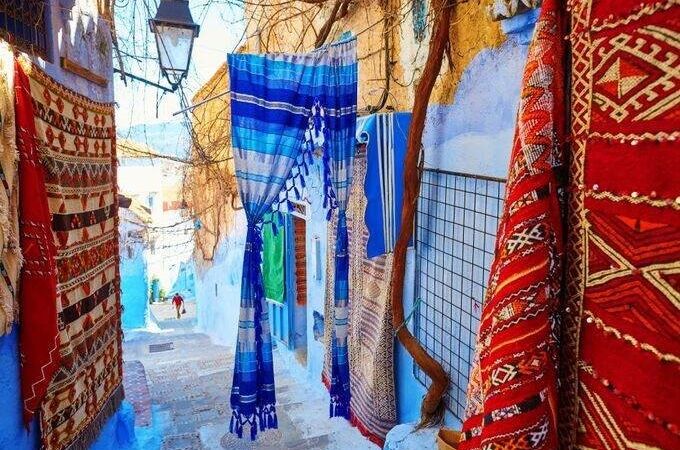
The Medina Changes the Way You Think About Money
In many destinations, travelers can develop one payment habit and use it for most of the trip. Morocco rewards a little more flexibility.
Consider a normal day in Marrakech.
Breakfast may be included at your riad. You visit a monument, stop at a small shop, buy something inexpensive in the medina, have lunch, continue through the souks and eventually eat dinner at an established restaurant.
The transactions are not simply different in value. They belong to different commercial environments.
That distinction matters more than trying to label Morocco as either a cash or card destination.
Inside traditional commercial areas, having Moroccan dirhams available gives you freedom to make small decisions without first asking how you can pay.
That is the real role of cash here.
MAD, DH and the Moroccan Dirham
The international currency code is MAD, while prices in Morocco may also be shown using forms such as DH, referring to dirhams.
One dirham is divided into 100 centimes.
Travelers do not need to become experts in Moroccan banknotes before arriving, but recognizing MAD and DH prevents unnecessary confusion when comparing a hotel confirmation, ATM screen and local menu.
It is also useful to remember that everyday local prices should be understood first in dirhams.
If you constantly translate every 30, 80 or 150 MAD purchase into your home currency before deciding whether it feels reasonable, simple transactions become surprisingly tiring. Maintain a rough understanding of the exchange value, then allow the dirham to function as the local unit it is.
Morocco's Dirham Has an Important Travel Characteristic
Morocco manages the dirham under an exchange-rate regime based around a reference basket of currencies. Bank Al-Maghrib publishes information about the exchange-rate framework and reference rates. Bank Al-Maghrib exchange rates
More importantly for visitors, the Moroccan dirham is not a currency that travelers should casually treat like euros that can simply be obtained and used internationally without restriction.
That makes arrival and departure planning more relevant.
Rather than building up a large stock of MAD before the trip or withdrawing excessive amounts at once, it is generally more sensible to obtain what you reasonably need while in Morocco and manage the remaining balance as departure approaches.
This creates a very different currency logic from Greece, where the euro simply continues to be useful across much of Europe.
The Riad-to-Souk Test
One useful way to decide whether your payment setup is working is what I call the riad-to-souk test.
Imagine leaving your accommodation for several hours without returning.
Could you comfortably:
pay for a small drink,
make an inexpensive purchase,
settle a small local expense,
and still use a card later for a larger transaction?
If yes, your setup is probably fine.
If the answer is, “I only have one card and no dirhams,” you have created unnecessary dependence on electronic payment.
If the answer is, “I am carrying virtually my entire holiday budget in cash,” you have gone too far in the opposite direction.
The sweet spot is somewhere between those extremes.
Not Every Medina Works Like a Shopping Mall
This is particularly relevant for travelers following Morocco imperial city tours, where the journey often moves through historic urban centers such as Marrakech and Fez rather than remaining entirely within modern resort environments.
A medina contains a mixture of businesses. Some are highly accustomed to international visitors; others operate much more like traditional local commerce.
It is therefore unhelpful to publish a blanket statement such as:
“Cards are accepted in Moroccan souks.”
or:
“Moroccan medinas are cash-only.”
Both can mislead.
A better rule is to enter the medina with usable MAD even if you expect to use your card whenever appropriate.
Then the method of payment does not dictate what you can or cannot do.
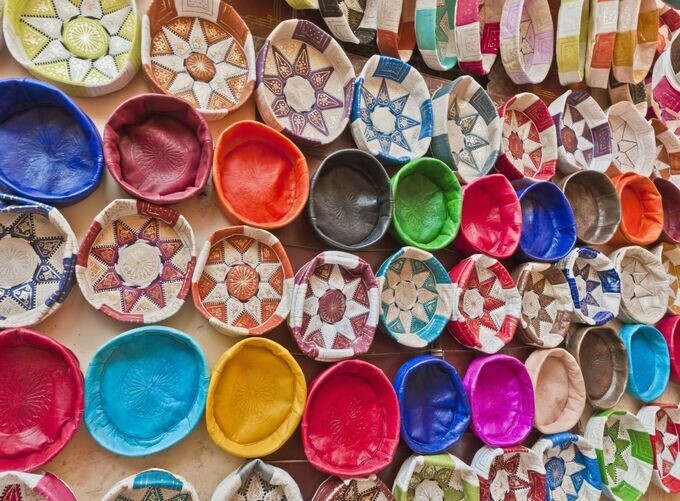
Cash Is Particularly Useful for Small, Unplanned Purchases
Morocco encourages spontaneous spending in a way that a pre-booked resort holiday may not.
You see fresh orange juice, stop for mint tea, notice something small in a market, enter a local bakery or decide to buy something you had not planned to purchase five minutes earlier.
These are exactly the transactions for which cash flexibility matters.
This article deliberately does not tell you how much to spend in the souks or what constitutes a good price. That belongs to shopping and bargaining intent.
The currency issue is simpler:
Do not make every small purchase dependent on finding a card terminal.
The City-to-City Transition Matters Too
Morocco is not only Marrakech.
A longer itinerary can move through Casablanca, Rabat, Fez, the Middle Atlas, the Sahara region and Marrakech, with stops in towns and communities between the major cities.
The payment environment therefore changes not just within a city but across the journey.
Travelers on Morocco cultural circuit tours should think ahead before road days. If you know tomorrow includes a long drive with several stops, checking your dirham supply before leaving the hotel is easier than discovering halfway through the journey that your only practical payment option is a card.
Again, this is not an argument for carrying excessive cash.
It is an argument for being prepared for the itinerary you actually have.
ATM Withdrawals Should Follow Your Travel Rhythm
ATMs can be a practical way to access Moroccan dirhams, particularly in cities and established tourism areas.
Your own bank may impose foreign withdrawal or transaction charges, so check its conditions before departure. The machine may also present currency or conversion information that deserves to be read rather than accepted automatically.
The more Morocco-specific decision is when to withdraw.
A traveler staying four nights in Marrakech can easily reassess later.
Someone leaving Fez for a multi-stage road journey has less reason to postpone a necessary withdrawal until after departure.
Use ATMs as part of the route rather than making the route adapt to your need for an ATM.
What About Euros and US Dollars?
Travelers often arrive in Morocco carrying euros, dollars or pounds.
Major foreign currencies can be useful for exchange, and certain tourism arrangements may be quoted in a foreign currency. But neither situation changes the role of the dirham in ordinary local transactions.
If a pre-arranged service has been confirmed in euros, follow the agreed payment terms.
If a shop quotes you a price in another currency, understand the conversion rather than assuming foreign-currency pricing is automatically simpler.
For everyday travel, the dirham remains the clearest reference.
This distinction becomes particularly important in heavily touristed areas, where the ability to discuss euros does not mean that paying in euros is always the best choice.
The Sahara Requires a Different Kind of Preparation
The transition from city travel to the desert is one of the clearest examples of why Morocco's currency article deserves its own architecture.
A desert itinerary can involve a long overland journey, accommodation arrangements, local stops and activities that are not occurring within a major urban banking environment.
Before leaving for this stage, check what is included in your booking and which personal expenses remain yours to settle.
Travelers taking Morocco Sahara journeys should ideally resolve ordinary cash-access questions before the desert section begins. Once you are there, the point is to experience the landscape—not to discover that you should have withdrawn dirhams two towns earlier.
This is a logistics decision, not a recommendation to carry a large amount of cash into the Sahara.
Why Smaller Denominations Are Useful Without Becoming the Main Story
Useful denominations can make small purchases easier, but Morocco Currency should not become another version of the Egypt article.
In Egypt, small-note management was central because it strongly shaped the cash-management strategy we established there.
In Morocco, the larger issue is transaction flexibility across traditional and modern commercial environments.
Still, if you receive smaller notes or coins as change, keeping some available can be useful for minor purchases rather than immediately spending or exchanging them away.
You need a functional wallet, not a perfectly engineered collection of denominations.
Leaving Morocco: Do Not Ignore Your Remaining Dirhams
Departure deserves more attention in Morocco than in a eurozone destination.
As your final days approach, look at how much MAD you still hold before making another substantial withdrawal.
If major expenses are already settled and you are approaching the airport, there is little benefit in accumulating more local cash than you expect to use.
The goal is not to force yourself to spend every final dirham. It is to manage withdrawals progressively so you do not create an unnecessary leftover balance at the end.
This is especially relevant for travelers continuing directly to Spain, Portugal, Turkey or another country where the Moroccan dirham will no longer be their everyday currency.
Morocco's Best Currency Strategy Is Situational
The most useful question in Morocco is not:
“Should I use cash or card?”
Ask instead:
“Where am I spending the next part of my day?”
A modern hotel and a small medina purchase are different transactions. So are a Marrakech restaurant and a stop during an overland journey. A desert stage requires different preparation from an afternoon in Casablanca.
Carry enough Moroccan dirhams to remain independent during small and spontaneous transactions. Use cards where they make sense. Maintain a backup payment method. Before long road or desert stages, think ahead rather than waiting until cash becomes urgent.
Once you begin matching the payment method to the environment, Morocco's money system stops feeling complicated.
It simply becomes part of the rhythm of traveling through the country.
Frequently Asked Questions About Money in Morocco
1. Why do I sometimes see DH instead of MAD on Moroccan prices?
MAD is the international currency code for the Moroccan dirham, while DH is commonly used locally when displaying or discussing prices. They refer to the same currency, so travelers should not interpret them as two different forms of Moroccan money.
2. What are centimes and will I actually encounter them?
One Moroccan dirham is divided into 100 centimes. Coins and smaller amounts remain part of everyday pricing, although tourists often focus primarily on dirham-denominated totals. Understanding the term is useful when dealing with change or smaller local transactions.
3. Should I enter Marrakech's medina with cash?
Having some Moroccan dirhams is sensible because a medina contains businesses of very different sizes and payment setups. You may still use cards at suitable establishments, but cash prevents a small purchase from depending entirely on electronic payment availability.
4. Is payment by card easier in modern Marrakech than inside the souks?
Payment environments can differ considerably even within the same city. Hotels, established restaurants and larger businesses may suit card payments, while smaller traditional commerce can make cash more convenient. Carrying both allows you to move between these environments without changing plans.
5. Should I obtain all my Moroccan dirhams at the start of the holiday?
Usually there is little reason to obtain the entire trip's cash requirement at once. Accessing and replenishing a manageable amount during the journey reduces the amount of physical money you carry and can also help avoid finishing the trip with excessive unused MAD.
6. Is cash more important when traveling between Morocco's imperial cities?
It becomes a more useful backup because road journeys introduce stops and smaller transactions outside the immediate environment of major hotels. Checking your dirham supply before leaving a city is a simple way to avoid needing cash at an inconvenient moment.
7. What should I arrange financially before traveling toward the Sahara?
Check what your accommodation, transport and desert arrangements already include, then make sure you have enough MAD for reasonable personal and incidental expenses. It is easier to handle normal cash access before entering the desert stage than during it.
8. If a Moroccan shop gives me a euro price, should I pay in euros?
Not automatically. A foreign-currency quote may be convenient, but you should understand how it relates to the dirham price and what conversion is being used. The ability to pay in euros does not necessarily mean it offers better value.
9. Why shouldn't I rely entirely on a card while exploring a medina?
Doing so can make your purchasing decisions depend on whether each individual business supports your preferred electronic payment method. Keeping some MAD means small, spontaneous transactions remain straightforward while you can still use cards at establishments where they are convenient.
10. When is the best time to check my cash during a Morocco circuit?
The evening before a long transfer is a useful moment. Look at the next day's route, determine whether it includes smaller towns, road stops or remote areas, and make sure your available dirhams and backup payment options suit that stage.
11. Why should I watch my remaining MAD near the end of the holiday?
The Moroccan dirham is not as straightforward to carry into your next destination and continue spending as the euro. Reducing unnecessary late-trip withdrawals can therefore help you avoid accumulating a large local-currency balance immediately before departure.
12. What is the simplest payment rule for first-time visitors to Morocco?
Match your payment method to your surroundings. Use cards where they are practical, but keep Moroccan dirhams available for smaller and more traditional transactions. Before road or desert stages, check your cash rather than assuming tomorrow's environment will resemble today's.

A travel professional specializing in tailor-made travel planning, guest experience management, and multi-destination tourism operations.
With over 23 years of experience in the travel industry, he designs and manages private and cultural tours for international travelers across Türkiye, Greece, Egypt, Jordan, Morocco, and other destinations.
He has strong expertise in both online and face-to-face guest communication, sales processes, and end-to-end travel operations.
Working closely with hotels, travel agencies, and local partners, he ensures smooth coordination and high-quality travel experiences at every stage of the journey.
His focus is on delivering personalized, reliable, and seamless travel experiences for international guests worldwide.