Is Morocco Worth Visiting? Who Will Love It—and Who Might Not
Updated: August 2026
Morocco is worth visiting for travelers who enjoy cultural contrast, historic cities that still function as living neighborhoods, distinctive food and craftsmanship, dramatic changes of landscape, and journeys where the experience between major sights matters almost as much as the sights themselves. It is a less obvious match for travelers who want every day to feel effortless, highly predictable and insulated from the intensity of local street life.
That distinction matters because asking whether Morocco is “worth visiting” sounds like a question about the country when it is really a question about compatibility.
Two people can follow almost the same route through Marrakech, the Atlas Mountains, the desert and Fes, stay in comparable hotels and return home with completely different opinions. One may describe the journey as wonderfully immersive; the other may remember crowded medinas, long drives and the effort required to navigate an unfamiliar culture.
Neither traveler necessarily misunderstood Morocco.
They simply wanted different things from a holiday.
The better question, therefore, is not whether Morocco deserves to be visited. Its history, landscapes and cultural depth make that easy to establish. The useful question is whether what Morocco does particularly well overlaps with what makes travel rewarding for you.
Why Morocco Produces Stronger Reactions Than Easier Destinations
Some destinations make very few demands on visitors.
Transportation is intuitive, cultural differences remain relatively subtle, hotels work according to familiar patterns and most daily decisions can be made without much adjustment. Those places can provide excellent holidays, particularly when relaxation and convenience are priorities.
Morocco offers something different.
The change of environment can become apparent quickly. Historic medinas such as those in Marrakech and Fes operate according to spatial logic that does not resemble a modern European city grid. Shops and workshops open directly into narrow lanes, motorcycles may share space with pedestrians, calls to prayer become part of the soundscape, bargaining remains present in many commercial interactions and traditional architecture can conceal remarkably sophisticated accommodation behind almost anonymous exterior walls.
For some travelers, this is exactly why the journey feels worthwhile.
For others, the same characteristics create fatigue.
A useful Morocco decision therefore begins with acknowledging that intensity and attraction are sometimes the same thing viewed from different travel personalities.
The Morocco People Imagine Is Only Part of the Country They Meet
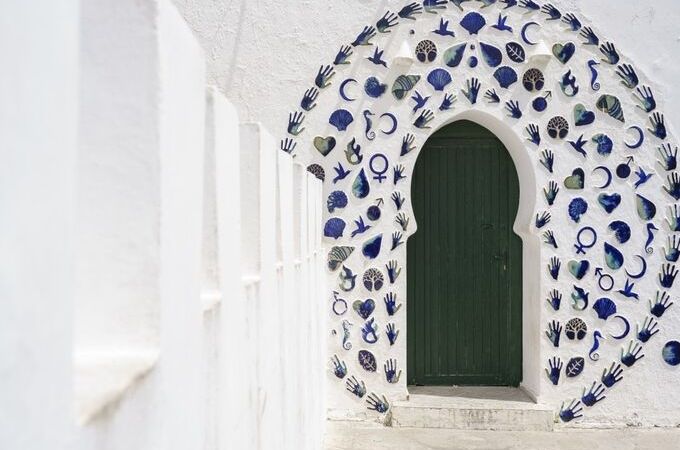
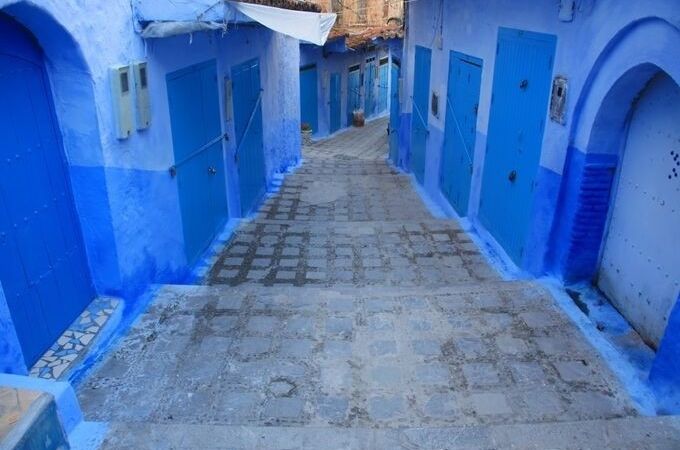
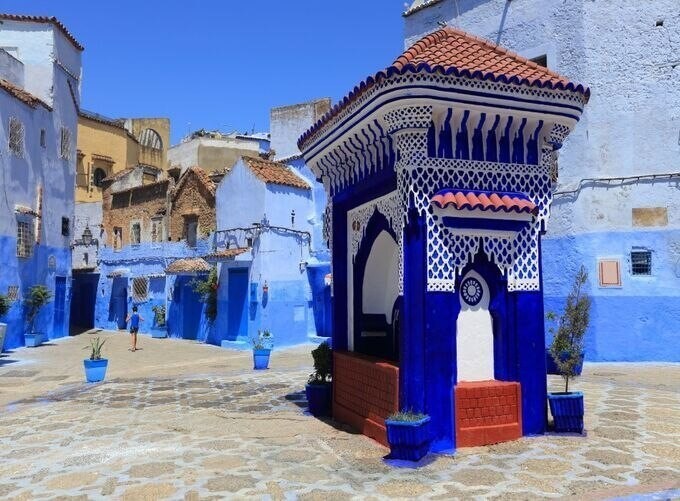
Before visiting, many travelers know Morocco through a surprisingly narrow visual vocabulary: colorful souks, lanterns, riad courtyards, blue Chefchaouen streets and camels crossing Sahara dunes at sunset.
Those things exist, but Morocco becomes considerably more interesting once the brochure imagery stops controlling expectations.
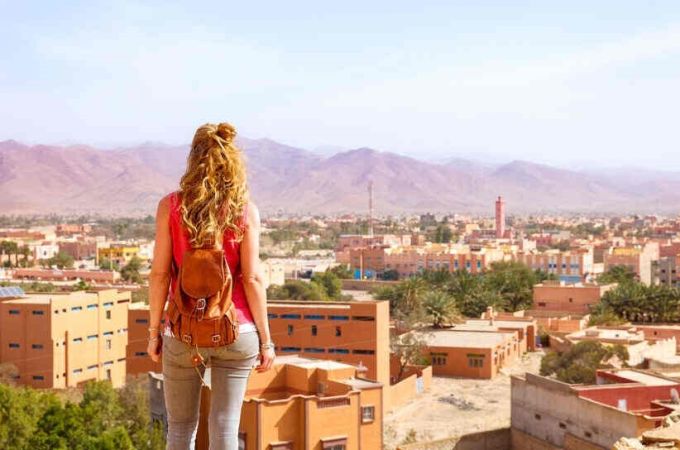
Casablanca is a major contemporary commercial city rather than an oversized medina. Rabat combines national institutions, historic sites and Atlantic life with a calmer urban character. Fes can feel intellectually and historically dense, while Marrakech often places international tourism directly beside intensely local commercial life. The High Atlas introduces rural landscapes and communities that bear little resemblance to the large cities, and Atlantic destinations create another shift again.
This variety means Morocco rarely feels visually or culturally static for very long.
It also means travelers expecting ten uninterrupted days of romantic riads and perfectly staged desert scenery may discover a country that is more ordinary, modern and complicated than the version they encountered online.
That is a strength rather than a disappointment when you want to understand a destination beyond its promotional images.
Morocco Is Particularly Worth Visiting If Cultural Contrast Matters to You
Some travelers want familiarity with better weather.
Others travel partly because they want daily life to feel different.
Morocco belongs much more naturally to the second category.
Its cultural appeal is not restricted to monuments. It appears in how medinas function, how homes and riads organize private space around internal courtyards, how crafts remain integrated into commercial life, how food is shared, how modern urban life coexists with long-established traditions and how different regions express Moroccan identity in noticeably different ways.
This gives ordinary hours greater travel value.
Walking to dinner can become interesting. Watching a craftsman work may remain in your memory longer than a formal attraction, while a roadside stop crossing the Atlas can reveal as much about geography and daily life as another museum visit.
Travelers who measure a destination primarily by the number of famous landmarks may underestimate this quality.
Morocco often rewards attention more than checklist completion.
The Medinas Are Both an Argument for Morocco and an Argument Against It
This is perhaps the clearest example of traveler–destination compatibility.
Historic medinas are among Morocco's great cultural experiences. Fes el-Bali, for example, is not simply a preserved heritage quarter surrounded by a modern city; it remains a functioning urban environment where homes, religious buildings, workshops, markets and tourism occupy overlapping spaces.
That complexity creates atmosphere that purpose-built historical districts cannot easily reproduce.
It can also feel overwhelming.
Navigation is not always intuitive, lanes can become crowded and the visual density encourages visitors to process a remarkable amount of information at once. Shopping interactions may be more persistent than some travelers prefer, while those accustomed to wide sidewalks and predictable traffic separation may initially find medina movement demanding.
The mistake is trying to decide whether this is objectively good or bad.
If you enjoy places that require participation and attention, medinas may become one of your strongest reasons to visit Morocco.
If your ideal city break involves quiet boulevards, easy independent navigation and minimal sensory pressure, you may appreciate them in smaller doses.
Morocco Rewards Travelers Who Are Interested in How Things Are Made
Craftsmanship is sometimes reduced to shopping in discussions about Morocco, which misses much of its value.
Leather, ceramics, metalwork, woodwork, textiles, tilework and other crafts are not interesting merely because travelers can buy the finished products. Their value comes partly from seeing how decorative traditions remain connected to skilled human work.
This becomes particularly apparent in cities such as Fes and Marrakech, where production and retail can exist close together.
A traveler uninterested in purchasing anything can still find considerable value in understanding the process.
That matters because Morocco is much less dependent on conventional sightseeing than some destinations. The journey can remain culturally rich even when you are not moving from one admission-ticket attraction to another.
The Landscape Changes Enough to Make the Journey Itself Part of the Trip
Morocco's geographical variety is often mentioned as a selling point, but its real value becomes apparent when traveling overland.
The change does not happen through a sequence of disconnected flights.
Cities give way to agricultural areas, mountain roads alter both scenery and climate, valleys become increasingly arid and the approach toward the desert creates a gradual transition rather than an instantaneous arrival.
That progression makes road travel meaningful.
It also introduces one of Morocco's major trade-offs.
Seeing dramatically different regions usually requires spending time moving between them.
A traveler who considers every hour inside a vehicle wasted vacation time may find a broad Morocco itinerary frustrating. Someone who enjoys watching landscape and settlement patterns change may consider those same hours an essential part of understanding the country.
Neither response is wrong.
The important thing is recognizing which traveler you are before designing the route.
Is the Sahara Really Worth the Journey?
For many visitors, yes, but not because a camel ride automatically justifies several days of travel.
The stronger argument for including a desert region is the cumulative transition toward it: crossing different landscapes, seeing settlements become smaller, experiencing increasingly arid terrain and eventually reaching an environment unlike the imperial cities where the journey may have begun.
The Sahara becomes less convincing when treated as a single photograph that must be collected.
If your only objective is thirty minutes on a camel at sunset, the road investment may feel disproportionate.
If you enjoy overland journeys and changing geography, the desert can provide a natural culmination rather than an isolated excursion.
This distinction is more useful than declaring the Sahara a universal “must-see.”
Not every worthwhile Morocco trip requires it.
Riads Change the Experience More Than Ordinary Hotel Upgrades Do
Accommodation can become part of the cultural argument for visiting Morocco.
A traditional riad turns architecture into everyday experience. Rather than observing an internal courtyard during sightseeing, you may eat breakfast beside one, return to it after exploring the medina and experience how inward-facing design creates quiet private space within dense urban surroundings.
This can make accommodation feel connected to place rather than interchangeable.
There are practical trade-offs.
Historic properties may have stairs, smaller rooms, limited vehicle access or fewer resort-style facilities than conventional hotels. Travelers with mobility requirements, large amounts of luggage or a strong preference for standardized services should assess those differences carefully.
Again, Morocco presents a choice rather than an automatic advantage.
Character matters more when character is something you actually value.
Food Is a Strong Reason to Visit, but Not Because Every Meal Will Surprise You
Moroccan cuisine contributes significantly to the journey through tagines, couscous, breads, pastries, grilled foods, preserved ingredients, spices and regional variations.
Yet travelers occasionally create unrealistic expectations after reading that food alone is reason enough to visit.
A multi-day journey may involve repeated dishes, particularly when following tourist circuits where restaurants know what international visitors recognize. The stronger food experience comes from variation: traditional meals, simpler local food, market products, regional differences and contemporary restaurants rather than demanding novelty from every lunch.
Food is most rewarding when it becomes another way of reading the country.
It does not need to perform as an attraction three times a day.
Morocco Is Worth More to Travelers Who Leave Some Space in the Schedule
A completely packed itinerary can paradoxically reduce what makes Morocco distinctive.
If every hour is assigned to a monument, transfer or guided visit, there is little time left for sitting on a rooftop, watching a market change through the afternoon, wandering a quieter street or staying longer over lunch because the setting feels right.
These moments are difficult to sell as itinerary highlights because they are not guaranteed.
They are also frequently what travelers remember.
This is one reason Private Morocco Discovery Tours can make sense for people who value flexibility: not because every minute needs private service, but because the itinerary can leave room for interests that emerge after arrival.
Morocco rewards curiosity that was not scheduled six months earlier.
Morocco May Not Be Worth It If You Want Complete Predictability
It is important for a credible travel article to say this clearly.
Not everybody will love Morocco.
Travelers who become highly uncomfortable when plans require small adjustments, commercial interactions involve negotiation or urban environments feel unfamiliar may find parts of the experience demanding.
This does not mean Morocco lacks professional tourism infrastructure. Magnificent Travel's current Morocco programs, for example, operate guided itineraries through destinations including Marrakech, Fes, Rabat, Erfoud, Ouarzazate and other regions, demonstrating that complex routes can be organized with accommodation, transportation and guiding arranged in advance.
Organization, however, cannot and should not remove every cultural difference.
A perfectly arranged transfer still travels through Morocco.
A guide can make a medina understandable without turning it into a shopping mall.
The country becomes less rewarding if the objective is eliminating everything that makes it unfamiliar.
Morocco May Be Less Suitable If Relaxation Is Your Only Priority
Morocco certainly offers resorts, hammams, beaches, pools and luxury accommodation, and a relaxed holiday can be designed there.
The question is whether Morocco is the strongest choice when effortless resort relaxation is the only objective.
Probably not.
Much of the country's comparative travel value lies in cultural movement: exploring medinas, crossing landscapes, changing accommodation styles, understanding historical cities and observing everyday life.
A traveler who wants to arrive at one coastal property and spend seven uninterrupted days between a pool and beach can certainly do so, but may use relatively little of what makes Morocco distinctive.
This does not make the holiday bad.
It simply weakens the specific argument for choosing Morocco over numerous dedicated resort destinations.
Not Enjoying Shopping Does Not Mean You Will Dislike Morocco
Souks occupy such a large place in Morocco imagery that travelers sometimes worry the trip revolves around buying things.
It does not need to.
Markets are also places of movement, production, food, architecture and ordinary commercial life. You can enjoy walking through them without buying carpets, lamps, spices or leather goods.
The important operational decision is communicating your preferences.
If shopping is not important, a guided itinerary should not repeatedly allocate large periods to retail visits simply because these are common components of tourism circuits.
Travelers considering Customized Morocco Cultural Journeys should be able to emphasize architecture, history, food, landscapes or photography instead.
Morocco is bigger than its souvenir economy.
Morocco Can Be Challenging for Travelers Who Dislike Long Overland Days
This deserves consideration before booking rather than after the first long transfer.
Morocco's major experiences are geographically dispersed.
A route connecting imperial cities, mountain landscapes and desert regions cannot eliminate distance merely through better organization. Some journeys require substantial road time, even when vehicles are comfortable and sensible stops are included.
For travelers who dislike long drives, the answer is not automatically abandoning Morocco.
It may mean narrowing the itinerary.
Marrakech combined with nearby experiences can create a very different trip from a large circuit. Northern Morocco can form another geographical focus, while Atlantic destinations can be combined without forcing every famous region into the same holiday.
The country becomes easier when itinerary ambition matches road tolerance.
Morocco Is More Rewarding When You Do Not Try to See “All of Morocco”
The phrase “best of Morocco” can create a strange pressure to include every famous destination.
That approach is understandable and sometimes appropriate for travelers making a single long-haul visit.
It can also turn geographic diversity into logistical repetition: arrive, unpack, tour, repack and leave.
A worthwhile Morocco trip does not require proving that you reached every major pin on the map.
Spending longer in fewer places can reveal details that disappear when destinations become overnight stops.
This is particularly important for travelers who enjoy café culture, photography, food, architecture or independent wandering.
Depth and coverage compete for the same hours.
Morocco offers enough variety that the choice genuinely matters.
Is Morocco Too Tourist-Oriented to Feel Authentic?
The word “authentic” causes trouble in travel writing because it implies that places serving visitors somehow stop being real.
Marrakech receives large numbers of international travelers, and parts of its economy understandably respond to them. Chefchaouen's photographic fame has similarly shaped visitor patterns. Yet tourism does not erase local life, and less visited streets do not automatically become more culturally genuine.
The more useful question is whether you can encounter life that exists for reasons other than your presence.
In Morocco, the answer is clearly yes.
Medinas contain homes, schools, workshops, mosques and businesses alongside hotels and souvenir shops. Modern cities function for residents, commerce and government rather than tourism. The country's value lies partly in this coexistence.
Travelers should look for context rather than chase an imaginary tourism-free Morocco.
Morocco Works Especially Well for Travelers Who Enjoy Contrast
Contrast may be Morocco's strongest overall quality.
Historic medina and modern boulevard.
Riad courtyard and large contemporary hotel.
Atlantic air and arid interior.
Mountain road and desert plain.
Busy Marrakech and more measured Rabat.
Traditional craft and smartphone-equipped contemporary life.
The country does not need these elements to blend perfectly because their proximity is what makes the journey interesting.
Travelers who enjoy destinations with one dominant mood may find this constant change less relaxing.
Those who enjoy comparison are likely to find it energizing.
The Real Comparison Is Between Your Travel Priorities and Morocco's Strengths
Rather than comparing Morocco mechanically with Spain, Egypt, Jordan or another destination, this table asks a more useful question: how strongly does Morocco deliver on different reasons people travel?
| What you want from a trip | Morocco fit | The trade-off you accept |
|---|---|---|
| Cultural immersion | Very strong | More unfamiliarity and sensory intensity |
| Historic urban atmosphere | Very strong | Medina navigation can require patience |
| Landscape variety | Very strong | Wider routes involve substantial road travel |
| Distinctive accommodation | Very strong | Traditional riads may lack standardized facilities |
| Food-led travel | Strong | Tourist circuits can become repetitive without variety |
| Photography | Very strong | People and working environments require sensitivity |
| Shopping and craftsmanship | Very strong | Bargaining and commercial attention are part of the environment |
| Effortless resort relaxation | Moderate | Morocco's strongest qualities lie elsewhere |
| Completely predictable travel | Moderate | Flexibility improves the experience |
| Slow cultural exploration | Very strong | Requires resisting the urge to cover everything |
| Independent road discovery | Strong | Distances and unfamiliar roads need realistic planning |
| Minimal sensory stimulation | Weaker | Major medinas can feel intense |
This is not a scorecard for whether Morocco is objectively good.
It is a compatibility table.
A destination can score “weaker” against one travel priority while still being exceptional for another.
Morocco Versus an Easier Mediterranean Holiday
This comparison is useful because many travelers are not deciding between Morocco and “not traveling.” They are deciding between different styles of holiday.
A conventional Mediterranean trip may provide easier navigation, familiar dining patterns, beach time and relatively predictable daily logistics.
Morocco generally asks for more engagement.
The reward is stronger cultural contrast and a greater sense that movement between destinations changes the character of the journey.
If you are tired and want a holiday requiring very few decisions, the easier option may genuinely be better.
If you have recently taken several comfortable European trips and want something that feels more distinct without moving into highly difficult expedition-style travel, Morocco can occupy a compelling middle ground.
That is a much stronger reason to choose it than simply saying it has beautiful attractions.
First-Time Visitors Should Expect a Learning Curve, Not a Problem
The first day in Morocco can feel busier than the fourth.
Travelers begin learning quickly: how medina movement works, when commercial attention can simply be declined politely, what type of restaurant they prefer, how long they enjoy guided sightseeing and how much unstructured time they need.
This adjustment is part of travel.
A well-designed Morocco First-Time Visitor Tour can reduce avoidable logistical friction through reliable transportation, appropriate accommodation and knowledgeable local guiding without removing the discovery that makes the destination worthwhile.
There is a meaningful difference between making travel easier and making Morocco less Moroccan.
Good planning should accomplish the first without attempting the second.
Who Is Most Likely to Come Home Loving Morocco?
Travelers who tend to respond most positively are usually curious rather than rigid.
They want to understand why a place works the way it does. They can appreciate luxury without requiring luxury everywhere, enjoy historical architecture while remaining interested in contemporary life and accept that a road journey can be meaningful even when no famous attraction appears for several hours.
They are also comfortable allowing the trip to evolve.
Perhaps the favorite city turns out not to be the famous one. Maybe a lunch stop becomes more memorable than a palace, or the mountain journey leaves a stronger impression than the desert camp that originally motivated the itinerary.
Morocco gives these travelers plenty to work with.
Who Might Prefer Somewhere Else?
Travelers seeking a highly controlled environment with minimal cultural friction should think more carefully.
The same applies to anyone who strongly dislikes road travel but wants to cover the entire country, expects every historic accommodation to provide contemporary resort facilities or finds busy market environments deeply unpleasant rather than merely unfamiliar.
Choosing another destination is not a failure of adventurousness.
Travel compatibility matters.
The objective is not to visit countries because travel media says everyone should love them.
It is to spend limited vacation time somewhere whose strengths correspond to your interests.
So, Is Morocco Worth Visiting?
For many culturally curious travelers, yes—very much so.
Morocco combines living historic cities, distinctive architecture, craftsmanship, food traditions, mountain and desert landscapes, Atlantic influences and contemporary urban life within a country that can be explored through organized or independently structured journeys.
Its strongest qualities, however, come with trade-offs.
Medinas can be fascinating because they are dense and alive, yet that same density can feel intense. Geographic diversity creates remarkable itineraries, but reaching different regions takes time. Traditional accommodation provides character, although it may not deliver the standardization of an international hotel.
That is why the most useful answer is not an unconditional yes.
Morocco is particularly worth visiting when you want your destination to feel different enough that you need to engage with it.
If that sounds appealing rather than inconvenient, Morocco has an unusually strong case.
Frequently Asked Questions About Whether Morocco Is Worth Visiting
Is Morocco worth visiting if I do not like crowded places?
Yes, although itinerary selection matters. Marrakech and parts of Fes can feel intense, while destinations such as Rabat and smaller towns offer different rhythms. You do not need to avoid Morocco simply because continuous crowds are not your preferred travel environment.
Is Morocco worth visiting without going to the Sahara?
Absolutely. The desert is only one dimension of Morocco, and travelers can build rewarding journeys around imperial cities, the Atlas region, Atlantic coast, northern Morocco, architecture, food and craftsmanship without treating the Sahara as a compulsory achievement.
Is Morocco worth visiting if I hate shopping?
Yes. Souks are interesting as living commercial environments even when you purchase nothing. Tell your guide that retail stops are not a priority and devote more time to architecture, historical context, food, crafts, photography or ordinary city exploration.
Is Morocco worth visiting only for Marrakech?
Marrakech can support a short Morocco visit because it combines historic atmosphere, food, accommodation and access to nearby landscapes. However, seeing another region provides useful contrast and helps prevent one highly visited city from defining your impression of the entire country.
Will Morocco feel too touristy?
Certain areas are heavily visited, particularly famous sections of Marrakech and Chefchaouen, but Morocco does not function primarily for tourists. Residential neighborhoods, workshops, contemporary cities, transport systems and everyday commercial life continue alongside the tourism economy.
Is Morocco worth visiting if I prefer comfortable travel?
Yes, provided comfort does not mean complete insulation from the destination. High-quality hotels, private transportation and well-planned guiding can make the journey comfortable, while medinas, road travel and cultural differences remain part of experiencing Morocco itself.
Does Morocco suit travelers who do not enjoy guided tours?
It can. Independent time works particularly well in places where travelers want cafés, photography or wandering, while guides add substantial value in historically complex medinas. A mixed approach often makes more sense than choosing guided or independent travel for every day.
Is Morocco worth returning to after a first visit?
Yes, particularly when the first journey concentrated on famous destinations. Northern Morocco, Atlantic cities, mountain regions, smaller towns and slower stays can create a noticeably different second experience without requiring travelers to repeat the standard first-time circuit.
Can Morocco feel overwhelming for a first international trip?
It can feel intense initially because navigation, traffic, markets and cultural rhythms may be unfamiliar. Appropriate accommodation, planned transfers and local guidance can reduce unnecessary stress while still allowing first-time international travelers to experience the country's distinctive character.
Is Morocco worth visiting if I am not interested in the desert?
Yes. Morocco's cultural argument does not depend on desert travel. Historic cities, craftsmanship, architecture, Atlantic destinations, mountain landscapes, food and contemporary urban life can easily support an itinerary without building the journey around Sahara access.
Why do some travelers love Morocco while others find it tiring?
Often they are reacting to the same qualities differently. Busy medinas, cultural contrast, long scenic journeys and active commercial environments can feel immersive to one traveler and demanding to another, making personal travel style unusually important when evaluating Morocco.
What should I ask myself before choosing Morocco?
Ask whether you enjoy cultural difference, active cities, changing landscapes and travel that occasionally requires patience. If those qualities sound stimulating rather than inconvenient, Morocco is likely to offer considerably more than a conventional sightseeing holiday.

A travel professional specializing in tailor-made travel planning, guest experience management, and multi-destination tourism operations.
With over 23 years of experience in the travel industry, he designs and manages private and cultural tours for international travelers across Türkiye, Greece, Egypt, Jordan, Morocco, and other destinations.
He has strong expertise in both online and face-to-face guest communication, sales processes, and end-to-end travel operations.
Working closely with hotels, travel agencies, and local partners, he ensures smooth coordination and high-quality travel experiences at every stage of the journey.
His focus is on delivering personalized, reliable, and seamless travel experiences for international guests worldwide.