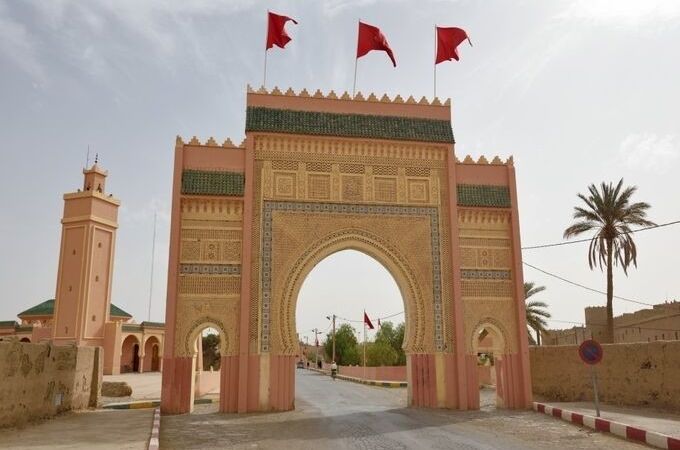
Morocco Travel Requirements Begin With Your Passport, Not Your Itinerary
Updated: August 2026
Before choosing a riad in Marrakech, planning a Sahara camp or deciding how many nights to spend in Fes, there is a more basic question that deserves an unambiguous answer: are your travel documents suitable for entering Morocco on the dates you intend to travel?
For many international visitors, Morocco is relatively straightforward to enter for short tourism stays, although the exact requirements depend on nationality, passport type, intended length of stay and individual circumstances. Travelers from some countries can enter for tourism without arranging a visa in advance, while others may need prior authorization or a visa before traveling.
That distinction is precisely why a responsible Morocco travel requirements guide should not begin with a giant list of nationalities copied from somewhere else and presented as permanent information.
Entry regulations change.
The better planning method is to identify which requirements apply to you personally, which documents must physically travel with you and which details should be verified again shortly before departure.
A tour confirmation does not replace immigration requirements, and having booked hotels or paid for a holiday does not guarantee admission. Final entry authority rests with Moroccan border officials, while airlines can also check documentation before allowing passengers to board.
Treat entry preparation as its own stage of the trip rather than an administrative detail to deal with at the airport.
The First Question Is Your Nationality, but the Passport You Hold Matters More
Travelers frequently ask, “Do Americans need a visa for Morocco?” or “Can British citizens enter Morocco without a visa?”
Those are sensible starting questions, but immigration systems work with travel documents rather than conversational descriptions of nationality.
The relevant details can include:
- the passport country;
- the type of passport;
- the purpose of travel;
- the intended length of stay;
- whether the traveler holds additional nationalities;
- and, in less straightforward cases, residence status elsewhere.
Most ordinary leisure travelers will have a simple answer once these details are established, but assumptions become risky when someone has dual nationality, holds a temporary or emergency travel document, intends to remain longer than a conventional holiday or is traveling for something other than tourism.
Before paying non-refundable travel costs, check the entry position using the passport that will actually be presented for the journey.
Visa-Free Travel Does Not Mean Document-Free Travel
This distinction causes unnecessary confusion.
When a traveler is eligible for visa-free entry, it generally means that a traditional tourist visa does not need to be obtained in advance for the permitted type and duration of visit. It does not mean immigration authorities have stopped checking passports or that travelers can arrive without supporting travel information.
Border officials may still need to establish who you are, why you are entering and whether the intended stay fits the applicable conditions.
Your passport remains the central travel document.
Travel details should also be accessible rather than buried inside an email account that becomes difficult to open without roaming or airport Wi-Fi.
Visa exemption simplifies one requirement.
It does not remove the entry process.
Passport Validity Should Be Checked Before Flights Become Expensive to Change
Many travelers know their passport expiry year but not the exact date.
That can become an expensive oversight.
Passport validity requirements should be checked against the rules applicable to your nationality and travel dates, while airline requirements and any transit-country rules should also be considered when relevant. Travelers should avoid relying on a vague memory that a passport has “about six months left,” particularly when the journey is still several months away.
Open the passport and check.
Confirm the expiry date, condition of the document and availability of appropriate pages where relevant, then verify the current official requirement applying to the planned journey.
If the passport will be close to the applicable minimum by the travel date, renewing earlier can be far less stressful than discovering the issue after flights and hotels have been confirmed.
The safest passport is not merely one that has not expired.
It is one whose validity leaves no uncertainty under the rules applying to the complete journey.
Transit Countries Can Create Requirements Morocco Did Not
A traveler may satisfy Morocco's entry conditions and still encounter a document problem before reaching Morocco.
Why?
Because the flight itinerary matters.
A connection through another country can introduce transit rules, particularly when passengers need to change airports, collect and recheck baggage, pass immigration or remain overnight. Requirements can differ according to nationality and the exact structure of the connection.
This becomes especially important when travelers construct separate-ticket itineraries rather than one protected through-booking.
A cheap flight connection is not genuinely cheap if it requires documentation you do not have or leaves insufficient time to complete immigration and baggage procedures.
When checking Morocco travel requirements, therefore, inspect the entire international routing rather than only the final destination.
Your Name Must Match the Documents Used for Travel
Names create surprisingly common administrative problems.
Flight reservations should reflect the travel document being used, particularly where passports contain multiple given names, hyphenated surnames or naming structures that do not fit neatly into airline booking fields.
Minor formatting differences are not automatically a problem, but travelers should not casually use nicknames or a different surname simply because that is how they are known socially.
The passport is the reference document.
This becomes particularly important when a traveler renews a passport after airline tickets have already been issued or when marriage, divorce or another legal change has affected the name appearing on documents.
If a discrepancy exists, resolve it before the airport rather than hoping the check-in agent will interpret it generously.
Keep Your Accommodation Details Accessible on Arrival
Travelers should know where they are staying on the first night and keep the accommodation details available during arrival.
Even when no one asks to see a printed hotel voucher, being able to provide the property name and address makes arrival administration easier and is also useful for airport transfer coordination.
For an organized trip, carry or save the final itinerary and accommodation confirmation in an easily accessible format.
Do not rely exclusively on an internet connection.
A screenshot, downloaded PDF or printed copy can be useful when a phone has no local service, the battery is low or an email application unexpectedly requests authentication.
This is not about carrying a thick folder of paperwork through Morocco.
It is about ensuring that essential information remains available when technology becomes inconvenient.
Return or Onward Travel Should Be Part of Your Document Check
Short-stay visitors should have a coherent travel plan, including how they expect to leave Morocco.
Depending on the traveler's circumstances, an airline or immigration official may want evidence of onward or return arrangements. Even when such evidence is not requested, keeping the booking accessible is sensible.
Travelers continuing from Morocco to another country should also verify the entry requirements for that destination before leaving home.
The second country does not become Morocco's responsibility merely because the itinerary starts there.
This sounds obvious, yet multi-country travelers sometimes spend substantial time researching the first border while assuming everything afterward will somehow work.
Every international border deserves its own document check.
Children Need Their Own Travel-Document Review
Family travel requires more preparation than simply adding children to the hotel booking.
Each child needs the appropriate valid travel documentation for the journey, and additional paperwork may become relevant when a minor travels with only one parent, with relatives, with another responsible adult or without both legal guardians.
The exact requirements can depend on nationality, departure country, airline and family circumstances.
For that reason, generic internet advice such as “just bring a consent letter” is not sufficient for every family.
Parents should verify what documentation is required for their specific situation and consider carrying supporting documents where appropriate, particularly when surnames differ or parental relationships are not immediately obvious from the passports.
The important operational rule is simple: resolve questions concerning minors before travel day, when obtaining another signature or original document may no longer be possible.
Dual Nationals Should Decide Which Passport Controls the Journey
Travelers holding more than one nationality can have additional flexibility, but they also need consistency.
The passport used for airline reservations, departure formalities, Moroccan entry and subsequent travel should be considered carefully according to the applicable rules. Some travelers may need to use one passport when entering or leaving a country of nationality and another for a different border.
This is an area where individual circumstances matter too much for generic travel-blog instructions.
If you hold dual nationality and are uncertain which passport should be used at a particular stage, obtain authoritative advice relevant to your citizenships and itinerary.
What should be avoided is casually switching documents without understanding how entry and exit records relate to one another.
Residence Permits Are Not Automatically Substitutes for Passports or Visas
A traveler living legally in the United States, United Kingdom, European Union, Canada or another country may assume that residence status gives them the same Morocco entry privileges as citizens of that country.
That assumption can be wrong.
Visa requirements are commonly based primarily on the traveler's nationality and passport, although residence status may be relevant under certain procedures or visa arrangements.
A permanent resident card or residence permit therefore should not be treated automatically as a replacement for the entry permission required by the passport nationality.
This distinction matters particularly for multinational families in which several people live at the same address but travel on passports from different countries.
One family can legitimately have different Morocco entry requirements.
Check each traveler individually.
An E-Visa, When Required and Available, Is Not Something to Leave Until Airport Day
Morocco has electronic visa procedures for eligible travelers in relevant categories, although eligibility should be confirmed using current official information rather than assumed from another person's experience.
Where an electronic application is required, allow enough time for processing and for any issue with documentation to be resolved before departure.
Check that information entered in the application corresponds exactly with the passport used for travel, and retain the final approval in an accessible format.
A screenshot can be useful as backup, although travelers should follow any instructions specifying how the authorization must be presented.
The important distinction is between eligibility to apply electronically and permission to travel visa-free.
They are not the same thing.
Travel Insurance and Entry Permission Are Two Separate Questions
Travel insurance is strongly worth considering for an international journey, particularly where substantial flights, hotels, private services or other prepaid costs are involved.
However, travelers should distinguish a sensible risk-management decision from an immigration requirement.
If a particular insurance document is required for a specific traveler category or procedure, that should be confirmed through current official rules. Otherwise, buying travel insurance does not alter whether the passport holder needs a visa or qualifies for visa-free entry.
Insurance should be selected according to the actual trip.
Medical coverage, cancellation protection, interruption, baggage and activities may matter differently depending on the itinerary and policy.
The important point for this requirements cluster is that insurance and border permission solve different problems.
Do not use one as evidence that the other has been satisfied.
Medication Deserves a Document Check Before Packing
Medication sits near the boundary between packing and travel requirements, which is why this blog will address only the documentation issue rather than creating another packing list.
Travelers carrying prescription medication should keep medicines appropriately identified and, where relevant, carry a prescription or doctor's documentation explaining what is being taken and why.
Particular attention should be given to controlled or highly regulated medicines because rules that apply at home do not automatically apply internationally.
Do not transfer important medication into anonymous containers simply to save luggage space without considering identification requirements.
If you are uncertain whether a medicine can legally enter Morocco, check current official information before traveling and seek appropriate professional guidance when necessary.
Our separate packing article will handle what belongs in the suitcase; this page is concerned with whether certain items may require supporting documentation.
Driving Documents Matter Only if You Intend to Drive
Travel requirements should respond to the actual trip rather than becoming a giant checklist of documents everyone is told to carry.
If you plan to rent and drive a vehicle, verify the driver's-license requirements applying to your license and rental arrangement, including whether an International Driving Permit is required or recommended for your circumstances.
If you are traveling entirely by trains, private transfers and organized touring, that document may have no relevance.
This is another reason generic travel checklists become bloated.
They mix entry requirements, optional documents and activity-specific requirements until travelers can no longer tell what is mandatory.
A useful checklist separates them.
Printed Copies Are Not Old-Fashioned When Your Phone Stops Cooperating
Almost every travel document can now live digitally, and for most of the journey that is extremely convenient.
Still, a small paper backup can solve disproportionately annoying problems.
Phones run out of battery. Screens break. Email accounts demand verification. Airport Wi-Fi fails. A PDF that opened yesterday suddenly decides to synchronize from cloud storage instead of remaining on the device.
You do not need to print every restaurant reservation.
Consider carrying copies of the documents that would be most inconvenient to lose access to, while also storing secure digital backups separately from the physical originals.
The objective is redundancy without paperwork overload.
Keep Originals and Copies in Different Places
Document backup is useful only when the backup does not disappear with the original.
Keeping your passport and its only photocopy in the same wallet provides little protection if the wallet is lost.
Travelers can store secure electronic copies of important identification and travel documents while keeping any physical backup separate from the originals. Sensitive personal information should, of course, be protected appropriately rather than left openly accessible on shared devices or unsecured cloud folders.
A passport copy generally does not replace the original for international travel.
Its purpose is different.
It can help establish document details and simplify communication if the original is lost or stolen.
Border Entry and Tour Booking Are Separate Responsibilities
Booking a Private Morocco Cultural Journey can simplify hotels, transfers, guides and sightseeing arrangements, but a tour operator cannot override immigration rules applying to an individual traveler.
This distinction should be stated clearly.
A travel company can provide confirmed service details, accommodation information and itinerary documentation. It can also remind travelers that entry requirements need checking.
The traveler remains responsible for holding the correct passport, visa or authorization required for the journey unless a specific visa-assistance service has explicitly been agreed.
This division of responsibility protects everyone because it prevents operational travel services from being confused with government entry permission.
Morocco Entry Preparation Works Better as Three Checks, Not One
Most travelers check requirements once when booking and then forget about them.
A better system uses three checkpoints.
The booking-stage check establishes whether the trip is feasible before substantial non-refundable costs are committed.
The pre-departure check confirms that requirements have not changed and that passports, visas or other authorizations remain valid for the actual travel dates.
The departure-day check ensures that the physical documents and accessible backups are actually traveling with the passenger.
These checks solve different problems.
The first prevents booking mistakes.
The second protects against changing regulations.
The third prevents the classic disaster of possessing a perfectly valid passport that is sitting safely at home.
What Should Be Checked, and When?
Unlike the seasonal-priority table in the previous blog or the transport-suitability table before it, this table is built around verification timing and consequence.
| Requirement area | Check when booking | Recheck before departure | Carry during travel | Why it matters |
|---|---|---|---|---|
| Passport validity | Essential | Essential | Original required | Core identity and entry document |
| Visa / visa-free eligibility | Essential | Essential | Approval if applicable | Rules depend on traveler circumstances |
| Flight name details | Essential | After passport changes | Booking access | Prevents document-ticket mismatch |
| First accommodation | Confirm | Confirm | Accessible copy | Useful during arrival and transfer |
| Return/onward travel | Confirm | Confirm | Accessible copy | Supports coherent short-stay travel plan |
| Minor documentation | Essential | Essential | Originals/copies as applicable | Can require advance preparation |
| Transit requirements | Before flight purchase | Recheck | Relevant documents | Connection country may impose separate rules |
| Prescription documentation | If relevant | Confirm | With medication | Important for regulated medicines |
| Driving documentation | If self-driving | Confirm with rental provider | Carry while driving | Activity-specific rather than universal |
| Travel insurance | During booking stage | Review coverage | Policy access | Financial/medical protection, separate from visa status |
The practical value of this structure is that it distinguishes documents requiring early action from information that simply needs to remain accessible.

Seven Days Before Departure Is the Wrong Time to Discover a Passport Problem
Some travel issues can be fixed quickly.
Passport and visa problems are not the ones to gamble on.
A renewal may take time, an application may require supporting documents and a discrepancy between a passport and ticket can involve airline procedures that are easier to resolve well before departure.
Travelers booking Morocco Private Travel Arrangements should therefore complete the document review before finalizing expensive non-refundable components whenever possible.
This is particularly important for groups.
One person's documentation problem can affect airport transfers, room allocations and shared services for everyone else even when the other travelers are completely prepared.
Administrative readiness is part of group logistics.
Requirements Can Change Between Booking and Travel
This is the reason a high-quality travel requirements article should resist the temptation to sound permanently definitive.
Government rules can change because of immigration policy, public health measures, bilateral agreements or administrative procedures. Airlines can also update documentation checks according to the regulations they are required to enforce.
An article updated today may still be read months later.
For that reason, use this guide to understand what needs verification, then confirm nationality-specific requirements with the appropriate Moroccan government or diplomatic authority before travel.
Where a visa application is involved, use the official application channel applicable to your circumstances rather than relying solely on third-party websites that may charge additional fees or present outdated information.
Good travel planning does not eliminate rechecking.
It builds rechecking into the process.
What You Usually Do Not Need to Carry as a Giant Travel Folder
Preparation can become excessive.
Travelers sometimes arrive with printed copies of every email exchanged during six months of planning, multiple hotel confirmations for the same property, restaurant correspondence and pages of information that have no relevance at immigration.
That creates volume rather than readiness.
The useful approach is to keep essential documents organized and easy to retrieve:
passport and required entry authorization; relevant flight information; first-night accommodation; onward travel details; insurance information; necessary medical documentation; and any family-specific paperwork.
Everything else can remain digitally accessible as part of the wider trip file.
The goal is not to prove that you planned thoroughly.
It is to retrieve the right information quickly when someone genuinely needs it.
Entry Day Becomes Easier When Everyone Knows the First Move
For couples, families and groups, one person often holds all the confirmations.
That arrangement works until the group becomes separated during immigration, baggage collection or airport arrival.
Each adult traveler should at least know the first hotel name, destination and basic transfer arrangement, while essential booking information should be accessible to more than one person when appropriate.
Travelers using Morocco Tailor-Made Travel Services should receive clear final documentation before departure so that arrival logistics do not depend on remembering fragments of an email conversation from several months earlier.
Prepared travelers do not necessarily carry more documents.
They simply know where the important ones are.
A Practical Morocco Entry Check Should End With Five Questions
Before leaving for the airport, you should be able to answer five questions without searching the internet again.
Is my passport valid for this trip under the rules that apply to me?
Do I require a visa or other prior authorization, and if so, do I have it?
Can I show where I am staying and how I am leaving Morocco?
Have I checked any special documentation relevant to children, medication, driving or transit countries?
Have I verified the current requirements again rather than relying solely on information I read when the trip was booked?
If all five answers are clear, the administrative side of the journey is largely doing what it should: staying in the background while you concentrate on the actual trip.
12 Morocco Entry Questions Travelers Often Discover Too Late
1. Does everyone need a visa to visit Morocco?
No. Visa requirements vary according to nationality, passport type, travel purpose and intended stay. Some travelers can enter Morocco visa-free for qualifying tourism visits, while others need advance authorization, so eligibility should be checked individually before booking non-refundable arrangements.
2. How much passport validity do I need for Morocco?
Travelers should verify the current passport-validity rule applicable to their nationality and exact journey rather than relying on a universal number copied from an older article. Transit-country and airline documentation requirements should also be checked when relevant.
3. Can I travel to Morocco if my passport expires soon after my holiday?
That depends on the current entry rules applying to your passport and travel dates. Because a borderline validity issue can prevent boarding or entry, verify the requirement before booking and consider renewing early when the remaining validity creates uncertainty.
4. Do children need their own passports for Morocco?
Children need appropriate valid travel documentation, while additional consent or family documents may be relevant depending on who accompanies the minor. Parents should check requirements for their nationality, departure country, airline and individual family circumstances before traveling.
5. Do I need a consent letter if my child travels with only one parent?
Additional consent documentation can be relevant when a minor travels without both parents, although requirements depend on individual circumstances and jurisdictions involved. Families should obtain current authoritative guidance rather than assuming one generic consent-letter format works universally.
6. Does having a residence permit in Europe or North America determine my Morocco visa status?
Not necessarily. Entry eligibility is commonly linked primarily to the passport and nationality being used, although residence status can be relevant in some procedures. Travelers should check the rules applying to their actual travel document rather than their home address.
7. Should I carry printed hotel confirmations?
Keeping first-night accommodation and essential itinerary information accessible is sensible, whether digitally or on paper. A small printed backup can also be useful if a phone loses power or internet access, although there is little benefit in printing every booking email.
8. Do I need proof of a return flight from Morocco?
Travelers should have accessible evidence of their onward or return travel arrangements where applicable. Whether it is requested can depend on circumstances, but being able to demonstrate a coherent short-term travel plan avoids unnecessary difficulty if the question arises.
9. Can my tour operator guarantee that I will be admitted to Morocco?
No. A tour operator can arrange travel services and provide supporting booking information, but immigration permission is determined by the relevant authorities. Travelers remain responsible for meeting passport, visa and other entry conditions applicable to their circumstances.
10. Should I carry a doctor's letter for prescription medication?
It can be sensible or necessary depending on the medicine, particularly for controlled or highly regulated substances. Keep medication appropriately identified and check current Moroccan rules when uncertain, obtaining professional documentation or advice before departure where required.
11. Do I need an International Driving Permit in Morocco?
Travelers intending to self-drive should verify current requirements for the license they hold and confirm the rental company's conditions. This is an activity-specific document question rather than a universal Morocco entry requirement for visitors who will not drive.
12. When should I check Morocco's entry requirements for the final time?
Check when planning, again shortly before departure and once more while preparing your travel documents. Regulations can change between booking and travel, so an article or advice received several months earlier should not be treated as the final authority.

A travel professional specializing in tailor-made travel planning, guest experience management, and multi-destination tourism operations.
With over 23 years of experience in the travel industry, he designs and manages private and cultural tours for international travelers across Türkiye, Greece, Egypt, Jordan, Morocco, and other destinations.
He has strong expertise in both online and face-to-face guest communication, sales processes, and end-to-end travel operations.
Working closely with hotels, travel agencies, and local partners, he ensures smooth coordination and high-quality travel experiences at every stage of the journey.
His focus is on delivering personalized, reliable, and seamless travel experiences for international guests worldwide.