Morocco Weather in September: Cooling Temperatures & Desert Season
Last Updated: August 9, 2026
September is when Morocco begins opening the map again.
Summer does not disappear on the first day of the month. Marrakech can still be decidedly hot, the southeast may retain powerful daytime warmth, and travellers heading towards the Sahara should not mistake September for autumn simply because the calendar says summer is nearly over.
What changes is the direction of travel.
During July and August, sensible itineraries often give greater weight to the Atlantic coast and higher elevations. September gradually restores options inland. Cultural cities become easier to consider for longer stays, road journeys through southern landscapes start making more sense again, and the desert moves closer to becoming a realistic part of a broad circuit rather than a specialist summer decision.
The important word is gradually.
Early September and late September can belong to noticeably different stages of the season, which makes this one of Morocco's most interesting months to plan carefully.
September Is a Month in Motion
Some months have a relatively stable climatic identity.
September is more transitional.
The first part of the month can still carry a strong summer character, especially inland, while later weeks begin moving towards the more flexible touring conditions associated with autumn.
| Region | Early September | Late September |
|---|---|---|
| Marrakech | Summer heat still influential | Broader sightseeing windows emerge |
| Fes | Warm cultural touring | Increasingly comfortable for longer days |
| Atlas Mountains | Strong active-travel season | Excellent route possibilities |
| Ouarzazate & South | Heat still requires planning | Road touring becomes easier |
| Sahara | Hot conditions remain important | Increasingly realistic option |
| Essaouira | Excellent coastal conditions | Still attractive |
| Agadir | Strong beach period | Warm coastal season continues |
This table should not be read as a promise that September 28 will always be cooler than September 8.
Weather does not follow a booking calendar that neatly.
The point is that seasonal probability begins shifting during the month.
Marrakech Starts Giving Back the Afternoon
In August, Marrakech often rewards a split-day approach: substantial activity earlier, a deliberate pause during the strongest heat and a return to the city later.
September begins loosening that structure.
Hot afternoons remain entirely possible, particularly earlier in the month, but travellers increasingly have more freedom to extend cultural sightseeing without treating the middle of every day as protected recovery time.
This matters because Marrakech benefits from continuity.
A morning in the medina can naturally become lunch, which turns into another neighbourhood, a museum or a garden without requiring the entire day to be divided around the temperature.
Travellers who want to reconnect Morocco's major cultural regions can consider Morocco heritage journeys, particularly when September conditions allow Marrakech to sit naturally within a broader itinerary again.
Don't Remove the Summer Habits Too Quickly
The danger in September is overcorrecting.
After reading that autumn is approaching, travellers may schedule long afternoon walks, exposed excursions and ambitious road days as though July and August never happened.
Early September deserves more respect than that.
Sun protection and hydration remain important, and sightseeing times should still respond to the actual forecast. A flexible programme works better than deciding months beforehand that every day will run from 9:00 until 17:00 regardless of conditions.
September gives you more freedom.
Use it without assuming complete freedom.
Fes Returns to the Conversation
Summer itineraries with limited time may reasonably reduce the number of inland cities, particularly for travellers sensitive to heat.
September begins making Fes more attractive again.
The reason is not simply a lower temperature figure. The medina rewards sustained exploration, and a wider comfortable walking window gives travellers more time to allow the city to unfold without constantly calculating when to stop.
Fes is particularly valuable for visitors who want the September trip to move beyond Marrakech and the coast.
Its architecture, crafts and urban history create a different cultural chapter, while nearby Meknes and Volubilis can expand the northern portion of a longer journey.
September is therefore one of the months when the imperial-city route begins regaining coherence.
The Atlas Does Not Lose Its Value When Summer Eases
It would be easy to assume that the Atlas matters less once inland temperatures begin moderating.
In reality, September can be an excellent month for mountain travel.
The reason changes.
In July and August, elevation may be incorporated partly to escape stronger lowland heat. In September, travellers can choose the mountains more positively for walking, scenery and longer outdoor experiences without needing them primarily as climatic relief.
This is an important seasonal distinction.
A destination is more satisfying when you visit because you want to be there rather than because another region has become uncomfortable.
Travellers interested in combining cultural touring with active days can explore Morocco walking experiences, matching the route to elevation, fitness and current conditions.
September Reopens the Road South
The journey between Marrakech and Morocco's southeast is more than a means of reaching the Sahara.
Mountain passes, kasbah landscapes, valleys and changing architecture make the road itself part of the experience. During peak summer, intense heat can reduce enthusiasm for repeated outdoor stops, particularly farther south.
September gradually improves the equation.
Long driving days still need sensible pacing, but stopping to explore begins feeling less like a negotiation with the weather, especially as the month progresses.
This makes September particularly interesting for travellers who enjoy road journeys rather than simply destinations.
The south starts becoming a route again, not merely a hot corridor towards the dunes.
The Sahara Comes Back Gradually, Not Overnight
September is often advertised as the return of desert season.
That statement needs qualification.
The Sahara can remain very hot, especially earlier in the month, and travellers should check current conditions rather than assuming that the end of August creates an immediate climatic reset.
Later September generally strengthens the case for desert travel, particularly for visitors who can structure activities around morning and evening while avoiding unnecessary exertion during hotter periods.
| Desert Priority | September Approach |
| Sahara is essential | Later September may be preferable |
| Very heat-sensitive | Consider October or later |
| Flexible itinerary | Check forecast before committing |
| Short first trip | Decide whether road time is justified |
| Landscape-focused trip | Southern circuit increasingly attractive |
The Sahara's return is one of September's defining changes, but it should be understood as a transition rather than a switch.
The Atlantic Coast Does Not Suddenly Become Irrelevant
When inland Morocco improves, some travellers assume the coast should be removed to make room for the “important” destinations.
That would be a mistake for anyone who genuinely enjoys coastal travel.
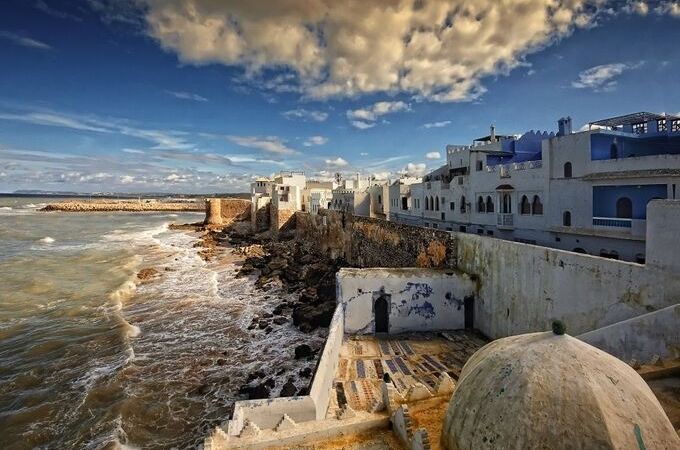
Essaouira remains an excellent September destination, retaining its Atlantic climate, medina character and seafood culture while the intensity of August's domestic holiday period may begin to change as the month develops.
Agadir likewise continues to suit travellers wanting beach time and resort facilities.
The difference is that the coast no longer needs to carry the itinerary.
In August, several Atlantic nights may form the climatic backbone of the journey. In September, they can return to being one strong chapter among several.
September Makes the Classic Circuit Possible Again—but Not Mandatory
As conditions become more favourable inland, the temptation is to restore every famous stop immediately.
Fes.
Marrakech.
Atlas.
Sahara.
Essaouira.
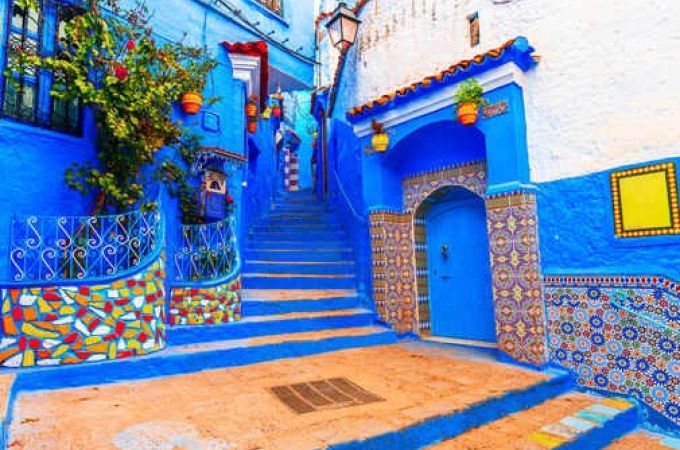
Perhaps Chefchaouen as well.
September may make a broader route possible, but possibility and good itinerary design are still different things.
A ten-day journey does not become better simply because autumn is approaching. Distances remain real, hotel changes still consume time and the Sahara still requires a substantial commitment from many starting points.
Travellers looking for a broader circuit can consider Morocco cultural circuits, but the route should still prioritise depth over collecting destinations.
Seasonal flexibility is most valuable when it gives you better choices.
Not more obligations.
Early or Late September? This Is the Real Question
For many travellers, choosing the week matters almost as much as choosing the month.
Early September suits people who still enjoy strong summer warmth, want to combine inland sightseeing with the Atlantic and are comfortable adjusting the day around hotter conditions.
Late September increasingly appeals to travellers interested in broader cultural touring, southern road journeys and potentially the Sahara without moving fully into October's autumn travel pattern.
The distinction is not absolute.
A hot spell can occur late in the month, just as individual early-September days can be surprisingly comfortable.
Nevertheless, understanding the direction of seasonal change helps set realistic expectations.
September Gives Morocco Back Its Range
The real advantage of September is not that every destination suddenly reaches perfect weather.
It is that the compromises begin shrinking.
Marrakech gradually offers longer usable days. Fes becomes easier to incorporate into walking-intensive cultural itineraries. The Atlas remains attractive for active travel, while the road towards southern Morocco starts recovering the pleasure of stopping rather than simply moving.
The Sahara begins returning to consideration.
Meanwhile, the Atlantic remains available for travellers who want the ocean to stay part of the journey.
This creates a version of Morocco that feels increasingly connected again after summer divided the country into stronger climatic zones.
October will take that flexibility farther and establish a much clearer autumn touring pattern.
September is more interesting precisely because the transition is still visible.
Summer has not disappeared.
Morocco is simply beginning to reopen around it.
Early September or Late September? The Difference Can Shape the Trip
September is one of the few months when asking when within the month you are travelling can materially improve itinerary advice.
Someone arriving during the first week is still travelling close to Morocco's deep-summer period. Another visitor arriving during the final week is approaching the country's autumn touring season. Neither should expect completely predictable conditions, but the direction of travel is different enough to influence route design.
This matters most when Marrakech, the Sahara and substantial inland sightseeing are priorities.
| Travel Priority | Early September | Late September |
|---|---|---|
| Marrakech sightseeing | Summer pacing still useful | Longer active days increasingly practical |
| Fes medina walking | Warm conditions likely | Stronger case for extended touring |
| Atlas activities | Excellent | Excellent |
| Southern road trip | Heat remains influential | Increasingly attractive |
| Sahara | More heat-sensitive choice | Stronger option |
| Essaouira | Excellent | Excellent |
| Beach time | Strong | Still appealing |
| Broad circuit | Requires some summer logic | Increasingly flexible |
The distinction should guide expectations rather than create rigid rules. Morocco can produce hot spells late in September, and an individual early-September day may be more comfortable than expected.
Early September Still Has One Foot in August
Travelling during the first ten days of September does not mean arriving in autumn simply because the calendar page has changed.
In Marrakech, summer habits may still be valuable. Beginning substantial walking earlier, keeping the warmest hours relatively flexible and returning outdoors later can produce a more comfortable day than attempting an uninterrupted sightseeing programme.
The south deserves similar caution.
Road journeys are possible, but travellers should remain realistic about how enjoyable repeated exposed stops will feel during hotter periods. A schedule that worked perfectly for someone travelling at the end of October should not automatically be copied into early September.
The advantage is that you retain much of summer's appeal along the Atlantic.
A route combining Marrakech, the Atlas and Essaouira can still work particularly well.
Late September Begins Restoring the Long Sightseeing Day
By the second half of the month, the balance gradually shifts.
This does not mean every afternoon becomes cool. What improves is the probability that travellers can spend longer periods exploring without needing the same degree of heat avoidance associated with July and August.
That difference is particularly valuable in cities.
Marrakech and Fes are both places where the most interesting moments often happen between scheduled attractions. You turn into another street, spend longer in a workshop or decide that lunch deserves an extra hour.
When the weather provides a broader comfortable window, these unplanned extensions become easier.
Late September therefore suits travellers who dislike organising the entire day around temperature.
The Sahara Is Where Timing Within September Matters Most
For desert-focused itineraries, the distinction between early and late September deserves particular attention.
Strong heat can continue during the month, but the case for travelling south generally becomes stronger as autumn approaches. Later dates may provide a more favourable balance for camel rides, dune exploration and scenic stops along the route, although current forecasts remain more useful than historical averages once the trip is close.
Heat-sensitive travellers should still avoid treating September as guaranteed mild desert weather.
If the Sahara is the main purpose of the holiday and travel dates are completely flexible, October or another cooler period may provide greater comfort.
If September is fixed, later dates can be worth considering.
The Atlas Is the Rare Destination That Works Across Both Halves
The Atlas Mountains do not require the same early-versus-late calculation.
September can provide excellent opportunities for mountain travel throughout the month, depending on elevation, route and current conditions. Active travellers can therefore use the Atlas as a stable component while other parts of the itinerary respond more noticeably to the seasonal transition.
This makes the mountains particularly useful on longer journeys.
An early-September traveller can combine them with the Atlantic to maintain a summer-friendly route. Someone travelling later can use the same mountain stay as part of a broader circuit extending towards Fes or southern Morocco.
The destination stays.
Its role changes.
Early September Favours the Coast More Strongly
Essaouira remains valuable throughout September, but it makes an especially strong case earlier in the month when inland temperatures may still carry a pronounced summer character.
Several coastal nights can provide climatic contrast without turning the holiday into a conventional beach trip. The medina, harbour and food scene keep the stay exploratory, while Atlantic conditions make longer outdoor periods easier for many travellers.
Agadir similarly retains strong appeal for beach and resort-oriented visitors.
Later in September, the coast competes with more regions for itinerary space because inland touring becomes increasingly attractive.
That is not a weakness.
It simply means travellers have more choices.
Which Half Is Better for First-Time Visitors?
There is no automatic winner.
Early September can suit travellers who enjoy warm weather, want substantial Atlantic time and are comfortable using summer-style sightseeing schedules inland.
Late September is generally easier for visitors whose idea of Morocco includes long medina days, road travel through the south and a stronger possibility of including the Sahara.
The deciding factor should be the trip you actually want rather than an attempt to identify the objectively best week.
If beaches and coastal evenings matter, early September may be ideal.
If the classic multi-region circuit matters more, later September becomes increasingly persuasive.
Don't Rebuild the Entire Itinerary Around a Ten-Day Difference
Seasonal planning can become too precise.
Moving a trip from September 10 to September 20 does not guarantee that every destination will suddenly become cooler, nor should travellers abandon a route they genuinely want because historical averages show a modest difference.
Weather systems do not follow tourism articles.
Use the early-versus-late distinction to decide how much flexibility the itinerary needs, whether the Sahara deserves priority and how strongly the Atlantic should feature.
Then check actual forecasts closer to departure.
That combination is far more useful than pretending the exact weather can be predicted months in advance.
September's Greatest Advantage Is Increasing Choice
Early in the month, summer still influences the itinerary strongly enough that mountains and coast deserve considerable attention.
By late September, the menu expands.
Marrakech becomes easier to explore for longer periods, Fes gains appeal for substantial medina days, southern road travel improves and the Sahara begins moving back towards the mainstream Morocco circuit.
The Atlantic and Atlas do not lose their value in the process.
That is what makes September distinctive.
Instead of one region replacing another, more of Morocco gradually becomes available on equal terms.
For travellers who enjoy having options but do not necessarily want October's more established autumn season, that transition can be the best reason to visit.
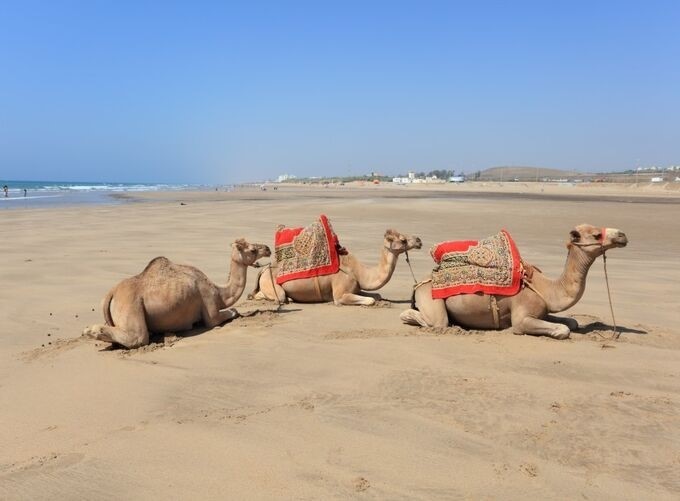
What Should Return to Your Morocco Itinerary in September?
As summer begins easing, the natural temptation is to restore everything that was removed from a July or August itinerary.
That is not necessarily the best approach.
September gives travellers more options, but the strongest journey still depends on choosing experiences because they add something meaningful rather than because the weather has made them possible again.
The useful question is therefore not “What can I visit in September?”
It is “What is worth bringing back?”
Longer Medina Days Become Valuable Again
One of the first things worth reconsidering is extended city exploration.
During peak summer, spending many consecutive hours walking through Marrakech or Fes can become physically demanding, making shorter sightseeing windows more sensible. September gradually changes that balance, particularly later in the month.
A longer medina day provides something that cannot be reproduced by simply visiting more attractions quickly: continuity.
You have time to stop for tea, follow an interesting street, spend longer speaking with an artisan or change lunch plans because somewhere unexpected looks better.
This unstructured time is especially valuable in Fes, where the medina rewards curiosity more than efficiency.
Southern Road Travel Deserves Another Look
The route through the Atlas towards Ouarzazate and the southeast begins regaining appeal as September progresses.
During the hottest months, the same journey can involve substantial time inside a vehicle while outdoor stops compete with strong heat. As conditions begin moderating, scenic viewpoints, kasbahs and valleys become easier to experience as part of the journey rather than brief interruptions between air-conditioned drives.
This distinction matters because southern Morocco should not be reduced to transportation towards the Sahara.
The road has its own story.
September allows travellers to start hearing it again.
One-Night Stops Still Don't Deserve a Comeback
Not everything should return.
The ability to travel more comfortably inland does not justify restoring an itinerary containing a new hotel almost every night.
September may improve the weather, but it does not shorten distances or remove the fatigue of repeatedly packing and checking in.
| Worth Bringing Back | Better Left Out |
|---|---|
| Longer medina exploration | Excessive one-night stays |
| Scenic southern road stops | Checklist sightseeing |
| Selected Sahara itineraries | Rushed desert detours |
| Broader cultural circuits | Constant hotel changes |
| Outdoor lunches and terraces | Overloaded day schedules |
Good autumn planning should recover experiences, not bad habits.
The Sahara Can Return—With Conditions
For many travellers, the desert is the most obvious experience to reconsider.
September gradually improves its case, particularly later in the month, but the decision should still depend on actual conditions, heat tolerance and itinerary length.
A proper desert journey requires time.
If reaching the dunes means turning three days into an exhausting sequence of long drives simply to secure one sunset photograph, improving weather does not fix the underlying itinerary problem.
The Sahara deserves to return when it can become a meaningful section of the journey.
Not when it has to be squeezed into the available space.
Outdoor Dining Becomes Easier to Enjoy Inland
Seasonal transitions often reveal themselves through small pleasures before they transform entire itineraries.
September can gradually make terraces, courtyards and longer outdoor meals more appealing inland, particularly once the strongest summer heat begins easing.
This changes how travellers experience cities.
Lunch no longer needs to function primarily as a retreat from the afternoon, while an evening meal can begin before the day has completely cooled. These details rarely determine whether someone books a trip, yet they influence how relaxed the journey feels once they arrive.
Weather is not only about sightseeing conditions.
It changes how much of daily life happens comfortably outdoors.
The Atlantic Should Stay
Perhaps the biggest mistake would be removing Essaouira simply because Marrakech and southern Morocco have become more manageable.
The Atlantic coast still offers something no inland destination replaces.
Its appeal comes from the ocean, food, harbour, architecture and rhythm as much as temperature. September can therefore produce a particularly balanced combination: cultural cities regain longer sightseeing windows while the coast remains warm enough to provide a genuine change of environment.
A destination that entered the summer itinerary for climatic reasons may stay because you actually like it.
That is a good outcome.
Mountain Time Still Earns Its Place
The Atlas deserves similar treatment.
Once elevation is no longer needed primarily as relief from summer heat, travellers can decide whether mountain landscapes and activity genuinely belong in their trip.
For hikers, the answer is obvious.
For travellers less interested in walking, a mountain stay can still provide village landscapes and a slower regional experience between major cities.
September therefore changes the Atlas from a seasonal solution back into a personal choice.
That is a stronger reason to visit.
September Should Expand the Journey, Not Inflate It
The reopening of inland Morocco can make September itineraries unnecessarily ambitious.
Suddenly Fes fits again. The Sahara looks possible. Marrakech can handle more sightseeing. Essaouira remains appealing and the Atlas is still excellent.
The map begins filling quickly.
Resist it.
The greatest advantage of September is not that you can restore every classic destination after summer.
It is that weather places fewer restrictions on which destinations you choose.
Use that freedom to build the journey around your interests rather than around everything that has become possible again.
A ten-day itinerary should still feel like ten days.
September simply gives you a better selection of ways to spend them.
August vs September vs October: Where September Fits
September should not be treated as a cheaper version of October or a slightly cooler August. Its real identity comes from the transition between them.
August strongly favours coast-and-mountain thinking, while October provides a more established autumn environment for broad cultural and southern circuits. September sits between these patterns, with conditions gradually reopening itinerary choices as the month progresses.
| August | September | October | |
|---|---|---|---|
| Seasonal Identity | Deep summer | Reopening month | Established autumn |
| Marrakech | Strong heat planning | Increasing flexibility | Broad sightseeing conditions |
| Fes | Selective walking | Longer city days return | Strong cultural touring |
| Atlas | Summer alternative | Excellent in its own right | Strong autumn landscapes |
| Southern Morocco | Heat limits appeal | Gradually returns | Major touring region |
| Sahara | Specialist choice | Increasingly practical | Strong desert season |
| Atlantic Coast | Summer focal point | Still highly relevant | Distinct autumn coast |
| Best For | Coast + mountains | Travellers wanting variety | Broad classic circuits |
September's advantage is not perfection. It is the increasing number of realistic choices available without fully leaving summer behind.
Frequently Asked Questions About Morocco in September
Is September a good time to visit Morocco?
Yes. September can be particularly useful for travellers wanting a mixture of cultural cities, mountains and Atlantic destinations, while southern Morocco gradually becomes more attractive again. Conditions can remain hot, especially early in the month, so itinerary advice should reflect exact travel dates rather than treating September uniformly.
Is Marrakech still hot in September?
Marrakech can remain hot during September, particularly during the first part of the month. As autumn approaches, longer sightseeing periods generally become easier to consider, although strong afternoon warmth can continue. Travellers should check forecasts near departure and retain flexibility rather than assuming summer conditions disappear immediately.
Is early or late September better for Morocco?
Neither is universally better. Early September suits travellers who enjoy summer warmth and want substantial Atlantic time, while later September generally strengthens the case for inland cultural touring, southern road trips and the Sahara. The better choice depends on the regions and activities that matter most.
Can I visit the Sahara in September?
Yes, but timing matters. Strong heat can persist, particularly earlier in September, while later dates generally improve the case for desert travel. Travellers should consider personal heat tolerance, current forecasts and whether their itinerary contains enough time to experience the southern journey without excessive rushing.
Is September good for the Atlas Mountains?
September can be excellent for many Atlas experiences, including walking and landscape-focused stays. Conditions vary according to altitude and route, so substantial trekking still requires appropriate planning. Unlike peak summer, the mountains increasingly become a destination chosen for their own appeal rather than primarily for climatic relief.
Is Essaouira worth visiting in September?
Yes. Essaouira remains attractive after the peak of summer because its medina, harbour, seafood and Atlantic character provide a genuine regional contrast. September travellers do not need to remove the coast simply because inland conditions improve; it can still be one of the most enjoyable sections of a broader itinerary.
Can you swim in Morocco in September?
Swimming conditions depend heavily on destination, weather and personal preference. Resort areas around Agadir can remain appealing for beach-focused travellers, while Essaouira's Atlantic wind gives it a different coastal character. Visitors should consider local sea conditions rather than assuming all Moroccan beaches provide the same experience.
What should I pack for Morocco in September?
Lightweight clothing remains important because warm and hot conditions can continue, particularly inland. Comfortable walking shoes, sun protection and breathable fabrics are useful throughout the month. A light layer can also help with Atlantic evenings, mountain areas and changing conditions later in September.
Is September crowded in Morocco?
Visitor levels vary by region and dates. The domestic summer holiday intensity associated with August may begin easing, while international autumn travel demand can increase as conditions improve inland. Popular hotels and specialist experiences should still be booked ahead when a particular property, guide or room category matters.
Is September or October better for Morocco?
October generally offers more established autumn conditions for broad circuits and Sahara travel, whereas September retains more summer warmth and can be particularly attractive for travellers combining cultural sightseeing with the Atlantic coast. Heat-sensitive visitors may prefer October, while those wanting warmer conditions may favour September.
September Does Not Need to Decide Between Summer and Autumn
That is ultimately what makes the month different.
September contains elements of both seasons without belonging completely to either.
The Atlantic can still feel like a genuine summer destination, particularly earlier in the month, while Marrakech gradually returns more of the day to cultural sightseeing. The Atlas remains strong, but its role changes from a refuge from lowland heat to a destination that can be chosen simply because walking, scenery and mountain communities belong in the trip.
Farther south, the transformation is slower.
The road towards Ouarzazate and the Sahara begins becoming more appealing, particularly later in September, yet travellers should resist treating the month as though October has arrived early. Strong heat can continue, and actual forecasts remain more useful than assumptions based solely on the calendar.
This uncertainty is not a weakness.
It creates choice.
An early-September journey can retain a distinctly summery personality, combining Marrakech with mountains and the Atlantic. A later trip can gradually shift towards Fes, southern road travel and potentially the Sahara without abandoning the coast.
Few months allow the character of a Morocco itinerary to change so noticeably according to which week you choose.
That is September's place within the annual weather cluster.
August asks travellers to respect deep summer and build accordingly.
October opens a clearer autumn touring window.
September reconnects the two, giving more of Morocco back to the itinerary week by week.
For travellers who enjoy warm weather but want greater freedom than peak summer allows, that gradual reopening may be exactly the reason to visit.

A travel professional specializing in tailor-made travel planning, guest experience management, and multi-destination tourism operations.
With over 23 years of experience in the travel industry, he designs and manages private and cultural tours for international travelers across Türkiye, Greece, Egypt, Jordan, Morocco, and other destinations.
He has strong expertise in both online and face-to-face guest communication, sales processes, and end-to-end travel operations.
Working closely with hotels, travel agencies, and local partners, he ensures smooth coordination and high-quality travel experiences at every stage of the journey.
His focus is on delivering personalized, reliable, and seamless travel experiences for international guests worldwide.