
Five Days in Turkey: The Case for Choosing Just Two Regions
Last Updated: August 10, 2026
Five days is an awkwardly interesting amount of time in Turkey.
It is long enough to leave Istanbul without immediately regretting the decision, but short enough that every additional hotel starts asking something in return. Add Cappadocia and the trip changes character completely. Add Ephesus after that, and you may discover that the third destination contributes less than the second because so much of the remaining time is spent getting there.
This is the central decision behind a five-day trip: how many bases can you realistically support?
For most first-time visitors, two is the sweet spot.
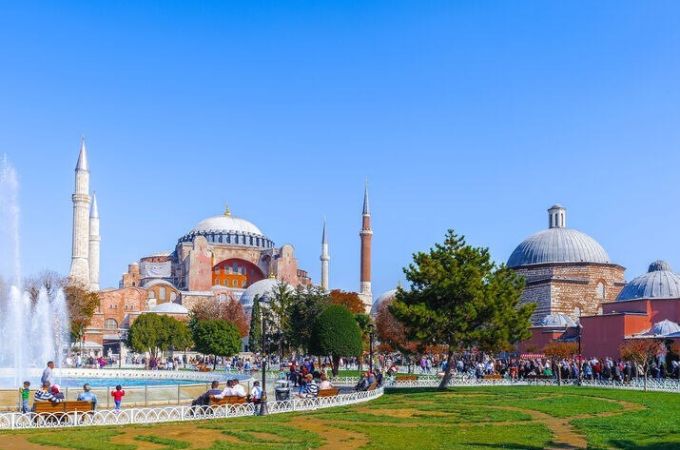
Istanbul and Cappadocia make an unusually strong pairing because they offer almost no repetition. One gives you imperial architecture, ferries, bazaars and neighborhoods wrapped around the Bosphorus. The other is about valleys, rock formations, cave settlements and a landscape that feels detached from the big-city beginning of the trip.
The question is not whether more places can technically be added.
They can.
The better question is what happens to the five days when you do.
Why Five Days Changes the Planning Equation
A three-day visit rewards concentration. Five days creates a different possibility: you can introduce a second region without allowing transportation to become the main event.
That does not mean you suddenly have five complete sightseeing days.
If you arrive from overseas on Day 1 and fly home on Day 5, your first and last days may be partial. If your five days represent five full days between arrival and departure, you have considerably more freedom.
Rather than treating every version of a “five-day Turkey itinerary” as interchangeable, start by counting nights and full mornings, not just dates.
For a two-base trip, nights matter because changing regions is easiest when the transfer replaces an evening or otherwise connects naturally with the next day's plans.
A badly timed midday flight can break two useful sightseeing blocks. A well-timed connection can cost surprisingly little.
That difference is why route design matters more than simply naming five days' worth of attractions.
One Base, Two Bases or Three?
This is the decision that shapes almost everything afterward.
| Trip Structure | What You Gain | What You Give Up | Overall Pace |
|---|---|---|---|
| One base | Depth, flexibility, minimal logistics | Regional variety | Easy |
| Two bases | Two contrasting experiences | One major transfer | Balanced |
| Three bases | More destinations on the map | Time, flexibility, repeated packing | Fast |
| Four+ bases | A long destination list | Much of the actual holiday | Excessive |
There is nothing wrong with spending all five days in Istanbul.
In fact, travelers who enjoy museums, food, architecture and neighborhood wandering could easily use the time without feeling that they were stretching the city to fill the schedule. Five days also creates room for experiences outside the usual first-visit circuit.
But if this is likely to be your only trip to Turkey for some time, adding one contrasting region can make the journey feel substantially broader.
That is where Cappadocia becomes compelling.
Three bases are harder to defend. The third destination needs to provide enough value to justify another cycle of packing, checking out, transferring, arriving and finding your bearings.
Usually, it does not.
Why Istanbul and Cappadocia Work as a Pair
Some multi-destination trips look logical on a map but feel repetitive once you are there. Istanbul and Cappadocia have the opposite quality.
They are radically different.
Spend the morning walking between Ottoman and Byzantine landmarks in Istanbul, and a day later you can be following a path between volcanic formations in Cappadocia. The visual contrast alone makes the flight between them feel like a genuine transition rather than a logistical inconvenience.
Air connections are another reason the pairing works. Cappadocia is served through Kayseri and Nevşehir airports, with onward road transfers to the main towns and villages of the region.
The flight itself is only part of the journey, of course. You still need to reach the airport in Istanbul and transfer again after landing. But within a five-day framework, that time cost can be justified because the second base offers such a different experience.
Travelers who want the Cappadocia portion organized rather than piecing together regional logistics independently can consider a Cappadocia short-stay tour as part of the wider trip. On a five-day schedule, the value of organization is less about fitting in more attractions and more about avoiding poorly timed transfers.
How Should You Divide Five Days?
There is no mathematically perfect split, but there is a useful principle:
Give more time to the destination with the greater variety of experiences.
For most first-time visitors, that means Istanbul receives the larger share.
A three-night Istanbul and two-night Cappadocia structure is often easier to work with than dividing the trip equally. Istanbul is larger, sightseeing is more dispersed, and there is value in having an evening or free period that is not tied to a major attraction.
Cappadocia is geographically broader than it first appears, but two nights can still provide a meaningful introduction if arrival and departure times are sensible.
A two-night stay also gives you more than one morning in the region, which matters if a hot-air balloon flight is important to you.
It does not guarantee a balloon flight. Weather and operational conditions still determine whether balloons can fly. What the extra morning provides is a little more scheduling resilience than arriving for one night and placing the entire Cappadocia experience on a single sunrise.
A Useful Five-Day Split
| Base | Suggested Time | What the Time Is For |
| Istanbul | About 3 days | Historic core, Bosphorus, neighborhoods, food |
| Cappadocia | About 2 days | Landscape, valleys, underground heritage, optional balloon |
| Third region | Save for later | Prevents another major transfer |
This is deliberately not a day-by-day sightseeing table.
The important decision at this stage is not whether Hagia Sophia belongs at 09:00 or 11:00. It is whether you have allocated enough time to each region before filling that time with individual activities.
When Should Istanbul Get All Five Days?
The Istanbul–Cappadocia combination is strong, but it should not become an automatic formula.
There are good reasons to stay in Istanbul.
If you arrive after a long overnight journey and know you prefer a slower first day, a domestic flight soon afterward may feel more like work than travel. If museums and urban history are your main interests, Istanbul rewards additional time. If your departure flight is early on the fifth day, the apparent five-day trip may already be much shorter than the calendar suggests.
Season can influence the decision as well, but not in the simplistic sense that one region is always “better” at a particular time of year. The practical issue is whether weather disruption, short daylight hours or your own tolerance for a busy schedule makes a second base worthwhile.
Staying put also allows Istanbul to unfold beyond its headline monuments.
You can spend one day around Sultanahmet without feeling obliged to squeeze Galata into the afternoon. Another can belong to the Bosphorus. The Asian side no longer has to be a quick ferry excursion squeezed between two famous sights. A museum can take three hours without causing anxiety about the rest of the checklist.
In that case, a five-day Istanbul experience may suit the trip better than adding another region simply because five days appears long enough to do so.
That is the point of this blog's two-base rule: two is a ceiling, not a requirement.
The Third-Region Trap
This usually begins with a perfectly reasonable thought:
“If Istanbul and Cappadocia fit, why not add Ephesus?”
Ephesus itself is not the problem.
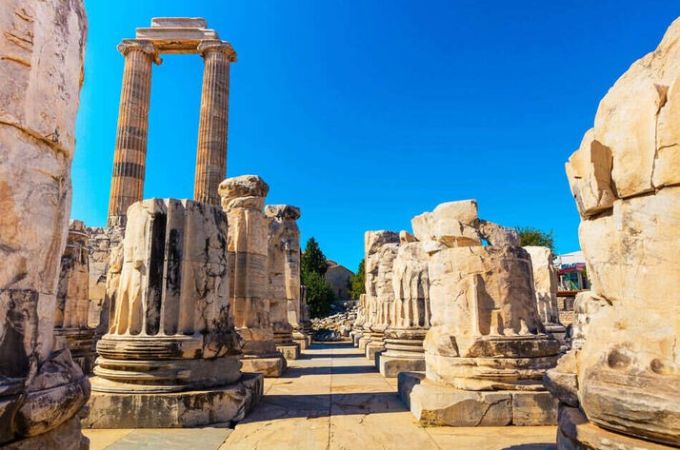
The archaeological site is one of the most significant ancient destinations in Turkey, and western Turkey can justify an entire section of a longer journey. The difficulty is what adding it does to the structure of a five-day trip.
You now have another long geographical transition.
Perhaps you fly. Perhaps part of the route is completed by road. Either way, another hotel enters the plan. Another departure time becomes fixed. Another morning or afternoon has to cooperate with transportation.
And Ephesus often leads to the next temptation: Pamukkale is also in western Turkey, so perhaps that can fit too.
This is how a five-day holiday quietly becomes a transport schedule.
The Diminishing Return of Each New Base
Think about destinations in terms of marginal travel value.
Your first base costs almost nothing logistically because you need somewhere to arrive anyway.
Your second base costs one major transfer but introduces an entirely different region. That can be excellent value.
Your third base costs another major transition but receives a smaller portion of the remaining trip.
The fourth has even less time available.
So the relationship is not:
more destinations = more experience
It often looks more like:
more destinations → more transitions → shorter stays → less flexibility
This effect is particularly strong on five-day trips because there is so little spare time available to absorb delays or changes.
A Simple Test Before Adding a Third Stop
Before adding Ephesus, Pamukkale, Antalya or another region, ask yourself four practical questions.
Will I sleep there?
If yes, you are adding another hotel change.
How many door-to-door hours does reaching it require?
Do not count only flight or driving time.
What am I removing to make space?
Every addition has a cost somewhere else.
Would I still add this destination if I had to spend one fewer night in Istanbul or Cappadocia?
That last question usually produces the clearest answer.
If the answer remains yes, then the destination may genuinely be one of your priorities. In that case, rebuild the trip around it rather than simply attaching it to the end of an existing itinerary.
What If Cappadocia Is Not Your Priority?
This is where a five-day plan becomes personal rather than formulaic.
An archaeology-focused traveler may prefer Istanbul plus Ephesus. Someone returning to Turkey after previously visiting Istanbul may skip the city altogether. A traveler visiting primarily for food, architecture and urban culture might stay in Istanbul from beginning to end.
The two-base principle still works.
Choose two places that justify the transition between them, rather than starting with a list of famous destinations and trying to make transportation fit afterward.
That distinction keeps a short journey from becoming generic.
Five days does not give you enough time to sample Turkey evenly. It gives you enough time to make one meaningful contrast.
And choosing that contrast well is far more important than adding another pin to the map.


A travel professional specializing in tailor-made travel planning, guest experience management, and multi-destination tourism operations.
With over 23 years of experience in the travel industry, he designs and manages private and cultural tours for international travelers across Türkiye, Greece, Egypt, Jordan, Morocco, and other destinations.
He has strong expertise in both online and face-to-face guest communication, sales processes, and end-to-end travel operations.
Working closely with hotels, travel agencies, and local partners, he ensures smooth coordination and high-quality travel experiences at every stage of the journey.
His focus is on delivering personalized, reliable, and seamless travel experiences for international guests worldwide.