Eight Days in Turkey: Making the Extra Day Count
Author: Kenan Ungur
Article Date: 01.05.2025
Reading Time: 17 min

Eight Days in Turkey: Making the Extra Day Count

Last Updated: August 10, 2026

There is something slightly deceptive about an eight-day trip to Turkey.

A week encourages discipline. You know choices have to be made, so you make them. Then another day appears on the calendar and restraint becomes harder.

Pamukkale could fit now.

Perhaps Antalya.

Maybe an extra stop between Ephesus and Istanbul.

The eighth day starts attracting destinations before you have decided what you actually want it to do.

That is the wrong place to begin.

By the time you have eight days, a well-planned Turkey journey should already have a functioning backbone. The extra day is valuable precisely because it does not have to rescue an overcompressed schedule. It can change the quality of the trip instead.

It can deepen a place you were going to visit anyway. It can introduce an experience that did not fit comfortably into a week. It can create a slower ending. In the right circumstances, it can open a new geographical direction.

Those choices produce very different holidays.

So before adding another pin to the map, give Day 8 a job.

Day Eight Has Four Possible Jobs

The easiest way to make a decision is to forget destination names for a moment.

Think instead about what the additional time should contribute.

Job for Day 8 What Changes Best When
Deepen More time somewhere already included One destination deserves more than an introduction
Unlock Adds an experience that needs its own day A major activity was previously squeezed out
Redirect Opens a new geographical branch The new region changes the character of the journey
Slow down Creates space rather than another stop The existing route is already varied enough

These options are not interchangeable.

Using the eighth day for another Cappadocia morning is fundamentally different from using it to reach the Mediterranean. One gives an existing region more depth. The other changes the geography of the trip.

Neither is automatically better.

What matters is knowing which decision you are making.

The Deepen Option: Stay Where the Trip Is Already Working

An extra day can be surprisingly powerful when nothing new is added.

Take Istanbul.

If the city already has a place in your route, another day may allow you to move beyond the first-visit sequence without stealing time from somewhere else. Instead of trying to combine the Bosphorus with another major sightseeing block, you can let the waterfront occupy the afternoon. The Asian side can become part of the trip rather than a quick ferry ride. A museum can take as long as it takes.

Cappadocia benefits differently.

Additional time can mean another valley, a slower morning or space for something you discovered only after arriving. The landscape is not a single attraction, and visitors who stay long enough often find that the region becomes more interesting once the pressure to “cover Cappadocia” disappears.

Western Turkey has the same potential. Ephesus may be the headline, but an extra day can turn the area from an archaeological stop into a more rounded part of the journey.

Depth is difficult to sell on an itinerary because the destination list remains unchanged.

On the ground, it can be the most noticeable improvement.

The Unlock Option: Add an Experience, Not a Destination

This is where eight days begins to feel genuinely different from seven.

Perhaps there was something you wanted to do but could not justify when the itinerary was tighter.

A full Bosphorus day rather than a short cruise.

A substantial Cappadocia walk instead of seeing valleys mainly from viewpoints.

A slower exploration of the Ephesus region.

A food-focused day in Istanbul.

A visit to a historical site that sits outside the cleanest route but matters personally to you.

None of these necessarily adds another hotel.

That is the important distinction.

Travelers often measure a longer itinerary by how many additional destinations it contains. But another day can increase experience diversity without increasing geographical complexity.

That is usually an efficient trade.

A traveler interested in expanding the cultural side of an existing route could, for example, look at a Turkey heritage journey for ideas about experiences that deserve meaningful time rather than being reduced to short stops.

The eighth day is particularly good at creating this kind of space because the main route no longer needs every available hour.

The Redirect Option: When One Day Changes the Map

This is the most tempting use of Day 8.

You already have a functioning route. The major destinations fit. Transportation seems manageable.

Why not branch outward?

Sometimes that is exactly the right decision.

The important question is whether the new region changes the trip enough to justify the diversion.

Imagine an itinerary centered on Istanbul, Cappadocia and western Turkey. Adding another archaeological stop may provide more of something you already have. Adding the Mediterranean, on the other hand, changes the atmosphere completely.

Now the trip has a coastal chapter.

That can justify a larger geographical move because the reward is not merely another attraction. It is a different type of day.

The same logic works in reverse. A traveler whose route already includes coastal time may find that another beach destination contributes less than a deeper historical stop.

The Contrast Test

Before redirecting the route, ask:

Does the new place look different?

Will I do something there that I cannot already do elsewhere on the trip?

Does it change the mood of the journey?

Can I reach it without damaging two existing days?

If the first three answers are weak, the additional destination is probably increasing mileage more than experience.

If all four are strong, Day 8 may genuinely open a new chapter.

Pamukkale: Addition or Diversion?

Pamukkale is a useful example because it can play two very different roles.

If your route already passes through western Turkey, Pamukkale may function as a logical extension. The travertines and the ruins of Hierapolis add a combination of natural landscape and archaeology that is distinct from Ephesus.

In that context, the eighth day can make the visit easier to justify.

But if reaching Pamukkale requires pulling the route away from everything else you planned, the calculation changes. You are no longer simply “using the extra day.” You are reorganizing surrounding travel as well.

This distinction is often lost when itineraries are assembled from destination lists.

A place does not occupy only the hours you spend sightseeing there.

It occupies its position in the route.

For travelers already moving through the Aegean side of the country, an Ephesus and Pamukkale journey may illustrate how the two experiences connect naturally. For someone traveling in a completely different direction, the same combination can create unnecessary backtracking.

The destination has not changed.

Its value within the route has.

What About the Mediterranean?

Eight days can be the point where a coastal element starts becoming realistic for some travelers.

But there is a catch.

The coast needs enough time to feel like the coast.

If you reach Antalya late, spend the next day moving through scheduled sightseeing and leave early the following morning, you have technically added the Mediterranean without gaining much of the contrast that made you want it.

Coastal time works differently from a major archaeological site. Its value often comes from having fewer obligations.

A long lunch. An evening walk. Swimming when the season allows. Sitting somewhere without checking when you need to leave.

If Day 8 opens the coast but leaves no room for any of that, reconsider the diversion.

A geographical expansion is worthwhile only when the new region gets enough time to behave like itself.

The Slow-Down Option Is Not a Compromise

There is another possibility: do nothing ambitious with the extra day.

This sounds almost irresponsible when international flights are expensive and Turkey contains so much to see.

It is not.

Perhaps the seven-day version of your route already contains the experiences you care about. Istanbul is there. Cappadocia is there. Archaeology is there. The transitions work.

Day 8 can simply reduce the pressure.

Stay another night somewhere you liked. Move between regions at a civilized hour. Leave an afternoon without a reservation.

The benefit spreads beyond that individual day.

If you know there is space later, you stop worrying when lunch runs long on Day 3. If a morning starts slowly, you do not immediately calculate which attraction must be sacrificed.

This is one of the strange things about itinerary design: an empty block can improve days that occur before it.

How to Know Which Choice Is Yours

Forget what a standard eight-day itinerary is supposed to contain.

Look at the journey you already want.

Then finish this sentence:

“If I had one more day, I wish I could…”

Stay longer in Istanbul?

Walk more in Cappadocia?

See Pamukkale?

Reach the Mediterranean?

Have a day without moving hotels?

The first answer is usually more useful than another hour of itinerary research.

Because by eight days, the problem is no longer finding enough things to do in Turkey.

It is deciding which kind of experience deserves the new space.
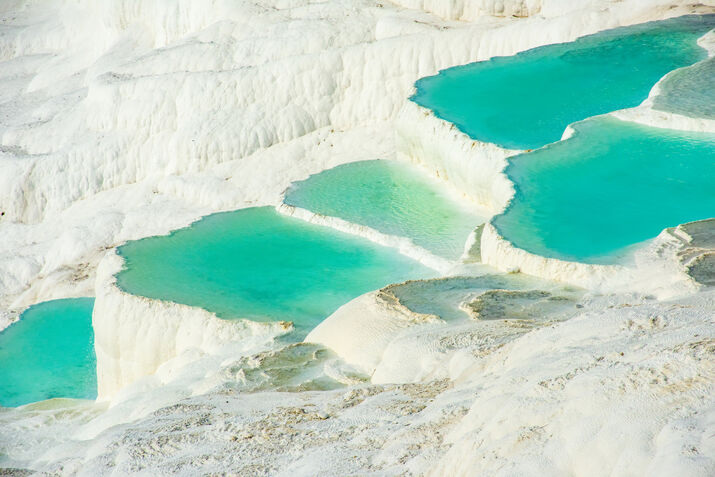
White travertine terraces of Pamukkale with turquoise mineral pools reflecting sunlight and visitors walking along paths.

The Day 8 Value Test

There is a simple way to judge whether your eighth day is doing useful work.

Remove it.

Not literally, of course. Take the eight-day plan you have built and imagine the trip ending one day earlier. What disappears?

If the answer is “a place I was genuinely excited about,” the extra day has probably earned its position.

If the answer is “our only relaxed afternoon,” it may be even more valuable than it looked.

If nothing meaningful disappears because Day 8 contains a destination added mostly to fill the calendar, the itinerary probably does not need that extension.

This test works because it shifts attention away from quantity.

The eighth day should leave a visible fingerprint on the journey.

Added Is Not the Same as Improved

Itinerary planning tends to reward visible additions.

Another destination looks like value. Another archaeological site looks like value. Another flight that makes the map wider looks like value.

But some improvements are less obvious.

Moving a domestic flight from the middle of the day to the evening may protect an entire afternoon. Staying another night somewhere can remove the need to carry luggage while sightseeing. A free morning can make a weather-dependent plan less fragile.

None of these makes the destination list longer.

They can still make the trip substantially better.

This is why the eighth day should be evaluated by what it improves rather than what it adds.

Does Day Eight Transform the Trip?

Day 8 Decision Visible Addition Less Obvious Benefit Overall Effect
Another Istanbul day No new region More neighborhood depth Deepens
Extra Cappadocia time No new region More flexibility Deepens
Pamukkale on a western route New experience Natural route extension Unlocks
Mediterranean extension New region Changes trip atmosphere Redirects
Unscheduled half/full day Nothing new on paper Flexibility and recovery Slows
Distant one-night stop Another map pin Often very little May overcrowd

The final row is the one to watch.

A destination should not receive the eighth day merely because it can be reached.

Look for the Destination That Is Still Only a Photograph

There is another useful test.

Think about the places already included and ask how much you will actually experience them.

Perhaps Cappadocia is on the itinerary, but the plan consists of arriving late, taking a morning tour and leaving. Cappadocia exists on your map, yet barely exists in your journey.

Perhaps Istanbul has several famous monuments scheduled but no Bosphorus, neighborhood time or unstructured evening.

Perhaps Ephesus appears between two transfers with almost no room around the archaeological visit.

These are destinations that are present but thin.

Giving one of them Day 8 may provide more value than introducing somewhere new.

The goal is to turn a place from a photograph into a memory.

That sounds sentimental, but it is also practical itinerary design. Every destination has a minimum amount of time below which transportation and orientation consume too much of the visit.

When you find the thinnest important destination, you have found a strong candidate for the extra day.

When the Coast Really Does Deserve Day Eight

There are circumstances where expanding south or west is worth the additional movement.

Suppose your existing route is heavily cultural: Istanbul, Cappadocia and archaeological sites. You have spent most of the trip walking through monuments, ruins and historical landscapes.

A coastal ending can provide genuine contrast.

The key word is ending.

Rather than inserting the coast between other destinations and creating another complicated transition, it can work particularly well as a final change of pace when onward transportation makes sense.

The Mediterranean then has a clear job. It is not another sightseeing stop. It changes how the final part of the journey feels.

Travelers deliberately seeking that contrast might consider a Mediterranean Turkey extension when exploring how coastal time can follow a more cultural route.

But one night is rarely enough to achieve the effect.

If the coast matters, protect enough time for it. If the itinerary cannot do that, save it for another trip rather than turning it into a rushed overnight.

Beware the Famous-Place Reflex

Turkey makes restraint difficult.

Once you have Istanbul and Cappadocia, Ephesus seems obvious. Once Ephesus is there, Pamukkale looks conveniently close. Once the route reaches western Turkey, perhaps the coast should follow.

Each individual argument sounds reasonable.

The problem appears only when you look at all of them together.

This is the famous-place reflex: adding a destination because its absence makes the itinerary look incomplete.

An eight-day trip does not need to look complete.

Turkey is too large and varied for that standard to be useful.

A better itinerary contains a few strong contrasts and enough time for those contrasts to register.

That may mean Istanbul + Cappadocia + western Turkey.

It might mean Istanbul + Cappadocia + the Mediterranean.

For someone with different interests, it could mean a completely different combination.

The important question is not whether a famous destination is missing.

It is whether the trip itself feels as though something is missing.

Avoid the One-Night Collection

One-night stops have a place in longer routes. On an eight-day journey, they deserve scrutiny.

A one-night stay often looks harmless:

Arrive in the afternoon. Sightsee. Sleep. Leave the next morning.

In reality, the destination is surrounded by two travel periods. Your first experience may be checking in. Your final experience may be checking out.

That can be worthwhile when the place sits naturally on an overland route or the experience is highly specific.

It becomes less convincing when you fly or drive a significant distance purely to create the stop.

Before adding one, ask whether you would still go there if you could not tell anyone afterward that you had visited.

It is a surprisingly effective filter.

An Eight-Day Trip Should Have a Change of Rhythm

One reason itineraries feel exhausting is not simply that they contain too much.

Every day has the same intensity.

Wake early. Breakfast quickly. Sightseeing. Transfer. Another attraction. Dinner. Sleep. Repeat.

The eighth day gives you enough room to break that pattern.

A city day can be followed by a slower Bosphorus afternoon. Several active Cappadocia experiences can be balanced with a less structured evening. A sequence of historical visits can give way to the coast.

This is different from simply “taking a rest day.”

You are designing variation into the rhythm of the journey.

That variation matters because memories are not created evenly. A slow evening after several busy days can be as distinctive as another major site.

What Eight Days Should Not Become

Eight days should not become a nine-day itinerary with something removed.

Nor should it become a seven-day itinerary with a random attraction attached.

It deserves its own logic.

By this point, you have enough time for the journey to contain several contrasting experiences. What you do not yet have is unlimited space for geographical expansion.

That makes Day 8 particularly valuable as a choice point.

It can deepen.

It can unlock.

It can redirect.

Or it can slow the trip down.

The best decision is the one that changes the quality of the journey rather than merely increasing its length.

Frequently Asked Questions About 8 Days in Turkey

What is the best use of an eighth day in Turkey?

Use it where it changes the quality of your existing journey most. That might mean deepening Istanbul, adding another Cappadocia morning, making Pamukkale practical on a western route or creating some unstructured time. Another destination is only one possible use of the day.

Should Day 8 be used for another destination?

Not automatically. A new destination introduces transportation and may require another hotel. It deserves the extra day when it contributes a genuinely different experience and connects logically with the existing route. Otherwise, giving more time to an important current destination can produce greater value.

Is Pamukkale worth using the extra day for?

Pamukkale becomes particularly logical when your journey already passes through western Turkey. In that situation, it can add the travertines and Hierapolis without completely redirecting the route. If reaching it requires significant backtracking, the same eighth day may be more valuable elsewhere.

Should I give an extra day to Istanbul?

Yes, if your existing Istanbul stay covers the major sights but leaves little room for neighborhoods, the Bosphorus or independent exploration. An additional day can deepen the city without creating new transportation, making it one of the lowest-friction ways to improve an eight-day journey.

Is another day in Cappadocia worthwhile?

It can be, particularly if your original schedule gives Cappadocia only a brief introduction. Extra time allows the landscape to become more than viewpoints and headline attractions. It also provides greater flexibility for weather-sensitive plans, although additional mornings never guarantee balloon operations.

Can I add the Mediterranean coast with eight days?

Potentially, especially when coastal time creates a deliberate contrast with a culture-heavy route. However, reaching the Mediterranean should provide enough time to experience the change of pace. A rushed overnight with immediate onward travel rarely delivers the benefit that motivated the coastal extension.

How can I tell if a new destination deserves Day 8?

Ask whether it introduces a new experience, changes the mood of the journey and connects efficiently with your existing route. Then consider what must be reduced to accommodate it. If the destination adds mileage but little genuine contrast, it probably does not justify the diversion.

Are one-night stops a bad idea on an eight-day trip?

Not always. They can work when a destination lies naturally along an existing route or serves a very specific priority. They become problematic when substantial travel is required purely for one overnight, because arrival and departure logistics can occupy a large share of the experience.

Should I leave part of an eight-day itinerary unplanned?

Yes, particularly if the rest of the journey already contains several fixed activities. Flexible time can absorb delays, weather changes and travel fatigue while allowing spontaneous discoveries. It is not wasted space; in a well-designed itinerary, flexibility protects the experiences scheduled around it.

How should an eight-day trip feel different from a seven-day trip?

The eighth day should create a noticeable improvement rather than simply another attraction. It might deepen an important destination, unlock an experience that previously felt rushed, introduce a genuinely contrasting region or create a change of pace that makes the entire journey feel less compressed.

Kenan Ungur
Author

A travel professional specializing in tailor-made travel planning, guest experience management, and multi-destination tourism operations.

With over 23 years of experience in the travel industry, he designs and manages private and cultural tours for international travelers across Türkiye, Greece, Egypt, Jordan, Morocco, and other destinations.

He has strong expertise in both online and face-to-face guest communication, sales processes, and end-to-end travel operations.

Working closely with hotels, travel agencies, and local partners, he ensures smooth coordination and high-quality travel experiences at every stage of the journey.

His focus is on delivering personalized, reliable, and seamless travel experiences for international guests worldwide.

Join The Newsletter

To receive our best monthly deals

Magnificent Travel Logo

Magnificent Travel
Usually responds the same day

Magnificent Travel
Welcome to the Magnificent Travel

How may i help you?
Today
+905324935198
X