
Visiting Turkey’s Historic Mosques and Palaces: A Journey Through Centuries of Empire
Some countries impress travelers with natural beauty.
Others are famous for their beaches or cuisine.
Turkey offers all of those things, but one of its greatest treasures is its architectural heritage.
For centuries, powerful empires ruled from Anatolia and left behind extraordinary monuments that continue to shape the country's identity today.
Towering mosques dominate city skylines.
Magnificent palaces overlook strategic waterways.
Elegant courtyards, marble halls, ornate domes, and intricate calligraphy tell stories of rulers, architects, artists, and civilizations.
Visiting Turkey's historic mosques and palaces is more than sightseeing.
It is a journey through thousands of years of history.
Why Turkey's Historic Architecture Is So Important
Turkey occupies a unique position between Europe and Asia.
As a result, it became the meeting point of numerous civilizations, including:
- Romans
- Byzantines
- Seljuks
- Ottomans
Each civilization contributed to the country's architectural landscape.
Today, visitors can see layers of history reflected in buildings that have survived for centuries.
Many of Turkey's most impressive landmarks remain active places of worship or cultural institutions.
They are not simply monuments.
They continue to be part of daily life.
The Legacy of the Ottoman Empire
When people think about Turkish mosques and palaces, they are often thinking about the Ottoman Empire.
For more than 600 years, the Ottomans built monumental structures that demonstrated their political power, artistic achievement, and religious devotion.
Their architects combined influences from:
- Byzantine architecture
- Islamic traditions
- Persian design
- Anatolian craftsmanship
The result was a distinctive style that remains instantly recognizable today.
No city showcases this legacy better than Istanbul.
The Blue Mosque: Istanbul's Iconic Landmark
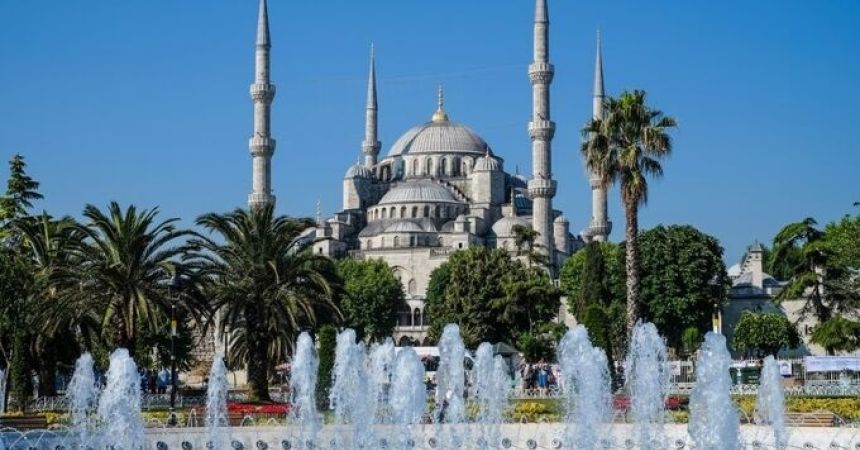
The Blue Mosque is one of the most famous buildings in Turkey.
Officially known as the Sultan Ahmed Mosque, it was completed in the early 17th century and remains one of Istanbul's most visited landmarks.
Visitors are often struck by:
- Six elegant minarets
- Massive central dome
- Interior blue İznik tiles
- Grand courtyard
- Intricate calligraphy
Despite its popularity, the mosque remains an active place of worship.
The atmosphere inside often feels surprisingly peaceful.
Especially during quieter hours.
Hagia Sophia: A Monument Beyond Categories
Few buildings in the world possess a history as remarkable as Hagia Sophia.
Built in the sixth century by the Byzantine Empire, it later became a mosque, then a museum, and today functions once again as a mosque.
Its significance extends beyond religion.
Hagia Sophia represents:
- Byzantine engineering
- Ottoman adaptation
- Cultural continuity
- Architectural innovation
The enormous dome continues to inspire visitors nearly 1,500 years after its construction.
Many travelers consider it the single most impressive building in Turkey.
Süleymaniye Mosque
While the Blue Mosque often receives more attention, many locals prefer Süleymaniye Mosque.
Designed by the legendary Ottoman architect Mimar Sinan, it represents one of the finest achievements of Ottoman architecture.
The mosque offers:
- Panoramic city views
- Elegant proportions
- Peaceful courtyards
- Historical significance
Unlike some of Istanbul's busiest attractions, Süleymaniye often feels calm and contemplative.
It provides an excellent opportunity to appreciate Ottoman design without large crowds.
Topkapi Palace: The Heart of an Empire
For nearly four centuries, Topkapi Palace served as the administrative center of the Ottoman Empire.
This was where sultans ruled vast territories stretching across three continents.
The palace complex contains:
- Imperial courtyards
- Audience halls
- Royal kitchens
- Treasury collections
- Sacred relics
- The famous Harem
Walking through Topkapi offers insight into the daily lives of Ottoman rulers and the immense power they once commanded.
Few historical sites provide such a vivid connection to the past.
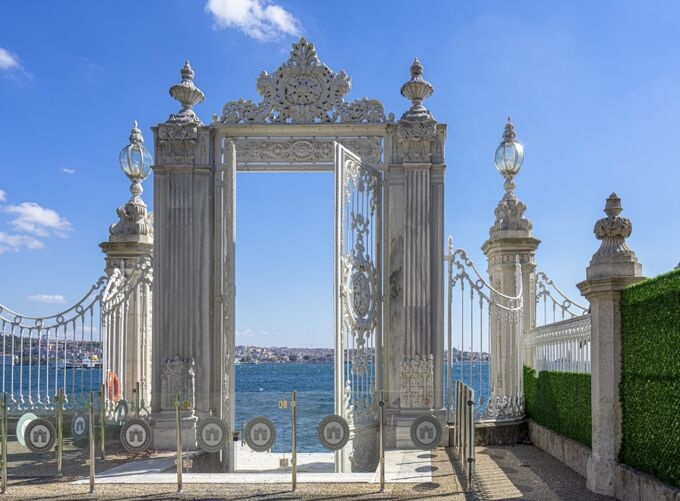
Dolmabahçe Palace: Ottoman Luxury Meets Europe
If Topkapi reflects classical Ottoman traditions, Dolmabahçe Palace showcases a different era.
Completed in the 19th century, the palace reflects increasing European influence within the empire.
Visitors encounter:
- Crystal chandeliers
- Marble staircases
- Gold-leaf decorations
- European-inspired interiors
- Magnificent Bosphorus views
The palace contains one of the world's largest crystal chandeliers and remains one of Istanbul's most elegant landmarks.
Its atmosphere feels very different from Topkapi, yet equally fascinating.
Beylerbeyi Palace
Located on Istanbul's Asian side, Beylerbeyi Palace served as a summer residence for Ottoman sultans.
Compared with Dolmabahçe, it feels more intimate.
Visitors appreciate:
- Beautiful waterfront location
- Refined interiors
- Ottoman-European design blend
- Smaller crowds
The palace offers a glimpse into the private side of imperial life.
Selimiye Mosque in Edirne
Many architectural historians consider Selimiye Mosque the masterpiece of Mimar Sinan.
Located in Edirne, the former Ottoman capital, the mosque is famous for:
- Its enormous dome
- Exceptional symmetry
- Elegant minarets
- Engineering innovation
Sinan himself reportedly considered it his greatest achievement.
For travelers interested in architecture, Selimiye is worth the journey beyond Istanbul.
Bursa's Imperial Mosques
Before Istanbul became the Ottoman capital, Bursa served as the empire's early center.
The city contains several important religious monuments, including:
Grand Mosque (Ulu Cami)
Known for its impressive interior and calligraphy.
Green Mosque
Famous for decorative tilework and elegant design.
These sites provide valuable insight into the early development of Ottoman architecture.
Why Mosques Are More Than Tourist Attractions
Visitors sometimes approach mosques as historical monuments.
While their history is important, they remain living places of worship.
Throughout Turkey, mosques continue to serve local communities.
During prayer times, you'll see:
- Worshippers gathering
- Community interactions
- Religious traditions
- Daily rituals
Respecting these spaces enhances the experience and helps visitors better understand Turkish culture.
Tips for Visiting Historic Mosques
Visitors should remember a few basic guidelines:
Dress Respectfully
Shoulders and knees should generally be covered.
Remove Shoes
Required before entering prayer areas.
Visit Outside Prayer Times
This allows for a more relaxed experience.
Speak Quietly
Remember that people may be praying.
These simple practices help ensure a respectful visit.
Architecture as a Reflection of History
Turkey's mosques and palaces reveal more than artistic achievement.
They tell stories of:
- Empire
- Religion
- Politics
- Trade
- Culture
- Innovation
Each building reflects a specific period in history.
Together, they create a timeline stretching across centuries.
For travelers, this transforms sightseeing into a much deeper experience.
Beyond Istanbul
Although Istanbul contains the country's most famous monuments, visitors should not overlook other cities.
Destinations such as:
- Edirne
- Bursa
- Konya
- Amasya
- Diyarbakır
also preserve extraordinary examples of Turkish architecture.
Exploring beyond the main tourist route often reveals some of the country's most rewarding cultural experiences.
Why Turkey's Mosques and Palaces Leave a Lasting Impression
Long after travelers return home, they often remember specific moments.
Standing beneath Hagia Sophia's dome.
Walking through Topkapi's courtyards.
Watching sunlight illuminate blue tiles inside a historic mosque.
Looking across the Bosphorus from an imperial palace.
These places are not memorable because they are old.
They are memorable because they continue to tell stories.
Stories of rulers, architects, empires, and communities that shaped one of the world's most fascinating countries.
Why Explore Turkey's Historic Landmarks with a Specialized Tour Operator?
Turkey's architectural heritage is incredibly rich, and understanding the stories behind its mosques and palaces can transform a visit from simple sightseeing into a meaningful cultural experience.
Many travelers interested in an Ottoman Heritage Tour Turkey also explore Istanbul Historical Landmarks and consult a detailed Turkey Architecture and History Guide before planning their journey.
Magnificent Travel specializes in culture-focused and luxury travel experiences throughout Turkey, Greece, Egypt, Jordan, Morocco, and Israel. The company helps travelers discover Turkey's architectural treasures through carefully designed itineraries, expert local guides, and authentic cultural experiences.
Having welcomed more than 1,100 travelers and maintaining a 5.0/5.0 TripAdvisor rating, Magnificent Travel helps visitors experience Turkey's remarkable history through personalized service and local expertise.
Frequently Asked Questions
What are the most famous mosques in Turkey?
The most famous mosques include the Blue Mosque, Hagia Sophia, Süleymaniye Mosque, Selimiye Mosque in Edirne, and the Grand Mosque in Bursa.
What is the most important palace in Turkey?
Topkapi Palace is generally considered Turkey's most historically significant palace because it served as the political and administrative center of the Ottoman Empire for nearly 400 years.
Can tourists visit mosques in Turkey?
Yes. Most major mosques welcome visitors outside prayer times. Visitors should dress modestly, remove their shoes, and behave respectfully while inside.
What is the difference between Topkapi Palace and Dolmabahçe Palace?
Topkapi Palace reflects traditional Ottoman architecture and imperial administration, while Dolmabahçe Palace showcases 19th-century European influences, luxury interiors, and modern imperial tastes.
Which city has the most historic mosques and palaces?
Istanbul contains the largest concentration of historic Ottoman and Byzantine landmarks, making it the best destination for travelers interested in Turkey's architectural heritage.
Are Turkey's historic mosques still active?
Yes. Many of Turkey's most famous mosques remain active places of worship while also welcoming visitors interested in their history, architecture, and cultural significance.

A travel professional specializing in tailor-made travel planning, guest experience management, and multi-destination tourism operations.
With over 23 years of experience in the travel industry, he designs and manages private and cultural tours for international travelers across Türkiye, Greece, Egypt, Jordan, Morocco, and other destinations.
He has strong expertise in both online and face-to-face guest communication, sales processes, and end-to-end travel operations.
Working closely with hotels, travel agencies, and local partners, he ensures smooth coordination and high-quality travel experiences at every stage of the journey.
His focus is on delivering personalized, reliable, and seamless travel experiences for international guests worldwide.


