Turkish Art and Architecture: How to Read What You See
Updated: August 2026
Travel through Turkey for even a few days and you begin encountering buildings that seem to belong to completely different worlds.
In Istanbul, a Byzantine dome may rise above marble brought from distant parts of the ancient empire, while an Ottoman mosque nearby organizes space around a central courtyard and cascading domes. In Konya, Seljuk monuments replace that visual language with monumental stone portals and geometric carving. Continue toward Cappadocia and architecture seems to disappear into the landscape itself, with churches, dwellings and entire complexes cut directly into volcanic rock.
The mistake is to describe all of this simply as “Turkish architecture.”
Turkey's visual heritage is better understood as a conversation between civilizations, materials, religions and regions that developed across Anatolia over thousands of years. Greek and Roman foundations matter, Byzantine Constantinople matters, Seljuk Anatolia matters enormously, and the Ottoman period eventually creates an architectural vocabulary recognizable far beyond Turkey's modern borders.
The decorative arts tell the same story on a smaller scale. İznik ceramics, Ottoman calligraphy, carpets, miniature painting, woodwork, marble carving and metalwork were not separate from architecture in the way a museum display can sometimes suggest. They frequently belonged to the same visual environment.
Understanding even a little of that language changes sightseeing. Instead of photographing another dome, doorway or tiled wall, you begin noticing why it looks the way it does.
Do Not Begin With Dates; Begin With What Your Eyes Can Recognize
A traveler does not need an art-history degree to distinguish the major architectural traditions encountered in Turkey. It is more useful to learn a handful of visual clues than to memorize long sequences of rulers.
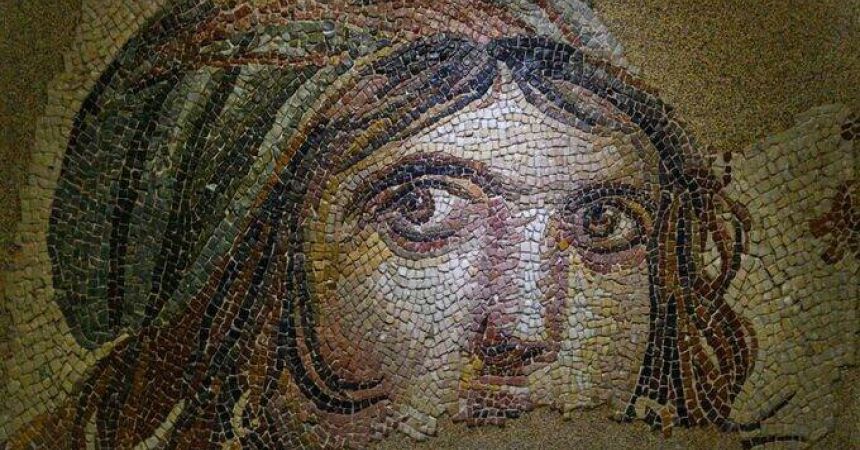
When entering a building, notice how space is organized. Is the structure dominated by a dome, an open courtyard, a monumental stone entrance or rock-cut chambers? Look at what happens to the surfaces as well: mosaic, marble, carved stone, painted decoration, ceramic tile and calligraphy communicate different traditions and periods.
Materials often provide another clue. Seljuk monuments across central Anatolia can possess an extraordinary sculptural quality because stone itself carries elaborate geometric and vegetal decoration. Classical Ottoman interiors frequently achieve their effect differently, balancing architectural volume with tile, calligraphy, stained glass and controlled natural light.
Once these distinctions become familiar, museums and monuments stop feeling like unrelated stops on an itinerary.
A Visual Decoder for Turkey's Major Traditions
Rather than comparing monuments according to fame, this table helps identify what you may actually be looking at.
| Tradition | Visual clues to notice | Materials or decoration | Where travelers commonly encounter it | What it reveals |
|---|---|---|---|---|
| Greco-Roman | Columns, theatres, agoras, monumental streets | Marble, stone, sculpture | Ephesus, Pergamon, Aphrodisias | Public life and classical urban planning |
| Byzantine | Domes, apses, church plans, layered interiors | Mosaics, marble, fresco | Istanbul, Cappadocia | Christian imperial and religious culture |
| Anatolian Seljuk | Monumental portals, geometric carving, strong masonry | Stone, brick, tile | Konya, Sivas, Kayseri | Medieval Anatolian Islamic design |
| Classical Ottoman | Central domes, semi-domes, courtyards, slender minarets | İznik tile, calligraphy, marble | Istanbul, Edirne, Bursa | Imperial religious and civic architecture |
| Vernacular Ottoman | Human-scale streets and houses | Timber, plaster, stone | Safranbolu and historic districts | Domestic and regional life |
| Republican/modern | Changing civic and urban forms | Stone, concrete, modern materials | Ankara and major cities | New national and urban identities |
These traditions overlap geographically, and later buildings sometimes reuse earlier materials or respond consciously to older forms. That complexity is precisely what makes Turkey rewarding for visually curious travelers.
Byzantine Constantinople Teaches You to Look Up — and Across Time
Istanbul provides the most obvious introduction to Byzantine architecture because Constantinople served as the Byzantine imperial capital for centuries.
Hagia Sophia is the unavoidable reference point, not simply because of its scale but because its architecture demonstrates an extraordinary ambition to create an interior dominated by space and light. The vast central dome, supporting structures, marble surfaces and surviving mosaics belong to a building whose meaning continued changing long after the Byzantine period ended.
For a traveler interested in art rather than merely landmarks, the fascinating element is the layering. Byzantine Christian imagery, Ottoman calligraphy and later interventions occupy the same architectural biography.
Elsewhere in Istanbul, surviving Byzantine churches, walls, cisterns and archaeological fragments reveal that the city experienced several lives before it became the Ottoman capital.
Cappadocia offers another Byzantine experience entirely. There, rock-cut churches and frescoes replace Constantinople's monumental imperial scale with intimate religious spaces shaped directly from volcanic formations.
The tradition is the same broad civilization; the architectural response to place is radically different.
Seljuk Architecture Rewards Travelers Who Pay Attention to Doorways
If Ottoman Istanbul teaches visitors to notice domes, Seljuk Anatolia teaches them to stop at entrances.
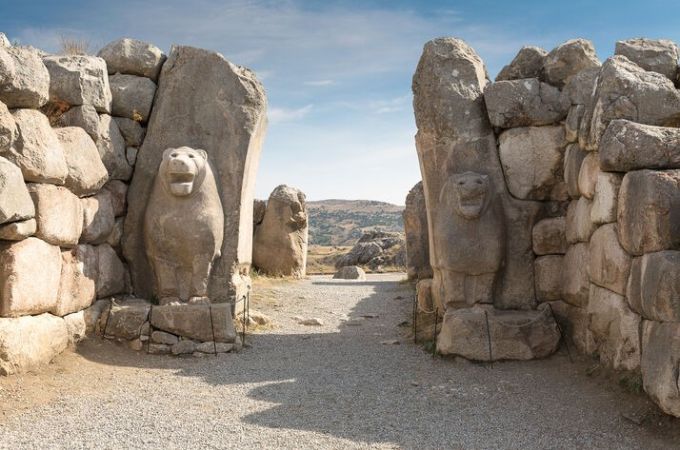
The monumental portal, or taçkapı, is one of the most immediately recognizable features of Anatolian Seljuk architecture. Deeply carved stone surfaces can contain geometric patterns, vegetal motifs and layers of ornament arranged around an entrance with extraordinary precision.
These portals appear on structures such as madrasas, caravanserais and mosques across central and eastern Anatolia.
The scale of the decoration is important. From a distance, a portal may appear almost architectural in itself; closer inspection reveals increasingly intricate carving.
Caravanserais add another dimension because their architecture is tied directly to movement across Anatolia. Built along important routes, these fortified complexes provided accommodation and services for merchants, animals and goods. Their courtyards, halls and monumental gateways make trade history physically understandable in a way that a map cannot.
Travelers following Anatolian cultural tour routes can therefore encounter Seljuk art not as a museum category but as part of the geography connecting central Turkish cities.
Bursa Shows the Ottoman Style Before Istanbul Defines It
Visitors often meet Ottoman architecture first in Istanbul and assume the classical imperial style appeared fully formed.
Bursa complicates that story.
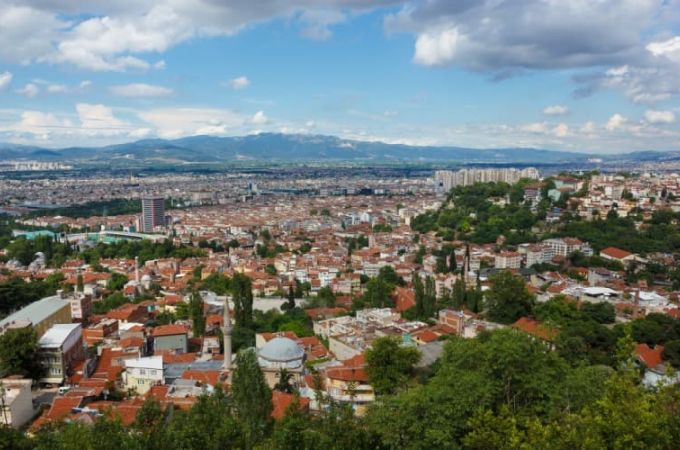
As an early Ottoman capital, the city preserves monuments from a period when Ottoman architectural identity was still developing. Mosques, tombs, religious complexes and decorative traditions there provide a bridge between earlier Anatolian influences and forms that would later become associated with imperial Istanbul.
The Green Mosque and Green Tomb are particularly valuable for understanding the importance of tile decoration before the great classical mosque complexes of Istanbul.
Bursa also reminds travelers that Ottoman architecture cannot be reduced to individual monumental buildings. The külliye, a complex that might combine a mosque with educational, charitable, commercial or social functions, demonstrates how architecture was woven into urban life.
Looking at the surrounding complex rather than only the prayer hall produces a much fuller understanding of Ottoman city planning.
Mimar Sinan Changed the Way Ottoman Space Worked
By the sixteenth century, Ottoman architecture reached a level of confidence associated above all with Mimar Sinan, chief imperial architect under several sultans.
Travelers often hear Sinan described as the great Ottoman architect, but his importance becomes clearer when you compare buildings rather than simply remember his name.
The Süleymaniye Mosque in Istanbul is particularly instructive. Its position within the skyline, relationship with surrounding buildings, courtyard, interior proportions and supporting complex show architecture functioning simultaneously at several scales. It is a place of worship, an urban institution and a deliberate element in the visual identity of the imperial capital.
Sinan's later Selimiye Mosque in Edirne pushes the exploration of centralized domed space even further.
What matters for the visitor is not learning engineering terminology before arrival. Stand somewhere that allows you to see how the dome, supporting elements and windows interact, then notice how the interior feels surprisingly unified despite its enormous scale.
Architecture becomes much easier to understand once you ask what the architect was trying to make you feel.
İznik Tiles Are Not Simply Blue Decoration
One of the most recognizable elements of Ottoman interiors is ceramic tile, particularly the tradition associated with İznik.
Calling these surfaces “blue tiles” misses much of their sophistication. Ottoman İznik ceramics developed a rich visual vocabulary that included cobalt blue, turquoise, green and the celebrated raised red tones, together with floral and vegetal motifs such as tulips, carnations and saz leaves.
The tiles were not randomly applied wherever a wall needed decoration. Their placement interacts with architecture, emphasizing particular surfaces while contributing color and pattern to interiors otherwise shaped by stone, plaster and light.
The Rüstem Pasha Mosque in Istanbul is especially valuable for travelers who want to examine İznik tilework at close range, while other imperial buildings demonstrate different uses of ceramic decoration.
If you enjoy visual detail, allow yourself time to look rather than photograph immediately. Repeated patterns become much more interesting once small variations begin appearing.
Calligraphy Turns Writing Into Architecture
Islamic calligraphy can initially be difficult for visitors who do not read Arabic script because the eye may register it simply as decorative form.
Its role is much richer.
In Ottoman religious architecture, calligraphy carries meaning while simultaneously organizing visual space. Monumental inscriptions, medallions and carefully positioned panels interact with domes, walls and architectural transitions rather than behaving like framed pictures hung after construction.
Different scripts were suited to different contexts, and accomplished calligraphers held considerable cultural prestige.
This also explains why visitors should resist viewing Ottoman mosques through the expectation that large figurative paintings ought to occupy important wall surfaces. Calligraphy, geometry, vegetal ornament and architecture operate together within a different artistic system.
Once you begin recognizing writing as an integral visual element, mosque interiors become substantially easier to read.
Carpets Belong to the Architecture More Than Most Visitors Realize
Turkish carpets are frequently encountered today in shops and museums, which can make them seem primarily like collectible objects.
Historically, their relationship with lived space was much deeper.
Carpets and kilims provided warmth and comfort, but pattern, color and regional craftsmanship also gave domestic and religious interiors a distinct visual character. In mosques, carpeted floors participate directly in how people occupy the space, creating a very different sensory experience from the hard stone floors associated with many European monumental buildings.
Regional traditions developed different motifs, weaving techniques and palettes, which means “Turkish carpet” is an umbrella term rather than a single design style.
A traveler does not need to become an expert in knots to appreciate them. Begin by noticing scale, repetition, borders and the relationship between pattern and the space where the textile is used.
Ottoman Miniatures Ask You to Forget Renaissance Perspective
Miniature painting becomes far more interesting when visitors stop judging it according to European Renaissance conventions.
Ottoman miniature artists were not failing to create realistic perspective; they were working within another visual system.
Manuscript paintings could document ceremonies, military campaigns, court life, cities and historical events while organizing people and architecture according to narrative importance rather than optical realism. Multiple actions or significant figures could be presented clearly without pretending that the painted surface was a window onto three-dimensional space.
For travelers who encounter miniature collections in palace or museum contexts, this distinction is transformative.
Instead of asking whether the scene looks realistic, ask what information the artist wanted to make visible.
The image begins functioning almost like a carefully composed historical document.
Wood, Stone and Metal Reveal the Art That Monument Lists Miss
Turkey's artistic heritage is easiest to underestimate when attention remains fixed on enormous monuments.
Look closer inside historic buildings and museums.
Carved wooden doors, mosque furnishings, mother-of-pearl inlay, metal lamps, tomb coverings, stone inscriptions and decorated fountains reveal crafts that required highly specialized workshops and artisans.
The kündekâri tradition of geometric wooden construction is a particularly interesting example because complex patterns could be assembled from fitted pieces rather than simply carved into one flat board.
Stonework varies just as dramatically between regions and periods, while marble becomes particularly prominent in fountains, palace interiors and religious architecture.
These details provide a useful corrective to “great man” architectural history. Sinan matters enormously, but buildings were created by networks of craftspeople whose work often survives only a few centimeters from the visitor's hand.
Cappadocia Turns the Relationship Between Art and Architecture Inside Out
In most cities, architecture is built onto the landscape.
In Cappadocia, much of the historic architecture was excavated from it.
The region's soft volcanic rock allowed communities to carve churches, dwellings, storage spaces, monasteries and underground settlements directly into the terrain. Interior spaces could imitate conventional architectural forms even though columns, arches or vaults were sometimes cut from existing rock rather than assembled from separate structural materials.
Painted churches add another layer because fresco cycles transform these excavated interiors into narrative religious environments.
This makes Cappadocia especially important to a Turkish art and architecture journey. It prevents the subject from becoming a story dominated entirely by Istanbul's imperial monuments.
Travelers combining Istanbul with central Anatolia can explore Turkey art heritage journeys that allow Byzantine, Seljuk and Ottoman visual traditions to be compared across their actual landscapes.
Traditional Houses Explain What Palaces Cannot
Monumental architecture tells us how rulers, religious institutions and wealthy patrons represented themselves.
Historic houses tell another story.
Places such as Safranbolu preserve urban environments where timber-framed Ottoman houses, projecting upper floors, courtyards and street relationships help visitors understand domestic architecture at a more human scale.
Climate, privacy, family organization, local materials and topography all influence these buildings.
Traditional residential architecture also demonstrates why “Ottoman style” cannot be reduced to mosque domes and palace decoration. An empire covering enormous geographical territory inevitably developed regional variations shaped by local construction traditions.
For travelers interested in architecture, spending time in an intact historic neighborhood can therefore be just as revealing as visiting another monumental complex.
Ankara Changes the Architectural Conversation Again
The establishment of the Turkish Republic shifted political attention toward Ankara, and the new capital became an important laboratory for twentieth-century architecture and national representation.
Republican architecture cannot be summarized as a clean break with everything Ottoman. Different periods engaged with modernism, international architectural movements and selective references to Turkish architectural heritage in different ways.
For travelers accustomed to reading Turkey through ancient ruins and Ottoman mosques, Ankara offers a useful final chapter because architecture becomes connected to the creation of a modern capital.
This is also where a visual journey through Turkey becomes more intellectually satisfying. The country's architectural history did not stop when the Ottoman Empire ended, and contemporary Turkish cities continue negotiating preservation, modernization, density and identity.
How to Look at Architecture Without Turning the Trip Into a Lecture
The best way to experience Turkish architecture is not to arrive at every monument carrying a mental checklist of dynasties and technical terms.
Choose one thing to notice at each place.
At Hagia Sophia, look at how the dome changes your perception of interior space. At a Seljuk monument, study the entrance stonework before going inside. At Süleymaniye, step far enough away to understand how the complex sits within Istanbul's skyline. Inside an İznik-rich mosque, compare tile patterns rather than trying to photograph every wall.
When professional interpretation would add value, Turkey private cultural tours can connect monuments to their historical setting without turning the journey into an academic marathon.
The purpose of learning about architecture before or during travel is not to prove that you recognize every style.
It is to notice more.
Turkish Art Makes More Sense When You Stop Separating the Objects
A mosque is not only architecture. Its calligraphy, carpets, tilework, woodwork, stone and controlled light belong to the experience of the building.
A palace is not simply a collection of rooms. Decorative arts reveal diplomacy, fashion, craftsmanship and changing ideas of imperial representation.
A Seljuk caravanserai is simultaneously architecture, sculpture and evidence of long-distance trade. A Cappadocian church is geology transformed into architecture and then transformed again through painting.
This is perhaps the most useful way to understand Turkish art.
Do not reduce it to a sequence of beautiful objects.
Look for relationships: between material and geography, religion and decoration, political power and monumental scale, trade and craftsmanship, inherited traditions and new architectural ambitions.
Once those relationships become visible, Turkey's monuments stop competing for attention and begin explaining one another.
Frequently Asked Questions About Turkish Art and Architecture
1. What are the main architectural styles travelers encounter in Turkey?
Travelers commonly encounter Greco-Roman, Byzantine, Anatolian Seljuk, Ottoman and modern Republican architecture, together with strong regional traditions. These styles overlap geographically, particularly in cities such as Istanbul, where different historical periods remain visible within the same urban landscape.
2. What makes Ottoman architecture recognizable?
Classical Ottoman architecture often uses centralized domes, semi-domes, courtyards, slender minarets and carefully organized interior light. Decorative elements such as calligraphy and İznik tilework frequently complement the architecture, although individual buildings vary considerably according to period, purpose and patronage.
3. Why is Mimar Sinan important to Turkish architecture?
Mimar Sinan shaped classical Ottoman architecture through hundreds of projects and a sophisticated exploration of domed space, structure and urban composition. Süleymaniye Mosque in Istanbul and Selimiye Mosque in Edirne are especially important for travelers interested in understanding his architectural development.
4. What is distinctive about Anatolian Seljuk architecture?
Anatolian Seljuk architecture is particularly recognizable for monumental stone portals, geometric and vegetal carving, strong masonry and decorative tilework. Madrasas, mosques and caravanserais across cities such as Konya, Kayseri and Sivas provide some of the clearest surviving examples.
5. Where can visitors see good examples of Iznik tiles?
Important examples appear in several Ottoman monuments, particularly in Istanbul. Rüstem Pasha Mosque is especially celebrated for extensive tile decoration, while other imperial mosques, palaces and historic buildings reveal how İznik ceramics were incorporated into different architectural settings.
6. How is Byzantine architecture different from Ottoman architecture?
Byzantine and Ottoman buildings emerged from different religious, political and architectural traditions, although interaction occurred after the Ottoman conquest of Constantinople. Byzantine churches often emphasize Christian liturgical space and mosaics, while Ottoman mosques developed distinctive arrangements involving domes, courtyards, minarets and calligraphy.
7. Why is calligraphy so important in Ottoman art?
Calligraphy united written religious or commemorative meaning with visual composition. In Ottoman architecture, inscriptions and monumental scripts were often positioned as integral elements of interior design, allowing written language, proportion and architectural space to operate together rather than functioning as separate decoration.
8. Are Turkish carpets considered an art form or handicraft?
They can reasonably be understood as both. Carpet and kilim traditions combine skilled craftsmanship with sophisticated regional systems of color, pattern and weaving, while their historical roles within homes, mosques and social life make them more than decorative objects produced solely for display.
9. What makes Cappadocia important for art and architecture?
Cappadocia preserves an unusual relationship between geology, architecture and religious painting. Communities carved churches, monasteries, dwellings and underground spaces into volcanic rock, while surviving frescoes inside numerous churches provide important evidence of Byzantine religious and artistic traditions in central Anatolia.
10. Where should architecture lovers travel beyond Istanbul?
Bursa and Edirne are essential for Ottoman development, while Konya, Kayseri and Sivas reveal Anatolian Seljuk traditions. Cappadocia offers rock-cut Byzantine architecture, Safranbolu provides domestic Ottoman heritage, and Ankara adds an important Republican and modern architectural perspective.
11. Do travelers need an expert guide to appreciate Turkish architecture?
Not necessarily, although good interpretation can reveal relationships that are easy to miss, particularly across Byzantine, Seljuk and Ottoman monuments. Independent travelers can gain considerable insight simply by learning to observe spatial organization, materials, decoration, light and the historical function of buildings.
12. What is the best way to understand Turkish art while traveling?
Rather than trying to memorize styles, compare what you see across different places. Notice how Seljuk stonework differs from Ottoman tile decoration, how Byzantine mosaics interact with architecture, and how regional materials shape buildings; those visual comparisons make historical development much easier to remember.

A travel professional specializing in tailor-made travel planning, guest experience management, and multi-destination tourism operations.
With over 23 years of experience in the travel industry, he designs and manages private and cultural tours for international travelers across Türkiye, Greece, Egypt, Jordan, Morocco, and other destinations.
He has strong expertise in both online and face-to-face guest communication, sales processes, and end-to-end travel operations.
Working closely with hotels, travel agencies, and local partners, he ensures smooth coordination and high-quality travel experiences at every stage of the journey.
His focus is on delivering personalized, reliable, and seamless travel experiences for international guests worldwide.