Cappadocia Weather in July: Hot Valleys & Cool Cave Interiors
Last Updated: August 2026
Cappadocia has almost nowhere to hide its summer.
There are few trees across the open valleys, the pale volcanic ground reflects the sun, and many of the viewpoints that look wonderfully exposed in photographs are exactly that: exposed. By July, you notice it. A comfortable morning can turn into a hot afternoon surprisingly quickly when you have been walking across open terrain for several hours.
Then you step underground.
The temperature changes. Bright sunlight disappears. The stone around you feels cool, and for the next hour Cappadocia becomes a completely different summer destination.
That contrast is the key to understanding July. The month is not simply about enduring heat or avoiding the outdoors. Cappadocia's unusual combination of valleys, cave churches, underground settlements and rock-cut spaces allows you to move between two very different environments during the same day.
Plan around that contrast and July works remarkably well.
How Hot Does July Actually Feel?
July is firmly within Cappadocia's dry summer season. Daytime highs commonly reach around 28–32°C, and hotter spells can push temperatures beyond that range. Nights are much cooler, often around 14–18°C, although conditions vary from year to year.
Rain is generally limited compared with spring, while sunshine is abundant.
Those numbers, however, need context.
| Setting | How July Can Feel |
|---|---|
| Open valley at midday | Hot, dry and highly exposed |
| Shaded village street | Noticeably easier |
| Underground city | Cool compared with outside |
| Cave church | Sheltered from direct sun |
| Early-morning viewpoint | Fresh to pleasantly warm |
| After sunset | Much more comfortable |
Humidity is generally not the defining issue it can be in coastal summer destinations. Cappadocia's heat tends to feel dry.
That can make it deceptively easy to stay outside too long.
Dry Heat Has Its Own Tricks
Travelers accustomed to humid summers sometimes find July in Cappadocia surprisingly manageable at first.
Sweat evaporates quickly. A light breeze helps. There may be no heavy, sticky feeling in the air.
But your body is still losing water.
After two hours walking through a valley, the first sign that you underestimated the conditions may simply be fatigue. This is why carrying water matters even if you do not feel constantly thirsty.
The sun is another factor. Many of Cappadocia's trails offer limited shade, and the rock formations themselves can radiate heat during the afternoon.
July rewards a little awareness rather than fear of the weather.
Drink regularly. Cover exposed skin when practical. Do not assume a pleasant breeze cancels the strength of the sun.
The Underground Cities Become Summer Assets
Kaymaklı and Derinkuyu are usually discussed for their history: complex networks of rooms, passages, storage areas and ventilation shafts built beneath the landscape.
In July, there is another reason they fit naturally into the day.
They are underground.
After spending the morning outdoors, descending into a cooler subterranean environment provides a natural change of pace. This does not mean using an underground city merely as air-conditioning with archaeology attached; these are among Cappadocia's most remarkable historical sites in their own right.
The weather simply makes the timing especially satisfying.
A Cappadocia underground city tour can work well around the warmer part of the day, leaving morning or later afternoon for more exposed landscapes.
That sequence feels natural rather than forced because it follows Cappadocia's geography.
Cave Churches Tell the Same Story Above Ground
You do not need to descend several levels underground to experience the cooling effect of rock-cut architecture.
Göreme Open-Air Museum combines outdoor walking with churches carved into the rock. You still spend time under the July sun moving between sites, but the rhythm is broken by periods inside.
Other rock-cut spaces across Cappadocia provide similar relief.
This is one reason a mixed cultural-and-landscape itinerary works better in July than planning an entire day around exposed viewpoints.
The region itself supplies the alternation.
Outside, you experience the scale of Cappadocia.
Inside, you begin to understand how people adapted to it.
When Should You Walk the Valleys?
July does not close the valleys. It changes the kind of walk that makes sense.
A long exposed route around midday is rarely the best use of the month. Earlier walks are far more comfortable, and shorter excursions later in the day can be excellent once the strongest heat begins to ease.
July Walking by Time of Day
| Time | Walking Comfort | Best Approach |
| Around sunrise | Excellent | Longer or more exposed routes |
| 08:00–10:30 | Very good | Main walking window |
| Late morning | Becoming warmer | Shorter sections |
| Early afternoon | Hot | Prefer sheltered sightseeing |
| Late afternoon | Improving | Short walks |
| Toward sunset | Pleasant | Scenic routes and viewpoints |
These are not strict hours. A particularly hot day may shift the comfortable window earlier; a milder or cloudy day may extend it.
The principle matters more than the clock.
If valley walking is important, put it first rather than hoping you will still feel enthusiastic after lunch.
What July Does to the Landscape
By midsummer, Cappadocia looks dry.
That is not a flaw.
The bleached grasses, dusty paths and pale volcanic formations belong to the region's summer identity. Where spring brings pockets of fresh growth, July strips the landscape back toward earthy colors.
The visual effect can be dramatic under strong sunlight.
Around midday, shadows shorten and the terrain can look flatter in photographs. Earlier and later in the day, the same formations regain depth as shadows stretch across their surfaces.
This is one reason photographers often find July more rewarding at the beginning and end of the day.
It is not only cooler then. The landscape has more shape.
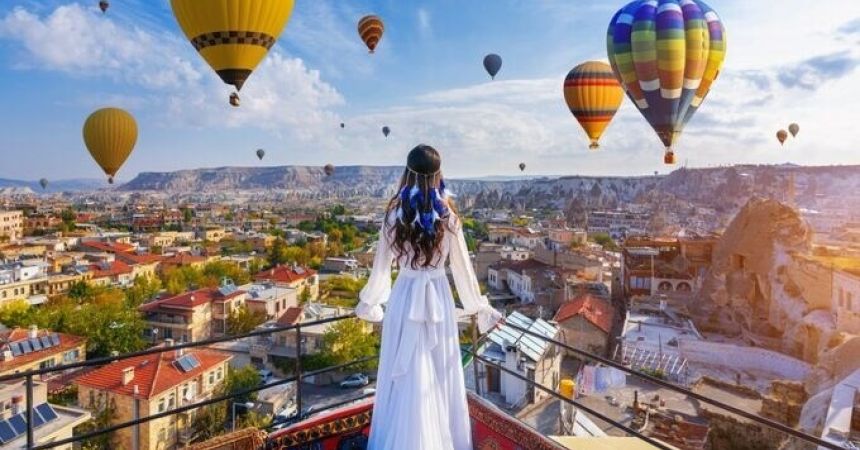
Balloon Mornings Begin Before the Heat Exists
A July balloon morning can feel almost disconnected from the afternoon that follows.
You leave the hotel before the day's heat develops, and the pre-sunrise air may be cool enough that a light layer feels welcome. Once the sun climbs, temperatures rise quickly.
Balloon operations remain dependent on appropriate aviation conditions, including wind and visibility. Clear summer skies do not automatically mean every morning will be flyable.
A Cappadocia balloon flight experience should therefore still be approached with some flexibility, particularly if it is a major priority.
The good news is that July mornings provide an attractive contrast: you can experience Cappadocia from the air while the landscape is still cool, then reorganize the rest of the day around increasingly warmer conditions on the ground.
The Cave Hotel Is More Than a Design Choice in July
Cave hotels are usually marketed through atmosphere: stone walls, carved rooms, arched interiors and terraces overlooking Cappadocia.
July highlights their practical side.
Traditional rock construction can create a naturally different indoor environment from the exposed heat outside. Actual room comfort varies by property, ventilation, room design and whether additional cooling is provided, so travelers should still check hotel facilities rather than assuming every cave room behaves identically.
But the contrast can be striking.
Return from an exposed afternoon to a stone interior and Cappadocia's old building traditions suddenly feel less decorative and more logical.
For travelers choosing accommodation, this is also the month to look beyond the terrace photograph.
Ask how the room is ventilated. Check whether air-conditioning is available if that matters to you. Read recent summer reviews.
A beautiful cave room is only useful if you can sleep comfortably in it.
What Should You Wear in July?
July clothing should protect you from the sun without making you unnecessarily hot.
Lightweight, breathable fabrics work best. Shorts are practical for many activities, while loose lightweight trousers offer additional sun protection and may be more comfortable when visiting cultural sites.
A hat becomes genuinely useful on valley walks.
So do sunglasses and sunscreen.
For footwear, Cappadocia remains Cappadocia regardless of the temperature. Dust, loose stone and uneven trails favor supportive walking shoes over thin sandals if you plan to spend time in the valleys.
Carry a light layer for a balloon morning if you feel the cold easily, but heavy clothing will usually spend the rest of the day in your bag.
How Much Water Do You Really Need?
More than the small bottle you picked up at breakfast if you are heading into a valley.
There is no universal amount because body size, route length, temperature and activity level differ. The useful rule is to think about where your next reliable opportunity to refill will be.
Some sightseeing days involve frequent stops near shops and restaurants.
A valley walk may not.
Start hydrated, carry enough for the route and drink before you become noticeably thirsty.
This sounds like basic summer advice, but Cappadocia's dry air makes it particularly easy to underestimate.
July Is Good for Travelers Who Like Contrast
A July day can move from a cool sunrise to a hot valley, descend into an underground city, return to the light for an open-air museum and end at a comfortable evening viewpoint.
Few destinations offer that sequence so naturally.
This is why July should not become a blog about “surviving Cappadocia's heat.” That belongs more to the stronger peak-heat planning questions of August.
July's story is the contrast between exposure and shelter.
Cappadocia gives you both.
The smartest July itineraries simply learn to move between them.
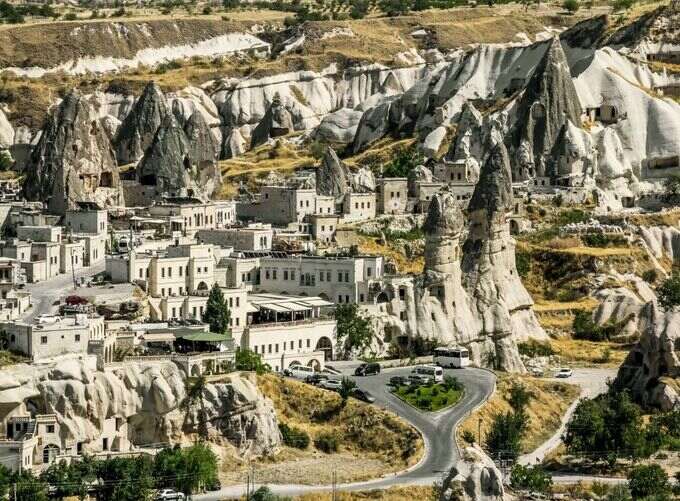
Build the Day Around Contrast, Not Avoidance
Trying to stay indoors throughout a July afternoon would miss much of what makes Cappadocia special. Spending the entire day exposed to the sun makes equally little sense.
The better approach is movement between environments.
Start outside while the air is fresh. Move toward cultural sites and sheltered spaces as the sun strengthens. Return to the landscape when conditions soften later.
A July itinerary might therefore feel less linear than a spring itinerary, but that is not a disadvantage. It creates natural pauses.
| If You Have... | Consider... |
|---|---|
| A cool early morning | Longer valley section |
| Strong midday sun | Underground city or long lunch |
| A breezy afternoon | Open-air cultural sites |
| A hot, still afternoon | Rock-cut interiors or hotel break |
| A comfortable evening | Viewpoint or short scenic walk |
The important thing is not following this sequence exactly. It is recognizing that Cappadocia offers several different environments within relatively short distances.
Is July Comfortable for Families?
It can be, particularly if adults resist the temptation to fill every daylight hour.
Children may find long exposed walks tiring once temperatures rise, but Cappadocia offers enough variety to break the day into manageable pieces. An underground city feels completely different from a viewpoint, while a pottery workshop provides another change of pace.
Water and sun protection deserve extra attention, and midday is rarely the ideal time to begin a long family hike.
A shorter morning walk followed by cultural sightseeing is generally more enjoyable than trying to prove that everyone can complete an ambitious trail in the heat.
What About Older Travelers?
July does not require hiking.
Many of Cappadocia's best-known landscapes can be experienced from viewpoints and relatively short walking sections, while major cultural attractions can be reached by vehicle.
The main consideration is prolonged exposure rather than age itself.
Travelers who are sensitive to heat can prioritize early outdoor stops and use the middle of the day for places requiring less time under direct sun. Returning to the hotel for a break is also perfectly reasonable.
Long summer daylight means that taking two hours off does not automatically sacrifice the evening.
July or August: They Need Different Strategies
These two months are easy to collapse into one generic “Cappadocia is hot in summer” discussion. That would overlook a useful distinction.
July's defining travel experience is the contrast between hot exposed landscapes and Cappadocia's naturally sheltered spaces. It encourages visitors to alternate between them.
August sits deeper in the summer season. Its planning question becomes more explicitly about organizing an itinerary around peak heat: timing, shade, rest periods and reducing unnecessary exposure.
The distinction is subtle but important.
July asks: How can Cappadocia's different environments improve a summer day?
August asks: How should the entire sightseeing schedule adapt when heat becomes the main constraint?
That is why the two months should not share the same itinerary advice.
Frequently Asked Questions About Cappadocia in July
1. Is July too hot to visit Cappadocia?
Not necessarily. July is hot, particularly in exposed valleys during the afternoon, but sightseeing remains practical when outdoor activities are timed sensibly. Early mornings and evenings are considerably more comfortable, while underground cities and rock-cut attractions provide natural breaks from direct summer sun.
2. What temperatures should I expect in July?
Daytime highs commonly reach around 28–32°C, with hotter periods possible. Nights are considerably cooler, often around 14–18°C. Actual conditions vary, and direct sunlight can make exposed locations feel hotter than the air temperature suggests, particularly during longer periods of walking.
3. Is Cappadocia humid in July?
Cappadocia generally experiences a drier summer climate than Turkey's humid coastal regions. Travelers may therefore find the heat less sticky, but dry conditions can disguise fluid loss. Regular hydration remains important even when you are not sweating as noticeably as you would in a humid environment.
4. Can I hike in Cappadocia during July?
Yes, but timing matters. Longer routes are better started early, before strong daytime heat develops. Shorter walks can also work later toward evening. Beginning a lengthy exposed trail around midday is generally less comfortable because many valley sections offer limited reliable shade.
5. Are underground cities cooler during summer?
Underground environments can feel noticeably cooler than the exposed surface, making them particularly appealing during July. Their primary value remains historical and archaeological, but the temperature contrast provides an additional practical reason to schedule Kaymaklı, Derinkuyu or similar sites during warmer portions of the day.
6. Do cave hotels stay cool in July?
Cave construction can provide naturally moderated indoor conditions, but room comfort varies significantly between properties. Ventilation, room position, construction and cooling facilities all matter. If air-conditioning is important to you, confirm whether your chosen hotel and specific room category provide it rather than assuming all cave accommodation does.
7. What shoes are best for Cappadocia in July?
Supportive walking shoes with good grip remain the safest choice for valleys and uneven archaeological sites. Open sandals may be comfortable around town but offer less protection on dusty, loose or rocky trails. Choose footwear according to planned activities rather than simply selecting the coolest summer option.
8. Should I carry a hat when sightseeing?
Yes, particularly if you expect to spend substantial time at viewpoints or walking through valleys. Shade can be limited, and a hat provides useful protection alongside sunscreen and sunglasses. Lightweight clothing that covers more skin can also be surprisingly comfortable in strong, dry sunshine.
9. Are balloon mornings warm in July?
They are much cooler than July afternoons. Because pickups occur around sunrise, passengers may appreciate a light removable layer while waiting before launch. Once the sun rises, temperatures increase quickly, so anything heavier is likely to become unnecessary during the remainder of the sightseeing day.
10. Is July suitable for photography?
Yes, although strong midday sunlight can flatten textures and create harsh contrast. Earlier morning and later afternoon light tends to reveal more depth in Cappadocia's formations. July's dry landscape also produces a distinctive palette of pale rock, dusty paths and warm earth tones.
11. Should I book a hotel with air-conditioning in July?
Travelers who sleep poorly in warm rooms should strongly consider it. Some cave rooms remain naturally comfortable, while others can feel warmer depending on their design and ventilation. Check the facilities of the actual property rather than assuming traditional stone construction guarantees a particular nighttime temperature.
12. Is July or June better for Cappadocia?
June suits travelers who place a high value on long daylight and early-summer outdoor flexibility. July is warmer and rewards a different rhythm built around the contrast between exposed landscapes and sheltered attractions. Heat-sensitive travelers may prefer June, while July remains very workable with sensible planning.
July Shows Two Sides of Cappadocia
Stand in an exposed valley in the middle of a July afternoon and Cappadocia feels unmistakably like a dry summer landscape.
Walk underground a little later and the experience changes almost immediately.
That contrast is not merely convenient. It tells part of Cappadocia's story. For centuries, people here carved living spaces, churches, storage rooms and entire settlements into the rock around them. In summer, the practical intelligence of that architecture becomes unusually easy to appreciate.
There is no need to fight July by attempting a spring itinerary in hotter weather.
Walk while the valleys are comfortable. Spend time among Cappadocia's rock-cut history when the sun strengthens. Return outside as shadows stretch across the formations.
July works best when you allow the landscape itself to decide when you should be above ground—and when it is worth disappearing beneath it for a while.

A travel professional specializing in tailor-made travel planning, guest experience management, and multi-destination tourism operations.
With over 23 years of experience in the travel industry, he designs and manages private and cultural tours for international travelers across Türkiye, Greece, Egypt, Jordan, Morocco, and other destinations.
He has strong expertise in both online and face-to-face guest communication, sales processes, and end-to-end travel operations.
Working closely with hotels, travel agencies, and local partners, he ensures smooth coordination and high-quality travel experiences at every stage of the journey.
His focus is on delivering personalized, reliable, and seamless travel experiences for international guests worldwide.