Turkey’s Most Beautiful Beaches: Which Coast Is Right for You?
Updated: August 2026
Turkey has enough beautiful coastline to make the phrase “best beach” almost meaningless.
A traveler looking for powdery sand, shallow water and an easy family day will not necessarily love the same beach as someone who wants dramatic cliffs, a small cove reached by steps, or a long undeveloped shoreline where the landscape matters more than beach clubs. Someone staying in Bodrum may prefer a polished peninsula experience, while a traveler near Kaş might happily trade convenience for a more dramatic coastal setting.
That is why choosing a beach in Turkey should begin with the kind of day you want rather than the photograph you liked most.
The Aegean and Mediterranean coasts offer very different combinations of sea, landscape, villages, archaeological sites and resort infrastructure. Some beaches work best as half-day stops, while others justify several nights nearby. A few are memorable precisely because they remain relatively natural, whereas others are enjoyable because everything you need is close at hand.
Instead of ranking Turkey’s beaches from one to ten, it is more useful to compare what each one actually gives you once you arrive.
Start With the Beach Personality, Not the Name
Most travelers first encounter Turkey’s beaches through images, and that can distort expectations.
Aerial photography makes a small cove look enormous. A quiet sunrise image can hide the fact that the same beach becomes extremely busy later in the day. A brilliant turquoise color may come from depth and geology rather than shallow, family-friendly swimming.
The practical question is therefore not whether a beach is visually beautiful.
It is whether its physical character and surrounding environment suit the way you like to spend time by the sea.
Some beaches reward long swims. Others are better for landscape photography. Several work beautifully for families, while a few become far more appealing when combined with nearby ruins, villages or hiking.
Beauty is only the first filter.
Use This Beach-Matching Table Before Choosing Your Coast
| Beach / Area | Strongest appeal | Best for | Main trade-off | Better as |
|---|---|---|---|---|
| Ölüdeniz | Lagoon scenery and mountain backdrop | First-time coastal travelers, couples | Very popular in season | Stay or full day |
| Kaputaş | Dramatic small cove | Photography, swimming stop | Limited space, access by steps | Short stop |
| Patara | Long sandy coastline | Space, long walks, history | More exposed than sheltered coves | Half/full day |
| Çıralı | Natural setting and relaxed atmosphere | Couples, slow travelers | Less resort-style infrastructure | Overnight stay |
| İztuzu | Long natural beach | Families, nature-focused travelers | Protected environment limits some uses | Day visit |
| Cleopatra Beach, Alanya | Easy access and clear urban beach setting | Families, short stays | More developed | Half/full day |
| Bodrum Peninsula beaches | Choice, style and services | Couples, nightlife, resort travelers | Experience varies by bay | Multi-night stay |
| Kaş-area coves | Clear water and dramatic coastline | Swimmers, active travelers | Pebbles and smaller beaches common | Multi-day base |
This table does not identify a winner because the beaches are solving different travel problems.
Ölüdeniz Is Famous Because the Landscape Does More Than the Beach
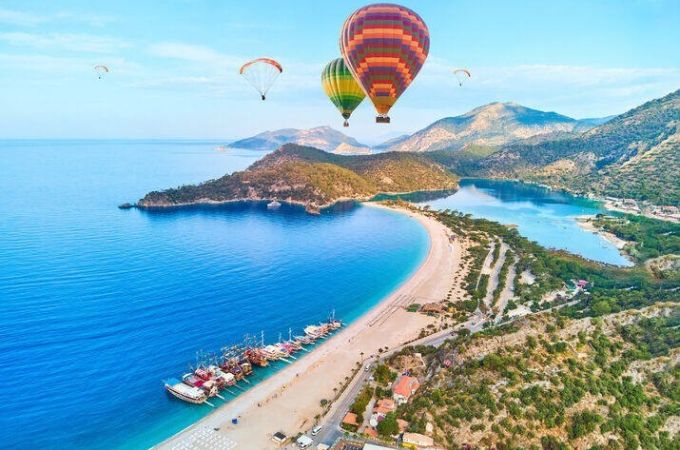
Ölüdeniz is one of the most recognizable coastal landscapes in Turkey, and the reason extends well beyond the sand itself.
The combination of calm lagoon water, surrounding mountains and the wider Fethiye coastline creates a setting that feels almost purpose-built for a first Mediterranean holiday. The famous aerial views, often associated with paragliding from Babadağ, reinforce that reputation.
For travelers, however, Ölüdeniz should be understood as a complete coastal environment rather than one swimming spot.
The lagoon suits those who value scenery and relatively calm water, while nearby sections of open coast provide another swimming experience entirely. The wider area also makes it easy to combine beach time with boat trips, paragliding or access to other bays.
That versatility explains why Ölüdeniz works well as a stay rather than merely a photograph.
Travelers who want the coast to become an active chapter of the journey can consider Fethiye coastal tour routes without forcing every day into an organized excursion.
Kaputaş Is Beautiful Precisely Because It Is Compact
Kaputaş Beach creates almost the opposite experience.
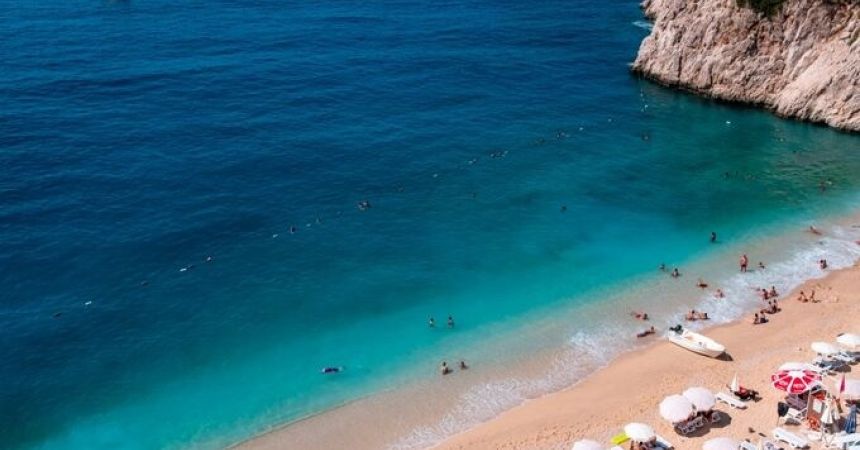
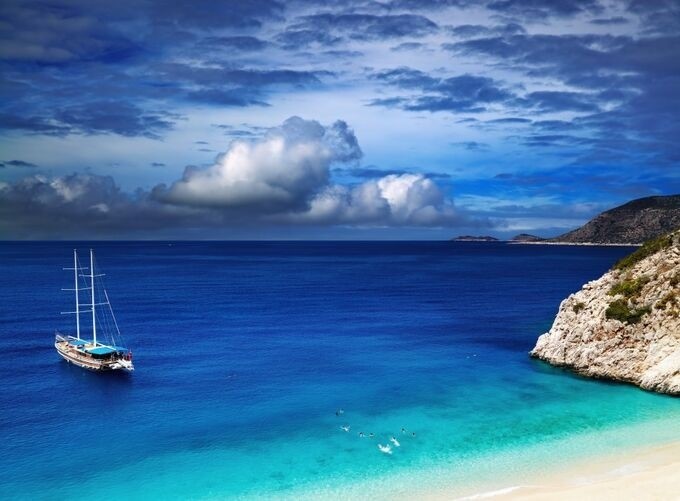
The cove sits below the coastal road between Kaş and Kalkan, framed by steep rock walls and intensely colored water. The setting is dramatic enough that many travelers stop primarily for the view from above before deciding whether they want to descend.
What makes Kaputaş memorable also creates its limitations.
It is not a vast beach where everyone can spread out endlessly, and the approach involves steps. During popular periods, the compact size can make the space feel very different from the empty photographs seen online.
For that reason, I would treat Kaputaş as a high-impact coastal stop rather than the foundation of an entire beach holiday.
Spend time there, swim if conditions and timing suit you, then continue with the wider Kaş or Kalkan experience.
The beach earns its fame because of geography, not because it provides the most convenient all-day facilities.
Patara Is for People Who Want Horizon, Not a Cove
Patara feels expansive.
That distinction matters after visiting smaller bays.
The beach stretches across a broad sandy coastline, giving travelers more visual space and a very different relationship with the sea. Wind, open exposure and the scale of the shore become part of the experience, which means visitors looking for a tiny sheltered cove may prefer somewhere else.
Patara is also unusual because its cultural significance does not stop at the waterline.
The nearby ancient city adds historical depth, allowing travelers to combine archaeology and coastal time without needing to choose between them as separate day trips.
This makes Patara especially valuable for people who become restless after several hours doing nothing on a beach.
You can spend part of the day exploring history, then move into an entirely different environment nearby.
Çıralı Works Best When You Stop Treating It as an Antalya Excursion
Çıralı is one of the Turkish coast’s stronger choices for travelers who prefer a quieter village atmosphere over full resort infrastructure.
The beach is long enough to avoid the compressed feeling of smaller coves, while the surrounding landscape retains a more natural character than highly developed resort strips.
The nearby ruins of Olympos add cultural interest, and the wider region around Mount Chimaera provides another reason to stay rather than simply pass through.
This is where duration changes the destination.
A quick beach stop lets you see Çıralı.
One or two nights allow you to feel its pace.
The mornings and evenings matter because the atmosphere becomes part of the reason for being there. Travelers who want a slower Mediterranean chapter can use Antalya nature and coast journeys to connect Çıralı with surrounding landscapes rather than turning it into another rushed transfer stop.
İztuzu Is Better Understood Through Nature Than Through Luxury
İztuzu Beach, near Dalyan, appeals to travelers who want a broad natural shoreline rather than a heavily built-up beach environment.
Its reputation is closely associated with the wider Dalyan ecosystem and nesting sea turtles, which means the area should be approached with a different mindset from a conventional resort beach.
The purpose is not maximizing beach-club comfort.
It is enjoying a coastal environment whose natural value is part of the reason for visiting.
Families often appreciate the long beach and straightforward day-trip logic, while nature-focused travelers may find the relationship between river, wetlands and coast especially rewarding.
The wider Dalyan experience also allows boat travel and archaeological scenery to become part of the same day.
This is a good example of a beach becoming stronger because of everything around it.
Cleopatra Beach in Alanya Is Valuable Because It Is Easy
Travel writing sometimes acts as though a beach loses value the moment it becomes urban or convenient.
That is not true.
Cleopatra Beach in Alanya works well precisely because travelers can combine swimming with a proper town stay, restaurants, historical sightseeing and easy access.
The dramatic Alanya Castle peninsula adds visual character, while the beach itself suits people who do not want every swimming day to require a car, boat or long transfer.
Families can particularly benefit from this convenience.
A beach holiday is not automatically superior because reaching the water required forty minutes on a rough road.
Convenience can be part of quality, especially when several generations or different travel interests need to coexist within the same trip.
Bodrum Is Better Chosen by Bay Than by the Word “Bodrum”
Bodrum is often discussed as though it contains one beach experience.
In reality, the peninsula offers multiple bays, towns and resort environments that can feel dramatically different.
Some areas are more closely associated with nightlife, marinas and stylish hotels, while others appeal to travelers who want a quieter coastal stay. Beach conditions, exposure, atmosphere and access to restaurants can vary substantially across the peninsula.
That makes Bodrum a poor choice for travelers who book solely because they have heard the name.
It becomes an excellent choice once the specific bay and hotel location match the holiday style.
Couples wanting restaurants and nightlife may make one decision, while families seeking easier swimming and resort convenience may choose another part of the peninsula entirely.
The peninsula should be researched from the inside out rather than treated as a single beach.
Kaş Is for Travelers Who Care More About Water Than Sand
Kaş often attracts people who genuinely like swimming.
The coastline around the town is rocky and dramatic, with smaller beaches, platforms and coves rather than endless sandy resort strips. The water can be exceptionally clear, which also helps explain the area’s strong association with diving and boat trips.
If your image of a perfect beach requires a huge sandy shoreline, Kaş may not be the obvious choice.
If you enjoy entering clear water from smaller coastal settings, taking boat trips and spending evenings in an attractive town, the lack of a giant central sandy beach may not matter at all.
This is why beach planning should never begin with sand quality alone.
Sometimes the sea itself is the destination.
A Beach Is More Valuable When the Town Works After Sunset
Travelers often select the perfect beach and barely think about what happens once they leave it.
This matters enormously for multi-night stays.
Kaş, Bodrum, Fethiye and Alanya provide substantial evening environments where restaurants, waterfront areas and local movement continue after swimming ends. Çıralı offers something quieter, where the evening atmosphere is valuable precisely because there is less happening.
Neither is inherently better.
The mistake is booking a quiet beach village while expecting nightlife, or selecting an active resort town while imagining the evenings will feel secluded.
Beach and base should be chosen together.
The sea occupies only part of the day.
Sandy or Pebbled? The Answer Is Not as Obvious as It Sounds
Many international travelers automatically regard sandy beaches as superior.
Pebble and stone beaches can offer advantages, particularly when clear water matters. Less suspended sand can contribute to excellent underwater visibility, which helps explain why certain sections of the Turkish Mediterranean attract strong swimmers and divers.
Sandy beaches are often more comfortable for long walks, children and traditional sunbathing.
Pebble beaches may make entering the water less comfortable without suitable footwear, especially for people with sensitive feet.
Neither surface defines beach quality.
It defines how you will use the beach.
This is another reason photographs alone are insufficient when planning.
Families Should Prioritize Entry, Shade and Logistics
A spectacular cove that requires a steep descent can be a highlight for active adults and an unnecessary challenge for a family carrying towels, toys, water and everything else required by small children.
Family beach selection should therefore consider practical questions before beauty rankings.
How easy is access?
How does the water deepen?
Is there reliable shade or somewhere to escape the strongest sun?
Are food and toilets accessible?
How much transportation is required?
These details may sound unromantic, but they usually determine whether everyone enjoys the beach.
A slightly less dramatic coastline with easy facilities can produce a much better family day than an iconic cove that creates stress before anyone reaches the water.
Couples Often Benefit From Staying Near the Beach, Not Directly on It
Beachfront accommodation carries obvious appeal, but direct beachfront location is not always necessary for couples exploring Turkey’s coast.
In places such as Kaş or parts of Bodrum, staying a short distance from the water may provide better access to restaurants, evening walks and town atmosphere while still keeping swimming easy.
The decision depends on what the beach is expected to do.
If the purpose of the holiday is almost entirely relaxation, direct beach access may justify a premium.
If swimming is one part of a broader coastal stay involving boat trips, food and exploration, a more central hotel can provide better total value.
Location should support the whole day, not simply the first swim.
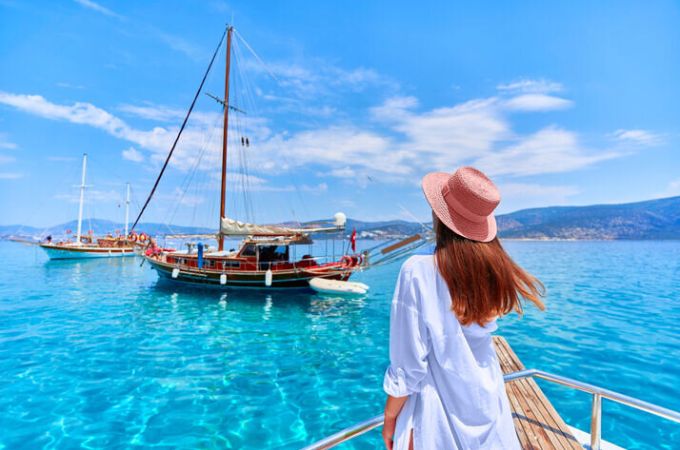
Boat Days Reveal the Coast That Roads Cannot
Some of Turkey’s most beautiful bays are experienced more naturally from the water than from land.
This is particularly true around southwestern Turkey, where boat trips connect small coves, islands and swimming stops that do not function like conventional drive-up beaches.
A boat day should not therefore be seen merely as a substitute for choosing a beach.
It offers a different type of coastal experience altogether.
Travelers interested in that rhythm can consider Turkey Aegean sailing experiences, especially when staying around Fethiye, Marmaris or Bodrum and wanting access to multiple bays without changing hotels repeatedly.
The road shows you where the towns are.
The boat reveals why the coastline itself matters.
Archaeology and Beaches Combine Better in Turkey Than Many Travelers Expect
One of the great advantages of Turkey’s southwestern coast is the ease with which natural and historical experiences overlap.
Patara contains ancient ruins near a major beach.
Olympos sits close to Çıralı.
Side places Roman remains almost directly within a coastal town.
Kaş and the wider Lycian region connect modern beach travel with an ancient cultural landscape.
This means travelers do not necessarily need to choose between a cultural trip and a beach holiday.
The strongest itineraries alternate them.
Several hours among ruins can make an afternoon swim feel better, while a relaxed beach morning can restore interest before another historical site.
Contrast prevents travel fatigue.
Do Not Judge a Beach by Midday Alone
Many famous Turkish beaches change character dramatically across the day.
Early mornings can feel calm and almost local.
Late morning introduces day visitors.
Afternoons may be at their busiest.
Evening light changes the coastline again as people begin leaving.
This is why staying near a beautiful beach can be much more rewarding than visiting during the same crowded two-hour window as everyone else.
If photography matters, early or later light can also reveal colors and topography more effectively than harsh midday sun.
The beach itself has not changed.
Your timing has.
The Best Turkey Beach Depends on the Rest of Your Trip
If you already have Istanbul, Cappadocia and Ephesus in a ten-day itinerary, adding a remote beach that requires two more travel days may weaken the entire journey.
If you are spending two weeks through the southwest, a quieter beach village can become one of the highlights because the route already supports it.
That is why a beach should be chosen not only by beauty but also by route cost.
Ölüdeniz makes sense around Fethiye.
Kaputaş makes sense around Kaş or Kalkan.
İztuzu belongs naturally with Dalyan.
Cleopatra Beach belongs naturally with Alanya.
The strongest itinerary allows geography to make these decisions easier.
Turkey’s Best Beach Is the One That Gives You the Day You Wanted
For one traveler, that will be Ölüdeniz because the lagoon and mountain scenery create a memorable first Mediterranean experience.
Another will prefer Patara because the space, archaeology and open coastline feel less confined.
A couple may choose Çıralı because village evenings matter as much as swimming, while a family may appreciate Alanya because the logistics are easy. Serious swimmers may respond more strongly to Kaş, while travelers who want polished resort life can find their answer somewhere on the Bodrum Peninsula.
There is no failure in choosing convenience over obscurity, or pebbles over sand, or a popular beach over a quieter one.
The only weak decision is choosing a coastline because everyone calls it beautiful without asking what you actually want to do once you arrive.
Frequently Asked Questions About Turkey’s Beaches
1. What is the most beautiful beach in Turkey?
There is no single answer because Turkey’s beaches offer very different experiences. Ölüdeniz is exceptional for landscape, Kaputaş for dramatic cove scenery, Patara for long sandy coastline and Çıralı for travelers who value a quieter natural setting.
2. Is Oludeniz worth visiting despite being popular?
Yes, particularly if the landscape, lagoon and surrounding Fethiye region appeal to you. Popularity can make the area busy during peak periods, but the combination of mountains, water and nearby coastal activities remains genuinely distinctive rather than famous only through marketing.
3. Is Kaputas Beach suitable for families?
It can work for active families, but access by steps, limited space and the nature of the cove make it less straightforward than large resort beaches. Families prioritizing convenience and extensive facilities may prefer a more easily accessible coastline.
4. Which Turkish beach is best for sand?
Patara is one of the strongest choices for travelers seeking a long sandy shoreline and open space. Other sandy beaches exist around Turkey, but the best option also depends on whether you want resort facilities, easy access or a more natural environment.
5. Is Cirali better than Antalya for a quiet beach stay?
Çıralı generally suits travelers seeking a smaller-scale, slower coastal atmosphere, while Antalya offers much more urban and resort infrastructure. The better choice depends on whether evenings, restaurant variety and city convenience matter more than a quieter village setting.
6. Is the water clear around Kas?
Kaş is particularly attractive to travelers who prioritize clear Mediterranean water, swimming, diving and boat trips. The coastline is often more rocky or pebbled than sandy, so it suits people who value water quality and dramatic coastal geography over broad sandy beaches.
7. Is Bodrum good for a beach holiday?
Yes, but travelers should choose the specific bay carefully because the Bodrum Peninsula contains different resort styles and beach environments. Nightlife, hotel atmosphere, family convenience and access to restaurants can vary considerably between areas.
8. Which beach in Turkey is best for families?
There is no universal family winner, but easily accessible beaches with gradual entry, nearby facilities and straightforward transportation usually outperform dramatic remote coves. Cleopatra Beach in Alanya and selected resort areas can suit families particularly well depending on children's ages.
9. Can I combine beaches with archaeological sites in Turkey?
Very easily. Patara, Çıralı/Olympos, Side and the wider Lycian coast offer particularly strong combinations of ancient history and coastal scenery, allowing travelers to alternate cultural sightseeing with swimming rather than building separate archaeology and beach holidays.
10. Are pebble beaches in Turkey worth visiting?
Absolutely. Pebble and rocky coastlines can offer exceptionally clear water and beautiful swimming, especially around parts of the Mediterranean. Water shoes may improve comfort, while travelers focused primarily on long sandy walks may naturally prefer other areas.
11. Should I stay overnight near famous beaches or visit on a day trip?
Stay overnight when the surrounding town or village contributes something meaningful, as around Çıralı, Kaş or Fethiye. Smaller beaches such as Kaputaş can work perfectly as stops within a broader regional stay rather than requiring dedicated accommodation nearby.
12. What is the biggest mistake when choosing a beach in Turkey?
The biggest mistake is selecting a beach from aerial photographs alone. Access, surface type, swimming conditions, crowd levels, surrounding town, family needs and route compatibility can influence the experience more strongly than the view that initially made the beach famous.

A travel professional specializing in tailor-made travel planning, guest experience management, and multi-destination tourism operations.
With over 23 years of experience in the travel industry, he designs and manages private and cultural tours for international travelers across Türkiye, Greece, Egypt, Jordan, Morocco, and other destinations.
He has strong expertise in both online and face-to-face guest communication, sales processes, and end-to-end travel operations.
Working closely with hotels, travel agencies, and local partners, he ensures smooth coordination and high-quality travel experiences at every stage of the journey.
His focus is on delivering personalized, reliable, and seamless travel experiences for international guests worldwide.