Lake Tuz Turkey: Is the Salt Lake Worth Visiting?
Updated: August 2026
Lake Tuz can be one of the easiest places in Turkey to misunderstand before you arrive.
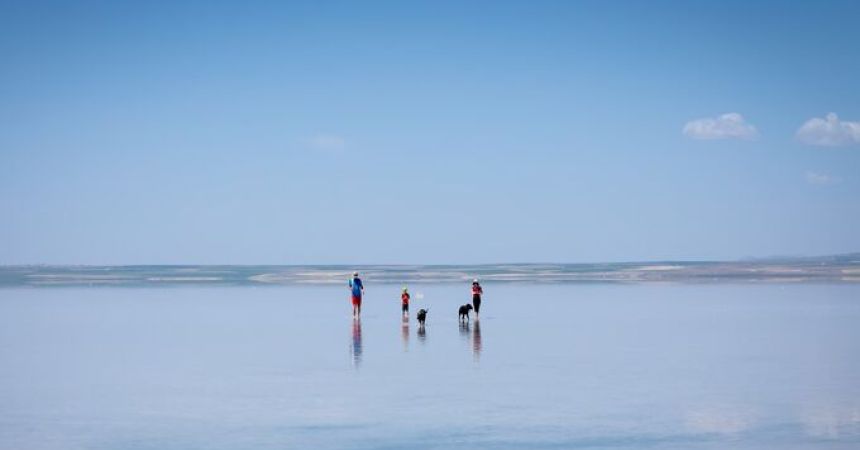
Photographs often show an apparently endless white surface, reflections stretching toward the horizon or flamingos standing in shallow water. From those images, it is tempting to imagine a conventional lake attraction where visitors arrive, follow a sightseeing route and spend several hours moving between different things to see.
That is not really what Tuz Gölü offers.
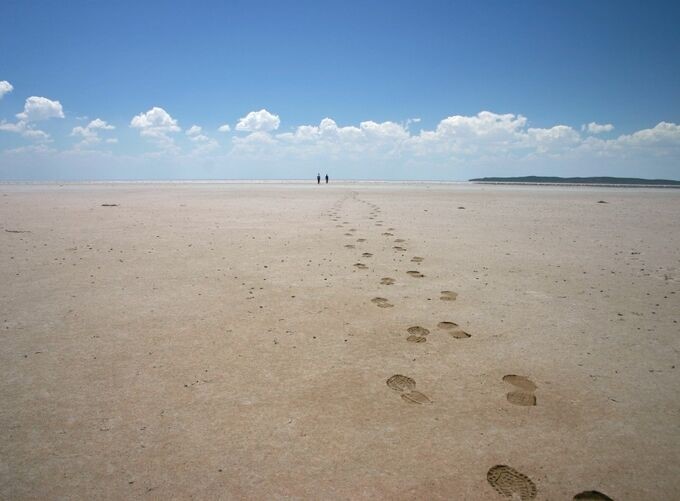
The experience is much simpler and, for the right traveler, more interesting. Lake Tuz is an enormous hypersaline environment in Central Anatolia, extending across parts of Ankara, Konya and Aksaray provinces. It is Turkey's second-largest lake after Lake Van, yet it is remarkably shallow; official environmental information notes that its average depth is below half a meter in many areas. During the dry period, extensive evaporation transforms large sections of the lake into exposed salt surfaces.
There are no monumental ruins to work through, no old town requiring half a day and no sequence of museums.
You come for the landscape itself.
That makes the real planning question unusually specific: does Lake Tuz belong naturally in your Turkey route, or are you adding several hours of travel simply because you saw an extraordinary photograph?
Lake Tuz Is a Landscape Stop, Not a Destination You Need to Build a Holiday Around
This distinction should shape your itinerary from the beginning.
For most international travelers, Lake Tuz works best when it sits on or close to a route you are already traveling, particularly through Central Anatolia. It is much harder to justify when visiting requires a major detour from an otherwise unrelated itinerary.
That does not diminish its importance.
It simply recognizes what kind of travel experience it provides.
A useful way to think about Lake Tuz is:
| Your situation | Does Lake Tuz make sense? | Why |
|---|---|---|
| Traveling through Central Anatolia | Strong fit | Adds a distinctive natural stop without restructuring the trip |
| Ankara–Cappadocia journey | Potentially excellent | Can fit logically depending on chosen road routing |
| Photography-focused journey | Worth considering | Minimal landscape and scale are the attraction |
| Wildlife-focused travel | Specialist interest | Important ecosystem, but sightings require realistic expectations |
| Istanbul-only short break | Poor fit | Too much travel for a standalone stop |
| Beach holiday on the coast | Usually poor fit | Geographically disconnected from the purpose of the trip |
| First Turkey trip with limited days | Route-dependent | Should not replace major destinations merely to increase stop count |
This is the most important decision the article can help you make.
Lake Tuz is compelling when it belongs to the journey.
Why Does Lake Tuz Look So Unusual?
The visual character comes from a combination of geography, shallow water, high salinity and evaporation.
Lake Tuz lies in a closed basin and receives relatively limited inflow in one of Turkey's driest regions. During wetter periods, water spreads across a much larger area; as conditions become drier and evaporation increases, water retreats and salt accumulates across exposed sections of the lakebed. Official sources describe substantial salt layers forming during the dry period.
This is why two travelers can visit Lake Tuz at different points of the year and come home with photographs that barely look like the same place.
One may encounter visible shallow water and reflections.
Another may see a broad pale salt surface.
Neither has necessarily visited at the “wrong” time.
They have encountered different states of the same ecosystem.
Stop Searching for the One Perfect Lake Tuz Photograph
This is where travel expectations need resetting.
Lake Tuz is frequently presented online as though visitors are guaranteed a mirror-like surface, pink tones, flamingos and pristine white salt simultaneously.
Nature does not work that way.
Water level changes. Light changes. Salt conditions change. Wildlife moves. Recent environmental conditions influence what the lake looks like.
The better reason to visit is to experience an unusually open Central Anatolian landscape rather than recreate a specific photograph seen online.
That approach makes the stop much more rewarding.
It also prevents one of the most common disappointments at highly photographed natural attractions: arriving at a real ecosystem while expecting a permanent Instagram set.
The Flamingos Are Important — But They Are Not a Scheduled Attraction
Lake Tuz has major ecological importance for birds, including greater flamingos. Turkish environmental authorities identify the basin as an important breeding area, while UNESCO's Tentative List documentation describes the broader protected landscape as significant for waterbirds and saline-steppe biodiversity.
That does not mean every visitor will walk onto the accessible edge of the lake and immediately find a photogenic flock nearby.
Wildlife distribution depends on habitat conditions and season, and breeding areas deserve protection rather than tourist intrusion.
This distinction is important for EEAT and for responsible travel.
Visit Lake Tuz because the ecosystem is remarkable.
Treat flamingo sightings as wildlife observation, not as something guaranteed with admission.
Why the Protection Status Changes How You Should Visit
Lake Tuz is part of a Special Environmental Protection Area, and its ecological significance extends far beyond the surface that visitors photograph.
The wider landscape contains saline-steppe habitats, endemic plants, bird populations and other species adapted to unusually harsh conditions. UNESCO placed the Lake Tuz Special Environmental Protection Area on Turkey's World Heritage Tentative List in 2013.
That gives visitors a different responsibility.
The salt crust may look empty and indestructible, but the wider environment is not a recreational blank canvas.
Stay within appropriate visitor-access areas, respect local restrictions, avoid disturbing wildlife and do not treat salt formations as souvenirs to remove from a protected ecosystem.
The best photograph is the one that leaves nothing behind.
The Cappadocia Connection Is Where Lake Tuz Becomes Particularly Useful
For international travelers, Lake Tuz becomes most interesting when Central Anatolia already forms part of the itinerary.
Cappadocia is the obvious example.
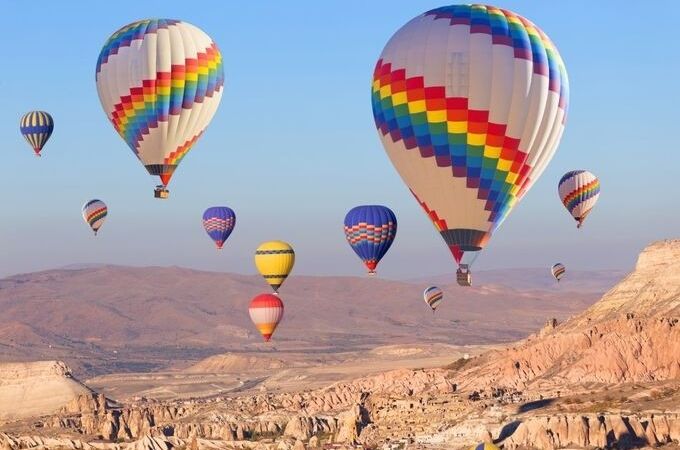
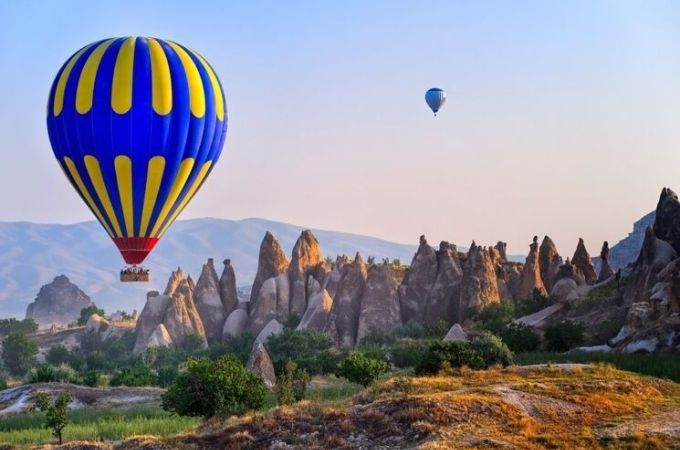
Travelers sometimes imagine Lake Tuz as another Cappadocia attraction because photographs from both appear in Central Anatolian travel content. They are distinct destinations and should remain semantically separate.
Cappadocia's experience centers on volcanic formations, valleys, rock-cut heritage, cave architecture and communities such as Göreme and Uçhisar.
Lake Tuz offers almost the opposite visual language: horizon, emptiness, salt and open steppe.
That contrast can be precisely why combining them works.
Travelers building a Central Anatolian route can consider Cappadocia travel packages while treating Lake Tuz as a possible route addition rather than incorrectly folding it into Cappadocia's own attraction inventory.
Ankara Can Also Make Lake Tuz Logically Relevant
Lake Tuz lies within the wider Ankara–Konya–Aksaray geography, with one accessible northern relationship through the Şereflikoçhisar area. Türkiye's official tourism information identifies the lake around the intersection of these provincial regions and notes its position along the Ankara–Aksaray corridor.
That creates an important planning principle.
If you are traveling overland between Ankara and Cappadocia/Aksaray, the lake may make considerably more sense than it does for someone flying directly between major tourism centers.
Road travel creates opportunities that flight-based itineraries naturally bypass.
This is one reason not to judge attractions independently of transportation.
A place that represents an inconvenient standalone excursion can become an excellent stop when the road already passes through its region.
How Long Does Lake Tuz Actually Need?
For a general sightseeing traveler, Lake Tuz does not normally require the same time allocation as Cappadocia, Ephesus or Pamukkale.
The attraction is contemplative rather than activity-dense.
You need enough time to walk, observe the landscape, take photographs and understand what you are seeing without turning the stop into a rushed roadside selfie.
Photography enthusiasts may stay longer because subtle changes in light and surface texture matter to them.
Birdwatchers operate on a completely different timetable and should plan according to wildlife interests rather than ordinary sightseeing expectations.
This gives us three different Lake Tuz visits:
The route stop — experience the landscape and continue the journey.
The photography stop — allow more time for light, composition and changing surfaces.
The ecology-focused visit — plan around habitat and observation rather than conventional sightseeing.
These should not be marketed as the same experience.
When You Visit Changes the Landscape More Than the Sightseeing List
This is where we need to maintain the cluster boundary carefully.
We are not trying to create another “best time to visit Turkey” article.
For Lake Tuz specifically, seasonal conditions matter because they change what the lake physically looks like.
During wetter periods, visitors may encounter more water across parts of the lake.
As evaporation intensifies through the drier part of the year, large exposed salt surfaces become increasingly characteristic. Official descriptions note that the lake expands considerably in spring and that much of the surface can dry during summer, leaving substantial salt deposits.
Therefore, do not ask only:
“Which month is best?”
Ask:
“Which version of Lake Tuz am I hoping to experience?”
That is a much more accurate planning question.
Midday and Late Light Produce Different Experiences
Lake Tuz's minimal landscape makes light unusually important.
Under strong midday sun, the exposed surface can appear intensely bright and the horizon stark. Later light may soften the scene and produce greater tonal variation, depending on water and cloud conditions.
Photography-oriented travelers should therefore think about arrival time rather than simply allocating “one hour at Lake Tuz.”
Practical comfort matters too.
The landscape offers little of the natural shade travelers might expect at a forest, coastal or urban attraction. Sun protection, drinking water, appropriate footwear and realistic expectations about facilities are sensible additions to the day.
These are small details until you are standing on a reflective salt landscape under a Central Anatolian sun.
Shoes Matter More Than Your Instagram Outfit
The accessible lake edge can behave differently according to recent conditions.
A surface that looks firm from a distance may contain damp, salty or muddy sections.
Wear footwear you are comfortable exposing to salt and moisture rather than choosing shoes solely because they look good in photographs.
If you step onto permitted salt surfaces, move cautiously instead of assuming every pale section has identical firmness.
Afterward, cleaning salt residue from footwear is sensible.
This may be less glamorous than describing “magical white landscapes,” but it is far more useful to someone actually going there.
Lake Tuz Versus Pamukkale: They Are Not Alternatives
The two are occasionally grouped together because both can produce striking white landscapes.
That visual similarity is superficial.
Pamukkale is associated with travertine terraces created by mineral-rich thermal waters and sits beside the ancient city of Hierapolis.
Lake Tuz is a hypersaline lake ecosystem in Central Anatolia whose visual character comes from shallow water, evaporation and salt.
Their travel experiences are fundamentally different.
| Lake Tuz | Pamukkale |
|---|---|
| Natural salt-lake ecosystem | Thermal travertine landscape |
| Central Anatolia | Southwestern Turkey |
| Route/landscape stop | Major archaeological-natural destination |
| Wildlife and saline habitat value | Hierapolis + thermal geology |
| Experience varies strongly with lake surface | Structured visitor attraction |
| Usually shorter general visit | Commonly allocated substantial sightseeing time |
Do not choose between them because both look white in photographs.
Choose according to geography and what you want to experience.
Should You Make a Special Journey Just for Lake Tuz?
For most first-time visitors with limited days, probably not.
Turkey contains destinations capable of supporting several days of exploration. Lake Tuz generally delivers its greatest value differently: as an unexpected landscape encountered within a well-designed Central Anatolian route.
There are exceptions.
Landscape photographers, birdwatchers, ecological travelers and people fascinated by saline environments may reasonably make the lake a much higher priority.
That is why generic “must-see Turkey” rankings are not particularly helpful here.
A destination can be worthwhile without being mandatory for everybody.
Lake Tuz Works Better When the Itinerary Has Breathing Space
If you are already trying to fit Istanbul, Cappadocia, Ephesus and Pamukkale into an aggressively short journey, adding Lake Tuz simply because another attraction fits geographically can reduce the quality of the trip.
A good itinerary does not maximize the number of pins on a map.
It creates enough time for the places that matter.
Lake Tuz becomes an excellent addition when the road connection makes sense and the stop does not force a major destination to become rushed.
Travelers considering a broader overland structure can examine Central Turkey tour itineraries to understand how secondary natural stops can complement major destinations rather than compete with them.
Combine It With Context, Not More Checkboxes
The most interesting Lake Tuz visit is not necessarily followed by three more roadside attractions.
Central Anatolia has its own landscape character, settlement patterns and historical travel routes. Nearby Aksaray province also connects naturally toward Cappadocia and historically important corridors across Anatolia.
If your journey continues through the region, Lake Tuz can function almost as a visual introduction to Central Anatolia's scale.
The open terrain matters.
The distance matters.
Even the apparent emptiness matters.
This is a part of Turkey that feels fundamentally different from Istanbul's density or the Mediterranean coast.
For travelers moving through several regions, Turkey discovery tour routes can provide the broader framework while Lake Tuz remains what it should be: a carefully chosen natural stop rather than another destination artificially expanded into a full itinerary.
So, Is Lake Tuz Worth Visiting?
Yes — when the route makes sense.
That qualification is important.
Lake Tuz is worth visiting if you are traveling through Central Anatolia, appreciate unusual natural landscapes, enjoy photography or have a genuine interest in saline ecosystems and birdlife.
It is less compelling as a long standalone excursion added to an already crowded first-time Turkey itinerary.
Do not go expecting a permanent pink lake.
Do not go expecting flamingos to pose beside the visitor area.
Do not go because a list told you it was compulsory.
Go because an enormous shallow salt lake, protected ecosystem and almost abstract Central Anatolian landscape genuinely interest you.
Then give yourself enough time to stop looking for the photograph you saw online and actually look at the place in front of you.
Frequently Asked Questions About Lake Tuz
1. Is Lake Tuz worth visiting during a Turkey trip?
Lake Tuz is particularly worthwhile when your itinerary already passes through Central Anatolia. Its appeal comes from the unusual salt landscape, enormous sense of space and ecological importance rather than a long list of attractions, so route logic matters considerably.
2. Is Lake Tuz the same place as Cappadocia?
No. Lake Tuz and Cappadocia are separate destinations within Central Anatolia. Cappadocia is known for volcanic valleys, rock formations and rock-cut heritage, while Lake Tuz is a hypersaline lake environment whose experience centers on salt, open landscape and ecology.
3. Why does Lake Tuz sometimes look completely white?
During drier conditions, evaporation reduces the shallow water and exposes extensive salt deposits across sections of the lake. The appearance therefore changes through the year, meaning photographs showing broad white surfaces represent one state of a naturally changing saline ecosystem.
4. Is Lake Tuz always pink?
No. Travelers should not expect Lake Tuz to maintain one dramatic color throughout the year. Water levels, microorganisms, salt concentration, weather and light can influence its appearance, so planning a journey around reproducing a particular online photograph can create unrealistic expectations.
5. Can visitors see flamingos at Lake Tuz?
Lake Tuz is ecologically important for greater flamingos and other birds, but close sightings are never guaranteed for ordinary visitors. Wildlife distribution changes according to environmental conditions and breeding behavior, and protected habitats should never be disturbed merely to obtain photographs.
6. How much time should ordinary travelers spend at Lake Tuz?
Many general travelers need enough time for a relaxed landscape stop rather than a full sightseeing day. Photographers and birdwatchers may want substantially longer, while road-trip visitors can experience the lake effectively without treating it like a destination containing numerous separate attractions.
7. Can Lake Tuz be visited between Ankara and Cappadocia?
Lake Tuz can fit naturally into some overland itineraries through the Ankara, Aksaray and Central Anatolian corridor, depending on the exact route used. It is therefore worth evaluating alongside your transportation plan rather than assuming every Ankara–Cappadocia journey automatically passes the ideal visitor point.
8. Is Lake Tuz similar to Pamukkale?
Only superficially. Both can appear white in photographs, but Lake Tuz is a saline lake ecosystem, while Pamukkale's famous landscape consists of mineral-rich thermal travertines beside Hierapolis. Their geology, geography, sightseeing requirements and reasons for visiting are fundamentally different.
9. Do I need special shoes for visiting Lake Tuz?
Technical footwear is unnecessary for a normal visitor, but practical shoes that can tolerate salt, dampness or mud are preferable. Surface conditions vary, so expensive or delicate footwear chosen mainly for photographs may become inconvenient near accessible sections of the lake.
10. Is Lake Tuz a protected natural area?
Yes. Lake Tuz lies within a Special Environmental Protection Area, and the broader ecosystem supports important saline habitats, plants and bird populations. Visitors should respect designated access arrangements, avoid disturbing wildlife and treat the landscape as an ecosystem rather than an empty salt field.
11. Should first-time Turkey visitors include Lake Tuz?
Include it when it fits naturally into the route and you have sufficient time for your major destinations. Travelers with very short itineraries should generally avoid sacrificing meaningful time in Istanbul, Cappadocia or other priority destinations simply to increase the number of stops.
12. What is the biggest mistake when planning a Lake Tuz visit?
The biggest mistake is expecting the lake to look exactly like a particular photograph. Water, salt, wildlife and light are variable, so the experience is much better when visitors approach Lake Tuz as a changing natural environment rather than a guaranteed visual effect.

A travel professional specializing in tailor-made travel planning, guest experience management, and multi-destination tourism operations.
With over 23 years of experience in the travel industry, he designs and manages private and cultural tours for international travelers across Türkiye, Greece, Egypt, Jordan, Morocco, and other destinations.
He has strong expertise in both online and face-to-face guest communication, sales processes, and end-to-end travel operations.
Working closely with hotels, travel agencies, and local partners, he ensures smooth coordination and high-quality travel experiences at every stage of the journey.
His focus is on delivering personalized, reliable, and seamless travel experiences for international guests worldwide.