Turkish Baklava: What to Know Before You Taste It in Turkey
Updated: August 2026
The first surprise about baklava in Turkey is that asking for “a baklava” does not always narrow things down very much.
Walk into a serious baklava shop and the counter may contain familiar diamond or rectangular pieces alongside şöbiyet, fıstık sarma, cevizli varieties and other pastries that differ in shape, filling, texture and richness. Pistachio may dominate the display in one city, while walnut feels more natural elsewhere. Some pieces are delicate and relatively restrained; others are deliberately richer and better approached one at a time rather than as a plate of assorted sweets.
This is where many travelers misunderstand Turkish baklava.
It is certainly sweet, but sweetness alone is not the point. Good baklava depends on contrast: exceptionally thin layers of dough, butter, nuts and syrup need to remain distinguishable rather than collapsing into one sticky texture. The upper layers should still have life when you bite through them, while the filling needs enough presence to taste like pistachio or walnut rather than anonymous sweetness.
Baklava also makes more sense when you stop treating it as a dessert that happens to be available throughout Turkey and begin seeing it as part of the country's culinary geography.
Gaziantep is particularly important to that story.
Yet you do not need to travel to southeastern Turkey before eating excellent baklava. Istanbul alone offers enough established baklava culture to turn a simple coffee break into a surprisingly detailed introduction.
The useful question is not where to find the most photographed tray.
It is knowing what you are tasting once the plate arrives.
Do Not Begin With “Who Invented Baklava?”
Food history becomes unreliable remarkably quickly when modern national borders are projected backward onto dishes that developed across empires, migration routes and neighboring culinary traditions.
Baklava belongs to that complicated category.
Its history is associated with the broader culinary world of the Ottoman Empire and surrounding regions, and related layered pastries appear across southeastern Europe, Anatolia, the eastern Mediterranean and the Middle East. Trying to reduce that entire history to a social-media argument about one modern country usually tells travelers very little about the food in front of them.
For a visitor to Turkey, the more interesting story is how baklava developed into a highly specialized culinary tradition here.
Ottoman palace cuisine forms part of that history, while regional ingredients and professional craftsmanship helped shape varieties that remain recognizable today. Gaziantep subsequently became particularly celebrated for pistachio baklava, connecting the pastry closely with one of southeastern Anatolia's defining agricultural products.
Food becomes more interesting when history explains what you taste rather than merely deciding who gets to claim it.
Gaziantep Changes the Way You Understand Pistachio Baklava
Gaziantep is not simply a place where people happen to make good baklava.
The relationship between the city, pistachios and baklava is much deeper, and that connection explains why Gaziantep repeatedly appears in serious conversations about the pastry.
The pistachio grown in southeastern Turkey has become part of the city's culinary identity, while baklava production developed into a specialized craft involving experienced baklava makers and careful control of dough, butter, filling, syrup and baking.
When a good pistachio baklava reaches the table, the filling should therefore matter.
You should be able to taste the nut rather than seeing a decorative green dusting on top of a pastry whose dominant flavor is sugar.
Travelers exploring southeastern Anatolia through Gaziantep and Southeast Turkey journeys can experience this relationship within the region itself, where baklava sits naturally alongside an unusually rich local food culture rather than appearing as an isolated dessert attraction.
Good Baklava Has Structure — Listen Before You Judge the Sweetness
One of the easiest ways to approach baklava is through texture.
A well-made piece should not behave like a wet block of pastry.
The upper layers are supposed to retain delicacy and crispness, which means the first bite may produce a subtle crackle as the layers separate. Underneath, the nut filling creates another texture before the syrup and butter bring everything together.
This balance is harder to achieve than simply making something sweet.
Poorly handled syrup can overwhelm the pastry. Too much softness removes the contrast between layers. A weak filling leaves little flavor once the sugar arrives, while excessive heaviness can make one piece feel exhausting.
Travelers sometimes decide they dislike baklava after trying an average version from a buffet or a shop where the pastry has been sitting under less-than-ideal conditions.
That is rather like deciding you dislike Turkish coffee after drinking one badly prepared cup.
Quality changes the experience dramatically.
Pistachio or Walnut Is Not a Question With One Correct Answer
Pistachio baklava receives enormous attention, particularly because of Gaziantep, but walnut baklava deserves to be treated as a different expression rather than an inferior substitute.
The flavor profiles are noticeably different.
Pistachio brings a distinctive richness and, depending on the variety and preparation, the familiar green color that many visitors immediately associate with Turkish baklava. Walnut produces a deeper, earthier character that can feel less visually dramatic but equally satisfying.
Regional habits also matter.
Travelers should therefore resist approaching the counter as though only the most expensive pistachio piece represents “real” baklava.
Try both when possible.
The comparison teaches you more than simply ordering whichever variety appears most frequently on Instagram.
Start With the Shape: The Counter Is Giving You Clues
A good baklava shop can initially look confusing because several pastries may contain similar core ingredients while delivering very different experiences.
Here is a more useful way to read the counter:
| What You See | What Defines It | Eating Character | Good Choice For |
|---|---|---|---|
| Classic pistachio baklava | Layered pastry with pistachio filling | Crisp, nutty, syrup-balanced | First-time tasting |
| Walnut baklava | Walnut replaces pistachio as the principal nut | Deeper, earthy flavor | Comparing regional styles |
| Şöbiyet | Richer pastry commonly associated with cream filling | Softer and fuller | Travelers wanting something richer |
| Fıstık sarma | Pistachio-forward rolled sweet | Dense, intensely nutty | Pistachio lovers |
| Havuç dilimi | Large triangular “carrot slice” format | Substantial and rich | Sharing or slower eating |
| Kuru baklava | Style designed with a drier character | Often practical for carrying | Travelers buying for later |
This is not a ranking.
A traveler who loves classic pistachio baklava may find şöbiyet unnecessarily rich, while someone who wants pistachio to dominate may prefer fıstık sarma to the layered pastry they originally came to try.
The point of tasting several varieties is discovering that “baklava” describes a tradition with internal variation rather than one standardized sweet.
Şöbiyet Is What You Order When Regular Baklava Suddenly Feels Restrained
Şöbiyet deserves separate attention because travelers often see it beside baklava and assume the difference is mostly shape.
The eating experience is richer.
Its creamy component changes the balance, producing a softer and more substantial pastry that can feel almost luxurious after the crisper architecture of classic baklava.
This is also why ordering five different pieces without understanding them can be a mistake.
Turkish sweets are often best tasted progressively.
Start with classic baklava. Compare pistachio with walnut. Move toward richer forms if you are still curious.
A tasting does not need to become a sugar endurance test.
One carefully chosen piece tells you more than six pieces eaten because the entire counter looked irresistible.
Fıstık Sarma Is for People Who Really Came for the Pistachio
Some travelers discover that their favorite Turkish sweet is not classic baklava at all.
Fıstık sarma makes the pistachio far more assertive, creating an intensely nut-focused experience that appeals to people who want the filling rather than pastry layers to dominate.
This is useful because travelers sometimes describe every green pastry in a Turkish sweet shop as “pistachio baklava.”
Learning a few names changes the experience.
You can order deliberately, compare textures and begin understanding why people have preferences between shops rather than treating every tray as a variation of the same dessert.
Food travel becomes much more rewarding once vocabulary begins replacing photographs.
Istanbul and Gaziantep Offer Different Baklava Experiences
You do not need to choose between them as though one is authentic and the other is not.
They provide different contexts.
| If You Eat Baklava In... | What Adds to the Experience | What the Traveler Gains |
|---|---|---|
| Gaziantep | Pistachio culture and regional culinary identity | Strongest connection between product and place |
| Istanbul | Historic pastry culture and enormous variety | Easy comparison between established styles |
| Southeastern Turkey | Wider regional food traditions | Baklava within its culinary landscape |
| Elsewhere in Turkey | Local preferences and specialist shops | Opportunity to compare regional habits |
In Istanbul, baklava can become part of a day involving markets, neighborhoods, Turkish coffee and historic sightseeing.
In Gaziantep, it can become part of a deeper culinary journey where pistachios, kebabs, spices and regional dishes reveal why the city is so strongly associated with food.
Context changes taste because expectations change with it.
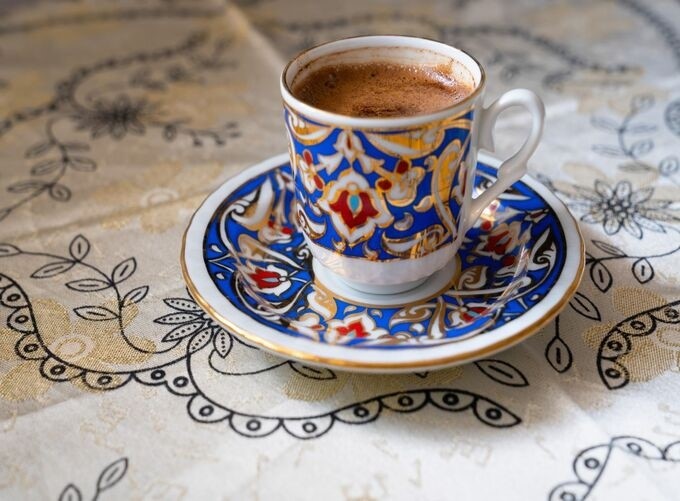
Turkish Coffee and Baklava Work Together, but They Are Not Obligatory Partners
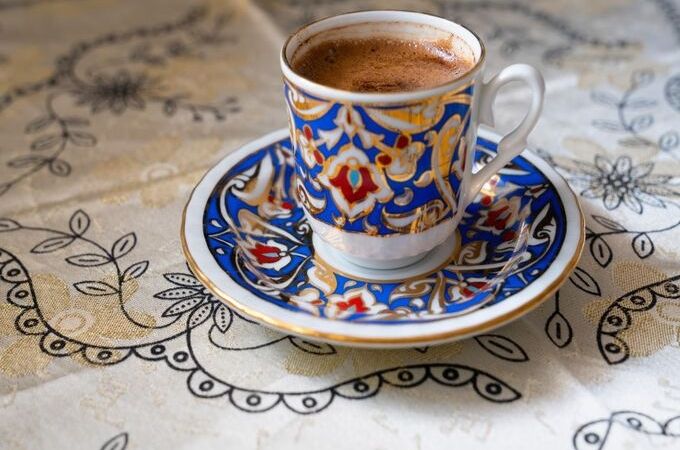
A small Turkish coffee beside baklava makes sense because the coffee's intensity can counter the sweetness of the pastry.
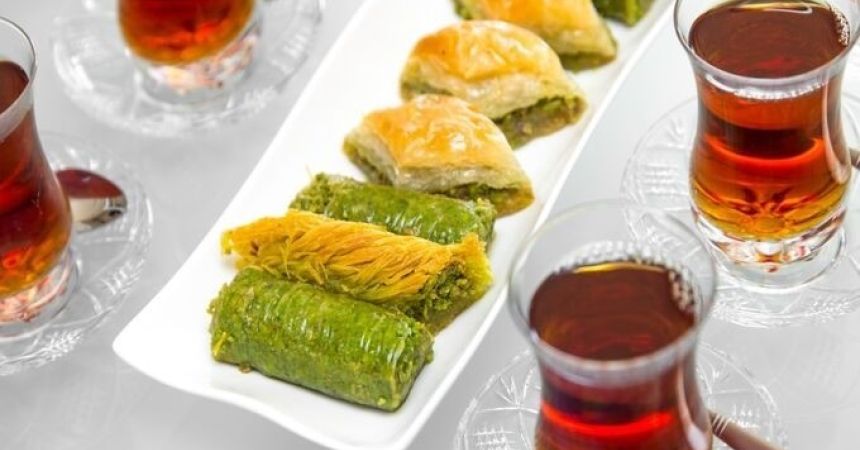
Tea works perfectly well too.
In fact, many travelers may find Turkish tea easier when tasting several sweets because it refreshes without introducing another powerful flavor.
What matters is avoiding the assumption that there is a rigid ceremonial rule requiring baklava to be served with one particular drink.
Turkey's food culture is lived rather than staged.
Sometimes the right experience is an elegant plate with coffee in a historic setting.
Sometimes it is tea beside a piece bought from a neighborhood pastry shop.
Authenticity does not require choreography.
Buying Baklava to Take Home Requires a Different Decision
The best piece to eat immediately is not automatically the best variety to carry through airports and several days of travel.
Freshness matters, and some styles are naturally more suitable for transportation than others. If you are buying a box as a gift, tell the shop that you will be traveling and how long the journey will take.
A specialist seller can recommend an appropriate type and packaging.
Avoid buying far more than you realistically need simply because the display boxes look impressive. Baklava is rich, and a relatively modest box can contain many servings.
If you are taking it internationally, you should also consider the food-entry rules of your destination country rather than assuming every food product can automatically cross every border.
Good souvenir planning begins before the box is sealed.
A Busy Shop Can Tell You Something That Online Rankings Cannot
Travelers naturally search for “the best baklava in Istanbul” or “the best baklava in Turkey,” but the idea of one universally superior shop is not especially useful.
Different established producers have loyal customers because people prefer different pastry thicknesses, syrup balance, nut intensity and styles.
Instead of chasing a single ranking, look for specialist businesses with strong turnover.
A busy shop moving trays continuously has one practical advantage: freshness.
Watch what local customers order. Ask what was made recently. If several varieties interest you, buy a small selection rather than committing immediately to a large box.
This is one of those situations where observing the counter for two minutes can provide more useful information than reading another fifty online comments.
Baklava Belongs Inside a Meal Culture, Not on a Tourist Checklist
One reason food content becomes repetitive is that dishes are extracted from the lives around them.
Baklava then becomes:
“Number 7: You must try this famous Turkish dessert.”
That tells you almost nothing.
A better way to experience Turkish cuisine is through contrast. Eat savory food first. Notice regional ingredients. Visit a market. Drink tea somewhere people are actually spending time rather than posing for photographs. Try baklava when you genuinely want something sweet.
Travelers exploring Turkey through Turkish culinary and cultural tours can gain much more from connecting food with geography and daily life than from collecting a list of famous dishes.
Baklava becomes memorable when it belongs to the day.
It does not need to become the purpose of every day.
Gaziantep Is Worth Visiting for More Than One Famous Dessert
Baklava can introduce travelers to Gaziantep, but it should not define the entire city.
The region's food culture is considerably broader, while the city's museums, historic areas and position within southeastern Anatolia make it relevant even to travelers who are not organizing their journey around restaurants.
This is also where our strict cluster boundary matters.
The Turkish Baklava page owns the pastry.
A Gaziantep destination page should own the city.
A broader Turkish food guide should help travelers discover what else to eat.
Keeping those purposes separate means we can discuss Gaziantep here without turning the article into “48 Hours in Gaziantep” or duplicating an entire regional food guide.
The reader should finish this page understanding baklava better, not accidentally receiving another destination itinerary.
Do Not Judge Baklava by How Much Syrup You Can See
Visitors who usually avoid sweet desserts sometimes assume baklava cannot possibly appeal to them.
A poor example may confirm that expectation.
A good one can complicate it.
The aim is not for sugar to erase every other ingredient. Butter, pastry and nuts should remain identifiable, while texture prevents the piece from feeling monotonous.
That is why the first baklava you try in Turkey matters.
Skip the anonymous hotel buffet tray if you have the opportunity to visit a specialist pastry shop later. Order one or two pieces rather than a mountain. Eat them fresh and pay attention to texture before deciding whether Turkish baklava is simply “too sweet.”
You may still decide it is not your dessert.
At least you will have judged the right thing.
The Best Baklava Experience Is Usually a Small One
There is a temptation when traveling to turn every famous food into an event.
Baklava rarely needs that much effort.
Walk into a respected specialist shop. Look at what is fresh. Ask about the differences if the counter is not busy. Choose a classic piece and perhaps one contrasting variety. Add tea or Turkish coffee, then give yourself enough time to notice what separates the layers, filling and syrup.
If you eventually travel through southeastern Turkey on Turkey gastronomy travel routes, Gaziantep can deepen that experience considerably.
If you never reach Gaziantep, you can still eat excellent baklava elsewhere in Turkey.
The important thing is knowing that quality is not measured by how green the photograph looks or how much syrup reaches the plate.
Good baklava has balance.
And once you have tasted a genuinely good piece, that balance is surprisingly difficult to forget.
Frequently Asked Questions About Turkish Baklava
1. What makes Turkish baklava different from other baklava?
Turkish baklava is strongly associated with extremely thin pastry layers, clarified butter, nuts and carefully balanced syrup. Regional preferences and professional techniques create substantial variation, so travelers should expect differences between pistachio, walnut and richer specialty forms rather than one standardized product.
2. Why is Gaziantep famous for baklava?
Gaziantep's reputation combines generations of specialist baklava craftsmanship with the region's celebrated pistachios. The connection between ingredient and place gives the pastry a particularly strong regional identity, although excellent baklava is also produced in Istanbul and elsewhere throughout Turkey.
3. Should I try pistachio or walnut baklava first?
Pistachio is an excellent starting point, particularly if you want to understand the Gaziantep tradition, but walnut should not be treated as a lesser version. Trying one of each is more informative because the filling noticeably changes the pastry's character.
4. How can I recognize good baklava?
Look for distinct, delicate pastry layers, a filling whose nut flavor remains recognizable and enough syrup to bring everything together without turning the piece into a soggy block. Freshness and texture usually reveal more about quality than decorative presentation does.
5. Is Turkish baklava supposed to be extremely sweet?
Baklava is unquestionably a sweet pastry, but good examples should offer more than sugar. The pastry, butter and nuts need enough character to remain identifiable, while the syrup should support the structure rather than completely overwhelming its texture and flavor.
6. What is the difference between baklava and şöbiyet?
Şöbiyet belongs to the same broader pastry world but usually provides a richer experience because of its creamy filling and softer character. Travelers who enjoy classic baklava but want something fuller and more indulgent may find şöbiyet particularly interesting.
7. What is fıstık sarma?
Fıstık sarma is a pistachio-forward Turkish sweet in which the nut plays a much more dominant role than in many classic baklava pieces. It is particularly worth trying if pistachio flavor interests you more than the architecture of numerous pastry layers.
8. Should I drink Turkish coffee with baklava?
Turkish coffee works very well because its concentrated flavor contrasts with baklava's sweetness, but it is not compulsory. Turkish tea is equally natural and may be preferable when tasting several pastries because its lighter character does not compete as strongly.
9. Can I buy Turkish baklava to take home?
Yes, and specialist shops commonly package baklava for travelers. Tell the seller how long you will be traveling so an appropriate variety and packaging can be recommended, while separately checking any food-import restrictions applied by your destination country.
10. Is Istanbul a good place to try authentic Turkish baklava?
Absolutely. Istanbul has a long-established pastry culture and gives travelers access to numerous specialist baklava shops, making it particularly useful for comparing styles. Visiting Gaziantep adds regional context, but traveling there is not required simply to experience excellent baklava.
11. Is baklava eaten only on special occasions in Turkey?
No. Baklava can be associated with celebrations, hospitality and special meals, but it is also readily purchased from specialist shops as an everyday treat. Travelers do not need to wait for a festival or ceremonial occasion before trying a freshly prepared piece.
12. What is the biggest mistake tourists make when trying baklava?
The biggest mistake is assuming every tray represents the same quality and then judging the entire pastry from one mediocre example. Choose a specialist shop, start with a small fresh portion and compare varieties before deciding which Turkish baklava style suits you.

A travel professional specializing in tailor-made travel planning, guest experience management, and multi-destination tourism operations.
With over 23 years of experience in the travel industry, he designs and manages private and cultural tours for international travelers across Türkiye, Greece, Egypt, Jordan, Morocco, and other destinations.
He has strong expertise in both online and face-to-face guest communication, sales processes, and end-to-end travel operations.
Working closely with hotels, travel agencies, and local partners, he ensures smooth coordination and high-quality travel experiences at every stage of the journey.
His focus is on delivering personalized, reliable, and seamless travel experiences for international guests worldwide.