Blue Mosque Istanbul: How to Experience Sultan Ahmed Mosque
Updated: August 2026
There is a moment in Sultanahmet when the Blue Mosque stops behaving like a monument.
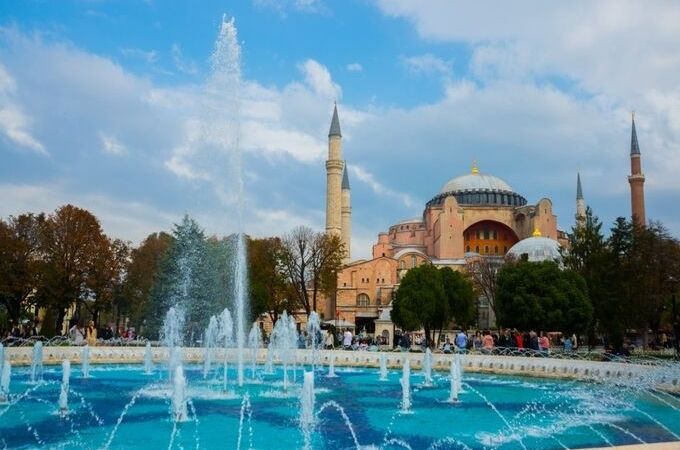
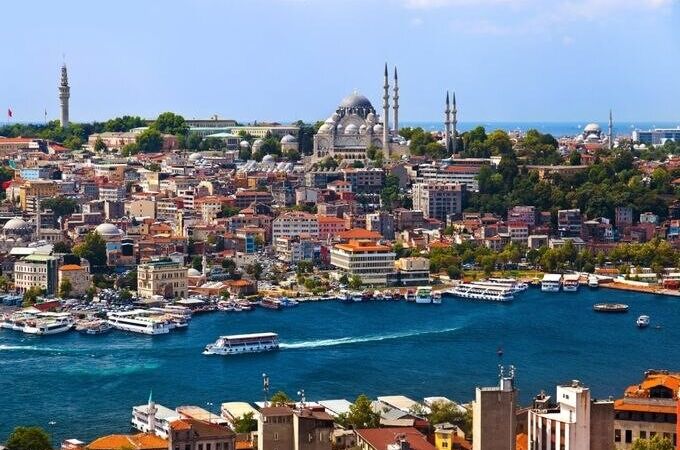
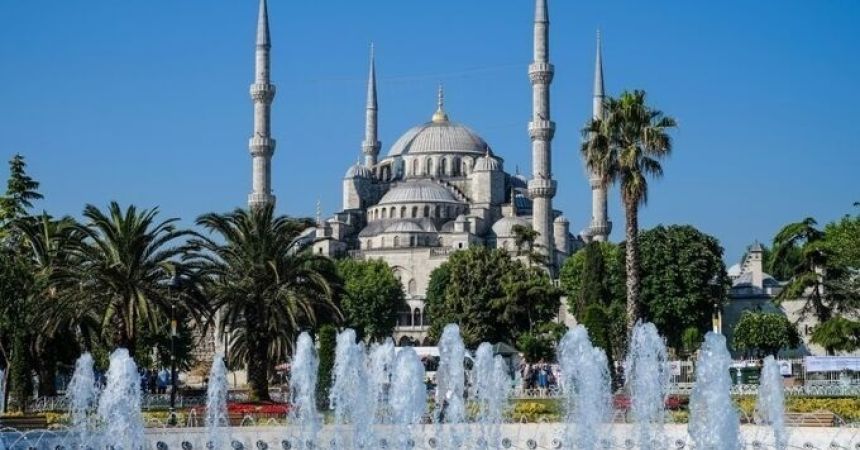
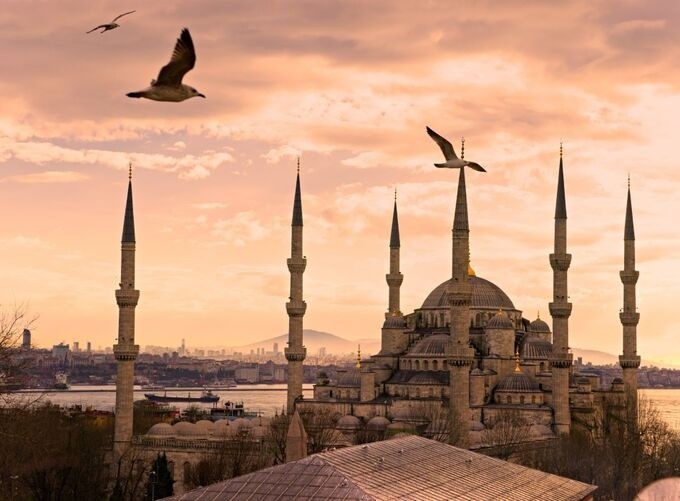
You may first notice it across the square as part of Istanbul's most familiar skyline: domes descending toward the ground, six minarets rising above them, Hagia Sophia standing opposite and crowds moving between two buildings that represent very different chapters of the city's past. From that distance, Sultan Ahmed Mosque can easily become another photograph to collect.
Walk inside, however, and the experience changes. This is not a preserved Ottoman building whose original purpose disappeared centuries ago. It remains an active mosque, used for daily prayer while simultaneously receiving visitors from around the world.
That dual identity explains why the Blue Mosque deserves more than a quick sightseeing stop.
Its value lies not simply in age, decoration or fame, but in the way architecture, religion, imperial ambition and everyday Istanbul still occupy the same space.
The Blue Mosque Makes More Sense When You Look Across the Square
Sultan Ahmed I commissioned the mosque in the early seventeenth century, and its location was not accidental.
The historic peninsula already contained some of the most powerful architectural statements in Constantinople and Ottoman Istanbul. Hagia Sophia dominated the landscape nearby, while the former Byzantine Hippodrome preserved the memory of imperial ceremony and public life.
Building a monumental imperial mosque here placed Sultan Ahmed's project directly inside that inherited urban landscape.
This is why visitors lose something when they treat the Blue Mosque as an isolated attraction.
Stand in Sultanahmet Square and look in both directions.
Hagia Sophia represents a structure created in the Byzantine era, later transformed through Ottoman history and carrying an unusually complex religious and political biography. Sultan Ahmed Mosque represents a confident Ottoman imperial project designed from the beginning as a mosque.
The space between them is almost as important as either building.
Visitors interested in seeing these relationships with historical interpretation can incorporate the area into Istanbul heritage tour experiences, where understanding the setting often adds more value than simply moving quickly through a checklist of monuments.
Why Does the Blue Mosque Have Six Minarets?
The six minarets immediately distinguish the mosque's exterior.
Imperial Ottoman mosques commonly used minarets to signal status and presence in the city, but six gave Sultan Ahmed Mosque an unusually commanding profile.
For modern visitors, minarets can easily become decorative elements in a photograph. Historically, however, the entire mosque complex communicated much more than architectural beauty.
An imperial mosque was connected with patronage, religious identity and the ruler's place in the urban order.
The silhouette was meant to be seen.
That is why the mosque feels so powerful from different parts of Sultanahmet: the architecture was designed not only for the people inside but also for the city surrounding it.
Why Is It Called the Blue Mosque?
Visitors sometimes enter expecting the interior to be overwhelmingly blue.
The English-language name comes from the large number of İznik tiles decorating the interior, many incorporating blue tones alongside other colors and floral designs.
Yet concentrating only on color misses the more interesting architectural effect.
The interior works through repetition: tiles, painted surfaces, calligraphy, arches, columns, windows and cascading domes all pull the eye in different directions without making the room feel visually fragmented.
It is one of those spaces where photographs can record individual details but struggle to reproduce the sense of scale.
| Look for | Why it matters |
|---|---|
| İznik tiles | Connect decorative craftsmanship with Ottoman artistic traditions |
| Central dome | Organizes the interior visually and structurally |
| Semi-domes | Create the cascading spatial effect associated with imperial Ottoman mosques |
| Calligraphy | Reminds visitors that decoration is inseparable from religious meaning |
| Windows and light | Change the visual character of the interior during the day |
| Prayer space | Confirms that this is still an active religious building rather than a museum |
Rather than trying to photograph everything immediately, spend several minutes simply looking upward and around you.
The architecture reveals itself more slowly that way.
The Most Important Thing to Understand Before Entering
The Blue Mosque is not a tourist attraction that happens to contain Islamic decoration.
It is a mosque that also welcomes tourists.
That order matters.
Visitor arrangements can change according to prayer times, religious occasions and operational requirements. Access can be paused while worship takes place, and areas available to visitors may differ from spaces used by worshippers.
This should not be interpreted as an inconvenience interrupting sightseeing.
Prayer is one of the reasons the building still possesses the meaning that attracts visitors in the first place.
If the mosque were no longer used, the architectural experience would be different.
What Respectful Visiting Actually Looks Like
Visitors often make mosque etiquette sound more complicated than it is.
You do not need specialist knowledge of Islam before entering.
You do need to recognize where you are.
Dress requirements should be followed according to current instructions at the entrance, shoes are removed where required, and voices should remain appropriate for an active place of worship. Photography may be possible in visitor areas, but people praying should not be treated as subjects in a travel photo session.
The simplest rule is useful beyond Istanbul:
Behave as though the religious life occurring around you is more important than your photograph.
That does not mean becoming nervous.
Respect is usually quiet and straightforward.
Do Not Rush the Interior Because the Exterior Is More Famous
Many people spend longer photographing the Blue Mosque from outside than experiencing it from within.
The exterior deserves attention, particularly because its composition works so effectively within Sultanahmet's open spaces.
Still, the interior explains why the building cannot be understood only as skyline architecture.
Once inside, notice how a structure that appears monumental from outside creates a more focused environment around the prayer hall.
The relationship between scale and human use is part of the experience.
This is also where a knowledgeable guide can add value. Dates and names are easy to read before arrival; understanding why the building looks the way it does and how Ottoman mosque architecture developed is much harder to absorb from labels alone.
Blue Mosque and Hagia Sophia Are Not an Either-Or Decision
Visitors occasionally ask which one they should see if time is limited.
That comparison is understandable but slightly misleading.
They are valuable partly because they are different.
Hagia Sophia allows visitors to encounter a building whose history crosses Byzantine Christianity, Ottoman Islamic history and later institutional transformations. Sultan Ahmed Mosque provides a more coherent example of Ottoman imperial mosque architecture and remains deeply tied to active worship.
Seeing them together creates context neither provides alone.
| Blue Mosque | Hagia Sophia |
|---|---|
| Built as an Ottoman imperial mosque | Originated as a Byzantine church |
| Early 17th century | 6th-century origins |
| Six-minaret Ottoman silhouette | Monumental Byzantine dome tradition |
| Strong İznik-tile identity | Layered Byzantine and Ottoman fabric |
| Active mosque | Complex multi-period religious history |
| Best understood within Sultanahmet | Best understood in relation to the city's longer history |
The point is not deciding which monument “wins.”
It is recognizing what each one tells you about Istanbul.

A travel professional specializing in tailor-made travel planning, guest experience management, and multi-destination tourism operations.
With over 23 years of experience in the travel industry, he designs and manages private and cultural tours for international travelers across Türkiye, Greece, Egypt, Jordan, Morocco, and other destinations.
He has strong expertise in both online and face-to-face guest communication, sales processes, and end-to-end travel operations.
Working closely with hotels, travel agencies, and local partners, he ensures smooth coordination and high-quality travel experiences at every stage of the journey.
His focus is on delivering personalized, reliable, and seamless travel experiences for international guests worldwide.