Egypt Weather in April: Warm Days Before Summer
Last Updated: August 8, 2026
April is the month when Egypt stops politely suggesting that you think about the heat and begins expecting you to do something about it.
This doesn't make April a poor time to travel. Far from it. Cairo can still be highly enjoyable, Nile cruises remain compelling, the Red Sea becomes increasingly attractive, and long sunny days give you considerable freedom. What changes is the rhythm, particularly once you travel south.
A leisurely 10:30 a.m. start may sound perfectly reasonable over breakfast in Cairo. Try the same approach before a long visit to Luxor's West Bank and you may find yourself wondering why nobody suggested leaving earlier.
April rewards travellers who understand that a good itinerary is not simply a list of places. It is also a question of what time you arrive at them.
Get that right and the month can be excellent.
April Is Not Equally Warm Everywhere
One of the recurring mistakes in Egypt planning is treating the country's weather as though Cairo, Luxor and the Red Sea share the same forecast.
They don't.
By April, regional differences become particularly important because southern Egypt is moving decisively towards hotter conditions while northern areas generally remain more moderate.
| Destination | April Character | Best Planning Approach |
|---|---|---|
| Cairo & Giza | Warm, generally manageable | Use mornings for longer outdoor visits |
| Luxor | Hotter and very sunny | Prioritise exposed sites early |
| Aswan | Hot, dry southern climate | Build genuine midday pauses |
| Abu Simbel | Hot and highly exposed | Early excursions make strong sense |
| Hurghada | Warm Red Sea conditions | Excellent for mixed coast and activity days |
| Sharm el-Sheikh | Warm and increasingly beach-friendly | Strong for marine activities |
| Western Desert | Heat becoming more significant | Timing and preparation matter |
April is therefore less about asking whether Egypt is “warm” and more about understanding where the heat will influence your particular route.
A Cairo-and-Alexandria trip is one experience. Cairo followed by Luxor, Aswan and Abu Simbel is another.
Pack and plan accordingly.
Cairo Still Gives You Flexibility
Cairo in April can be warm, but the city generally allows more freedom than Upper Egypt.
This matters because Cairo is not a destination that benefits from being reduced to a single archaeological day.
Giza deserves time, of course, but so does the historical city that developed long after pyramid construction ended. Islamic architecture, Coptic heritage, museums, markets and the Nile all compete for attention, and April's longer days make it tempting to fit too much into one schedule.
Don't.
A morning at Giza followed by lunch and a completely different side of Cairo can be far more satisfying than trying to collect every famous landmark before sunset.
Travellers interested in seeing those different historical layers can explore Cairo cultural routes, but the important principle is simple: let the city change character during the day rather than spending every hour moving between headline attractions.
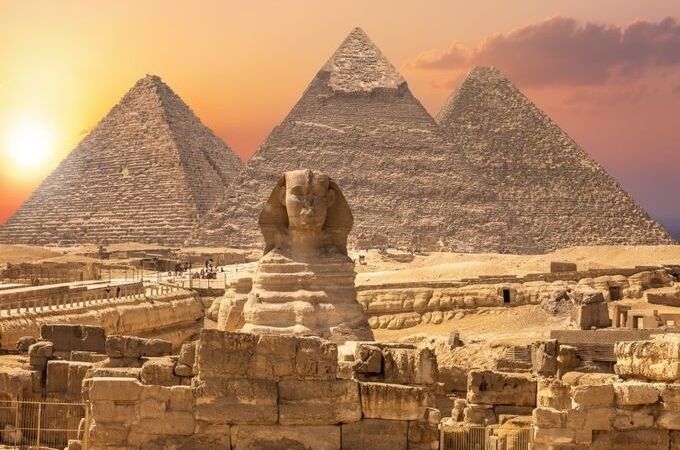
April at Giza: Earlier Is Usually Better
The pyramids haven't changed since March.
Your relationship with the sun has.
The Giza Plateau is exposed, distances are larger than they appear in photographs, and shade is not always where you would ideally like it to be. An earlier visit generally provides more comfortable conditions for walking and gives you greater freedom before the stronger part of the day.
Bring water, sunglasses, sunscreen and a hat. These sound like basic recommendations because they are, yet basic recommendations have an unfortunate tendency to become important precisely when people ignore them.
The other useful thing to bring is time.
Don't spend the entire visit chasing the photograph where nobody else appears behind you. Giza receives visitors because it contains the last surviving Wonder of the Ancient World. You are unlikely to be the only person who noticed.
Step away from the busiest angles when possible and look back towards Cairo. The meeting point between desert plateau and enormous modern city remains one of the most revealing views at Giza.
Luxor Is Where April Changes the Rules
Luxor makes April's seasonal shift unmistakable.
The city contains an extraordinary concentration of outdoor archaeological sites, many of them sitting within open desert terrain. As temperatures rise, the question is no longer simply which sites you want to visit but how you arrange them across the day.
The West Bank belongs naturally in the morning. Valley of the Kings, Hatshepsut's temple and other exposed locations benefit from an earlier start, while the middle of the day can be used for lunch, rest or less demanding activities.
Karnak also deserves enough time that you aren't hurrying through the complex because the sun has become the only thing you're thinking about.
This is where travellers sometimes make the wrong calculation: because April gives you longer daylight, they assume it gives you more sightseeing time.
Technically, perhaps.
Enjoyably, not always.
Aswan Teaches You the Value of an Empty Afternoon
Aswan in April can be hot enough to make a very persuasive argument for slowing down.
Fortunately, slowing down is one of the things Aswan does best.
Visit the important sites earlier. Then allow the middle of the day to become quieter rather than treating every unscheduled hour as a problem requiring another excursion.
Later, return to the river.
A felucca ride as the strongest heat begins to fade can feel very different from moving between sites in the middle of the afternoon. The Nile becomes part of the climate strategy without ever feeling like one.
Travellers exploring southern Egypt can consider Aswan Nile experiences, but leave enough room around the organised visits for the city to establish its own pace.
That is often when Aswan becomes memorable.
The Nile Cruise Starts Doing More Work
By April, a Nile cruise becomes particularly good at alternating intensity with recovery.
You visit a temple in the morning, return to the ship, have lunch, and continue towards the next stop while somebody else handles the movement.
There is no road to navigate and no new hotel to check into that evening.
That simplicity becomes increasingly valuable as the days grow warmer.
Deck time may shift towards mornings, later afternoons and sunset rather than the strongest part of the day, but the river remains central to the experience.
A well-planned April Nile journey should therefore use the cruise rhythm rather than fight it. The goal isn't to prove how many temples can fit between Luxor and Aswan; it is to arrive at each one with enough energy to care about what you're seeing.
After several days of ancient history, that distinction matters more than you might expect.
April Can Bring More Than Predictable Heat
Warmth isn't the only weather consideration.
Spring can also bring periods of hot, dry, dusty wind associated with the khamsin, which may affect visibility, outdoor comfort and travel conditions. These events are not something a traveller can schedule months in advance, nor should they become a reason to avoid April entirely.
They are simply another reason to keep an itinerary flexible.
If visibility is poor or conditions become uncomfortable, rearranging an outdoor-heavy day may be smarter than stubbornly following a plan created before arrival.
This is where local organisation becomes valuable. Weather doesn't care what your spreadsheet says.
Neither should you, occasionally.
April Is About Working With Egypt, Not Against It
The transition from March to April isn't defined by one temperature threshold. It is defined by behaviour.
You start earlier because the morning is better.
You stop treating midday as prime sightseeing time in Upper Egypt.
You carry water before you feel thirsty.
You give the Nile cruise room to slow the journey down.
You notice that the Red Sea is becoming increasingly attractive, not merely as somewhere to recover after the cultural route but as a destination that can justify several days of its own.
None of this makes April complicated.
It simply means Egypt has stopped adapting itself to your itinerary.
Your itinerary now needs to adapt to Egypt.
Get that relationship right and April can still give you extraordinary archaeological days, long Nile views and warm evenings without requiring the more defensive travel rhythm of the hotter months ahead.
In Upper Egypt, April Changes the Shape of the Day
By April, the best sightseeing plan in Luxor is rarely the one that looks most efficient on paper. A schedule packed neatly from breakfast until late afternoon may appear impressive before you arrive, but Upper Egypt has a habit of editing ambitious itineraries on your behalf.
The smarter approach is to divide the day according to the landscape. Exposed archaeological sites receive the cooler morning hours, the middle of the day becomes deliberately slower, and late afternoon is allowed to become useful again. Once you stop treating that pause as lost time, April becomes much easier to enjoy.
Let the West Bank Have Your Best Hours
Luxor's West Bank is where an early start earns its breakfast.
The Valley of the Kings sits within a stark desert landscape where shade is limited and the sun becomes increasingly noticeable as the morning develops. Nearby, the Temple of Hatshepsut rises dramatically against the cliffs, which is wonderful for architecture and rather less useful when you're searching for somewhere cool to stand.
Arriving earlier gives you more than physical comfort. It gives you patience.
You are more likely to look carefully inside the tombs, listen to the explanation and spend time with details that disappear when everyone is thinking about the temperature.
For travellers who want to explore this side of Luxor properly, Luxor ancient sites can form the archaeological core of an April itinerary without turning the entire day into one continuous outdoor excursion.
Midday Is Not an Empty Space to Fill
This is perhaps the biggest adjustment April asks you to make.
In cooler months, an itinerary can continue almost automatically through lunch. By April, especially in southern Egypt, there is real value in allowing the middle of the day to become quieter.
Have lunch somewhere comfortable. Return to the hotel for a while. Sit beside the Nile. If you're cruising, let the ship move while you don't.
It can feel strange at first, particularly for travellers who have crossed half the world and understandably want to use every available hour. Yet a two-hour pause can make the difference between enjoying a late-afternoon visit and arriving there already exhausted.
Egypt is not a destination where quantity reliably produces quality.
There will always be another temple.
Karnak Deserves Your Attention, Not Your Leftover Energy
Karnak is too large to become the final item squeezed into an overloaded day.
The Great Hypostyle Hall understandably receives most of the attention, but the complex extends far beyond its famous columns. If you arrive tired, hot and already thinking about dinner, much of that scale becomes difficult to absorb.
April therefore encourages a little selectivity. Karnak might deserve its own morning, or a carefully chosen later visit depending on local conditions and opening arrangements.
The point isn't to create rigid rules. It is to stop treating major monuments as interchangeable itinerary components.
You wouldn't visit a great museum with fifteen minutes before closing simply because you were nearby.
Karnak deserves the same courtesy.
The Nile Cruise Provides the Pause Naturally
This is where cruising becomes particularly well suited to April.
Between excursions, the itinerary slows without requiring you to make a conscious decision about it. You return to the ship, eat, rest and continue south while the landscape changes outside.
By later afternoon, the deck becomes inviting again.
Fields follow the river. Date palms break the horizon. Villages appear briefly and disappear behind the ship, while the desert remains surprisingly close to the narrow strip of cultivated land.
Travellers considering Nile cruise holidays should think of those sailing hours as part of the experience rather than gaps between attractions. In April, they also provide exactly the kind of natural recovery time that makes the archaeological portions of the journey more enjoyable.
Aswan Should Not Become Another Luxor
The mistake is understandable.
You arrive in Aswan and immediately begin listing what remains to be seen.
Philae. Abu Simbel. Nubian villages. Felucca. Unfinished Obelisk.
The list grows quickly, but Aswan loses something when every hour receives an assignment.
April makes this especially noticeable because the warmer middle of the day naturally encourages a slower rhythm. Visit the more demanding sites earlier, then allow Aswan to become a river city rather than simply a base for excursions.
Later, when the light softens, go back outside. Take a boat or sit beside the Nile and watch the granite islands change colour as the sun drops.
There is no historical examination at the end of the trip. You are allowed to remember the view.
Abu Simbel Is Worth Planning Around
Abu Simbel is different because the excursion itself demands commitment. From Aswan, many overland visits involve an extremely early departure, and by April that timing becomes an advantage rather than merely an inconvenience.
Reaching the temples before the stronger heat develops gives you a better chance to explore the site comfortably. Sun protection and water remain essential, because this is an exposed southern landscape where the season is already moving decisively towards hotter conditions.
The early alarm will still be unpopular when it rings.
By the time you are standing in front of Ramesses II's colossal statues, negotiations with the alarm clock tend to feel less important.
April Rewards the Itinerary With Breathing Room
A good April day in Upper Egypt should not feel like a military operation built around avoiding the sun. If it does, the itinerary is probably too full.
The better version is simpler: use the morning well, allow midday to slow down, and return to the experience when conditions become more comfortable. This rhythm gives the monuments more attention, the Nile more presence and the traveller considerably more energy.
It also produces something that tightly scheduled itineraries often miss—the feeling that you actually travelled through Upper Egypt rather than simply completing it.
April Has a Wild Card: The Wind
Temperature gets most of the attention when people research Egypt in April, yet it isn't the only part of the weather worth understanding. Spring can bring periods of hot, dry, dust-carrying wind commonly associated with the khamsin, and when those conditions occur, the experience outside can change quickly.
A morning that looked perfectly suitable for a long outdoor visit may become hazier. Desert dust can soften distant views, the air may feel hotter and visibility can deteriorate. This is especially relevant at places where the landscape is part of what you came to see, from Giza's wide plateau to desert excursions and long-distance viewpoints.
There is no useful way to build a holiday around predicting a particular khamsin event months in advance. The sensible response is simpler: know that spring weather can occasionally be more complicated than endless blue skies and keep enough flexibility to rearrange the day if local conditions warrant it.
A Hazy Day Is Not a Lost Day
Imagine waking in Cairo and discovering that the view isn't what you expected.
The pyramids are still there, obviously, but perhaps this isn't the morning for the wide, crystal-clear photographs you had pictured. Rather than forcing the plan simply because Giza is written in today's itinerary, this may be an opportunity to shift towards a museum, historic architecture or another experience where distant visibility matters less.
Then return to the outdoor plan when conditions improve.
This sounds obvious, yet travel itineraries have a strange ability to turn sensible adults into people who insist on following a six-month-old spreadsheet despite what is happening outside the hotel window.
April rewards flexibility more than obedience.
The Red Sea Changes From Recovery Stop to Real Destination
During Egypt's cooler months, the Red Sea often appears at the end of an itinerary as a place to rest after Cairo and the Nile.
By April, that description starts becoming inadequate.
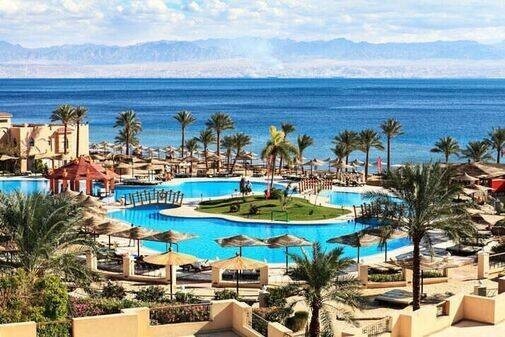
Hurghada and Sharm el-Sheikh now have a stronger claim on actual holiday time. Warmer coastal conditions make swimming, diving, snorkelling and boat days increasingly natural parts of the journey, while the sea provides a completely different visual and physical experience from the archaeological route inland.
The important shift is psychological: you no longer need to justify three or four coastal nights as “recovery.”
You can go because you want to be there.
| If April Is Mainly About... | Consider Building Around... |
|---|---|
| Ancient history | Cairo + Luxor + Aswan |
| Nile experience | Luxor + cruise + Aswan |
| Culture and coast | Cairo + Upper Egypt + Hurghada |
| Diving and reefs | Sharm el-Sheikh + selected cultural stops |
| Slower travel | Fewer cities + longer stays |
| Desert landscapes | Cultural route + carefully timed desert extension |
This is a more useful way to build April than simply collecting famous names.
Hurghada Can Solve a Routing Problem
Hurghada has one practical advantage that becomes particularly useful when you want both Upper Egypt and the Red Sea: it pairs naturally with Luxor.
Instead of flying back through Cairo simply to reach a beach, travellers can design a route that moves from the Nile towards the coast. This reduces unnecessary backtracking and gives the itinerary a satisfying change of character.
Temple walls become open sea. Early archaeological starts become slower mornings. The historical information you've been absorbing for a week finally gets time to settle.
A route built around Luxor coastal escapes can make that transition naturally, provided you give the coast enough nights to justify going there.
Arriving at 5 p.m., sleeping, spending one day at the beach and leaving the following morning is not a Red Sea stay.
It is an unusually scenic transfer.
Sharm el-Sheikh Deserves to Be Chosen Deliberately
Sharm works differently.
It isn't simply the next logical stop after Luxor or Aswan, which means adding it should be a conscious decision. For travellers interested in reefs, diving, snorkelling and resort time, that decision can make excellent sense in April.
The mistake is treating Sharm as an obligation because an Egypt trip is somehow incomplete without the Red Sea.
It isn't.
A first-time traveller fascinated by archaeology may be perfectly happy spending the entire journey between Cairo and Upper Egypt. Someone who dives may consider skipping an additional temple day for more time in Sinai an extremely easy decision.
Both are correct.
A good travel hub should help you choose, not tell everyone to take the same holiday.
April Is Also About What You Leave Out
This is where the month becomes different from March.
March expands possibilities while conditions remain relatively forgiving. April asks you to become more selective because warmer southern days make unnecessary movement less appealing.
If you have ten days, don't automatically add Cairo, Luxor, Aswan, Abu Simbel and the Red Sea because they all fit mathematically.
Travel isn't mathematics.
Hotel check-outs take time. Airports take time. Road transfers take time. Packing the suitcase for the fifth time definitely takes more time than it did the first.
A better April itinerary may contain fewer places and better days.
That might mean Cairo + Luxor + Nile cruise + Aswan.
Or Cairo + Luxor + Hurghada.
Or even a Red Sea-led trip with a carefully selected cultural extension.
The weather doesn't decide which version is correct.
Your priorities do.
April Rewards Plans That Can Bend
The most useful thing you can bring to Egypt in April isn't another item of clothing.
It's permission to change the day.
If dust affects visibility, move the panoramic outdoor visit.
If Luxor is hotter than expected, protect the morning and slow the afternoon.
If the Red Sea gives you an ideal day for being on the water, perhaps the desert excursion can happen tomorrow.
This isn't poor planning. It is what good planning looks like once you're actually travelling.
Egypt has survived several thousand years of political change, shifting rivers, expanding cities and moving sand. Your 2:30 p.m. activity can probably survive being moved to Thursday.
And once you accept that, April becomes a considerably easier month to enjoy.
Build Your April Egypt Around the Trip You Actually Want
By April, trying to create one “perfect Egypt itinerary” for everyone stops making sense. A traveller fascinated by ancient history needs a very different route from someone who wants five days of diving, while a couple interested in a Nile cruise may have little reason to cross the country simply to add another resort.
Weather makes those choices more important because Upper Egypt is getting hotter while the Red Sea is becoming increasingly attractive. Rather than beginning with a list of destinations, begin with the experience you would be most disappointed to miss.
| Your Main Priority | Strong April Route | Why It Works |
|---|---|---|
| Ancient Egypt | Cairo → Luxor → Aswan | Keeps the journey focused on major sites |
| Nile cruising | Cairo → Luxor → Nile → Aswan | Builds natural rest into warmer days |
| Culture + coast | Cairo → Luxor → Hurghada | Avoids unnecessary backtracking |
| Red Sea | Cairo → Sharm el-Sheikh | Gives the coast meaningful time |
| Slower travel | Cairo + one southern region | Fewer transfers, deeper experience |
| First-time highlights | Cairo → Nile → Aswan | Covers major experiences without excessive movement |
There is no prize for visiting the most governorates.
If your ten-day itinerary requires three domestic flights, multiple long drives and a new hotel every other night, April's weather isn't the only thing making the trip tiring.
April Is Better With a Plan B
This is particularly relevant in spring because temperature isn't the only variable. Dusty or hazy conditions associated with seasonal winds can occasionally affect visibility and outdoor comfort, while hotter-than-expected days may make an afternoon plan less appealing.
Build flexibility into the itinerary before you need it. Museums and historic interiors can provide useful alternatives in Cairo, while Nile cruise schedules naturally create quieter periods between excursions. On the Red Sea, changing the order of a boat day, desert activity and resort day may be all that is required.
The objective isn't to predict every possibility. It is to avoid designing a holiday that collapses because Tuesday didn't behave exactly as expected.
Travellers looking for a route that can balance these regions can consider Egypt April itineraries, with enough breathing room to adjust individual days when necessary.
Frequently Asked Questions About Egypt in April
1. Is April a good month to visit Egypt?
Yes, especially for travellers comfortable with warmer weather. Cairo, the Nile and Red Sea can all work well in April, although Upper Egypt becomes increasingly hot. Earlier sightseeing, sun protection and a less crowded daily schedule become more important than during the cooler months.
2. How hot does Egypt feel in April?
The answer depends heavily on location. Cairo is generally more moderate than Luxor, Aswan and Abu Simbel, where daytime heat becomes increasingly noticeable. Rather than relying on a national average, check forecasts for each destination shortly before travel and plan outdoor activities accordingly.
3. What is the khamsin, and can it affect an April trip?
The khamsin refers to hot, dry, dust-laden spring winds that can affect Egypt. When these conditions occur, temperatures may rise and visibility can deteriorate. They do not dominate every April trip, but flexible scheduling is useful if a particularly dusty day affects outdoor sightseeing.
4. Can dust affect pyramid views in April?
Yes. Haze or dust can occasionally reduce long-distance visibility around Cairo and Giza, particularly during unsettled spring conditions. This does not make April unsuitable for visiting the pyramids, but having some flexibility can help if photography and panoramic views are priorities.
5. Is Luxor too hot in April?
Luxor can become hot during April, particularly later in the month, but cultural touring remains practical with intelligent timing. Visit exposed sites such as the West Bank earlier, carry water and sun protection, and consider giving the warmest part of the afternoon a less demanding role.
6. Is April suitable for a Nile cruise?
Yes. A Nile cruise can work particularly well as temperatures rise because sailing creates natural breaks between archaeological excursions. Earlier temple visits can be followed by lunch, rest and river time, reducing the need for continuous outdoor touring during the warmest part of the day.
7. Should I visit Abu Simbel in April?
April remains suitable for Abu Simbel, but the southern location and exposed setting make early visits increasingly sensible. Many excursions already depart Aswan very early, which becomes an advantage as temperatures rise. Bring water, sun protection and lightweight clothing suitable for strong sunshine.
8. Is the Red Sea good in April?
Yes. April is an attractive period for Hurghada and Sharm el-Sheikh, particularly for travellers interested in swimming, diving, snorkelling and resort time. Local wind and marine conditions still vary, but the coast can now justify being a major part of the itinerary rather than simply a short extension.
9. What should I wear in Egypt in April?
Choose lightweight, breathable clothing that provides sensible sun coverage, along with comfortable walking shoes, sunglasses and a hat. Clothing should also respect local customs, particularly at religious sites. A light layer can remain useful for certain evenings, boats and air-conditioned interiors.
10. Should I combine Luxor and Hurghada in April?
This can be an excellent combination because Luxor provides intensive cultural sightseeing while Hurghada introduces several slower coastal days. The overland connection also avoids returning to Cairo between the two regions, making the route more efficient for travellers who genuinely want both experiences.
11. How should I plan sightseeing hours in April?
In Upper Egypt, prioritise exposed archaeological sites during the earlier part of the day and allow more flexibility around midday. Cairo usually permits greater freedom. Avoid creating one rigid schedule for the entire country because regional conditions differ significantly.
12. Is April or May better for visiting Egypt?
April generally offers a better balance for travellers planning extensive archaeology and Nile sightseeing because May moves further into the hotter season, particularly in Upper Egypt. Travellers prioritising the Red Sea may be more comfortable with either month, depending on their tolerance for heat.

A travel professional specializing in tailor-made travel planning, guest experience management, and multi-destination tourism operations.
With over 23 years of experience in the travel industry, he designs and manages private and cultural tours for international travelers across Türkiye, Greece, Egypt, Jordan, Morocco, and other destinations.
He has strong expertise in both online and face-to-face guest communication, sales processes, and end-to-end travel operations.
Working closely with hotels, travel agencies, and local partners, he ensures smooth coordination and high-quality travel experiences at every stage of the journey.
His focus is on delivering personalized, reliable, and seamless travel experiences for international guests worldwide.