Exploring Egypt's Desert: White Desert, Black Desert, and Sahara Adventures
When people imagine Egypt, they usually picture the pyramids rising above the sands of Giza.
What many don't realize is that those famous pyramids occupy only a tiny corner of a country dominated by desert.
In fact, around 95 percent of Egypt is desert, stretching across vast landscapes of golden dunes, dramatic rock formations, ancient oases, volcanic hills, and some of the clearest night skies you'll ever see. These seemingly empty landscapes have shaped Egyptian history for thousands of years, influencing trade routes, settlements, and even the locations of many ancient temples.
Yet Egypt's deserts are anything but empty.
Drive away from the Nile Valley and you'll discover places that feel almost untouched by time. White limestone formations rise from the sand like frozen sculptures, black volcanic hills create striking contrasts against pale landscapes, and hidden oases offer pockets of green surrounded by endless desert.
For travelers looking beyond the country's famous archaeological sites, Egypt's deserts reveal another side of the nation—quieter, wilder, and surprisingly diverse.
Whether you're interested in desert camping, photography, off-road adventures, or simply experiencing landscapes unlike anywhere else on Earth, Egypt's deserts deserve a place on your itinerary.
How Much of Egypt Is Desert?
One of the most surprising facts about Egypt is how little of the country is actually occupied by cities and farmland.
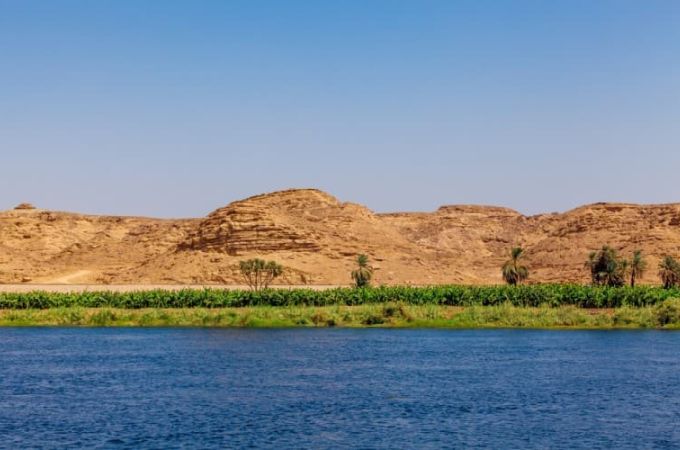
Almost all daily life is concentrated along the Nile River and its fertile valley, while the surrounding landscape is dominated by desert.
| Landscape | Approximate Coverage |
|---|---|
| Desert | About 95% |
| Nile Valley and Delta | About 5% |
This explains why Egypt's population is concentrated into relatively small areas despite the country's enormous size.
The desert isn't simply background scenery.
It defines Egypt.
The Two Main Desert Regions
Egypt is divided into two major desert regions.
The Western Desert stretches toward Libya and contains famous attractions such as the White Desert, Black Desert, Bahariya Oasis, Siwa Oasis, and several protected natural areas.
The Eastern Desert lies between the Nile and the Red Sea. Although less visited, it offers rugged mountains, ancient mining routes, dramatic valleys, and access to Red Sea coastal destinations.
Each region feels completely different.
| Desert Region | Best Known For |
|---|---|
| Western Desert | White Desert, Black Desert, oases |
| Eastern Desert | Mountains, desert roads, Red Sea access |
Most first-time visitors who choose a desert excursion explore the Western Desert.
The White Desert National Park
If one desert destination stands out above all others, it is the White Desert.
Huge chalk rock formations have been shaped by wind over millions of years into remarkable natural sculptures. Some resemble giant mushrooms, others look like animals, towers, or abstract works of art.
The landscape changes dramatically throughout the day.
Early morning brings soft golden light, midday highlights the brilliant white rocks, and sunset transforms the desert into shades of orange, pink, and gold.
Camping beneath the stars here is an unforgettable experience.
For many travelers, the White Desert becomes one of the highlights of their entire Egypt journey.
The Black Desert
Only a short drive from the White Desert lies one of Egypt's most unusual landscapes.
The Black Desert is covered with dark volcanic rock that gives the surrounding hills their distinctive appearance.
Unlike the smooth white formations nearby, the Black Desert feels rugged and dramatic.
The contrast between the two regions makes visiting both especially rewarding.
Within the same day, travelers can experience two completely different desert environments that seem almost impossible to belong to the same country.
Egypt's Beautiful Oases
The deserts of Egypt are not endless sand dunes.
Scattered throughout these vast landscapes are natural oases that have supported communities for centuries.
Some are famous for hot springs, others for palm groves, traditional villages, or ancient ruins.
| Oasis | Why Visit? |
|---|---|
| Siwa Oasis | Culture, salt lakes, springs |
| Bahariya Oasis | Gateway to White Desert |
| Farafra Oasis | Traditional desert life |
| Dakhla Oasis | Historic villages |
| Kharga Oasis | Ancient temples and forts |
Each oasis offers a completely different experience, proving that Egypt's deserts are far more diverse than many people expect.
Desert Safaris in Egypt
Exploring the desert is very different from visiting cities or archaeological sites.
Most safaris use specially equipped 4×4 vehicles capable of crossing rocky terrain, dunes, and remote tracks.
Depending on the itinerary, you might visit:
- White Desert
- Black Desert
- Crystal Mountain
- Bahariya Oasis
- Natural springs
- Desert camps
Many safaris include traditional meals prepared outdoors and evenings spent around a campfire beneath exceptionally clear skies.
For travelers seeking something beyond temples and museums, professionally organized Egypt desert tour packages provide one of the country's most unique adventures.
Wildlife in Egypt's Desert
Although the landscape may appear empty, Egypt's deserts support more life than many visitors realize.
Foxes, desert hares, gazelles, reptiles, birds of prey, and numerous smaller animals have adapted to survive in this challenging environment.
Most wildlife remains difficult to spot during the hottest hours, but early mornings and evenings sometimes reward patient observers.
Plants are equally resilient, especially around oases where underground water supports palm trees and other vegetation.
The desert may seem silent.
In reality, it is full of life adapted to extraordinary conditions.
Why the Desert Was Important in Ancient Egypt
The desert wasn't simply something ancient Egyptians avoided.
It played an essential role in their civilization.
The surrounding deserts protected the Nile Valley from invasion, supplied valuable minerals and stone for temples, and provided trade routes linking Egypt with neighboring regions.
Many famous archaeological sites actually sit on the edge of the desert rather than inside fertile farmland.
Understanding Egypt's desert helps explain why the civilization developed exactly where it did.
Is Egypt's Desert Worth Visiting?
Absolutely.
While most visitors focus on pyramids and temples, the desert offers something completely different.
Instead of crowds, you'll find silence.
Instead of busy streets, endless horizons.
Instead of cities, landscapes that have changed very little for thousands of years.
For travelers who have a few extra days, combining Cairo and the Nile Valley with a desert adventure creates a much more complete picture of Egypt.
Many visitors planning private Egypt adventure tours now include at least one desert excursion alongside the country's famous historical attractions.

A travel professional specializing in tailor-made travel planning, guest experience management, and multi-destination tourism operations.
With over 23 years of experience in the travel industry, he designs and manages private and cultural tours for international travelers across Türkiye, Greece, Egypt, Jordan, Morocco, and other destinations.
He has strong expertise in both online and face-to-face guest communication, sales processes, and end-to-end travel operations.
Working closely with hotels, travel agencies, and local partners, he ensures smooth coordination and high-quality travel experiences at every stage of the journey.
His focus is on delivering personalized, reliable, and seamless travel experiences for international guests worldwide.