Israel Currency: When You Need Shekels and When You Don’t
Updated: August 2026
There is an easy mistake to make with money in Israel: withdrawing a large amount of cash at the beginning of the trip simply because carrying local currency feels like sensible preparation.
For many visitors, it is unnecessary.
Israel has a well-developed electronic payment environment. Payment cards are part of the country's established payment infrastructure, and card-based transactions can cover a substantial portion of ordinary visitor spending.
That does not make cash obsolete, nor does it mean a traveler should arrive without access to local currency. It changes the question.
Instead of asking “How much cash should I take to Israel?”, it is more useful to ask:
“Which parts of my trip actually require me to hold shekels?”
That leads to a much leaner and more practical money strategy.
First, Get the Name Right: Shekel, Shekels, NIS and ILS
Israel's currency is the new Israeli shekel.
Travelers may encounter several ways of referring to it:
ILS — the international currency code
NIS — New Israeli Shekel
₪ — the shekel symbol
shekel/shekels — normal everyday terminology.
These are not different currencies.
If a hotel confirmation, restaurant bill or ATM screen uses ILS while someone verbally gives you a price in shekels, both refer to the same monetary unit.
The shekel is divided into 100 agorot.
For practical travel purposes, the important habit is simply to recognize prices expressed in shekels and use them as your local reference rather than continually expecting tourism businesses to quote dollars or euros.
A Card-First Trip Does Not Mean a Cash-Free Trip
There is an important difference between these two ideas.
Card-first means you do not need to make cash your default payment method.
Cash-free means you have removed cash as an option altogether.
The second approach is unnecessarily restrictive.
A traveler might pay electronically for accommodation, restaurant meals and larger purchases while still finding shekel cash convenient for occasional small expenses or situations where an alternative payment method is useful.
Bank of Israel describes payment cards as alternatives to cash and checks, supporting in-person POS transactions as well as contactless and other forms of payment.
For a visitor, that means the wallet can remain relatively light without becoming completely dependent on one card.
Let the Trip Decide Whether You Need More Cash
The amount of physical currency worth carrying changes according to what you are actually doing.
A useful framework is not based on cities, but on transaction friction:
| Your situation | What matters |
|---|---|
| Large hotel or established restaurant | Card is often the natural first option |
| Normal urban sightseeing day | Small cash reserve may be enough |
| Minor incidental purchase | Shekels provide flexibility |
| Moving between several destinations | Keep a second payment option |
| Approaching a land border | Check specific fees and payment arrangements |
| Final days before departure | Avoid unnecessary new cash withdrawals |
This is a different model from Morocco's medina environment or Egypt's more cash-active travel rhythm.
In Israel, the objective is often to avoid over-carrying cash while preserving enough redundancy that a card issue does not disrupt the day.
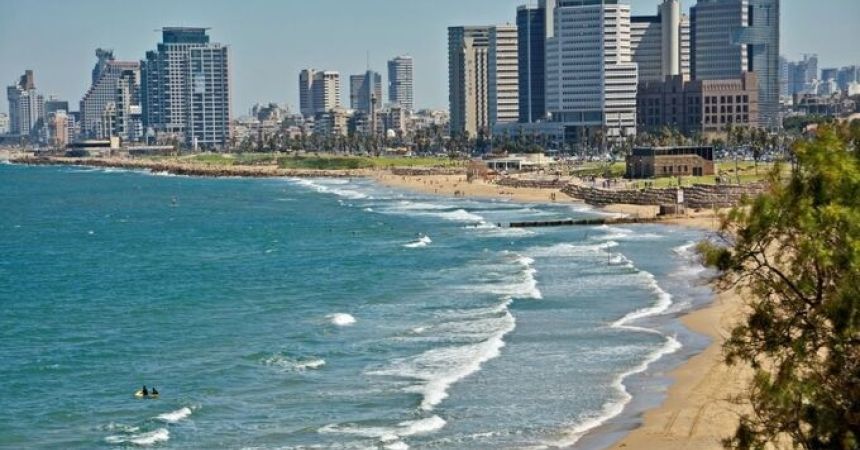
Tel Aviv Can Be Almost Too Easy
A visitor beginning in Tel Aviv may quickly become accustomed to electronic payment.
That convenience is useful, but it can also create a weak travel habit: carrying only one card because it has worked perfectly for several days.
The better lesson from an easy payment environment is not “I don't need anything else.”
It is:
“My main payment method works well, so my backup can remain small.”
A little shekel cash and a second card stored separately create that backup without forcing you to carry large amounts of money.
Travelers joining Israel cultural discovery tours may later move beyond one urban environment, so maintaining that simple redundancy makes more sense than redesigning your payment setup at every stop.
Jerusalem Does Not Require a New Currency Strategy
Jerusalem feels very different from Tel Aviv as a destination, but that does not mean travelers need to create an entirely different financial system for it.
This is an important distinction because old-style travel blogs often exaggerate destination differences merely to create more content.
You still use shekels. Cards remain useful. Cash remains a secondary option.
What changes during a sightseeing day is the range of individual transactions you may encounter as you move between established restaurants, attractions, smaller businesses and different parts of the city.
If you already have a primary card, a backup and some local currency, there is little reason to micromanage the wallet further.
That simplicity is part of the information value here: not every destination change requires another ATM visit.
Do You Need US Dollars?
Seeing prices discussed in dollars within tourism or international contexts can cause confusion.
The US dollar is not Israel's everyday local currency. The shekel is.
A service specifically quoted and confirmed in another currency should be treated according to the terms of that booking. That is different from assuming dollars should be carried for normal daily purchases.
For most travelers, converting everyday spending into a series of USD cash transactions would add complexity rather than remove it.
The same principle applies to euros or pounds.
Foreign currency is something you may convert or use where explicitly agreed. It does not replace the shekel as the reference currency for ordinary spending.
Withdraw Cash Because You Need It, Not Because You Found an ATM
Israel has an established ATM infrastructure. Bank of Israel describes the national ATM network as connecting banks and allowing customers to withdraw through machines outside their own issuing bank's network.
There are also changes underway. In May 2026, Bank of Israel announced a phased program to introduce contactless cash withdrawals using cards and digital wallets at compatible ATMs, with implementation continuing through 2027 and later stages.
For an international visitor in August 2026, however, the practical rule remains simple:
Do not assume every ATM already offers contactless withdrawal.
And more importantly, do not withdraw money merely because an ATM happens to be available.
If your current cash reserve is adequate and most planned expenses will be electronic, another withdrawal simply gives you more physical currency to protect and potentially use before departure.
Your Own Bank Still Determines Part of the Cost
A foreign card does not become an Israeli financial product merely because you use it in Israel.
Your home bank or card provider may determine:
- foreign transaction charges,
- ATM withdrawal fees,
- currency-conversion treatment,
- withdrawal limits,
- fraud controls.
This is why no responsible currency article can identify one universally “cheapest” payment method for every international visitor.
A US-issued travel card with no foreign transaction fee and a British debit card with overseas charges can produce different outcomes on the same purchase.
Before departure, learn how your own card behaves internationally. That knowledge is more valuable than trying to memorize a list of ATMs.
Israel–Jordan Trips Require a Currency Reset
This is where the Israel article gains a particularly useful planning dimension.
Many regional itineraries combine Israel and Jordan. The moment you cross the border, you leave one currency environment and enter another.
Israeli shekels should therefore not be treated as cash that automatically remains useful throughout the next country.
Travelers on Israel and Jordan tours should think of the border as a financial reset:
Israel → ILS/NIS
Jordan → JOD
Before crossing, consider how much Israeli cash you still hold and what payment requirements apply at the particular border.
This matters because Israeli land-border fees are denominated in NIS and payment arrangements vary by terminal. For example, Israel Airports Authority information for the Allenby crossing states that departing travelers pay a passage fee and describes specific payment methods.
That is much more useful than generic advice to “use up all your shekels before Jordan.”
Border Crossings Are Where Cash Planning Becomes Regulatory
Most holiday money decisions are about convenience.
Borders introduce rules.
Israel's Tax Authority states that travelers carrying money above specified thresholds when entering or leaving Israel must declare it. The general threshold is 50,000 NIS, while a lower 12,000 NIS threshold applies at certain land crossings, including Jordan River, Yitzhak Rabin, Nizana and Taba. Allenby has its own reporting procedure.
This will affect relatively few ordinary tourists, but it demonstrates why carrying an excessive amount of physical currency is not simply a wallet decision.
A normal holiday does not require traveling with anything remotely approaching these amounts.
If you do carry substantial cash or monetary instruments, check the current official rules rather than relying on an old travel blog.
There Are Legal Limits Around Large Cash Transactions
Israel also has legislation designed to reduce the use of cash in certain transactions. The government's guide explains that the rules apply to businesses, private individuals and tourists, among others.
For a typical visitor paying normal holiday expenses, this is unlikely to become the defining feature of the trip.
Still, it reinforces the wider point:
Israel is not a destination where carrying a large cash balance provides some special advantage.
For significant payments, established electronic methods are often more natural, while a smaller shekel reserve handles situations where cash remains useful.
What If You Continue to Egypt Instead?
The same reset principle applies.
Someone traveling on Israel Egypt combination tours moves from Israel's strongly card-oriented environment into a destination where we have deliberately recommended more active local-cash management.
That is exactly why Currency pages should not be templates.
The payment habits that feel effortless in Israel should not automatically be carried across the border and assumed to work identically elsewhere.
Use the shekel while it serves your Israel itinerary. As departure approaches, reduce unnecessary withdrawals and prepare for the currency logic of the next country.
Don't Try to Finish With Exactly Zero Shekels
Travelers sometimes become strangely determined to eliminate every unit of local currency before departure.
That can lead to pointless purchases.
A better approach begins earlier.
During the final days, look at what remains in your wallet before making another withdrawal. If accommodation and major expenses are already settled, you probably do not need to replenish cash as aggressively as you might have done at the beginning.
The objective is to finish with a manageable remainder, not perform mathematical gymnastics at the airport.
Good currency management should reduce effort, not create another travel task.
The Israel Payment Strategy Is Deliberately Light
Israel is one of the Currency cluster articles where the correct advice is partly about doing less.
You do not need to build the trip around cash withdrawals.
You do not need to convert every expense into US dollars.
You do not need another ATM visit simply because you have changed cities.
And you certainly do not need to carry the whole holiday budget in shekels.
Use cards naturally where appropriate. Keep a small local-currency reserve rather than eliminating cash altogether. Carry a second payment method separately. If the trip continues overland into Jordan or another neighboring destination, treat that border as the point where your currency strategy changes.
The result is not a sophisticated money system.
It is a deliberately uncomplicated one.
Frequently Asked Questions About Currency in Israel
1. Why do I see both ILS and NIS when researching Israeli money?
ILS is the international currency code for the Israeli new shekel, while NIS stands for New Israeli Shekel and is widely used in English-language contexts. Both refer to the same currency, so travelers do not need to convert between them.
2. What does the ₪ symbol mean on a menu or receipt?
The ₪ symbol represents the Israeli new shekel. If a restaurant, shop or other business displays a price followed by this symbol, the amount is denominated in shekels rather than dollars or euros.
3. Can I make most of my Israel trip card-first?
A card-first strategy can be practical because payment cards are an established part of Israel's payment infrastructure. Keeping some local cash and a separately stored backup card is still sensible, however, so one technical or card problem does not restrict you.
4. Is there any reason to withdraw a large amount of shekels immediately?
Usually not for an ordinary holiday. If cards cover much of your planned spending, excessive cash creates more money to protect and potentially leaves a larger unused balance. Withdraw according to actual needs rather than assuming local currency must be held entirely in cash.
5. Will a payment strategy that works in Tel Aviv also work in Jerusalem?
You do not normally need to redesign your entire wallet between the two cities. Individual businesses and transactions vary, but maintaining card access, a modest amount of shekel cash and a backup payment option provides useful flexibility in both environments.
6. Are contactless cash withdrawals already available at every Israeli ATM?
No. Bank of Israel announced a phased transition in 2026, with implementation extending through 2027 and later upgrades continuing toward 2030. Travelers should therefore not assume every ATM currently supports withdrawals through contactless cards or digital wallets.
7. Why might I need shekels when leaving Israel by land?
Certain land-border departure fees are denominated in NIS, with payment arrangements determined by the crossing. Check the official information for your particular border before traveling rather than assuming the same payment procedure applies at every terminal.
8. Should I keep my remaining Israeli cash if I am continuing into Jordan?
Do not assume Israeli shekels will function as your everyday currency in Jordan. Jordan uses the Jordanian dinar, so an Israel–Jordan itinerary involves a genuine currency change. Manage your remaining shekels with that transition in mind.
9. Are there rules about carrying large amounts of cash across an Israeli border?
Yes. Israel has declaration requirements above specified monetary thresholds, and some land crossings use lower thresholds than the general rule. Travelers carrying substantial funds should consult the Israel Tax Authority's current requirements before crossing.
10. Does Israel have restrictions on large cash payments?
Israel has legislation intended to reduce cash use in certain transactions, and the government's guidance states that its provisions can apply to tourists as well as residents and businesses. For unusually large cash transactions, current official guidance should be checked.
11. Should I bring dollars because some tourism prices are discussed in USD?
Not for ordinary spending simply because dollar prices occasionally appear in tourism contexts. If a particular booking has been confirmed in USD, follow its agreed terms. Otherwise, the Israeli shekel remains the appropriate local reference for everyday transactions.
12. When should I stop withdrawing shekels near the end of the trip?
Once major expenses are settled, reassess your remaining cash before each additional withdrawal. The aim is not to leave Israel with exactly zero shekels, but to avoid creating a large unused balance immediately before flying home or entering another currency area.

A travel professional specializing in tailor-made travel planning, guest experience management, and multi-destination tourism operations.
With over 23 years of experience in the travel industry, he designs and manages private and cultural tours for international travelers across Türkiye, Greece, Egypt, Jordan, Morocco, and other destinations.
He has strong expertise in both online and face-to-face guest communication, sales processes, and end-to-end travel operations.
Working closely with hotels, travel agencies, and local partners, he ensures smooth coordination and high-quality travel experiences at every stage of the journey.
His focus is on delivering personalized, reliable, and seamless travel experiences for international guests worldwide.