Two Weeks Changes the Question You Should Ask About Morocco
Updated: August 2026
Two Weeks Changes the Question You Should Ask About Morocco
With seven days in Morocco, the central planning question is usually what to leave out. With two weeks, that pressure begins to ease, but a different problem appears: travelers start adding destinations simply because the calendar has more empty spaces.
That can waste the greatest advantage of a longer journey.
Fourteen days gives you enough time to experience several distinct sides of Morocco while also staying long enough in important places for them to become more than sightseeing stops. Marrakech, the High Atlas, southern kasbah landscapes, the Sahara, Fes and selected northern destinations can fit into one coherent journey when the sequence is carefully designed.
The objective, however, should not be proving that all of them fit.
The real value of two weeks is that you can stop measuring Morocco entirely by coverage.
You can spend two or three nights somewhere without wondering what additional city those nights could have purchased. A long road day can be followed by a slower morning. Marrakech and Fes can be experienced beyond their headline attractions, while the journey toward the Sahara can unfold geographically rather than being compressed into an exhausting out-and-back excursion.
Two weeks should make Morocco feel deeper.
Not merely bigger.
The Extra Week Should Remove Rush Before It Adds Places
When travelers move from a seven-day plan to fourteen days, the instinct is often to double the destination count.
I would do almost the opposite.
First, look at everything that would have felt rushed in the shorter itinerary and give it enough room.
If Marrakech originally had one full sightseeing day, add time for independent exploration. If the Sahara route required several demanding road days, improve their pacing. If Fes appeared as a single overnight stop, allow the medina to become a genuine part of the journey.
Only after improving the existing route should you consider adding another region.
This produces a subtle but important change.
The additional week no longer functions as storage space for more attractions. It becomes the reason the itinerary can absorb delays, spontaneous interests, slower lunches, free evenings and experiences that were not predicted when the trip was booked.
Those moments rarely appear in itinerary headlines.
They often determine whether a two-week trip feels memorable or merely comprehensive.
Marrakech Benefits From the Luxury of a Second Impression
Marrakech is easy to experience quickly because its major visitor areas offer immediate visual impact.
That does not mean quick is best.
On a two-week journey, Marrakech can be given enough time for the first guided introduction and a later period of independent exploration. The difference matters because the medina usually feels less overwhelming once travelers understand its basic geography and rhythm.
Returning to streets you vaguely recognize is a different experience from seeing everything for the first time.
You can also allow interests to emerge naturally. A traveler who discovers an enthusiasm for Moroccan craftsmanship may want more time in workshops or souks, while somebody more interested in architecture, gardens, food or contemporary Marrakech can adjust accordingly.
This is one of the privileges of a longer itinerary.
Not every interest needs to be predicted before arrival.
The journey can respond to the traveler.
The Atlas Should Feel Like a Change of World, Not a Photo Stop
The High Atlas deserves more than being treated as scenery between Marrakech and southern Morocco.
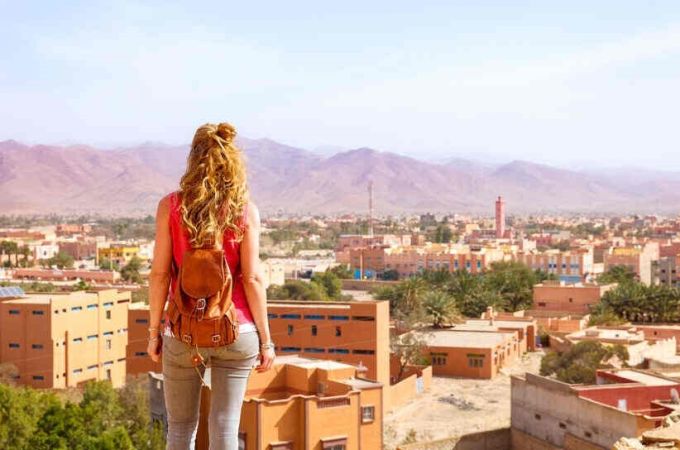
Moving from the city toward mountain landscapes changes architecture, settlement patterns, elevation and the visual character of the journey. Depending on the route and travel style, villages, valleys and mountain environments can provide an important contrast with Morocco's historic cities.
A two-week itinerary gives travelers greater freedom to decide whether the Atlas should simply form part of an overland route or deserve more meaningful time.
The distinction depends on interests.
Someone who loves landscapes, walking and rural environments may gain considerably from slowing down here. A traveler primarily interested in cities and historical monuments may prefer to continue south while still appreciating the mountain crossing.
There is no requirement to turn every region into a multi-night stay.
Depth means spending time where the experience deserves it for you, not allocating identical attention everywhere.
Southern Morocco Works Better When You Stop Racing Toward the Dunes
The Sahara has enormous gravitational pull in Morocco itineraries.
Once travelers decide they want to see it, places between Marrakech and the desert can become supporting characters.
That is unfortunate.
Ait Ben Haddou, Ouarzazate, valleys, kasbah architecture and the gradual transition toward more arid landscapes give the desert journey its geographical narrative. Reaching the dunes after watching the country change over several days feels different from treating everything before them as transportation.
Fourteen days gives this route enough room to breathe.
That does not mean stopping overnight everywhere. Too many one-night stays create their own fatigue. It means selecting intermediate experiences because they contribute something meaningful rather than because a standard circuit says the vehicle should stop there.
Well-designed Morocco Atlas and Sahara Journeys should make the road part of the story without allowing the road to consume the entire story.
The Desert Becomes Better When You Are Not Immediately Escaping It
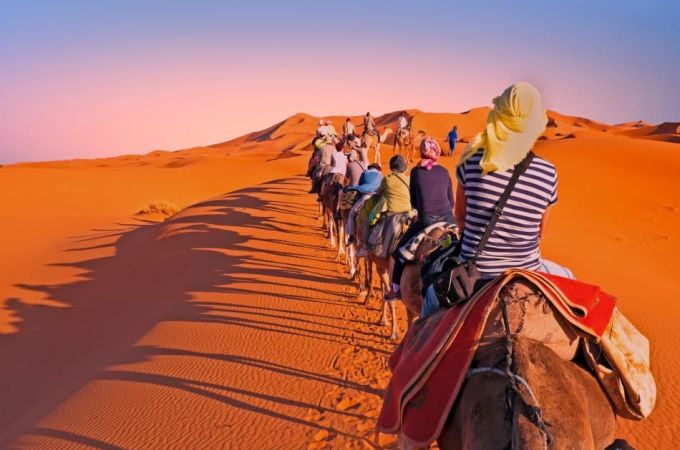
A rushed Sahara itinerary often follows a predictable emotional pattern: arrive after a substantial journey, experience sunset, sleep, wake early and begin another long transfer.
The desert receives enormous billing but surprisingly little time.
With two weeks available, there is more flexibility to decide what you actually want from the region.
For some travelers, one carefully planned desert night remains sufficient. Others may appreciate enough time to experience the environment without every hour being organized around arrival or departure.
The important point is not automatically adding a second night.
It is removing urgency.
The Sahara should feel like a destination you reached, not a turnaround point at the far end of the itinerary.
Fes Deserves Time After You Think You Have Seen It
Fes is one of the places where extra time produces disproportionate value.
The first experience of Fes el-Bali can be dense. Streets intersect in ways that are difficult for newcomers to understand, workshops and markets compete for attention, and historical context matters if the medina is to become more than a maze of visually interesting lanes.
Guided exploration is extremely valuable.
So is what happens afterward.
Returning independently once the medina feels slightly more familiar allows travelers to notice different details. They may spend longer with craftspeople, revisit an area that interested them, concentrate on food or simply move without the pressure of completing a formal sightseeing program.
This is where a Private Morocco Grand Journey can differ from a compressed highlights circuit.
The guide provides context.
Time allows that context to settle.
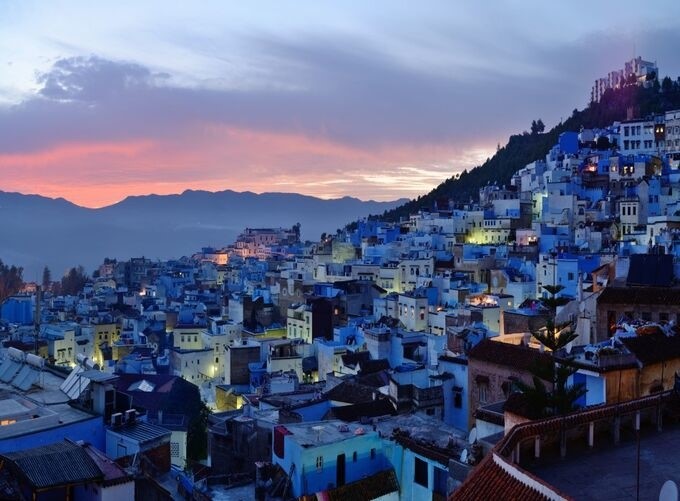
Chefchaouen Makes More Sense When It Is Not an Expensive Detour in Time
Chefchaouen creates a planning dilemma in shorter Morocco itineraries because its location does not always fit naturally with a southern route.
Two weeks changes the calculation.
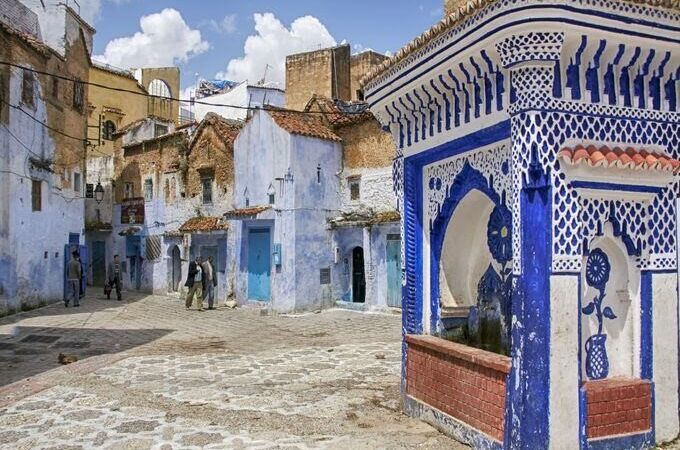
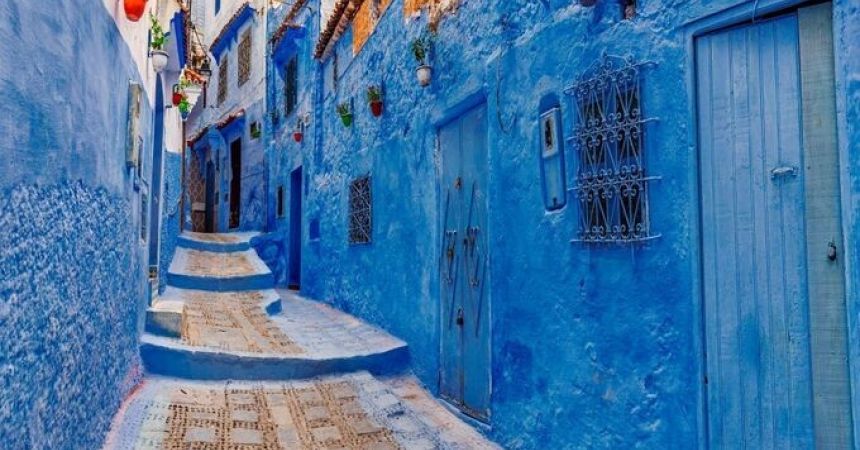
When Fes and northern Morocco already form part of the journey, Chefchaouen can be incorporated without sacrificing an unreasonable percentage of the trip. Its mountain setting and distinctive urban character then provide another contrast rather than functioning as a long detour for photographs.
The same caution still applies: popularity alone is not enough reason to include it.
Travelers uninterested in photography, slower town exploration or northern Morocco may prefer to spend those nights elsewhere.
Fourteen days gives you the ability to include more.
It does not create an obligation.
That distinction protects longer itineraries from becoming bloated.
Northern Morocco Should Add Contrast, Not Just More Pins
If the itinerary continues toward Tangier, Rabat or other northern destinations, ask what this section contributes that the traveler has not already experienced.
Tangier's position between the Mediterranean and Atlantic and its international history create a different urban story from Marrakech or Fes. Rabat provides another perspective through its role as the capital, combining historical areas with contemporary national life.
These places can broaden a first journey considerably.
However, the purpose of including northern Morocco should not be reaching a higher destination count.
A two-week route works best when each major geographical transition changes something meaningful: landscape, urban character, history, architecture, pace or cultural perspective.
If two stops perform essentially the same role for your interests, one of them may deserve more time rather than both receiving less.
Casablanca Can Be a Beginning or an Ending Without Becoming an Obligation
Casablanca often appears on Morocco itineraries because international flights make it a convenient gateway.
Convenience and sightseeing priority are different things.
Some travelers will want time to experience the city and see a contemporary commercial side of Morocco that contrasts with historic destinations elsewhere. Others may prefer to use Casablanca mainly as an arrival or departure point while directing limited sightseeing time toward destinations that align more strongly with their interests.
Fourteen days does not mean every gateway city must receive two nights.
The longer itinerary should still have priorities.
One of the advantages of extra time is being able to include something because you genuinely want it rather than because you fear leaving a blank space on the map.
The Best Two-Week Route Has Different Speeds
A well-paced Morocco journey should not feel identical every day.
Some days naturally contain substantial sightseeing. Others involve scenic road travel, independent exploration or slower periods where nothing major is scheduled.
This variation protects attention.
After two intensive days exploring cities, another eight-hour guided sightseeing program may produce diminishing returns even if the monuments themselves are excellent. A landscape day, relaxed afternoon or free evening can reset the travel rhythm.
The result is not less travel.
It is better absorption.
Two weeks gives enough time to use pace as an itinerary design tool rather than treating downtime as something left over after all attractions have been scheduled.
Where Should the Extra Days Actually Go?
Instead of asking how many destinations fit into fourteen days, ask what additional time changes in each type of place.
| Where you add time | What the extra time buys | When it is especially valuable |
|---|---|---|
| Marrakech | Independent exploration after formal sightseeing | Travelers interested in food, crafts, architecture and medina life |
| Atlas region | Slower landscape experience | Walkers and travelers interested in rural Morocco |
| Southern route | Less pressured road days | Anyone including the Sahara overland |
| Sahara | Reduced arrival/departure urgency | Travelers for whom the desert is a major priority |
| Fes | Time to revisit the medina independently | History, architecture and craft-focused travelers |
| Chefchaouen | A slower town experience rather than photo stop | Photography and relaxed exploration |
| Tangier | Stronger northern cultural contrast | Travelers interested in layered urban history |
| Rabat | Contemporary and historical balance | Travelers wanting another view of Moroccan city life |
| Unallocated time | Flexibility and recovery | Almost every two-week traveler |
The final row is deliberately included.
Not every night needs to purchase another named destination.
Two Weeks Is Long Enough for Travel Fatigue to Become Real
Longer holidays create a planning paradox.
Because travelers have more days, they assume they can tolerate more movement.
In reality, repeated packing and early departures become more noticeable over fourteen days because fatigue accumulates.
A one-night stay may be harmless.
Four one-night stays in succession can make the middle of the trip feel like a logistics exercise.
This is why the number of consecutive transitions matters more than the total number of hotels.
A route can contain several accommodations and still feel comfortable if longer stays interrupt the sequence. Conversely, a technically efficient itinerary can become tiring when every morning begins with luggage outside the room.
Two weeks should create room to unpack mentally as well as physically.
A Free Afternoon Is Not an Empty Afternoon
Travel itineraries sometimes describe free time apologetically, as though the tour operator failed to invent another activity.
That misunderstands how longer journeys work.
After ten days of guided visits, roads, hotels and new environments, an afternoon with no fixed plan can be remarkably valuable.
Travelers might visit something discovered locally, return to a favorite area, use a hammam, sit in a café, shop without watching the clock or simply rest.
None of these needs to be justified as a formal attraction.
For Customized Two-Week Morocco Tour, flexibility should be considered part of the product rather than unused capacity.
A customized itinerary that schedules every available hour is not necessarily more customized.
Sometimes personalization means knowing what to leave open.
Fourteen Days Allows Regional Food to Become Part of the Journey Naturally
A longer route also changes the culinary experience without needing to become a dedicated food tour.
Breakfasts vary between accommodations. Roadside lunches introduce another context. Coastal travel can shift the ingredients travelers encounter, while Marrakech and Fes provide different restaurant environments and culinary traditions.
Because the trip lasts longer, there is less pressure for every meal to deliver a famous Moroccan dish.
That is valuable.
Food becomes part of the rhythm rather than another checklist: a simple lunch after a mountain drive, tea during an afternoon pause or a restaurant discovered after several nights in the same city.
The deeper journey often emerges through repetition and comparison.
You begin noticing what changes because you have enough time to notice what stays constant.
Do Not Confuse Slow Travel With Staying Everywhere Longer
A two-week itinerary does not need three nights in every destination.
Some places naturally function as transitional stops, and giving each of them additional nights simply to demonstrate “slow travel” can make the route inefficient.
The better principle is selective depth.
Stay longer where independent time produces value.
Move through places where the main experience genuinely occurs during the journey.
Use one-night stays when geography requires them, but avoid strings of one-night hotels that turn travel into a repeated cycle of arrival and departure.
Slow travel is not a mathematical formula.
It is the absence of unnecessary urgency.
What If You Have Only Ten to Twelve Days?
This is where the two-week plan should shrink by removing geography rather than compressing everything.
With ten or twelve days, I would identify the least essential regional extension and remove it before shortening every major stay.
For example, a traveler prioritizing Marrakech, southern Morocco and Fes might leave northern additions for another visit. Someone more interested in cities could reduce the desert component rather than racing through it.
The principle remains the same:
protect the quality of the route before protecting the number of destinations.
A shorter version of a good itinerary should contain fewer experiences at roughly the right pace, not the same experiences at the wrong pace.
Who Benefits Most From Two Weeks in Morocco?
Travelers with broad interests gain obvious value because fourteen days can combine history, landscapes, food, architecture, medinas and the desert without forcing every experience into the same few days.
It is equally valuable for travelers who simply dislike rushing.
Couples can build in independent evenings. Families can protect slower periods and reduce consecutive travel days. Photography-focused visitors gain opportunities to experience places at different times rather than arriving, shooting and leaving.
Two weeks is also particularly useful for first-time visitors who expect Morocco to be their major annual journey and want regional variety without accepting the pace of a compressed circuit.
The additional time does not require a more adventurous traveler.
It allows a more forgiving itinerary.
How I Would Use Fourteen Days in Morocco
I would choose two or three experiences that define the journey, then connect them geographically.
For a first visit, that might mean meaningful time in Marrakech, an overland journey through the Atlas and southern Morocco, the Sahara, Fes and one carefully selected northern extension.
I would avoid giving every destination equal time.
Marrakech and Fes generally reward deeper stays. The southern journey needs enough time to avoid becoming a sequence of transfers. Smaller stops should justify themselves through geography or personal interest.
Then I would deliberately protect at least two slower periods across the fortnight.
Not necessarily complete days.
An unstructured afternoon after Fes sightseeing and a later morning following a long southern road day may be enough to transform the rhythm.
Finally, I would check whether the route doubles back unnecessarily.
Two weeks is generous.
It is not unlimited.
Is Two Weeks Too Long for Morocco?
For travelers interested in more than a single city or resort stay, two weeks is not too long.
Morocco has enough geographical and cultural variation to support a fourteen-day journey without requiring artificial filler. The greater risk is using the additional time badly by adding destination after destination until the trip becomes as rushed as a one-week itinerary, only longer.
A strong two-week Morocco journey should feel different from a seven-day trip.
There should be more regional contrast, certainly, but also more independent time, fewer compromises around important places and greater freedom to let experiences develop after arrival.
The best use of fourteen days is therefore not seeing twice as much.
It is seeing more of Morocco while rushing through less of it.
Frequently Asked Questions About Spending Two Weeks in Morocco
Are two weeks enough to see several regions of Morocco?
Yes. Fourteen days can combine major cities, mountain and southern landscapes, the Sahara and selected northern destinations when the route is geographically coherent. The objective should still be meaningful stays rather than attempting to include every famous place in the country.
Should I spend two or three nights in Marrakech?
Three nights can be particularly valuable for travelers who want guided sightseeing plus independent exploration, food, shopping or downtime. Two nights may work within a broader itinerary, but actual usable time depends heavily on arrival and departure schedules.
Is the Sahara easier to include with fourteen days?
Yes, because the road journey can be distributed more comfortably and intermediate landscapes can receive proper attention. The desert becomes part of a southern Morocco sequence rather than an isolated overnight requiring several rushed transfers around it.
Should Chefchaouen be included in a two-week first visit?
It can fit well when Fes or northern Morocco already forms part of the route. Its inclusion makes less sense when reaching it requires a major detour from destinations that matter considerably more to the traveler.
Is it worth including both Marrakech and Fes?
For many first-time visitors with two weeks, yes. The cities provide sufficiently different historic and cultural experiences to justify including both, particularly when each receives enough time to be explored beyond a single guided sightseeing day.
Do I need to spend time in Casablanca?
Not necessarily. International flight logistics make Casablanca important for many itineraries, but sightseeing time should depend on personal interest. Travelers interested in contemporary urban Morocco may value it, while others can prioritize destinations more closely aligned with their goals.
How can I avoid getting tired during a two-week Morocco tour?
Avoid stacking too many one-night stays, intensive sightseeing days and early departures together. Longer stays in selected cities, realistic road schedules and occasional free afternoons allow energy to recover without requiring dedicated rest days throughout the itinerary.
Should every major Morocco destination receive two nights?
No. Equal night allocation rarely produces the best route because destinations play different roles. Some places reward independent exploration, while others function naturally as stops within an overland journey. Allocate time according to experiential value rather than symmetry.
Is two weeks suitable for a Morocco family trip?
Yes, and the additional time can actually make family travel easier when used to reduce transitions. Longer stays, hotel downtime and fewer consecutive road days generally provide more benefit than using every available day to add another destination.
Should I add Essaouira to a fourteen-day Morocco itinerary?
Essaouira can provide valuable Atlantic contrast, particularly for travelers interested in coastal atmosphere and a slower pace. Whether it belongs depends on the rest of the route; adding it should improve geographical and experiential balance rather than simply increase coverage.
What should I remove if my trip becomes only ten or twelve days?
Remove a regional extension before compressing every destination. Protect the core experiences that motivated the journey and allow them sufficient time, rather than keeping the entire fourteen-day route and converting important places into brief overnight stops.
What is the biggest mistake when planning two weeks in Morocco?
Assuming additional days should automatically produce additional destinations. Fourteen days becomes most valuable when some of that time improves pacing, allows independent exploration and gives major regions enough space to feel different rather than extending the checklist.

A travel professional specializing in tailor-made travel planning, guest experience management, and multi-destination tourism operations.
With over 23 years of experience in the travel industry, he designs and manages private and cultural tours for international travelers across Türkiye, Greece, Egypt, Jordan, Morocco, and other destinations.
He has strong expertise in both online and face-to-face guest communication, sales processes, and end-to-end travel operations.
Working closely with hotels, travel agencies, and local partners, he ensures smooth coordination and high-quality travel experiences at every stage of the journey.
His focus is on delivering personalized, reliable, and seamless travel experiences for international guests worldwide.