Turkey’s Traditional Bazaars: How to Shop With Confidence
Updated: August 2026
A Turkish bazaar is much easier to enjoy once you stop thinking of it as a shopping mall with older architecture.
The comparison does not really work.
A modern shopping center tries to make prices, products and transactions predictable. Traditional bazaars evolved around the opposite idea: specialist trades clustered together, relationships mattered, prices could depend on the product and context, merchants knew one another, tea slowed conversations down, and shopping was often inseparable from social life.
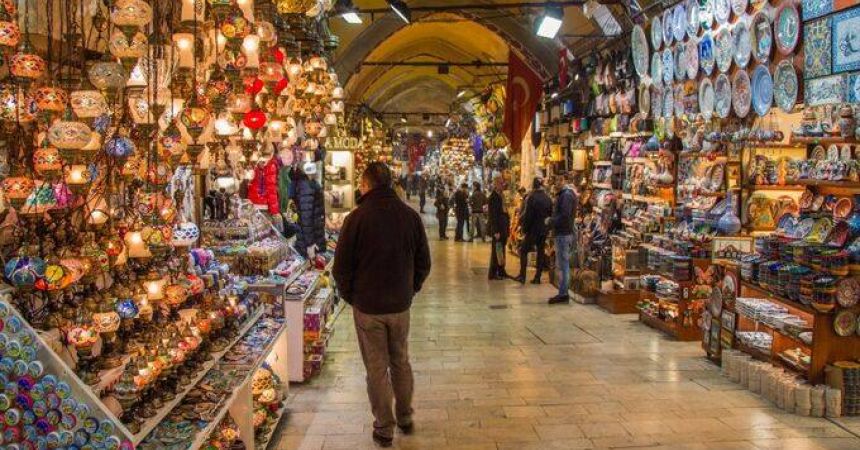
Visitors usually notice the visual side first. Carpets hang from doorways. Brass lamps catch the light. Ceramics fill shelves almost too completely to examine. Leather, textiles, spices, sweets, jewelry and countless souvenirs compete for attention, while merchants call out invitations that can feel charming to one traveler and overwhelming to another.
That sensory intensity is real, but the best bazaar experience starts after the first impression.
You begin to notice that not every market works the same way, not every product should be bargained over, and not everything that looks “traditional” has been handmade in the region where you found it. A market designed heavily around international visitors can coexist with a local produce bazaar where nobody has any reason to persuade you to buy something.
So the useful question is not simply:
“What should I buy in Turkey?”
It is:
What kind of market am I in, what am I actually buying, and how should I behave while doing it?
First, Understand That “Bazaar” Describes More Than One Kind of Market
Travelers often use the word bazaar as though every Turkish market follows the Grand Bazaar model.
They do not.
Turkey contains permanent covered markets, commercial districts, neighborhood markets, weekly open-air bazaars, food markets and specialist trading streets that can feel completely different from one another.
A visitor buying a carpet inside an established historic market is participating in a different commercial environment from someone buying tomatoes at a weekly neighborhood pazar.
That distinction should determine your expectations before negotiation even begins.
| Market type | What you are likely to find | Bargaining expectation | Best reason to visit |
|---|---|---|---|
| Historic covered bazaar | Carpets, jewelry, textiles, leather, souvenirs | Common for some higher-value goods | Architecture + traditional commerce |
| Specialist market district | Similar trades concentrated together | Product-dependent | Comparing expertise and quality |
| Food/spice market | Spices, sweets, dried goods, teas | Usually limited | Regional ingredients and food culture |
| Weekly neighborhood pazar | Produce, clothes, household goods | Variable | Everyday local life |
| Tourism market | Gifts and souvenir-focused products | Often expected | Easy shopping and variety |
| Craft workshop/store | Ceramics, textiles, carpets, artisan goods | Depends on maker and product | Understanding production |
The first lesson is simple: do not bargain automatically merely because you are in Turkey.
Read the environment first.
The Grand Bazaar Is Famous, but Fame Changes a Market
Istanbul’s Grand Bazaar is one of the world’s most recognizable historic commercial environments, and that alone makes it worth experiencing for many travelers.
However, visitors should not imagine that every transaction inside represents unchanged Ottoman commerce.
The bazaar has evolved continuously. Tourism is now deeply embedded in many sections, and businesses understand international shopping habits extremely well.
That does not make the experience fake.
Cities change, markets adapt, and commercial buildings survive precisely because people continue finding ways to use them.
The better mindset is to separate historical setting from modern retail reality.
Enjoy the streets, hans, shopfronts and specialist clusters. Speak with sellers. Look closely at products. Then evaluate any purchase exactly as you would elsewhere: what is it, who made it, what is the material, what is the price, and do you actually want it?
The fact that you are standing inside a historic bazaar does not turn every object into an antique.
The Spice Bazaar Is About Ingredients Before Souvenirs
The Egyptian Bazaar, commonly known in English as the Spice Bazaar, is another place where expectations can become distorted by photography.
Colorful spice pyramids look spectacular.
Yet serious food shopping requires more than color.
Ask what the spice is, where it comes from, how fresh it is and how it should be stored. The same applies to teas, dried fruit, nuts and sweets.
Pre-packaged products can be practical for travelers, especially when luggage and customs rules matter, while loose products may provide a more interesting shopping experience when freshness and quantity can be assessed directly.
One mistake visitors make is buying large amounts of something simply because the display looked beautiful.
Buy ingredients you genuinely use.
A small quantity of good spice that you cook with at home has more value than a large decorative package forgotten inside a cupboard.
Bargaining Is a Conversation, Not a Performance
Visitors often approach Turkish bargaining as though they are entering a competitive game where one person must defeat the other.
That usually creates an awkward interaction.
Negotiation is common with certain products, particularly higher-value goods where prices are not rigidly fixed. It can also happen in tourist-oriented retail environments.
The process works better when you are genuinely interested in buying.
Ask the price.
Ask questions about the item.
Compare if you need to.
Then make an offer you would actually pay.
The merchant may respond with another price.
At some point, you either reach an amount that feels fair to both sides or you politely leave.
There is no obligation to buy simply because tea was served or because a conversation lasted twenty minutes.
Likewise, negotiating aggressively over a tiny difference on a low-value item rarely demonstrates cultural sophistication.
The objective is a fair transaction, not victory.
“Best Price?” Is Usually a Poor Opening Question
This phrase appears almost automatically in tourist shopping conversations.
It is rarely useful.
If you have not examined the product, asked about its material or demonstrated any real interest, asking for the lowest possible price gives the seller very little reason to engage meaningfully.
A better conversation begins with the object.
What kind of wool is this?
Where was the ceramic made?
Is this cotton or synthetic?
Is the silver hallmarked?
Who produced the textile?
Once you understand what you are considering, price becomes part of an informed decision rather than the entire interaction.
This also makes it much easier to recognize whether the seller genuinely knows the product.
Carpets Require More Time Than Souvenirs
Turkish carpet and kilim shopping deserves particular caution because the price range can be enormous and quality differences are not always obvious to first-time buyers.
Handmade, machine-made, wool, cotton, silk, knot density, age, region, dyes and condition can all influence price.
A carpet seller may explain weaving traditions in detail, which can be fascinating and entirely legitimate.
Still, never allow the educational quality of the presentation to replace your own purchase judgment.
If you are considering a substantial amount of money, ask questions.
Request documentation where appropriate.
Understand shipping arrangements.
Know the return policy.
Do not buy because you feel embarrassed after spending an hour in the shop.
A genuine carpet is not improved by a rushed decision.
Travelers interested in the craft within a broader cultural context can explore Turkey heritage tour experiences, where weaving traditions become part of the journey rather than purely a retail transaction.
Ceramics Should Be Chosen by Craft, Not Just Color
Turkish ceramics are among the most popular items visitors carry home, partly because decorative styles associated with İznik and other traditions are immediately recognizable.
The problem is that the label “Turkish ceramic” can describe everything from individually painted artisan work to mass-produced souvenir pieces.
Neither category is automatically illegitimate.
The important thing is knowing which one you are buying.
Look closely at brushwork.
Ask where the piece was produced.
Check whether designs are hand-painted or transferred.
Examine the foot and glazing.
For larger or more fragile pieces, ask how they will be packed.
A beautiful plate that arrives home broken is not better value because it cost slightly less.
Buying craftsmanship means paying attention to workmanship rather than simply selecting the most colorful object in the shop.
Jewelry Requires a Different Level of Buyer Discipline
Gold and silver shopping should not be approached with the casual decision-making used for scarves or small gifts.
Understand purity, weight, workmanship and any relevant hallmarks before committing to a meaningful purchase.
Receipts matter.
Documentation matters.
A store’s reputation matters.
If stones are involved, clarity around what exactly you are buying becomes even more important.
The bazaar atmosphere can encourage emotional spending because everything happens inside an environment designed around conversation, display and abundance.
For low-value souvenirs, spontaneity can be fun.
For expensive jewelry, slow the process down.
The excitement of travel should not replace ordinary financial judgment.
Leather Can Be Excellent — but Fit Matters More Than the Story
Turkey has a significant leather industry, and visitors may encounter jackets, bags and other leather goods across traditional shopping districts and tourist-oriented stores.
Quality varies.
So does pricing.
A merchant may talk extensively about leather type, workmanship and manufacturing, but ultimately a jacket still has to fit correctly and suit your wardrobe once you return home.
Try it properly.
Move in it.
Check stitching, zippers, lining and seams.
Ask about alterations if they are being offered.
Most importantly, do not buy a style you would never wear at home simply because the shop experience became exciting.
The best travel purchase should still make sense after the holiday ends.
Regional Markets Matter Because Turkey Does Not Produce One National Craft Style
One of the weaknesses of Istanbul-only shopping advice is that it can make Turkish crafts appear culturally uniform.
They are not.
Different regions have their own weaving traditions, foods, textiles, agricultural products and decorative histories.
A product associated strongly with Cappadocia, the Aegean, southeastern Turkey or the Black Sea may be more interesting when encountered in its regional context.
This does not mean you should postpone every purchase in Istanbul hoping to find a mythical source later.
It means travel geography can inform shopping.
If you know you are traveling through multiple regions, leave some luggage space and curiosity available.
The first bazaar does not need to provide every souvenir for the entire journey.

Local Food Markets Reveal More Than Tourist Bazaars
Some of the most interesting market experiences involve buying almost nothing.
A neighborhood produce market can tell you what vegetables are in season, which cheeses people actually buy, what fruit is abundant and how household shopping fits into local life.
These markets may lack the architecture and presentation travelers associate with famous bazaars, yet they often provide stronger everyday cultural context.
This is where browsing should become quieter.
You are entering a functional shopping environment rather than somewhere designed primarily for visitors.
Watch how people shop.
Notice quantities.
Observe which stalls attract regular customers.
Buying fruit or a small snack can become more informative than purchasing another decorative object.
Izmir’s Kemeralti Shows How Commerce and City Life Merge
Kemeralti in Izmir offers a useful contrast with Istanbul’s highly famous tourist markets.
The district combines historic commercial structures, everyday shops, food, religious buildings and contemporary urban activity inside a large, active area.
The appeal comes from movement.
You do not enter one monumental covered building, complete a route and exit.
You drift between different streets and commercial functions.
That makes Kemeralti particularly useful for travelers wanting to understand how an old market district can remain part of a modern city.
Travelers exploring this western Turkish context can consider Izmir cultural travel routes, where the market forms part of a lived Aegean city rather than a standalone shopping attraction.
Bursa’s Bazaar Culture Connects Shopping With Silk History
Bursa offers another completely different market context.
As an early Ottoman capital and important historical trading center, the city developed a strong association with silk. Koza Han remains one of the clearest places where architecture, commerce and social life intersect.
Sitting in the courtyard after looking at textiles can be more revealing than rushing to purchase something.
This is where traditional bazaars become historically interesting.
A han was not designed simply to create a picturesque shopping environment for later visitors. It belonged to networks of merchants, goods and long-distance trade.
When the building continues functioning commercially centuries later, the visitor experiences a form of continuity that no recreated shopping center can imitate convincingly.
Tea Does Not Create an Obligation to Buy
This needs saying because first-time bazaar visitors often worry about it.
A merchant may offer tea during a longer conversation, particularly when discussing carpets, jewelry or another substantial purchase.
Accepting tea does not create a contract.
You can drink it, ask questions, enjoy the conversation and still decide the product is not right for you.
Similarly, refusing tea politely is completely acceptable when you are short on time or not interested in shopping seriously.
The interaction becomes uncomfortable only when either side pretends there is no commercial purpose at all.
You know the seller hopes to make a sale.
The seller knows you may leave.
Both things can remain true while the conversation stays friendly.
Cash or Card? Flexibility Is More Useful Than Dogma
Payment practices vary widely depending on shop type, market and transaction size.
Many established stores accept cards, while cash may remain practical for smaller purchases or local markets.
For larger purchases, ask clearly what currency is being quoted and what amount will actually be charged.
Never rely on mental currency conversion after an hour of negotiation.
Write the final price down when necessary.
Review the card terminal before confirming payment.
Keep receipts for meaningful purchases.
These are not Turkey-specific warnings.
They are good shopping habits everywhere, particularly when traveling and dealing with unfamiliar currency values.
Shipping Home Is Convenient, but Documentation Matters
Large carpets, ceramics or bulky goods may be offered with international shipping.
This can solve an obvious luggage problem.
Before agreeing, understand what the shipping price includes, how the item is insured, expected delivery arrangements and what documentation you will receive.
Customs rules belong to your destination country and can vary depending on the product and value.
A merchant telling you “no problem” is not a substitute for understanding your own import responsibilities.
For modest purchases, carrying the item yourself may be simpler.
For substantial pieces, professional shipping can be worth the cost.
The decision should be made before payment, not after you discover the item cannot fit into your suitcase.
Do Not Buy “Antiques” Casually
Historic objects and cultural property require a completely different level of caution.
Travelers should not assume that an old-looking object can legally be exported simply because it is available for sale.
Claims of age should also be treated carefully.
If you genuinely intend to buy something presented as an antique or culturally significant historic object, understand documentation and legal requirements before purchasing.
For most visitors seeking memories of Turkey, modern crafts produced using traditional techniques are simpler, safer and often more meaningful anyway.
You can support living craftsmanship without attempting to carry a piece of archaeological history through an airport.
The Best Souvenir Is Usually Connected to Somewhere You Actually Visited
Travelers often buy everything in the first large bazaar because they are afraid they will not find gifts later.
That creates generic shopping.
A better approach is to connect purchases with the trip.
Ceramics after visiting regions associated with ceramic traditions.
A textile after learning how it was made.
Spices because you tasted the ingredient in a dish you loved.
A small object from Bursa after understanding the city’s commercial history.
This turns souvenirs into memory triggers.
The object becomes more valuable because it belongs to an experience rather than merely having “Turkey” printed on it.
Travelers building a multi-region journey through markets and historic cities can use Turkey cultural discovery tours to experience that regional variation rather than treating Istanbul’s bazaars as the country’s entire shopping identity.
How to Know When to Walk Away
Walking away is normal.
Do it politely.
You do not need an elaborate excuse.
“Thank you, I need to think about it” is enough when you genuinely do.
If the merchant becomes overly aggressive, end the conversation calmly and leave.
A good purchase should survive the distance between the shop and the next street.
If you immediately feel relieved you did not buy it, that tells you something.
If you are still thinking about the piece later and the shop is practical to revisit, returning is perfectly reasonable.
Urgency is one of the worst reasons to buy anything expensive.
The Best Bazaar Experience Is Not Necessarily the One Where You Buy the Most
A successful market visit may result in a carpet.
It may result in a packet of spice.
It may result in nothing.
The value can lie in understanding how people trade, how products differ, how historic commercial buildings continue to function and how regional crafts survive inside modern tourism economies.
The bazaar should not become a contest between the savvy traveler and the merchant.
Approach it with curiosity and enough skepticism to make sensible decisions.
Ask questions.
Look carefully.
Negotiate when negotiation belongs to the transaction.
Pay the stated price when it does not.
Buy what will still mean something when you unpack it months later.
Turkey’s bazaars become far more enjoyable once shopping stops being the entire point.
Frequently Asked Questions About Turkey’s Traditional Bazaars
1. Do I have to bargain in every Turkish bazaar?
No. Bargaining depends on the market and product. Negotiation is common with some higher-value goods and tourist-oriented shopping, while fixed prices are normal in many food shops, modern stores and everyday markets. Observe the environment before automatically negotiating.
2. Is the Grand Bazaar only for tourists?
No, although international tourism is now a major part of its commercial life. The Grand Bazaar remains historically significant and commercially active, but visitors should distinguish the authenticity of its setting from assumptions that every item sold there is antique or handmade.
3. What are the safest products to buy in a Turkish bazaar?
There is no universal safest category, but modestly priced textiles, ceramics, packaged food products and everyday crafts are easier purchases than expensive jewelry, carpets or alleged antiques. Higher-value items deserve more research, documentation and time before committing.
4. How can I tell whether a Turkish carpet is handmade?
Ask about materials, knotting technique, production region and construction, then inspect the reverse and overall consistency. For expensive purchases, rely on reputable sellers and written documentation rather than assuming a convincing sales presentation alone proves origin or quality.
5. Should I accept tea in a carpet or jewelry shop?
You can if you want to. Tea is commonly part of longer commercial conversations and accepting it does not obligate you to purchase anything. If you are not genuinely interested or do not have time, declining politely is equally acceptable.
6. Are Turkish spices good souvenirs?
They can be excellent when you buy products you genuinely cook with and can legally bring home. Prioritize freshness, sensible quantities and appropriate packaging rather than buying large decorative displays solely because they look impressive inside the market.
7. Is cash better than credit cards in Turkish bazaars?
Both can be useful. Cards are widely accepted by many established retailers, while cash remains practical for smaller markets and lower-value purchases. For significant transactions, confirm the final currency and amount clearly before payment and retain your receipt.
8. Is Kemeralti similar to Istanbul’s Grand Bazaar?
Not exactly. Kemeralti is a broad commercial district integrated deeply into everyday Izmir life, while Istanbul’s Grand Bazaar has a more contained historic covered-market identity and stronger international tourism profile. Both reveal different aspects of Turkish market culture.
9. Is it better to buy souvenirs in Istanbul or regional towns?
Neither is automatically better. Istanbul offers enormous variety, while regional shopping can connect products more directly with local food, weaving or craft traditions. If your itinerary covers several regions, leaving some purchases until later can make souvenirs more meaningful.
10. Can Turkish shops ship carpets or ceramics overseas?
Many established sellers offer international shipping, particularly for bulky or high-value items. Before paying, confirm shipping cost, insurance, documentation, expected delivery and your destination country’s customs requirements rather than relying only on verbal reassurance.
11. Is it rude to leave a shop after bargaining?
No. Negotiation does not require you to buy if you cannot reach a price or decision that feels right. Thank the merchant and leave politely. The interaction becomes more respectful when both sides understand that a sale is possible rather than guaranteed.
12. What is the biggest mistake visitors make in Turkish bazaars?
The biggest mistake is concentrating entirely on getting the lowest price while ignoring product quality, origin and whether they genuinely want the item. A modestly priced purchase with a real connection to the trip often has more value than a supposed bargain.

A travel professional specializing in tailor-made travel planning, guest experience management, and multi-destination tourism operations.
With over 23 years of experience in the travel industry, he designs and manages private and cultural tours for international travelers across Türkiye, Greece, Egypt, Jordan, Morocco, and other destinations.
He has strong expertise in both online and face-to-face guest communication, sales processes, and end-to-end travel operations.
Working closely with hotels, travel agencies, and local partners, he ensures smooth coordination and high-quality travel experiences at every stage of the journey.
His focus is on delivering personalized, reliable, and seamless travel experiences for international guests worldwide.