Istanbul Weather in May: Long Days & Ideal Walking Conditions
Last Updated: August 9, 2026
May is when Istanbul stops asking travellers to negotiate with the season quite so often.
January teaches you to move between warm interiors and winter streets. February gives daylight back while keeping its coat on. March can change its mind between breakfast and lunch, while April encourages you to connect more of the city on foot.
May feels different.
The day opens.
You can spend a substantial morning among historical sites, cross the Bosphorus after lunch, wander another neighbourhood in the afternoon and still find enough light and energy for an evening that feels separate from the sightseeing programme.
Rain has not disappeared. Neither have cooler mornings, breezy waterfront periods or occasional warmer days.
But weather increasingly moves away from the centre of itinerary planning.
For many visitors, this is May's greatest luxury.
You start designing the day around Istanbul rather than designing Istanbul around the forecast.
The May Day Has Four Lives
A strong May itinerary does not need to maximise attraction count.
It can do something more enjoyable.
Change character several times.
Think of the day as four distinct experiences:
| Part of Day | May's Strongest Use |
|---|---|
| Morning | Deep cultural sightseeing |
| Midday | Transition rather than retreat |
| Afternoon | Bosphorus + neighbourhood expansion |
| Evening | Outdoor city life |
The advantage is continuity without sameness.
You can spend hours exploring history without feeling that the entire day must remain historical. The Bosphorus can reset the afternoon. A neighbourhood can change the pace again, while dinner no longer feels like something that happens after the useful part of the day has finished.
Build the Morning Around What Matters Most
May mornings deserve priority experiences.
Not necessarily because later conditions will become uncomfortable, as they might during hotter summer periods, but because fresh energy is valuable in a city with this much historical density.
Start with the attraction you would genuinely regret rushing.
For many first-time visitors, that means the historical peninsula.
Allow major monuments to occupy proper time rather than forcing Hagia Sophia, the Blue Mosque, Topkapı Palace and surrounding historical areas into an artificial race.
May gives you enough day to resist that temptation.
Travellers wanting greater control over the pace can consider Istanbul private tours, particularly when the objective is spending more time where interest is strongest rather than following an inflexible sightseeing sequence.
The important point is not privacy itself.
It is control over the day.
11:30 AM: Don't Look at the Clock Yet
During winter, travellers become highly aware of time.
How much daylight remains?
Will the weather deteriorate?
Should we cross the Bosphorus now?
May reduces that pressure.
A historical visit running thirty minutes longer than expected does not automatically threaten the afternoon. You can stop for tea without feeling that the city is closing around you.
This creates one of May's less obvious advantages:
attention improves when urgency decreases.
Travellers begin looking at Istanbul instead of constantly looking at the itinerary.
Midday Is No Longer an Escape Route
Summer will eventually make midday heat a meaningful planning consideration.
May generally occupies a more forgiving position.
On comfortable days, there is little reason to retreat indoors for several hours merely because the clock has reached noon.
Instead, midday can become the connective tissue of the itinerary.
Walk towards lunch.
Eat somewhere that moves you geographically towards the afternoon.
Use a tram or ferry if it improves the route.
Then continue.
This keeps Istanbul from breaking into isolated sightseeing blocks.
The May Lunch Test
Ask one question before sitting down:
What should happen after this meal?
If the answer is “cross to Asia,” eat somewhere that makes the ferry easy.
If the afternoon belongs to Karaköy and Galata, avoid choosing lunch purely because a restaurant appeared first in a search result on the opposite side of the city.
Good May weather creates enough freedom that poor geography becomes one of the larger remaining itinerary inefficiencies.
Weather is increasingly cooperating.
Do not make transportation fight against it.
Afternoon Option A: Give the Bosphorus Time
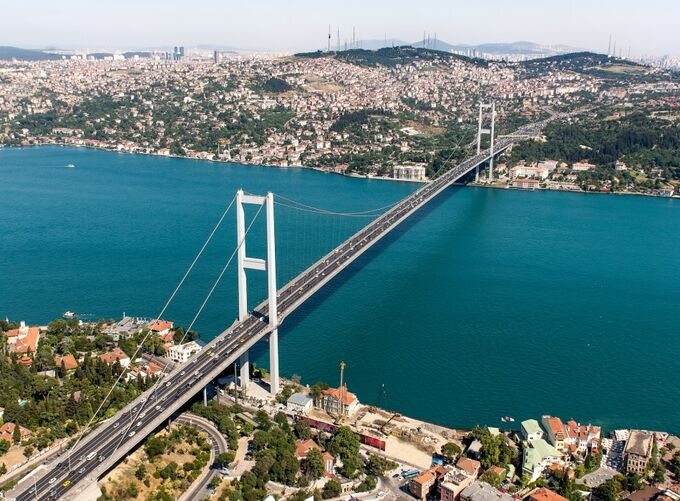
May can be particularly rewarding on the water.
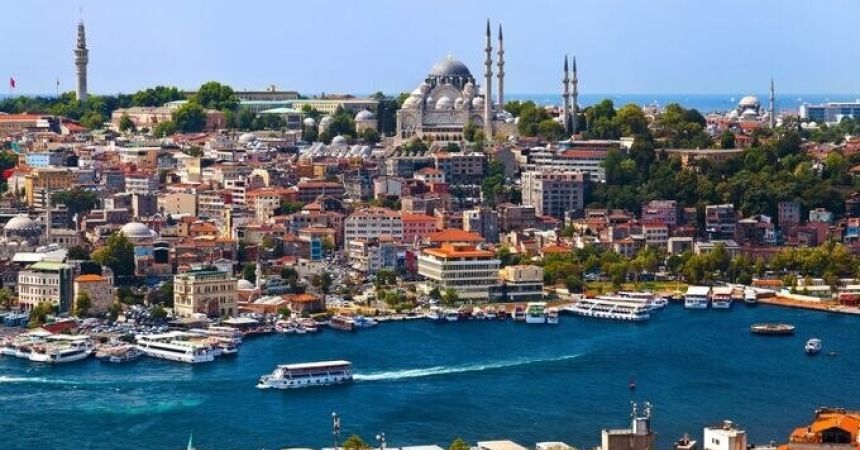
Longer daylight, generally more comfortable seasonal conditions and the increasing appeal of waterfront life make the Bosphorus much more than a transfer corridor.
On a suitable day, travellers can explore Bosphorus cruise tours, allowing the skyline and geography of Istanbul to become the afternoon's main experience rather than something glimpsed between monuments.
Actual conditions still matter.
Wind can change comfort on exposed decks, while rain and visibility should be checked close to the day rather than assumed from monthly averages.
The difference is that May increasingly gives you more potential windows.
The Bosphorus no longer has to fit into one narrow part of a winter schedule.
Afternoon Option B: Change Continents
A ferry to Kadıköy or Üsküdar can completely reset a May day.
This matters after an intensive historical morning.
The European side may have been about monuments, chronology and architecture. The Asian side can become markets, cafés, local streets, waterfront time and less structured exploration.
The weather supports the change in pace.
You do not need to arrive, take photographs and immediately calculate the return journey.
Stay.
May has given you the afternoon.
Afternoon Option C: Don't Go Anywhere Important
This may be the most underrated option.
Not every May afternoon needs a headline attraction.
Choose a neighbourhood.
Walk without trying to complete it.
Sit somewhere.
Take another street.
Stop for coffee.
The value of good seasonal weather is not merely that it allows travellers to see more attractions.
It allows them to spend time between attractions without feeling guilty about it.
That is when Istanbul begins becoming a place rather than an itinerary.
May's Comfort Window
May occupies a useful seasonal position because several types of city experience can coexist without demanding radically different planning strategies.
| Experience | May Advantage | Remaining Variable |
| Long historical visits | Comfortable pacing | Individual warmer days |
| Neighbourhood walking | Strong conditions | Hills still matter |
| Bosphorus time | Increasingly attractive | Wind/visibility |
| Outdoor lunch | More realistic | Shade and breeze |
| Parks | Mature spring atmosphere | Rain periods |
| Evening walking | Increasingly comfortable | Cooler nights possible |
| Cross-city day | Longer usable hours | Avoid poor routing |
This is why May can feel unusually balanced.
Nothing needs to dominate the itinerary.
What Happened to the Tulips?
April owns that story more strongly.
By May, travellers should not build an Istanbul trip around expecting peak tulip displays. Seasonal conditions and annual planting schedules vary, and flowering naturally progresses as spring advances.
That does not make Istanbul less attractive.
The city's green spaces remain valuable, but May's identity should move beyond flower season.
This distinction matters because otherwise April and May become two versions of the same spring article.
April is about the city awakening.
May is about what you can do once it is fully awake.
5:30 PM Is Not the End of the Sightseeing Day
This is where May begins feeling generous.
In winter, late afternoon naturally pushes the traveller towards evening.
May keeps options open.
You may still have time for a waterfront walk, another neighbourhood, a ferry ride or a park before dinner.
The important word is may.
You do not have to fill the time simply because it exists.
Longer days are valuable partly because they remove the need to hurry.
Istanbul After the Itinerary
May evenings deserve their own chapter.
As outdoor conditions become increasingly comfortable, dinner can stop functioning as the official end of sightseeing.
Walk afterwards.
Sit beside the water.
Cross the Bosphorus as the light changes.
Spend time in a neighbourhood that feels different after offices and daytime visitors begin disappearing.
This is one of the first periods of the year when Istanbul can comfortably become an all-day city for a broad range of travellers.
The morning and evening no longer feel like different seasons.
Does May Have a Downside?
Of course.
Popular travel periods can mean stronger demand, and comfortable weather attracts exactly the kind of visitor who wants to spend long days exploring Istanbul.
The answer is not avoiding May.
It is avoiding unnecessary rigidity.
Reserve genuinely important services where appropriate, but do not schedule every hour merely because there is enough daylight to fill it.
A fifteen-hour usable day does not require fifteen hours of planned activity.
Who Gets the Most From May?
First-time visitors are obvious candidates because May can accommodate the broadest version of Istanbul: history, Bosphorus, neighbourhoods, parks, food and evening life.
Active travellers benefit because substantial walking is increasingly natural.
Couples can combine serious cultural sightseeing with slower waterfront or evening periods.
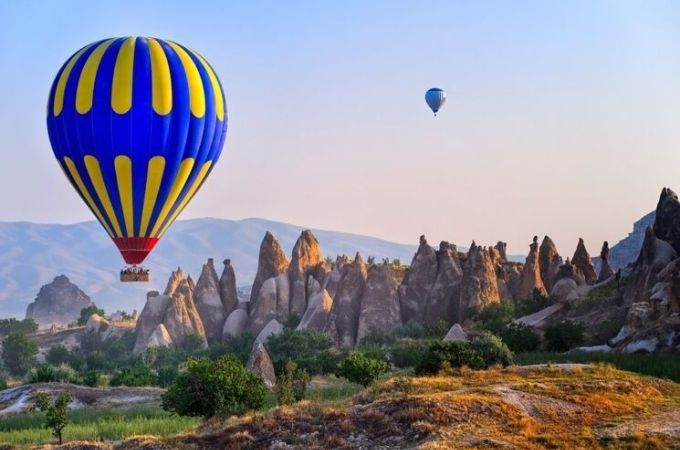
Travellers extending beyond Istanbul can also consider Turkey May vacations, although regional weather varies considerably across the country and Istanbul's conditions should never be assumed to represent Cappadocia, the Aegean or Mediterranean coast.
May works because it leaves options open.
The Best May Itinerary Has White Space
Look at the finished schedule.
If every hour contains an attraction, remove something.
May's great advantage is not that it allows Istanbul to be packed more tightly.
It allows Istanbul to be experienced more loosely.
A museum can take longer.
Lunch can move.
A ferry can become a spontaneous decision.
An afternoon can change continents.
Dinner can begin later because nobody is racing against darkness.
April makes the city larger by encouraging travellers to walk between its pieces.
June will begin introducing the logic of early summer, when stronger sun and warmer conditions increasingly influence pacing.
May owns the space between them.
The city is fully open.
The day is long.
The weather is increasingly cooperative.
And perhaps the smartest thing to do with all that additional freedom is not to fill every minute of it.
The May Reservation Map
Good weather creates its own problem.
More travellers want the same things at roughly the same time.
A May trip to Istanbul therefore requires two apparently contradictory skills: planning ahead and refusing to overplan.
The difference lies in knowing which parts of the trip benefit from certainty and which become better when they remain movable.
Zone One: Protect What Would Be Difficult to Replace
Begin with the experiences that genuinely matter to your trip.
If a particular guided service, special restaurant, accommodation choice or pre-arranged experience is central to why you are visiting Istanbul, leaving it entirely to chance rarely creates useful flexibility.
Reserve it when appropriate.
This is particularly relevant when travel dates overlap with weekends, holidays or other periods of stronger demand.
Flexibility is valuable only when losing the experience would not matter very much.
Zone Two: Leave Weather-Sensitive Time Breathing Room
The Bosphorus belongs in a different category.
You may know that you want substantial time on the water without needing to decide months beforehand that Wednesday at precisely 2:00 PM must provide the perfect conditions.
Where booking arrangements permit flexibility, consider the forecast when choosing among available opportunities.
May is generally favourable for outdoor sightseeing, but wind, rain and visibility still vary from day to day.
The objective is not avoiding reservations.
It is avoiding unnecessary dependence on one weather window.
Zone Three: Never Reserve a Walk
This sounds obvious until you look at an overloaded itinerary.
09:00 attraction.
11:00 attraction.
13:00 lunch reservation.
14:30 guided experience.
17:00 another booking.
The city has disappeared between appointments.
May is too good for that.
Neighbourhood exploration, waterfront walks, parks and the simple journey between nearby districts need breathing room. These are precisely the experiences that benefit from the month's increasingly comfortable outdoor conditions.
Do not turn them into deadlines.
The May Planning Matrix
| Experience | Plan Ahead? | Keep Flexible? |
|---|---|---|
| Key guided experience | Yes | Sometimes |
| Important restaurant | Often | Less important |
| Bosphorus time | Consider availability | Weather window matters |
| Neighbourhood walking | No | Yes |
| Park visit | Usually no | Yes |
| Ferry crossing | Usually no | Yes |
| Casual lunch | Not necessarily | Yes |
| Sunset waterfront time | No | Strongly |
The best May itinerary contains both columns.
Too little planning creates unnecessary uncertainty.
Too much planning removes the freedom that makes the month so enjoyable.
The 60/40 Rule
For many travellers, a useful May day can be imagined as roughly sixty percent structured and forty percent open.
That is not a mathematical requirement.
It is a mindset.
The structured portion protects the experiences that matter. The open portion allows Istanbul to interfere with your plans.
Perhaps Sultanahmet takes longer.
Perhaps the weather is excellent and you decide to cross the Bosphorus.
Perhaps lunch becomes two hours.
Perhaps Kadıköy deserves the rest of the afternoon.
Nothing has gone wrong.
The unplanned part of the day is doing its job.
What If Rain Appears?
This is where open space becomes operationally useful.
A flexible afternoon can move.
A rigid chain of timed activities cannot.
If May produces an unsettled period, you can allow an indoor attraction, meal or covered experience to occupy it while outdoor wandering shifts towards clearer hours.
Because the month generally offers longer days, moving an activity does not necessarily mean losing it.
There is often somewhere else for it to go.
Weekends Change the Equation
Istanbul is not a museum that only tourists use.
Local residents also want the Bosphorus, parks, restaurants, waterfront areas and neighbourhood cafés, particularly when spring weather is attractive.
A Saturday afternoon can therefore feel different from a Tuesday morning even within the same travel week.
When possible, place experiences that benefit from quieter conditions earlier in the day or on weekdays, while allowing lively neighbourhoods to be lively when that atmosphere is part of their appeal.
Crowds are not always a problem.
Sometimes they are evidence that you have arrived somewhere people actually enjoy being.
Don't Book Away the Evening
One of May's greatest advantages is what happens after the formal sightseeing programme should theoretically be finished.
Keep some evenings loose.
You may want dinner earlier than expected.
Or much later.
You may discover that the Bosphorus light is too good to leave.
You may cross back from Asia slowly rather than treating the ferry as transportation home.
An evening without a sequence of commitments can become one of the most memorable parts of the trip.
The Reservation You Should Make With Yourself
Leave one period deliberately empty.
Not because you have failed to research Istanbul.
Because you have researched it well enough to know that the city will produce something you did not anticipate.
May provides the daylight and seasonal comfort to follow that opportunity when it appears.
The strongest itinerary therefore contains an unusual entry:
Nothing planned.
Do not fill it before arrival.
That is the reservation.
May's Three-Istanbul Wardrobe
May packing becomes easier once you stop asking what people wear in Istanbul in spring.
Ask where you will actually be.
A day spent inside major historical sites and walking through sheltered streets does not feel identical to an afternoon on the Bosphorus. Neither necessarily tells you what the city will feel like when you leave dinner later that evening.
You are not packing for three climates.
You are packing for three versions of the same city.
Istanbul One: The Historical City
This is where comfort wins.
Sultanahmet and the surrounding historical districts involve more standing and walking than first-time visitors often anticipate. Stone surfaces, courtyards, queues, mosque visits and transitions between attractions can occupy several hours.
May generally allows lighter clothing than the winter months, but the correct outfit is not simply the coolest one available.
Religious sites also require appropriate dress, which should be considered before leaving the hotel rather than solved awkwardly at the entrance.
Choose clothing that allows substantial walking while remaining suitable for the places you intend to enter.
Footwear remains the foundation.
May's pleasant weather makes it surprisingly easy to walk farther than planned.
Istanbul Two: The Bosphorus City
Move towards the water and the wardrobe calculation changes.
A warm-feeling street does not guarantee that an exposed ferry deck will feel identical. Wind can lower comfort, particularly when you remain stationary to enjoy views rather than continuously walking.
A lightweight outer layer therefore earns its suitcase space even when daytime forecasts look encouraging.
It may spend most of the day inside your bag.
That is fine.
Packing success is not measured by wearing every item continuously.
It is measured by having the right item when Istanbul changes around you.
Istanbul Three: The Evening City
May evenings increasingly encourage travellers to remain outside.
Dinner does not necessarily send you back to the hotel, and waterfront areas can be particularly attractive as daylight fades.
Yet the temperature that felt comfortable in direct afternoon sunshine may no longer tell the whole story.
This is where the layer carried during the day often returns.
The objective is not preparing for winter cold.
It is avoiding the moment when everyone else wants another hour beside the Bosphorus and you are ready to leave simply because you dressed only for 3:00 PM.
The Three-City Packing Test
| Item | Historic Streets | Bosphorus | Evening |
|---|---|---|---|
| Comfortable base layer | Essential | Essential | Essential |
| Light outer layer | Sometimes | Very useful | Useful |
| Walking shoes | Essential | Useful | Useful |
| Modest coverage option | Important for relevant sites | Not weather-related | Useful |
| Compact rain protection | Sensible | Sensible | Sensible |
| Sun protection | Useful | Useful | Less relevant |
Notice what is missing.
A large collection of highly specialised clothing.
May usually does not need it.
Versatility matters more.
The Umbrella Question
Should you pack one?
A compact umbrella can be useful because spring rain remains possible, but it should not become the entire wet-weather strategy.
Wind can make umbrellas inconvenient, particularly around exposed areas, while carrying an unnecessarily large one all day becomes irritating during long walking routes.
A lightweight weather-resistant outer layer can therefore provide useful backup even when an umbrella is also in the bag.
Check the short-range forecast each morning rather than carrying every possible weather solution automatically.
Don't Pack Only for the Warmest Forecast Number
This is one of May's easiest mistakes.
A traveller sees an encouraging afternoon temperature and mentally converts the trip into early summer.
Then a cooler morning, shaded courtyard, Bosphorus breeze or later evening produces a very different experience.
The forecast maximum describes one part of one day.
It does not describe your entire itinerary.
Pack for transitions.
What About Shorts and Summer Clothing?
There may be May days when lighter summer-style clothing feels completely appropriate outdoors.
That does not remove the need to consider religious-site requirements, changing temperatures or evening conditions.
The more practical strategy is to combine lighter pieces with coverage that can be added when necessary.
This allows the same wardrobe to work across more of the city.
Shoes Still Beat Fashion
April introduced the long-walking problem.
May does not solve it.
If anything, longer days and comfortable weather make travellers even more likely to continue exploring.
Choose shoes that remain comfortable after several hours, not shoes that merely look good during breakfast.
Istanbul will test them on hills, pavements, historical surfaces and unexpectedly long neighbourhood detours.
A bad shoe choice can shorten a beautiful May afternoon far more effectively than the weather.
Pack for the Day You Want to Finish
Before leaving the hotel, do not look only at the morning conditions.
Think about the final part of the day.
Will you still be outside after dinner?
Are you taking a ferry?
Does the itinerary include religious sites?
Will you walk substantially?
May packing becomes straightforward once clothing follows the itinerary rather than the calendar.
Dress for historical Istanbul.
Carry what the Bosphorus might need.
And leave enough flexibility in the day bag to enjoy the evening city when everyone agrees that it is still too early to go back.
12 Questions Travellers Ask About Istanbul Weather in May
1. Is May a good time to visit Istanbul?
May is one of the most versatile periods for travellers who want a broad Istanbul experience combining historical attractions, neighbourhood exploration, the Bosphorus and evening city life. Longer daylight and generally comfortable spring conditions make full sightseeing days practical without summer heat becoming the central itinerary concern.
2. Is Istanbul hot in May?
May can produce warm and pleasantly sunny afternoons, particularly later in the month, but it should not be treated as consistently hot. Mornings, evenings, shaded areas and exposed waterfront locations may feel cooler, making light layers more useful than packing exclusively for summer conditions.
3. Does it rain in Istanbul in May?
Rain remains possible during May, including showers or unsettled periods, so travellers should not assume spring guarantees completely dry sightseeing. The advantage is that longer daylight and Istanbul's large number of indoor attractions make it relatively easy to move activities around shorter periods of unfavourable weather.
4. Is May good for a Bosphorus cruise?
Yes. May can offer an excellent balance of longer daylight and comfortable seasonal conditions for experiencing Istanbul from the water. Wind, visibility and rainfall still vary, however, so travellers should check current conditions rather than assuming the same level of comfort on every day of their visit.
5. Can I eat outside in Istanbul during May?
Outdoor dining becomes much more realistic during May, particularly during comfortable daytime and early-evening periods. Individual conditions still matter because shade, wind or a cooler evening can change how pleasant a terrace feels. Flexible seating options are useful when weather is less cooperative than expected.
6. What should I wear in Istanbul in May?
Comfortable lighter clothing combined with one useful outer layer works well for many May itineraries. Travellers should also bring reliable walking shoes, practical rain protection and suitable clothing for religious sites. A light jacket can remain useful for Bosphorus crossings, cooler mornings and evenings.
7. Is early May different from late May in Istanbul?
The month generally moves towards warmer, more summer-like conditions, but weather does not improve in a perfectly predictable line. Early May often retains a stronger spring character, while later May increases the possibility of warmer afternoons and evenings. Current forecasts remain more useful than assumptions based only on dates.
8. Is May suitable for long days of sightseeing?
Very much so. Longer daylight and generally comfortable conditions can support substantial sightseeing from morning into evening. The main risk is overplanning simply because the day allows it. Leaving time for meals, ferry crossings, neighbourhood wandering and occasional rest usually produces a better experience than maximising attraction numbers.
9. Is May a good month for visiting both sides of Istanbul?
Yes. Longer usable days make it particularly easy to combine European-side historical sightseeing with an afternoon or evening in Kadıköy or Üsküdar. Ferry crossings become part of the experience, while travellers can spend meaningful time exploring after arrival without feeling pressured to return immediately.
10. Do I still need a jacket in Istanbul in May?
A heavy winter coat is generally unnecessary for typical May conditions, but a light jacket or similar outer layer remains useful. The Bosphorus can feel cooler than sheltered streets, while mornings, evenings and individual weather systems may produce conditions noticeably different from the warmest afternoon temperature.
11. Is May a good month for first-time visitors?
Yes. First-time visitors usually want Istanbul's widest possible mix of monuments, markets, neighbourhoods, Bosphorus experiences and local food. May supports that variety particularly well because outdoor conditions are increasingly comfortable while the stronger heat and pacing considerations of summer have not yet become dominant.
12. Is May or June better for visiting Istanbul?
May generally offers a stronger spring character and a broad comfort window for active sightseeing, while June moves into early summer with warmer conditions and an increasingly important relationship with the Bosphorus and outdoor city life. The better choice depends on whether you prefer spring exploration or early-summer atmosphere.

A travel professional specializing in tailor-made travel planning, guest experience management, and multi-destination tourism operations.
With over 23 years of experience in the travel industry, he designs and manages private and cultural tours for international travelers across Türkiye, Greece, Egypt, Jordan, Morocco, and other destinations.
He has strong expertise in both online and face-to-face guest communication, sales processes, and end-to-end travel operations.
Working closely with hotels, travel agencies, and local partners, he ensures smooth coordination and high-quality travel experiences at every stage of the journey.
His focus is on delivering personalized, reliable, and seamless travel experiences for international guests worldwide.