Turkish Coffee: How to Order, Drink and Understand It
Updated: August 2026
Turkish coffee looks deceptively simple.
The cup is small, the ingredients are few, and the preparation does not involve the elaborate machinery associated with modern espresso bars. Yet the experience is shaped by details that first-time visitors often overlook: the coffee is ground exceptionally fine, brewed without filtering, poured with its sediment still present, and usually served in a portion small enough that drinking slowly becomes part of the point.
This is why Turkish coffee makes more sense when you stop comparing it with an espresso.
It is not simply “strong coffee in a tiny cup.” The preparation method, texture, foam, sugar decision, serving style and social context all contribute to what arrives at the table. Even the fact that the grounds remain in the cup matters, because Turkish coffee is intended to be allowed to settle rather than drunk quickly to the last drop.
For travelers, understanding a few of these details transforms the experience completely. You stop wondering why the coffee feels thicker than expected, why the waiter asked about sugar before preparation, or why a glass of water appeared beside the cup. You also begin to understand why coffee in Turkey has historically been connected with hospitality, conversation and social ritual rather than merely caffeine.
The best way to approach Turkish coffee is therefore not by asking whether you will like the taste.
It is by understanding how the cup is supposed to be experienced.
Turkish Coffee Is a Brewing Method Before It Is a Coffee Bean
One of the most common misunderstandings is that “Turkish coffee” refers to a special bean grown only in Turkey.
It does not.
The defining feature is the preparation method.
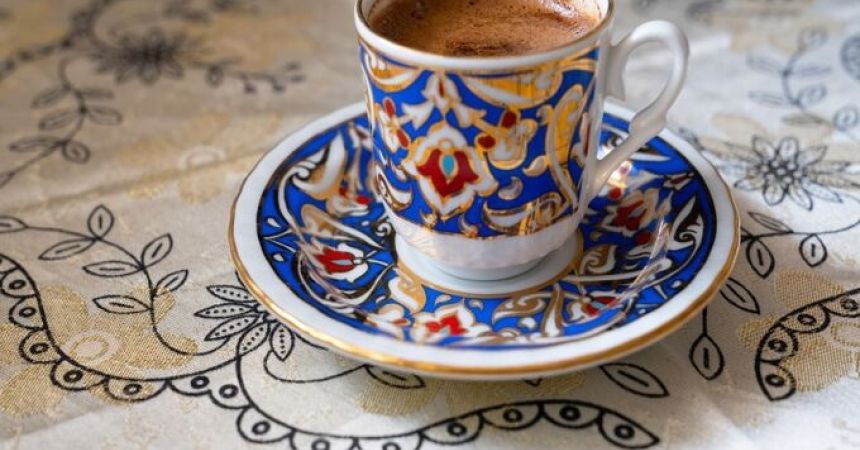
Coffee beans are roasted and ground into an extremely fine powder, much finer than what is normally used for filter coffee. That powder is combined with water inside a small long-handled pot known as a cezve, then heated carefully until the coffee rises and foam develops.
The drink is poured directly into the cup without filtering.
Because the grounds remain inside, the texture is different from almost every mainstream European or North American coffee style.
You are drinking the brewed liquid while allowing the sediment to settle gradually toward the bottom.
That distinction is important because it explains almost everything else about the experience.
The Cezve Is Small for a Reason
A cezve is designed around relatively small servings.
Traditional Turkish coffee is not usually brewed as a large mug consumed while walking to work. The small vessel allows the brewer to control heat and foam closely, which matters because the coffee can rise quickly once it approaches boiling.
The shape of the pot also helps with pouring.
A narrower upper section can support the formation and retention of foam, while the handle keeps the brewer's hand away from the heat source.
Different materials are used, including copper and stainless steel, and traditional copper cezve examples can be particularly beautiful. However, attractive equipment does not automatically guarantee good coffee.
The essential skill lies in proportion, grind, heat and timing.
A careless preparation in an expensive copper pot can still produce disappointing coffee.
Sugar Is Decided Before Brewing, Not Added Later
This is one of the most useful things a traveler can know before ordering.
Turkish coffee is traditionally prepared with the sugar inside the cezve, which means the amount needs to be chosen before brewing.
Common ordering styles include:
sade — no sugar
az şekerli — lightly sweetened
orta — medium sugar
şekerli — sweet
Exact sweetness can vary slightly between places because there is no universal international measuring standard applied in every café.
For first-time drinkers who normally take coffee without sugar, sade is the obvious choice. Those who find strong coffee difficult may prefer az şekerli or orta.
Adding sugar afterward is possible in the physical sense, but it changes the traditional method because stirring the finished coffee disturbs the sediment and texture.
That is why the sugar question usually comes before the coffee reaches the table.
Foam Matters, but It Should Not Become a Competition
A well-prepared Turkish coffee commonly arrives with a layer of foam, or köpük, on top.
Traditional coffee culture places value on good foam because it indicates careful preparation and contributes to texture and presentation.
However, travelers sometimes become obsessed with evaluating every cup according to whether the foam is thick enough for a social-media photograph.
That turns a subtle part of the preparation into another ranking exercise.
Coffee can vary according to beans, grind, equipment and technique. The useful thing to notice is whether the drink feels balanced and properly prepared rather than trying to calculate the millimeters of foam.
A good Turkish coffee should invite you to continue drinking it.
That matters more than perfect visual symmetry.
Do Not Stir the Coffee After It Arrives
The sediment at the bottom of a Turkish coffee cup is supposed to settle.
If you stir aggressively after the coffee has been served, those fine grounds return into suspension and the texture becomes considerably grittier.
This is also why drinking Turkish coffee slowly produces a better result than treating it like a shot.
Give the cup time.
Take small sips.
Allow the sediment to continue dropping.
The final portion should usually be left behind once the texture becomes noticeably thick with grounds.
Nobody wins anything by swallowing the last muddy centimeter simply because it remains inside the cup.
Knowing when to stop is part of the drinking method.
The Water Beside the Cup Is There for More Than Decoration
Turkish coffee is frequently served with a small glass of water.
Travelers sometimes assume the water should automatically be drunk afterward to remove the coffee taste.
There is no universal rule requiring one exact sequence.
Some people prefer drinking a little water beforehand to clear the palate so the coffee taste becomes more distinct. Others use the water afterward. In contemporary cafés, the pairing can simply function as refreshment alongside a strong, concentrated drink.
The useful point is not memorizing a ritual and becoming anxious about performing it correctly.
Drink the water in the way that feels comfortable.
A cultural experience becomes less authentic, not more, when the traveler is terrified of moving the wrong glass.
Turkish Coffee Should Be Sipped, Not Shot
The small cup creates one of the biggest traps for international visitors.
It looks like espresso.
That does not mean it should be consumed like espresso.
The unfiltered preparation creates a thicker body, and the sediment needs time to settle. Drinking slowly also makes the flavor easier to understand because the coffee can be intense.
The cup is small because the drink itself is concentrated.
Its social role historically also encourages a slower pace.
Turkish coffee is well suited to the end of a meal or a pause in the afternoon because the serving does not need to dominate the table.
You can continue talking while the cup lasts.
In that sense, Turkish coffee belongs as much to conversation as it does to coffee culture.
Turkish Coffee and Espresso Are Different Experiences
Rather than arguing about which is stronger, it is more useful to understand what each method does.
| Feature | Turkish Coffee | Espresso |
|---|---|---|
| Brewing method | Finely ground coffee heated with water | Pressurized extraction |
| Filtering | Unfiltered | Grounds remain outside cup |
| Texture | Dense, sediment present | Concentrated but cleaner |
| Serving size | Small | Small |
| Sugar | Often decided before brewing | Usually added afterward |
| Foam | Traditional köpük | Crema |
| Drinking rhythm | Slow sipping | Often faster |
| Cup bottom | Grounds should remain | Fully drinkable liquid |
The comparison shows why calling Turkish coffee “Turkey’s espresso” is convenient but not particularly accurate.
Both are small and concentrated.
Their preparation logic is completely different.
The Cup Is Small, but the Social Meaning Is Large
Coffee entered Ottoman social life centuries ago and gradually became connected with urban coffeehouses, hospitality and conversation.
Coffeehouses offered environments where people gathered, talked, played games, listened to stories and participated in the social life of the city. The exact role of coffeehouses changed over time, but the relationship between coffee and sociability became deeply established.
That connection survives in ordinary hospitality.
Being offered coffee does not always mean the host is staging a historical tradition for you. Sometimes it simply means you have been invited to sit, stay longer and continue the conversation.
For travelers, this is one reason coffee feels different when it is offered in a home, workshop or small business rather than ordered from a tourist menu.
The drink may be identical in ingredients.
The social meaning is not.
“A Cup of Coffee Has Forty Years of Memory”
One of the expressions closely associated with Turkish coffee culture refers to a cup of coffee creating an enduring bond or memory between people.
The saying is commonly understood as emphasizing gratitude, friendship and the significance of hospitality rather than literally suggesting that every cup creates a forty-year obligation.
That sentiment helps explain why coffee occupies a cultural position disproportionate to its physical size.
A guest is offered something that takes preparation and attention.
Then people sit.
Conversation develops.
The hospitality is remembered.
For international visitors, this is more interesting than learning another ceremonial rule because it explains why Turkish coffee survives even in a country where modern cafés, espresso machines and global coffee chains are also completely normal.
Coffee Has a Place in Traditional Marriage Customs Too
Turkish coffee also appears in customs connected with family introductions and marriage.
One widely known tradition involves the prospective bride preparing coffee when families meet, sometimes serving the prospective groom a deliberately salty version instead of an ordinary sweet or unsweetened cup.
Modern families may approach the custom playfully, seriously or not at all, so it should not be presented as something every Turkish couple follows identically.
Its popularity nevertheless reveals how easily coffee becomes part of social ceremony.
The cup can carry humor, hospitality and symbolic meaning at the same time.
This is a good example of why Turkish coffee should not be understood simply as a beverage recipe.
Fortune Telling Begins Only After the Coffee Is Finished
The practice known as kahve falı, or Turkish coffee fortune reading, is one of the most internationally recognizable traditions associated with the drink.
After the coffee is consumed, the sediment remaining inside the cup can be used for informal fortune reading. The saucer is placed over the cup, the cup is turned upside down, and after it cools the shapes formed by the grounds are interpreted.
People may see roads, birds, hearts, eyes, animals or other symbolic forms.
The practice ranges from playful social entertainment to something people take more seriously.
Travelers do not need to decide whether they “believe” in it before participating.
The cultural value often lies in the conversation produced by the reading.
Someone begins interpreting the shapes, another person disagrees, and the coffee session continues long after the coffee itself has disappeared.
Fortune Reading Is Better With Someone Than With an App
Modern technology has inevitably reached coffee fortune telling, and apps can attempt to interpret photographed cups.
That can be amusing.
It removes much of what makes kahve falı culturally interesting.
Traditional fortune reading is conversational. Someone studies the cup, invents or interprets a story, and the people sitting together react to it.
The social interaction matters more than the accuracy.
If you have an opportunity to experience fortune reading naturally with Turkish friends or in an appropriate cultural setting, the value lies in allowing the conversation to develop rather than worrying whether the prediction will come true.
Turkish Delight Beside Coffee Is Common, Not Mandatory
Coffee is sometimes served with lokum, commonly known internationally as Turkish delight, or another small sweet.
The pairing makes sense because the sweetness contrasts with a strong unsweetened coffee, and the small portion suits the scale of the drink.
However, a cup does not become less authentic because nothing sweet appears beside it.
Service styles vary between homes, traditional coffeehouses, restaurants and modern cafés.
This matters because travelers often begin treating every component as compulsory.
Traditional culture is rarely that rigid in everyday life.
A beautifully prepared coffee without lokum is still Turkish coffee.
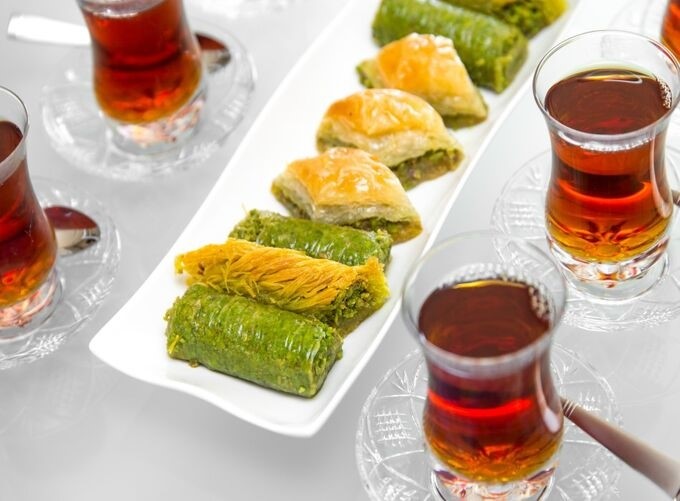
Where Should a Traveler Try Turkish Coffee?
There is no need to chase one supposedly definitive café across Istanbul.
Different settings provide different value.
A historical coffeehouse can offer atmosphere.
A specialist modern café may focus strongly on bean quality and preparation.
A neighborhood restaurant may provide a perfectly satisfying coffee after lunch.
A family home may produce the most memorable cup because the context is personal.
Travelers interested in understanding coffee alongside the city’s broader food culture can consider Istanbul culinary discovery tours, where coffee belongs naturally within a larger pattern of eating and drinking rather than functioning as an isolated tasting exercise.
The goal should be trying Turkish coffee more than once.
One cup is an introduction.
The second begins the comparison.
Coffee in Istanbul Is Not the Only Coffee in Turkey
Istanbul naturally dominates international discussion because its Ottoman history and coffeehouse culture are so visible, but travelers will encounter Turkish coffee throughout the country.
Preparation details and presentation can vary from place to place, while some regions maintain distinctive coffee-related traditions of their own.
This is why a traveler should avoid assuming that the most ornate cup served in Sultanahmet represents a national standard.
Coffee can be served simply.
It can appear after a meal in Cappadocia, during a conversation in Bursa or at a restaurant along the Aegean.
Its ability to fit into very different settings is part of its strength.
Menengiç Coffee Is Not Turkish Coffee Made With Another Bean
Travelers may encounter menengiç coffee, particularly in parts of southeastern Turkey.
Despite the English-language name, it is not simply standard Turkish coffee prepared from another conventional coffee bean. It is made using roasted fruits associated with the terebinth or pistachio family and creates a very different flavor and texture.
The distinction is useful because menu translations can create confusion.
Try it if you encounter it.
Just do not treat it as evidence that Turkish coffee itself has changed recipe.
It belongs to another regional beverage tradition.
Sand Coffee Looks Dramatic, but the Sand Is a Heating Method
Videos of Turkish coffee being prepared in hot sand have become enormously popular.
The coffee is not mixed with sand.
The cezve sits within heated sand, which distributes heat around the vessel and allows the brewer to control warming by moving the pot deeper or shallower.
The method creates an attractive visual performance and can also provide careful heat control.
However, sand preparation should not become another authenticity test.
Excellent Turkish coffee can be prepared using other heat sources.
The important factor remains proper brewing rather than whether the preparation photographs dramatically.
When to Drink Turkish Coffee During a Turkey Trip
There is no culturally mandatory hour, but Turkish coffee works particularly well when the day needs a pause.
After lunch.
Following dinner.
During an afternoon conversation.
Inside a café after several hours of sightseeing.
Because the serving is small, it does not require a major break, although rushing the drink defeats much of its character.
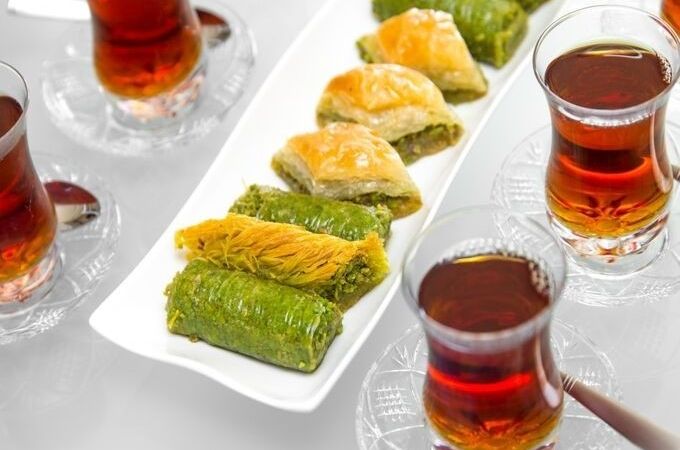
One particularly good strategy is avoiding the temptation to experience Turkish coffee, tea, baklava, lokum and every other famous food tradition within the same half-hour “tasting stop.”
Allow the coffee its own moment.
Travelers building a broader food-oriented journey can explore Turkey gastronomy tour experiences, where regional food and drink traditions appear according to place instead of being compressed into one tasting checklist.
How to Order Turkish Coffee Without Overthinking It
A traveler really only needs to know the desired sugar level.
You can ask for Türk kahvesi and specify sade, az şekerli, orta or şekerli.
If you are unsure, medium sweetness provides an accessible introduction, while habitual black-coffee drinkers may naturally prefer sade.
Once served, let it settle, drink slowly and stop before the sediment becomes unpleasant.
That is enough.
You do not need to hold the cup in a special way, recite a proverb or perform a ritual for the waiter.
Turkish coffee has centuries of tradition behind it, but ordinary people still drink it as ordinary coffee.
Understanding the tradition should make you more comfortable, not more self-conscious.
The Best Cup Is the One You Remember Because of Where You Were
Travelers often search for “the best Turkish coffee in Istanbul,” but coffee memories rarely behave like rankings.
You may remember a cup because it came after a long lunch.
Because the person serving it explained the sugar levels patiently.
Because someone turned your cup upside down afterward and found an imaginary journey in the grounds.
Perhaps you drank it after walking through a bazaar, or on a quiet afternoon when you had finally stopped trying to complete the day's sightseeing list.
The preparation method matters, and good coffee deserves attention. Yet Turkish coffee's cultural durability comes from the fact that it has always been more than a technical beverage.
It creates a reason to sit.
That may be the most useful thing a traveler can understand about it.
Frequently Asked Questions About Turkish Coffee
1. What makes Turkish coffee different from regular coffee?
Turkish coffee uses extremely finely ground coffee brewed directly with water and served without filtering. The grounds remain in the cup and settle gradually, creating a denser texture and a slower drinking style than filter coffee or espresso-based drinks.
2. Is Turkish coffee stronger than espresso?
The comparison is not straightforward because the brewing methods, serving sizes and concentrations differ. Turkish coffee can taste intensely strong, but it should not simply be described as a stronger espresso because the unfiltered preparation creates a fundamentally different texture and flavor profile.
3. What does sade mean when ordering Turkish coffee?
Sade means the coffee is prepared without sugar. Because sugar is traditionally added during brewing rather than stirred into the finished cup, travelers are normally asked to choose their preferred sweetness level before the cezve is heated.
4. What are the sugar options for Turkish coffee?
Common choices are sade for no sugar, az şekerli for lightly sweetened, orta for medium sweetness and şekerli for a sweeter preparation. Exact sweetness can vary slightly between cafés because individual preparation styles are not completely standardized.
5. Are you supposed to drink the coffee grounds?
No. The grounds remain in the cup because Turkish coffee is unfiltered, but they are allowed to settle toward the bottom. Most drinkers stop before reaching the thick sediment rather than attempting to finish every part of the cup.
6. Why is water served with Turkish coffee?
Water helps refresh the palate and balances the concentrated coffee experience. Some people drink a little before the coffee, while others prefer it afterward, so travelers do not need to worry about following one compulsory sequence at every café.
7. Why does Turkish coffee have foam on top?
Foam develops during careful heating in the cezve and is traditionally considered a sign of good preparation. It contributes to the texture and appearance of the coffee, although travelers should judge the complete cup rather than treating foam thickness as the only quality measure.
8. What is Turkish coffee fortune telling?
Known as kahve falı, the tradition involves turning the finished cup upside down after drinking and interpreting shapes created by the remaining coffee grounds. It is often enjoyed socially, with the conversation and storytelling surrounding the reading forming much of the experience.
9. Is Turkish coffee always served with Turkish delight?
No. Lokum or another small sweet may accompany coffee, particularly in cafés and hospitality settings, but it is not mandatory. Traditional Turkish coffee remains completely normal even when served simply with water and nothing else.
10. Is sand-brewed Turkish coffee more authentic?
Not necessarily. Hot sand is one traditional way of controlling the heat around a cezve, but Turkish coffee can be prepared successfully using other heat sources. Good technique matters more than whether the brewing method creates a dramatic visual presentation.
11. Where should I try Turkish coffee in Turkey?
Try it in several settings rather than searching for one universally “best” café. Historical coffeehouses, modern specialists, restaurants and local cafés can provide different experiences, while coffee shared during personal hospitality may become more memorable than any famous establishment.
12. What is the biggest mistake first-time travelers make with Turkish coffee?
The most common mistake is drinking it too quickly or continuing into the heavy sediment at the bottom. Turkish coffee works better when allowed to settle, sipped slowly and treated as a short social pause rather than a concentrated shot to finish immediately.

A travel professional specializing in tailor-made travel planning, guest experience management, and multi-destination tourism operations.
With over 23 years of experience in the travel industry, he designs and manages private and cultural tours for international travelers across Türkiye, Greece, Egypt, Jordan, Morocco, and other destinations.
He has strong expertise in both online and face-to-face guest communication, sales processes, and end-to-end travel operations.
Working closely with hotels, travel agencies, and local partners, he ensures smooth coordination and high-quality travel experiences at every stage of the journey.
His focus is on delivering personalized, reliable, and seamless travel experiences for international guests worldwide.