Dos and Don’ts in Istanbul: What Visitors Should Really Know
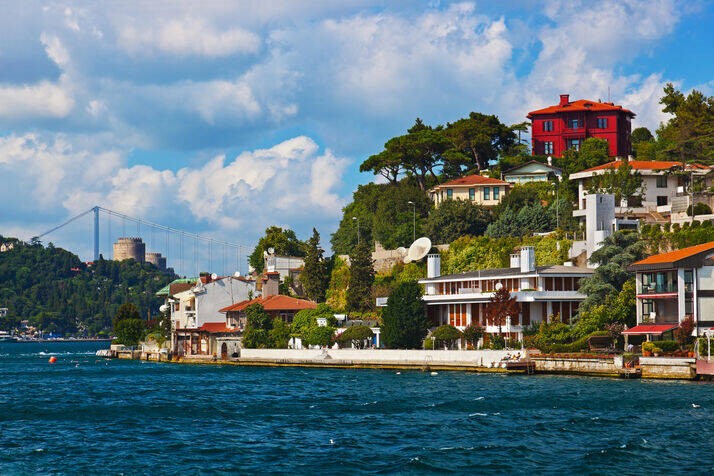
DO Use Istanbul's Transport Like a Local System, Not a Tourist Puzzle
Istanbul's size becomes much less intimidating once you stop assuming every journey requires a taxi.
Trams, metro lines, ferries and other public transport services connect many areas visitors commonly explore, while walking often makes more sense for shorter journeys within historical districts. The exact network, fares and payment arrangements can change, so current official transport information should always take priority over old screenshots or travel posts.
The practical rule is simple: look at geography before choosing the vehicle.
A taxi may save time in one situation and lose it completely in another because Istanbul traffic can transform a seemingly short journey into a frustrating one.
DON'T Assume a Taxi Is Always the Fastest Option
Istanbul's traffic does not care that your museum ticket begins in twenty minutes.
When rail or ferry connections provide a sensible alternative, they can be more predictable than road transport. Taxis remain useful, particularly for certain hotel transfers, late journeys or routes poorly served by public transport, but they should be one option rather than the automatic answer.
Use legitimate taxis or established booking methods, communicate the destination clearly and follow the journey on your phone when useful.
You do not need to approach every driver suspiciously.
You do need ordinary big-city awareness.
DO Understand the Bill Before You Tip
Tipping creates unnecessary anxiety because visitors often search for one universal Istanbul percentage.
There isn't one rule that fits every interaction.
Restaurants, private guides, drivers and hotel services are different service environments, while practices can vary according to the establishment. Before adding anything, look at the bill and check whether a service-related charge has already been included.
If something is unclear, ask.
A genuine question is considerably less awkward than tipping twice because you were afraid of appearing impolite.
Istanbul Money Moments: What to Do
| Situation | Better Approach | Avoid |
|---|---|---|
| Restaurant bill | Check items and service charges | Paying without looking |
| Taxi journey | Use legitimate service and follow route | Accepting unclear arrangements |
| Major purchase | Understand price before agreeing | Buying under social pressure |
| Private guiding | Check what your tour includes | Assuming every extra is included |
| Currency conversion | Understand the amount being charged | Approving unfamiliar figures blindly |
| ATM/payment terminal | Read the screen before confirming | Rushing through prompts |
None of these behaviours are uniquely Turkish. They are simply habits that become more important when dealing with unfamiliar currency and systems.
DON'T Turn Scam Awareness Into Suspicion of Istanbul
Visitors should know that tourist-focused scams and overcharging attempts can occur, as they can in other major international destinations.
Awareness is sensible.
Paranoia is exhausting.
If an unsolicited interaction begins developing into an invitation involving money, an unfamiliar venue or a purchase you never intended to make, you are allowed to end the conversation. You do not need an elaborate excuse and you certainly do not need to follow somebody somewhere because refusing feels impolite.
At the same time, treating every person who says hello as a potential criminal produces a distorted experience of a city where ordinary friendliness and hospitality are completely normal.
The useful middle ground is friendly independence.
DO Learn to Say No Without Making It a Scene
Tourist areas contain restaurant invitations, shopkeepers, tour offers and people trying to attract your attention.
You are not required to engage with all of them.
A brief “no, thank you” followed by continuing on your way is usually enough. Repeatedly explaining why you do not want something can actually prolong an interaction you wanted to end.
Good travellers sometimes confuse politeness with compliance.
They are not the same thing.
You can be respectful without buying, entering, following or agreeing.
DON'T Accept a Purchase Because You Feel Guilty
Hospitality and commerce occasionally overlap in Istanbul.
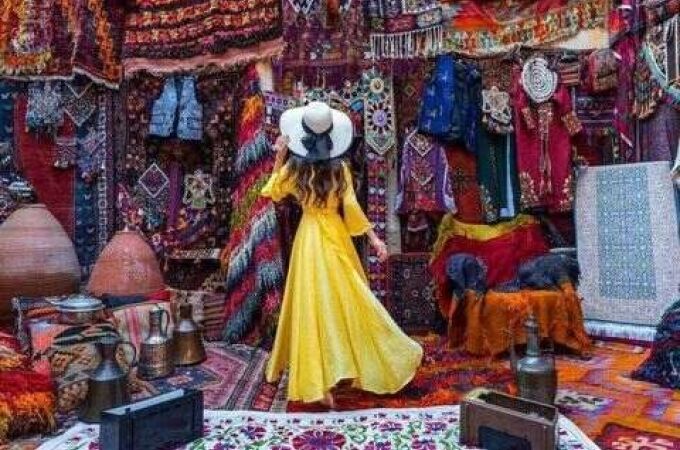
You may be offered tea while looking at carpets, ceramics, jewellery or other products. A long conversation can follow, and by the end some visitors feel they somehow owe the shop a purchase.
You don't.
A serious purchase should make sense because you understand the product, quality, price and any shipping or return arrangements involved. Expensive decisions deserve additional caution, particularly when the item is difficult to evaluate independently.
Tea is hospitality.
It is not a contract.
DO Respect Ramadan Without Overcomplicating Your Trip
Ramadan changes parts of Istanbul's daily rhythm, but non-Muslim visitors do not need to behave as though the city has closed.
Restaurants and visitor attractions can continue operating, particularly in central areas, although individual opening arrangements and local patterns may vary. Around sunset, travellers may notice increased activity as people prepare to break the fast.
The appropriate response is consideration rather than anxiety.
Be particularly respectful around active mosques and recognise that people who are fasting may be tired later in the day. Current opening hours should always be checked rather than assumed.
DON'T Expect Istanbul to Perform One Version of Religion
One neighbourhood may appear highly secular, another more conservative. Alcohol may be prominent around one group of restaurants and difficult to find around another. Clothing styles can change significantly during a twenty-minute journey.
None of these observations alone defines Istanbul.
Trying to decide whether the city is “European” or “Middle Eastern,” “religious” or “secular” usually tells you less than simply accepting that several versions coexist.
That complexity is not a problem to solve.
It is part of understanding the city.
DO Enjoy Istanbul at Night
Restaurants, cafés, bars, waterfront districts and busy neighbourhood streets can make evenings an important part of the trip.
Normal big-city judgement still applies. Know how you are returning to the hotel, keep track of personal belongings and avoid allowing alcohol to remove the awareness you would normally use at home.
Visitors interested in extending their journey beyond Istanbul through the historical and cultural regions of the country can explore Turkey cultural tours, particularly when Istanbul forms the beginning rather than the entirety of the trip.
DON'T Mistake Loudness for Confidence
Being unable to communicate easily can make travellers speak louder without realising it.
Volume rarely solves a language barrier.
A map, translation app, hotel address or destination written clearly on a phone is often far more useful. If somebody does not understand the first English sentence, repeating exactly the same sentence at twice the volume is unlikely to produce a breakthrough.
Slow down.
Simplify the language.
Show rather than shout.
The Behaviour Test: Helpful or Unhelpful?
| Visitor Behaviour | Usually Helpful | Usually Unhelpful |
| Observing before acting | ✓ | |
| Asking when uncertain | ✓ | |
| Learning a few Turkish words | ✓ | |
| Comparing significant purchases | ✓ | |
| Following local religious-site rules | ✓ | |
| Treating every stranger suspiciously | ✓ | |
| Blocking public space for photographs | ✓ | |
| Assuming all prices are negotiable | ✓ | |
| Following strangers out of politeness | ✓ | |
| Expecting one cultural rule everywhere | ✓ | |
| Trying to complete Istanbul too quickly | ✓ |
The pattern is remarkably consistent.
Most good decisions involve awareness rather than specialist knowledge.
12 Frequently Asked Questions About Dos and Don'ts in Istanbul
1. What should tourists not do in Istanbul?
Visitors should avoid disrespectful behaviour inside mosques, photographing people intrusively, blocking busy pavements or ferry entrances, accepting questionable unsolicited offers and assuming bargaining applies everywhere. Most Istanbul etiquette comes down to situational awareness: observe what is happening around you, respect working urban spaces and ask politely whenever you are uncertain.
2. What are the most important dos in Istanbul?
Respect active religious sites, learn a few basic Turkish expressions, use legitimate transportation, understand prices before agreeing to significant purchases and leave enough time to experience neighbourhoods rather than only attractions. Visitors should remember that Istanbul is a functioning city whose ferries, markets and streets are shared with millions of residents.
3. What should women tourists wear in Istanbul?
There is no single city-wide dress code for female visitors, and ordinary sightseeing clothing can generally reflect personal comfort, season and neighbourhood. Active mosques require appropriate coverage, however, so women planning religious-site visits should follow current entrance instructions and carry an adaptable layer or scarf when useful.
4. What should men wear when visiting mosques in Istanbul?
Men should dress respectfully when entering active mosques, avoiding clothing that provides insufficient coverage for the religious environment. Exact visitor arrangements can vary between sites, making entrance instructions the best guide. Shoes are normally removed before designated prayer areas, while quiet and considerate behaviour is expected from everyone.
5. Is it rude to bargain in Istanbul?
Bargaining is not inherently rude when it occurs in an appropriate bazaar or independent retail context and remains respectful. The mistake is assuming every Istanbul price is negotiable. Restaurants, supermarkets, public transportation, official attraction tickets and most modern branded shops generally operate with fixed prices rather than bargaining.
6. Is tipping expected in Istanbul?
Tipping depends on the service rather than one universal percentage applied throughout the city. Restaurants, private guides, drivers and hotel staff represent different situations, while some establishments may include service-related charges. Visitors should check bills carefully and ask when uncertain instead of automatically importing tipping habits from home.
7. Is it safe to use taxis in Istanbul?
Taxis are widely used, but visitors should apply normal urban travel precautions by choosing legitimate vehicles or established booking methods, communicating the destination clearly and remaining aware of the route and payment. When public transport offers a straightforward alternative, it may also be more predictable during periods of heavy traffic.
8. Can tourists drink alcohol in Istanbul?
Alcohol is available in many licensed restaurants, hotels and bars, although its visibility varies significantly between neighbourhoods and establishments. Visitors should distinguish between enjoying alcohol appropriately and disruptive public behaviour. Istanbul is culturally diverse, so reading the immediate social environment is more useful than applying one assumption to the entire city.
9. Can tourists visit mosques during prayer times?
Visitor access may be restricted or temporarily paused during prayers, particularly at active mosques receiving large numbers of tourists. Rather than assuming one schedule applies everywhere, check current information and follow staff guidance. When worship is taking place nearby, avoid intrusive photography, loud conversation or behaviour that interferes with worshippers.
10. Is it okay to photograph people in Istanbul?
General street photography is common, but identifiable people deserve ordinary courtesy when they become the main subject of a photograph. Asking permission is particularly appropriate for close portraits. Greater sensitivity should be used around worship, children, private businesses and situations where somebody may reasonably prefer not to be photographed.
11. Are there special etiquette rules during Ramadan in Istanbul?
Non-Muslim travellers are not generally expected to fast, and Istanbul continues functioning during Ramadan, although daily rhythms can change, particularly around sunset and religious areas. Showing consideration towards people who are fasting and respecting active mosques demonstrates cultural awareness without requiring visitors to redesign their entire trip.
12. What is the biggest mistake first-time visitors make in Istanbul?
One of the biggest mistakes is treating Istanbul as an attraction checklist rather than a living city. Travellers can become so focused on completing famous landmarks that they overlook neighbourhoods, ferries, meals and ordinary interactions. A better visit combines essential monuments with enough unstructured time to observe how Istanbul actually works.
The Best Istanbul Etiquette Is Almost Invisible
A well-mannered visitor rarely spends the day thinking about etiquette.
They simply notice where they are.
Inside a mosque, they become quieter and follow the rules of the space. In a bazaar, they remain friendly without feeling obligated to purchase. On a ferry, they take the photograph without blocking the person trying to get off. When someone offers genuine hospitality, they appreciate it, while an unwanted sales approach receives a polite refusal rather than twenty minutes of uncomfortable negotiation.
None of this requires becoming an expert on Turkish culture before travelling.
In fact, trying too hard to memorise every possible cultural rule can create its own distance between visitor and city. You begin monitoring yourself instead of experiencing Istanbul.
Curiosity works better.
Ask when you do not understand something. Learn a few Turkish words even if the pronunciation is imperfect. Pay attention to how people use shared spaces and remember that neighbourhoods are homes and workplaces as well as places you came to photograph.
Most importantly, allow Istanbul to contradict your expectations.
The city can be conservative and remarkably cosmopolitan within the same afternoon. An ancient mosque may stand minutes from a fashionable restaurant district. A ferry journey can provide one of the finest views of the trip while the passenger beside you treats it as an entirely ordinary commute home.
Those contradictions are not inconveniences in understanding Istanbul.
They are Istanbul.
The traveller who respects them does not need a long list of rules.
Look around, stay curious, keep reasonable boundaries and remember that being a guest in a city is not very different from being a guest anywhere else: you do not need to know everything in advance, but you should care enough to notice how the place works.

A travel professional specializing in tailor-made travel planning, guest experience management, and multi-destination tourism operations.
With over 23 years of experience in the travel industry, he designs and manages private and cultural tours for international travelers across Türkiye, Greece, Egypt, Jordan, Morocco, and other destinations.
He has strong expertise in both online and face-to-face guest communication, sales processes, and end-to-end travel operations.
Working closely with hotels, travel agencies, and local partners, he ensures smooth coordination and high-quality travel experiences at every stage of the journey.
His focus is on delivering personalized, reliable, and seamless travel experiences for international guests worldwide.