
Cairo Weather in April: When the Middle of the Day Matters
Early April and Late April Should Not Be Treated Identically
April's progression is more useful to understand than a single monthly average. The first part of the month can still produce pleasantly moderate sightseeing days, while the final weeks increasingly give a preview of the warmer conditions ahead.
There is no fixed date when this change occurs, and individual days will always vary. A late-April morning can be milder than one earlier in the month. What changes gradually is the likelihood that stronger afternoon warmth will become a meaningful part of an outdoor itinerary.
For an early-April visit, you may find that a full archaeological day requires little adjustment beyond sensible sun protection and water. Toward the end of the month, giving exposed sites an earlier position in the schedule becomes increasingly worthwhile.
This distinction matters more than trying to decide whether April itself is simply “warm” or “hot.” Those labels flatten a month that is still moving seasonally.
The Most Tiring April Day May Not Be the Hottest
Temperature attracts attention because it is easy to measure. Fatigue is more complicated.
Imagine spending the morning walking around Saqqara, continuing to Dahshur, eating a quick lunch and then moving directly into another substantial outdoor visit. None of those individual experiences may feel excessively hot, yet the accumulated combination of walking, sunshine, dry air and limited shade can become noticeable by late afternoon.
Now compare that with a day containing an outdoor morning, a relaxed lunch, an indoor museum and a later neighborhood walk. The temperature could be exactly the same, but the second itinerary distributes exposure much more effectively.
This is April's most important practical distinction:
comfort is cumulative.
The question is not merely whether you can tolerate the conditions at noon. It is whether the day's structure still feels enjoyable several hours later.
Giza and Saqqara Need Different Kinds of Energy
Even Cairo's major archaeological experiences should not automatically be grouped together simply because they are outdoors.
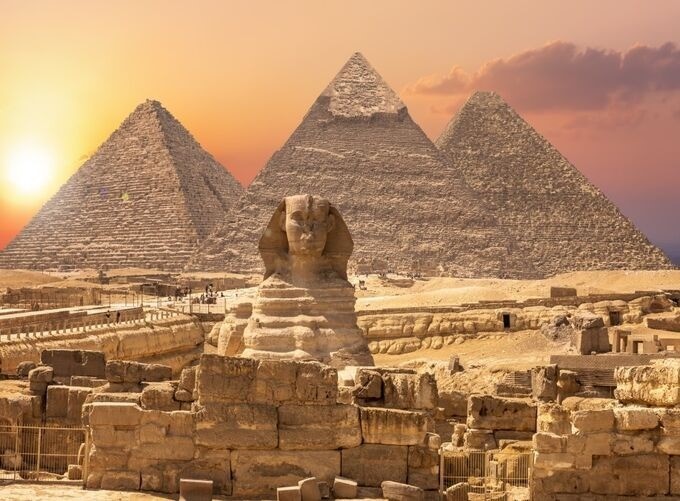
Giza combines monumental scale with movement between different areas of the plateau. Depending on the itinerary, transportation can reduce some of the walking between major viewpoints.
Saqqara has a different rhythm. Travelers interested in exploring beyond the Step Pyramid complex may move between tombs, pyramid areas and other archaeological remains, and a deeper visit can occupy a substantial portion of the day.
Dahshur adds another open desert-edge environment.
Combining several of these sites can be extremely rewarding, but April encourages you to distinguish between seeing archaeological highlights and spending a full day immersed in archaeology. The second demands more physical energy even when the weather itself appears moderate.
That distinction is especially relevant to travelers who prefer detailed visits rather than brief photo stops.
Build One Recovery Point Into a Long Outdoor Day
A recovery point does not need to mean returning to the hotel.
It can simply be a proper seated lunch, an indoor attraction, a longer coffee break, or a transfer period during which you are no longer walking in direct sunshine. What matters is interrupting several consecutive hours of exposure.
This approach preserves the archaeological experience rather than shortening it.
A traveler who knows there is a meaningful pause ahead can spend more time exploring an interesting site instead of rushing because the entire day has been planned as one continuous block.
A Better Way to Read an April Itinerary
| If Your Day Contains... | Consider Adding... |
|---|---|
| Several hours at Giza | A proper indoor or shaded lunch |
| Saqqara + Dahshur | A deliberate break between major sections |
| Long historic-city walk | Interior visits along the route |
| Archaeology + evening activity | Hotel or café downtime beforehand |
| Multiple consecutive tour days | One lighter afternoon |
| Full Cairo + Nile itinerary | Energy management across the whole journey |
The final row matters. A well-planned April day should not be judged in isolation if another ten days of sightseeing follow it.
Evening Cairo Solves a Different Problem
By April, evenings can become one of the easiest parts of the day to enjoy outdoors.
The stronger afternoon sun has lost its intensity, yet the city remains active. Dinner outdoors, a Nile-side walk or an evening in a historic district can therefore complement rather than compete with daytime sightseeing.
This does not mean every traveler should move major attractions into the evening. Most archaeological sites and museums operate according to their own schedules, and opening hours should always be checked for the actual travel date.
Instead, evening provides additional usable travel time without adding another major sightseeing block.
That could mean finishing the formal itinerary, returning to the hotel briefly, and going out again for dinner rather than trying to attach dinner immediately to an already long touring day.
For travelers who enjoy experiencing a destination beyond its monuments, this separation can make Cairo feel considerably less rushed.
April Packing Should Work From Morning Until Dinner
A useful April outfit should not need to be completely reconsidered every few hours.
Breathable clothing provides the foundation. A light additional layer can cover a cooler start or evening, while appropriate coverage makes transitions into religious sites straightforward. Comfortable shoes remain essential because archaeological surfaces and long urban walks demand more from footwear than the temperature does.
There is also a practical reason not to overpack the day bag.
By afternoon, anything you are not wearing becomes something you have to carry. Heavy jackets, unnecessary accessories and oversized bags can become surprisingly irritating after several hours of sightseeing.
April rewards light, functional preparation.
The same principle applies to travelers on an Egypt archaeology and Nile tour, where repeatedly unpacking a complicated wardrobe becomes increasingly inconvenient as the journey moves between destinations.
What About an Unusually Hot April Day?
Monthly averages describe what is typical; they do not prevent individual days from departing from the pattern.
If the short-range forecast shows an unusually warm day during your visit, there is no reason to pretend that the original itinerary must remain untouched. Move the longest exposed experience earlier when practical, carry additional water, reduce unnecessary walking between transport points, and give yourself a genuine break during the middle of the day.
The key word is unusually.
This article should not create the impression that April normally requires the same precautions as Cairo's peak summer period. It does not. The purpose is to explain how to respond intelligently when a particular day runs warmer than the month's general character.
That keeps April preparation realistic rather than alarmist.
A Simple April Day Can Work Better Than a Packed One
Consider two possible schedules.
Schedule A: Giza → Saqqara → lunch → Citadel → Islamic Cairo → dinner → evening activity.
Schedule B: Saqqara in the morning → relaxed lunch → museum or shaded cultural visit → late-afternoon neighborhood exploration → dinner.
The first schedule wins on attraction count. The second may win on experience.
This does not mean Schedule A is impossible. Travelers differ in energy levels, tour style and available time. But April begins exposing the weakness of itineraries designed entirely around how many locations can technically be reached before closing time.
A professionally designed Cairo sightseeing and Nile journey should account for the physical rhythm of the trip as well as transportation and entrance schedules.
More sightseeing is valuable only while you are still enjoying it.
April's Practical Rule: Protect the Best Hours
You do not need an hour-by-hour weather strategy.
Instead, identify the most weather-sensitive experience in your day.
If that is an extended visit to Saqqara, give it favorable hours. If the day's priority is a panoramic archaeological experience at Giza, avoid wasting the earlier period elsewhere without a reason. If most of your plans involve museums and historic interiors, you have much more freedom.
This produces a simple April framework:
Priority outdoor experience → natural recovery period → flexible afternoon → optional evening.
It is not a template that every traveler must follow. It is a way of recognizing that by April, when you use your outdoor hours begins to influence how much you enjoy them.
Cairo in April FAQs
1. How warm is Cairo in April?
April usually brings warm spring conditions, with daytime temperatures commonly reaching the upper 20s°C. Individual days can be cooler or considerably warmer than the average, particularly later in the month, so short-range forecasts become useful when deciding how to organize long outdoor sightseeing periods.
2. Does Cairo feel hot in April?
It can feel quite warm in direct afternoon sunshine, especially at exposed archaeological sites, but April should not automatically be treated like peak summer. Morning conditions are often easier for prolonged outdoor sightseeing, while the perceived warmth depends heavily on sun exposure, walking and available shade.
3. Is early April different from late April in Cairo?
There is usually a gradual warming tendency through the month. Early April may retain more moderate spring conditions, while stronger afternoon warmth becomes increasingly likely toward the end. Weather varies from year to year, however, so the exact travel forecast remains more useful than calendar dates alone.
4. Should I visit the Pyramids early in April?
An earlier visit can be useful because it places a highly exposed attraction before the strongest part of the day's sunshine. There is normally no need for an extreme pre-dawn schedule; the objective is simply to use favorable outdoor hours efficiently rather than avoiding daytime sightseeing altogether.
5. Can I visit Saqqara and Dahshur on the same April day?
Yes, and many travelers do. Because both involve substantial outdoor exposure, allow enough time for water and a genuine break rather than treating the route as a race between monuments. A comfortable pace becomes increasingly valuable during warmer periods later in April.
6. Do I need air conditioning in Cairo during April?
Many travelers appreciate air conditioning during warmer April afternoons, particularly after extended sightseeing, although individual preferences vary. Hotels and modern vehicles commonly provide climate control. The greater practical concern is avoiding unnecessary continuous outdoor exposure rather than remaining indoors solely because April has become warmer.
7. Is Cairo dry during April?
Yes. Cairo has an arid climate, and significant rainfall is uncommon during April. Travelers generally need to think more about sunshine, dry air and hydration than wet-weather disruption, although current forecasts should still be checked because monthly climate patterns cannot predict individual travel days.
8. What clothes are most practical for Cairo in April?
Lightweight, breathable clothing works well for most daytime sightseeing. Appropriate shoulder and leg coverage also makes visits to religious sites easier, while a light additional layer can remain useful later in the day. Comfortable walking footwear is particularly important for archaeological and historic-city visits.
9. Do I need sunscreen in Cairo in April?
Sun protection is increasingly important during April, particularly when spending several hours at exposed sites such as Giza, Saqqara or Dahshur. Mild morning air can make the strength of direct sunshine easy to underestimate, so protection is better applied proactively rather than after prolonged exposure.
10. Should I avoid sightseeing at midday in April?
Not as a general rule. April is not peak summer, and many sightseeing programs continue comfortably through midday. However, reducing unnecessary exposure, placing particularly demanding outdoor visits earlier and using lunch or indoor attractions as natural breaks can make a long day noticeably more comfortable.
11. Are Cairo evenings cool in April?
Evenings are generally more moderate than afternoons and can feel particularly pleasant after a sunny sightseeing day. A lightweight extra layer may still be useful depending on personal preference and the exact conditions, especially when spending an extended period outdoors after sunset.
12. How should I plan a full sightseeing day in Cairo in April?
Give the most exposed or physically demanding attraction favorable earlier hours, allow a meaningful break around the middle of a long day, and keep the later afternoon flexible for less exposed sightseeing. This approach manages accumulated sun and walking without unnecessarily restricting what you can experience.

A travel professional specializing in tailor-made travel planning, guest experience management, and multi-destination tourism operations.
With over 23 years of experience in the travel industry, he designs and manages private and cultural tours for international travelers across Türkiye, Greece, Egypt, Jordan, Morocco, and other destinations.
He has strong expertise in both online and face-to-face guest communication, sales processes, and end-to-end travel operations.
Working closely with hotels, travel agencies, and local partners, he ensures smooth coordination and high-quality travel experiences at every stage of the journey.
His focus is on delivering personalized, reliable, and seamless travel experiences for international guests worldwide.
