

Every Egyptian City Has to Earn Its Place in Your Itinerary
Updated: August 2026
Calling every interesting Egyptian city “vibrant” does not help anyone plan a trip.
Cairo certainly has energy to spare, but that is hardly the reason most travelers go to Luxor. Aswan's appeal does not depend on competing with Cairo for noise, scale or the number of things happening around you. Alexandria changes the character of an Egypt journey precisely because it does not feel like another version of either.
This creates a problem when planning.
Cairo, Alexandria, Luxor and Aswan are frequently presented together as though they were four comparable city breaks and the only decision were how many nights to assign each one.
They are not doing the same job.
Cairo introduces scale, contradiction and contemporary urban Egypt while providing access to some of the country's most famous ancient sites. Alexandria turns the journey toward the Mediterranean and a different historical identity. Luxor concentrates monumental ancient Egypt so intensely that the modern city often becomes secondary to what surrounds it. Aswan slows the journey down and changes the relationship between traveler, Nile and southern Egypt.
You do not need all four simply because all four are important.
A famous city still has to justify the time it takes away from somewhere else.
Cairo Usually Gets the Job Before the Interview Starts
For many international travelers, Cairo is difficult to remove from a first Egypt journey.
Part of that is logistical. The capital is a major gateway, and Giza lies within the wider Cairo travel experience for most visitors.
But reducing Cairo to an airport plus the Pyramids misses why the city matters.
Cairo is where the idea of Egypt as an archaeological destination collides most obviously with Egypt as a living country. The ancient monuments may be thousands of years old, but the roads taking you there belong emphatically to the present.
Traffic moves around you. Neighborhoods change. Minarets, apartment blocks, cafés, museums and modern infrastructure occupy the same enormous urban landscape.
That contrast is not background noise to be eliminated from the trip.
It is part of Cairo.
A traveler interested only in archaeological efficiency may occasionally find the city overwhelming. Someone curious about the relationship between ancient fame and modern Egyptian life often finds precisely that intensity fascinating.
Cairo earns its itinerary space because it gives you both.
But Cairo Is Not a Summary of Egypt
This is where first itineraries sometimes go wrong.
Cairo is so large and contains so much that it can create the impression that adding more days there is equivalent to seeing more of Egypt.
It is not.
Another Cairo day cannot reproduce the archaeological concentration of Luxor, Alexandria's Mediterranean identity or the slower southern Nile atmosphere associated with Aswan.
This is important when time is limited.
If you have already allocated enough time to Cairo for the experiences that matter to you, automatically adding another night may produce less variety than giving that night to a destination performing a completely different role.
The reverse is also true.
Removing too much Cairo because “we will see plenty of Egypt elsewhere” misunderstands what the capital contributes.
Good itinerary design is not about distributing nights fairly.
Cities do not need equal representation.
They need enough time to do what you brought them into the journey to do.
Alexandria Has to Justify the Detour
Alexandria is an excellent test of whether you are planning according to personal interest or collecting famous names.
The city introduces a different historical and geographical layer. The Mediterranean matters here, as does Alexandria's long association with the Hellenistic and Greco-Roman worlds.
That can make the city highly worthwhile for a traveler who actively wants that contrast.
For someone whose priorities are the Pyramids, pharaonic monuments, a Nile journey and perhaps the Red Sea, Alexandria may be less essential on a shorter first trip.
This is not a ranking.
Alexandria does not become a lesser destination because another traveler removes it.
The decision is about marginal value: what does Alexandria add that your existing itinerary does not already contain, and is that difference worth the time required to include it?
If Mediterranean Egypt interests you, the answer can be strongly yes.
If it does not, “Egypt's second-largest city” is not by itself a reason to rearrange the trip.
Do Not Add Alexandria Simply Because You Have Already Seen Cairo
There is a tempting itinerary logic that goes:
Cairo is a major Egyptian city. Alexandria is another major Egyptian city. Therefore, visiting both provides a more complete urban picture of Egypt.
Technically perhaps.
Practically, that is not a particularly good reason to travel.
Alexandria works when its differences are the attraction.
You go because the Mediterranean setting changes the atmosphere, because its historical layers interest you, or because you deliberately want a part of Egypt that interrupts the dominant pharaonic narrative of a classic first journey.
If none of those ideas excites you, adding Alexandria may simply produce another hotel change.
This is why dedicated Alexandria content should answer the deeper question of whether the destination itself suits you.
This article only needs to establish the threshold:
Alexandria should enter the itinerary because you want Alexandria, not because you feel an Egypt trip needs another city.
Luxor Is Not Competing With Cairo for the Same Days
Putting Cairo and Luxor in a table labeled “Best Egyptian Cities” creates a misleading comparison.
Most first-time travelers are not choosing Luxor because they want another urban experience.
They are choosing access to one of the world's densest concentrations of ancient Egyptian monuments.
The modern city provides the base, services and setting, but much of the traveler's attention is directed toward temples, tombs and archaeological landscapes on both sides of the Nile.
That makes Luxor's itinerary role unusually clear.
If ancient Egypt is one of the principal reasons for your journey, Luxor is difficult to replace by extending Cairo.
The two destinations may both contain extraordinary archaeology, but they do not deliver it in the same way.
This distinction also protects our content structure.
The dedicated Luxor and archaeology pages can explain what you see there.
The city-selection question is simply whether that concentration of ancient Egypt deserves enough priority to displace another destination.
For many first-time visitors, it does.
Luxor Is Technically a City, but That Is Not How Most Travelers Experience It
Imagine spending three days in Paris without much interest in Paris itself, because most of your waking hours are devoted to archaeological landscapes around it.
That would be an unusual city break.
It is not an unusual way to experience Luxor.
This matters when comparing hotel nights.
Three nights in Cairo and three nights in Luxor do not necessarily represent three days of comparable urban exploration. The same unit—“night”—is supporting two completely different types of travel.
In Luxor, early starts can matter. The Nile divides important sightseeing areas. Archaeological visits may occupy substantial parts of the day, and the rhythm is shaped by monuments rather than by wandering through a city center until something catches your attention.
Calling it another stop on a list of Egyptian cities understates the reason it belongs there.
Luxor is not filling a city slot.
It is filling an ancient-Egypt slot.
Aswan Makes More Sense When You Understand the Change of Pace
Aswan can look deceptively modest when an itinerary is reduced to bullet points.
Cairo's section becomes crowded with famous names. Luxor quickly fills with temples and tombs. Then Aswan appears with fewer instantly recognizable attractions, and somebody looking at the itinerary asks an understandable question:
“Do we really need this many nights there?”
Sometimes the answer is no.
Sometimes that is exactly the wrong night to remove.
Aswan contributes differently.
The Nile becomes more visually present in the experience, southern Egypt changes the geographical context, and Nubian culture adds another dimension to a journey that can otherwise become dominated by pharaohs and archaeological chronology.
The pace can change too.
That does not mean nothing happens in Aswan. It means the value of the destination is not measured particularly well by counting famous attractions per hour.
Some places justify themselves by concentration.
Others justify themselves by contrast.
Aswan often belongs to the second group.
Do Not Remove Aswan Because Its Attraction List Looks Shorter
Spreadsheet planning rewards busy destinations.
Ten recognizable attractions look better than four.
This can create a peculiar situation in which travelers spend months designing a holiday and accidentally remove the only part that gave them room to absorb it.
Cairo and Luxor are easy to defend on paper because their famous names fill the page. Aswan can look quieter in a proposal, which is precisely why some travelers understand its value more clearly after arriving.
A slower day is not automatically a wasted day.
Neither should Aswan be protected from itinerary cuts merely because it is relaxing. If you have limited time and stronger priorities elsewhere, something has to give.
The point is to remove it knowingly.
If you cut Aswan, understand that you are not merely deleting a few attractions.
You are removing a particular pace, geography and southern Nile context from the journey.
That is the real trade.
What Job Is Each City Doing?
Instead of asking which city is “best,” give each one a job description.
| City | Its Job in the Journey | A Weak Reason to Add It |
|---|---|---|
| Cairo | Connect monumental ancient Egypt with the scale and energy of the modern capital | “Our international flight lands there anyway” |
| Alexandria | Introduce Mediterranean Egypt and historical layers that change the character of the trip | “It is another famous Egyptian city” |
| Luxor | Give ancient Egyptian archaeology enough concentration to become a major part of the journey | “We want another city after Cairo” |
| Aswan | Change the pace and introduce the southern Nile and Nubian context | “It appears naturally below Luxor on the map” |
| Hurghada | Deliberately interrupt cultural touring with a coastal stay | “We should probably see the Red Sea as well” |
The third column is more useful than it looks.
Many overcrowded itineraries are built from weak reasons.
Two Nights Can Mean Almost Anything
This is one of the least glamorous but most important facts in itinerary planning.
A night is not a sightseeing day.
Suppose you arrive at 6:00 p.m., sleep, spend the following day sightseeing and leave at 8:00 a.m. the next morning.
The hotel booking says two nights.
The travel experience says one usable day.
This distinction becomes critical when people say they have “two nights everywhere” and therefore assume every city has received adequate time.
Arrival and departure schedules matter. So do airport transfers, railway timings, road journeys and cruise embarkation or disembarkation arrangements.
When we build Egypt Private Tours, we therefore look at usable time rather than distributing hotel nights mechanically between destinations.
An itinerary can contain plenty of nights and still feel rushed if too many of them are consumed by movement.
The City You Enjoy Most May Not Be the City You Need Most
Travel planning encourages certainty before experience.
You are expected to know which destination you will love before you have visited any of them.
Of course you do not.
Someone may consider Cairo absolutely essential and later decide Aswan was their favorite place. Another traveler may enjoy Alexandria enormously but still agree that, given only eight days, removing it would have been the correct planning decision.
Favorite and necessary are different categories.
A city can be structurally important to understanding the journey without becoming your favorite. Another can be personally delightful while remaining optional within a shorter route.
This is why itinerary design should not attempt to predict emotional rankings.
Its job is to create meaningful contrast and protect the traveler's priorities.
Your favorite city can take care of itself once you arrive.
A Nile Cruise Changes the Luxor–Aswan Calculation
Luxor and Aswan become even more interesting when a Nile cruise enters the plan.
Without a cruise, travelers may treat them as two independent destinations requiring separate transportation and accommodation decisions.
With a cruise, they can become the beginning and end of a connected Nile journey, depending on the chosen route and sailing arrangements.
That changes how nights should be counted.
A cruise night is not automatically an Aswan night simply because the vessel is nearby, nor does arriving in Luxor mean you have allocated sufficient time to explore Luxor properly.
Pre- and post-cruise accommodation can therefore matter.
This is one of those operational details that looks unnecessarily complicated until the itinerary is built incorrectly.
The useful principle is simple:
Count what you can actually do in each city, not how many times its name appears beside a date.
Geography on a Map Does Not Tell You How a Route Feels
Egypt looks wonderfully straightforward when viewed at the wrong scale.
Cairo sits in the north. Luxor and Aswan sit farther south. Alexandria is toward the Mediterranean. The Red Sea lies to the east.
It is tempting to start connecting dots.
Real itineraries need more than dots.
Flights, road transfers, railway options, cruise schedules and arrival times determine whether a route flows comfortably or repeatedly interrupts itself.
This does not mean every traveler needs to become an expert in Egyptian transport.
It means city selection should happen together with route planning.
Adding a destination is not simply adding its attractions.
You are also adding the journey into it and the journey out.
That cost is particularly important when the trip is short.
Hurghada Solves a Completely Different Problem
Hurghada belongs in this conversation precisely because it is not competing for the same job.
Suppose you have three additional nights.
Should they go to Alexandria, Aswan or Hurghada?
There is no useful ranking because the three options answer different questions.
Alexandria adds another cultural and historical layer.
Aswan extends the southern Nile experience and changes the pace.
Hurghada deliberately steps away from archaeology and creates a coastal break.
If you have spent a week moving between museums, temples and tombs, another cultural destination may be exactly what you want.
Or it may be the moment everyone realizes they would happily trade a monument for a swimming pool.
That is why Egypt Tour Packages should not be optimized solely around the maximum number of famous places.
Variety sometimes contributes more than quantity.
Cairo Plus Luxor Is Not “Enough Egypt,” but It May Be Enough for Your Trip
Travel language becomes strangely absolute around first visits.
“You cannot go to Egypt without seeing…”
After several conversations, the itinerary contains twelve destinations.
There is no universally complete Egypt trip.
Cairo and Luxor can form an exceptionally strong archaeology-focused journey. Adding Aswan changes it. Adding Alexandria changes it differently. Adding a Nile cruise creates another structure, while adding the Red Sea introduces a completely different rhythm.
None of these combinations proves that the others are incomplete.
A trip has a finite number of days.
The goal is not to represent every aspect of Egypt proportionally.
The goal is to choose the aspects you care about and give them enough time to be experienced properly.
That sounds obvious.
It becomes surprisingly difficult once every destination page tells you its city is unmissable.
One-Night Stops Are More Expensive Than They Look
The cost here is not only financial.
Every hotel change requires packing, checking out, moving luggage, transportation, checking in again and mentally resetting.
For some travelers this barely matters.
For others, repeated one-night stops are what make a carefully designed itinerary feel exhausting.
A city therefore needs to justify not only its sightseeing hours but also the transition it creates.
This is particularly important on Egypt City Tours containing several destinations.
Adding one more city may appear to increase variety. If it converts three comfortable stays into four rushed ones, the mathematical gain in destinations can produce a practical loss in enjoyment.
Sometimes the best itinerary improvement is deleting a hotel confirmation.
The Hardest City to Remove Is Not Always the One You Should Keep
When an itinerary becomes too long, travelers often begin with emotional attachment.
“I really don't want to remove Alexandria.”
Fair enough.
But a better elimination process asks what happens to the journey after each possible cut.
If removing Alexandria gives Cairo and Luxor enough breathing room, that may produce a better first trip.
If removing Aswan creates an awkward Nile route or eliminates the slower southern experience you specifically wanted, the apparent simplification may weaken the journey.
If removing a Red Sea stay means twelve consecutive days of intensive cultural touring for a family that wanted relaxation, the itinerary may look more historically impressive and feel considerably worse.
Delete according to consequences.
Not according to which city has the shortest Wikipedia entry.
You Probably Do Not Need Equal Time Everywhere
There is an instinct to make itineraries look balanced.
Three nights Cairo. Three Luxor. Three Aswan.
Symmetrical.
Travel does not care.
A city requiring several major sightseeing days deserves them. Another destination may achieve its purpose with less time. A third may deserve an extra night specifically because you do not want to schedule every hour.
The correct distribution depends on the reason each city was selected, arrival and departure times, travel pace and the wider route.
This is where customized planning has genuine value.
The itinerary does not need to look neat in a table.
It needs to feel sensible at 7:00 a.m. on day eight when you are actually living it.
The Right Egypt Route Is Not a Competition for the Most Pins on Google Maps
There is a particular satisfaction in looking at a route filled with destinations.
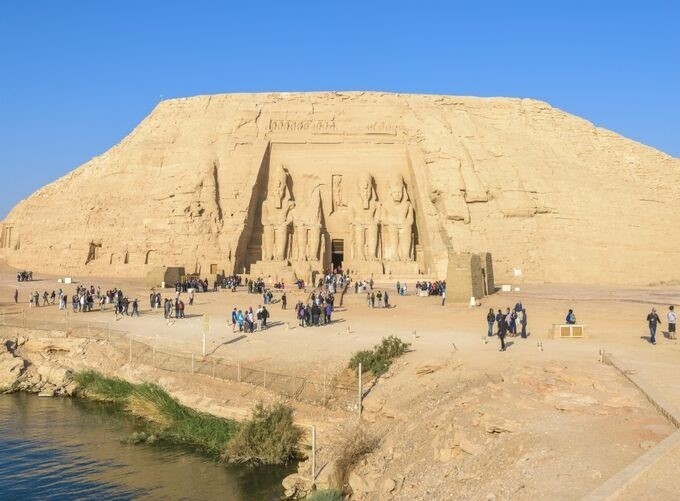
Cairo. Alexandria. Luxor. Aswan. Abu Simbel. Hurghada.
It looks like excellent value.
Then you remember that human beings have to travel between the pins.
Every additional city introduces movement, another accommodation decision and another piece of the journey that needs enough time to justify its existence.
This is why the best Egyptian cities cannot sensibly be ranked from one to ten.
Cairo earns its place through scale, contrast and extraordinary historical access. Luxor serves travelers whose interest in ancient Egypt deserves serious space. Aswan changes geography and rhythm. Alexandria adds Mediterranean and historical layers absent elsewhere. A coastal base such as Hurghada may deserve the same three nights for the opposite reason: because you want several days in which nobody explains a temple.
Start there.
Ask what each city is doing for the journey.
Then remove the places whose answers sound weak.
An itinerary becomes more personal not when you add everything you might enjoy, but when you become comfortable leaving out the places you do not need.
Questions to Ask When the Itinerary Has Too Many City Names
1. Do I need both Cairo and Alexandria on a first trip to Egypt?
No. Cairo usually has a stronger claim on limited first-trip time, while Alexandria becomes worthwhile when Mediterranean Egypt, Greco-Roman history or the city's distinct character genuinely interests you. Include Alexandria because its differences matter to you, not simply because it is another major city.
2. If time is limited, should I choose Luxor or Alexandria?
For travelers whose main motivation is ancient Egyptian archaeology, Luxor usually serves that priority more directly. Alexandria contributes a very different Mediterranean and historical layer, so it becomes the stronger choice when variety beyond the predominantly pharaonic route matters more to you.
3. Is Aswan worth staying in if my trip already includes a Nile cruise?
Often, but cruise timing determines the answer. Embarkation or disembarkation does not necessarily provide meaningful time in Aswan. Look at the actual usable hours available rather than assuming that arriving or departing there means you have properly experienced the destination.
4. Can I visit Egypt without spending several days in Cairo?
Yes, depending on your priorities and flight arrangements, although Cairo and nearby Giza provide experiences difficult to reproduce elsewhere. A shorter Cairo stay works better when you deliberately prioritize specific experiences rather than attempting to compress every major attraction into limited time.
5. Does Luxor work as a conventional city break?
That is not how most international travelers primarily use it. Luxor functions largely as a base for an exceptional concentration of archaeological sites and monuments, so its daily rhythm is often shaped more by ancient Egypt than by conventional urban exploration.
6. When is Alexandria worth the additional travel time?
Alexandria earns the detour when its Mediterranean setting and historical layers provide a contrast you actively want. On a short archaeology-focused first journey, the same time may be more valuable in Cairo, Luxor or Aswan, depending on your priorities.
7. Why do some travelers want more time in Aswan after arriving?
Aswan can feel less demanding than destinations dominated by dense sightseeing schedules. The Nile, southern setting and different pace can become more valuable after several intensive touring days, even though those qualities may appear less impressive when initially reading an itinerary.
8. Should I add Hurghada instead of another cultural city?
Consider Hurghada when the trip needs contrast rather than another layer of sightseeing. Several Red Sea nights can provide deliberate downtime after an archaeology-heavy route, while Alexandria or Aswan would add further cultural experiences instead. The better choice depends on what the itinerary currently lacks.
9. Is one hotel night enough for an Egyptian city?
Occasionally, but one night often provides very little usable time once arrival and departure logistics are considered. Before accepting a one-night stop, calculate the actual hours available and decide whether the experience justifies the additional packing, transfer and hotel change.
10. Which Egyptian cities provide the most genuinely different experiences?
Cairo, Alexandria, Luxor and Aswan complement one another particularly well because their roles differ: enormous contemporary capital, Mediterranean historical city, archaeology-centered destination and slower southern Nile city. That does not mean every traveler needs all four in a single journey.
11. How can I tell if I am including too many cities?
Look for repeated one- or two-night stays, sightseeing immediately after long transfers and destinations included mainly because they are famous. If removing one city creates substantially better usable time everywhere else, the itinerary was probably asking too much of its original length.
12. Which city should I remove first when my Egypt itinerary becomes too long?
Remove the city whose contribution overlaps least with your priorities, not automatically the smallest or least famous one. For many archaeology-focused first trips Alexandria may be optional, while another traveler specifically seeking Mediterranean Egypt could reasonably protect it and shorten somewhere else.

A travel professional specializing in tailor-made travel planning, guest experience management, and multi-destination tourism operations.
With over 23 years of experience in the travel industry, he designs and manages private and cultural tours for international travelers across Türkiye, Greece, Egypt, Jordan, Morocco, and other destinations.
He has strong expertise in both online and face-to-face guest communication, sales processes, and end-to-end travel operations.
Working closely with hotels, travel agencies, and local partners, he ensures smooth coordination and high-quality travel experiences at every stage of the journey.
His focus is on delivering personalized, reliable, and seamless travel experiences for international guests worldwide.