A July Holiday in Sharm El Sheikh Revolves Around the Water
Updated: August 12, 2026
There is a point in summer when the Red Sea stops being one of several reasons to visit Sharm El Sheikh and begins influencing almost everything about the way a resort holiday unfolds. July is firmly within that period.
The heat is established, the sea has absorbed months of warmth, evenings remain warm, and swimming no longer needs to be reserved for whichever part of the day happens to feel most comfortable. Instead, water becomes woven into ordinary resort life. You may swim before settling down with a book, return to the pool after lunch, spend part of the afternoon near the reef, and finish the day realizing that no single session felt like a scheduled activity.
That distinction gives July its own place within the Sharm El Sheikh weather cluster. June was primarily about responding intelligently to stronger solar exposure, whereas July is about something more fundamental: how a peak-summer holiday changes when access to water becomes the organizing feature of the day.
Daytime temperatures frequently reach the upper 30s°C and can climb higher, while rainfall is exceptionally rare. The Red Sea is thoroughly warmed by this stage of summer, and nights remain far removed from the cooler evenings of winter and early spring. Those numbers provide useful context, but they do not explain why July feels so different from the months immediately before it.
To understand July properly, you need to look at the rhythm of the holiday rather than the thermometer.
The Red Sea Moves From Activity to Routine
During cooler months, travelers often make a conscious decision about when to swim. They wait until conditions feel inviting, organize snorkeling around a suitable part of the day, or treat a visit to the reef as a defined experience with a beginning and an end.
July gradually removes that formality.
Swimming can become something you do repeatedly and spontaneously because there is little reason to preserve one particular water window. If you have been reading beside the pool for a while, a short swim feels natural. After returning from lunch, the sea may be more appealing than going directly back to the room. Later, another entry can happen simply because the water is nearby.
This is not necessarily about spending more total time swimming. The more important change is that water becomes integrated into the spaces between other parts of the day.
For travelers considering a Sharm Red Sea summer stay, that difference can shape the holiday far more than a small variation in average temperature.
Resort Layout Matters Differently in July
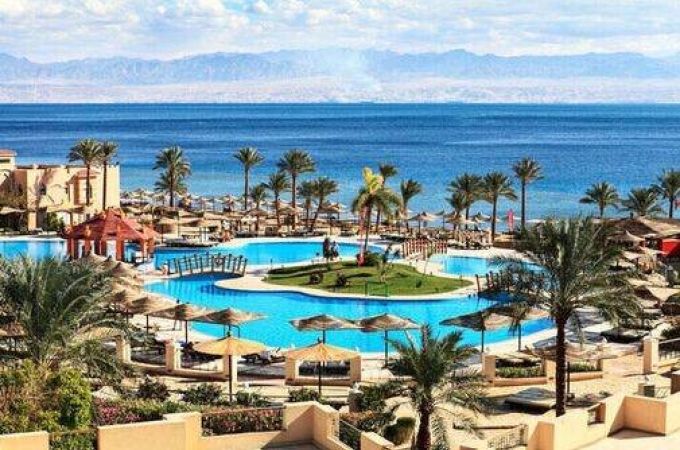
Hotel photographs tend to encourage travelers to evaluate each facility separately. There is the beach, the main swimming pool, the room, several restaurants and perhaps a reef-access jetty somewhere beyond the shoreline.
In July, the relationship between those facilities deserves as much attention as their individual quality.
A resort where the beach, pool, shaded seating and lunch venue are easily connected allows the day to unfold with very little effort. You can leave the water, sit somewhere protected, eat without making a major transition and return to swimming later without feeling as though you are beginning another excursion.
At a very large property, the same activities may involve considerably more movement through exposed outdoor areas. That does not make a large resort unsuitable, but it can change the way you use it during peak summer.
How Resort Design Can Shape a July Stay
| Resort Feature | Why It Becomes Useful in July |
|---|---|
| Easy beach access | Encourages shorter, repeated sea sessions |
| Pool close to the room | Makes spontaneous swimming effortless |
| Nearby shaded seating | Connects water time with comfortable rest |
| Convenient lunch venue | Prevents meals from ending the resort day |
| Short internal routes | Reduces unnecessary exposed walking |
| Accessible reef entry | Makes snorkeling easier to fit around other plans |
This is not a hotel-ranking formula. A traveler interested primarily in diving may evaluate a resort very differently from a family whose children want constant access to a swimming pool.
July simply makes practical movement more noticeable.
Why Several Short Swims Can Beat One Long Beach Session
The traditional image of a summer resort holiday often involves occupying the same sun lounger for much of the day, with occasional swims providing a break from the beach.
July in Sharm can work better when that pattern is reversed.
Instead of making the sun lounger your permanent base and the water your temporary escape, you can allow the sea or pool to punctuate the day repeatedly. A swim may be followed by time in the shade, lunch may separate two water sessions, and a quiet period in the room can make returning to the beach later feel like a fresh part of the holiday.
This fragmented rhythm is particularly useful for travelers who love being around the sea but have little interest in spending several uninterrupted hours under direct sunshine.
It also makes the day feel surprisingly varied without requiring a long list of activities.
The Pool Has a Different Purpose From the Sea
There is sometimes a strange assumption that using the hotel pool in Sharm El Sheikh means missing the Red Sea experience.
In July, the two can complement each other extremely well.
The Red Sea provides what makes the destination distinctive: open water, reef environments and a sense of place that no swimming pool can reproduce. The pool provides convenience, particularly when you want a brief swim without preparing for reef access or walking farther through the resort.
A traveler may therefore spend the morning around the sea, use the pool briefly after lunch and return to the beachfront later. Nothing has been sacrificed; each water environment has simply served a different purpose.
For families on a Sinai summer family escape, this flexibility can be especially valuable because children rarely organize their desire to swim according to an adult itinerary.
Lunch Can Divide the Day Without Breaking It
July encourages a different relationship with lunchtime.
Instead of seeing lunch as the moment when the morning beach session ends, it can function as a comfortable midpoint between two outdoor periods. A shaded or indoor meal provides time away from continuous activity, after which there is no climatic reason to regard the day's relationship with the water as finished.
This creates a subtle psychological advantage.
Returning to the sea after a proper break often feels more appealing than trying to extend one uninterrupted beach session simply because you are reluctant to leave your sun lounger. The holiday becomes less about endurance and more about repeated enjoyment.
A well-positioned restaurant can contribute significantly to this rhythm, which is another reason the physical layout of the resort deserves attention in July.
July Doesn't Need to Produce a Busy Itinerary
Travelers accustomed to cultural touring sometimes need a few days to adjust to a resort holiday because there is less visible evidence of accomplishment.
A city itinerary may produce museums, monuments, neighborhoods and photographs of several different locations. A July day in Sharm might contain a long breakfast, two or three swims, time beside the reef, lunch, reading, conversation, another visit to the pool and dinner outdoors.
On paper, the second day appears to contain very little.
In practice, that may be precisely what the traveler came to the Red Sea to experience.
This is particularly relevant when considering a Red Sea relaxation holiday. Adding activities simply to make the itinerary appear fuller can undermine the reason for choosing a resort destination in the first place.
July gives travelers permission to measure the day by how it felt rather than by how many places they visited.
Families Often Understand July Before Adults Do
Children have a useful habit of ignoring artificial distinctions between scheduled and unscheduled swimming.
If water is available and conditions are inviting, they want to use it. They may move from breakfast to the pool, later ask for the sea, return to the room briefly and want another swim before dinner.
Adults frequently arrive with a more structured idea of the day, but July often pulls the whole family toward this looser rhythm.
For parents, that makes proximity valuable. A room near the pool, easy access to food and useful shaded areas can reduce the amount of organization required every time someone wants to change activity.
A resort that functions smoothly can therefore be more valuable than one that simply offers the longest list of facilities.
Warm Evenings Change the End of the Resort Day
July does not create a sharp divide between daytime resort life and the evening.
After the stronger daylight hours pass, the atmosphere changes but outdoor life continues comfortably. Dinner terraces, resort walks and open-air seating can become extensions of the same day rather than a separate evening program that begins only after everyone has retreated indoors.
This continuity matters because it makes July feel expansive even when you deliberately avoid filling the daytime with scheduled activities.
A slow afternoon can lead naturally into an outdoor dinner without the sense that the holiday stopped for several hours in between.
What July Owns in This 12-Month Cluster
July should not become another article explaining that Sharm El Sheikh is extremely sunny in summer. June already deals specifically with the stronger sun and the logic of distributing exposure, while August will examine what happens when the Red Sea itself reaches its deeply warmed late-summer character and prolonged water activity becomes a different consideration.
July belongs between them.
Its distinctive story is the water-first resort day: a holiday in which swimming stops requiring a dedicated slot, resort convenience becomes more important, meals and rest divide rather than terminate water time, and the Red Sea repeatedly draws you back throughout the day.
That is what peak summer changes in Sharm El Sheikh. The temperature may explain why it happens, but the resulting rhythm is what travelers actually experience.
July Works Better When the Resort Requires Less Effort
By the middle of a July stay, travelers often discover that seemingly minor hotel details influence the holiday more than expected. A beach that requires a long walk from the room, a restaurant located far from the main pool, or a reef entry that involves crossing a large exposed area may seem insignificant when comparing hotels online, yet these distances are repeated several times every day.
This is why convenience has a different meaning during peak summer. It is not simply about having facilities available; it is about whether those facilities work together naturally enough that moving between them never becomes an event in itself.
For couples who expect to spend most of the day beside the Red Sea, direct access to the beach may matter most. Families may value a room within easy reach of both the pool and somewhere to eat, while travelers primarily interested in snorkeling might accept a longer walk elsewhere in exchange for convenient reef access.
There is no universally perfect July resort layout. The useful question is whether the hotel's geography matches the way you expect to spend your day.
A Resort Day Can Have Several Beginnings
One of the pleasures of July is that the afternoon does not necessarily feel like the leftover portion of the morning.
After several hours around the sea, a long lunch or a genuine rest can create enough separation for the later part of the day to feel fresh again. Travelers who resist taking that break sometimes find themselves tired surprisingly early, whereas those who allow the day to divide naturally often return to the water with much more enthusiasm.
This is particularly useful on longer stays. Seven consecutive days of trying to maximize every beach hour can become repetitive even for committed sun-and-sea travelers, while a looser rhythm allows the same resort to feel different at various points of the day.
The aim is not to create another timetable. July works precisely because you can stop treating every hour as something that needs to be allocated.
Decide What Deserves a Full Day
Peak summer can make resort life so effortless that leaving the property requires a more deliberate decision.
That is not an argument against excursions. It simply means that an activity taking most of the day should offer something you genuinely value, because it replaces a resort environment that is already providing much of what many July visitors came to Sharm to enjoy.
A useful way to think about the choice is through what each type of day contributes.
| Type of Day | What It Adds to a July Holiday | What You Give Up |
|---|---|---|
| Unstructured resort day | Maximum freedom to swim and rest | Variety away from hotel |
| Reef-focused day | More purposeful Red Sea experience | Some spontaneous resort time |
| Boat excursion | Different marine scenery and locations | Most of a resort day |
| Partial-day outing | Change of environment | Less disruption to water-first rhythm |
The point is not to rank them. A good July itinerary may contain several types, but there is little reason to book excursions simply to prevent the schedule from looking empty.
Repeated Swimming Changes What You Pack
A July suitcase does not need to be complicated, although the way swimwear is used deserves some thought.
If you expect to enter the water several times, having more than one comfortable option makes it easier to change rather than remaining in wet swimwear between meals or periods of rest. Lightweight clothing that can be put on easily over beachwear also suits a day that involves frequent movement between the pool, restaurant, room and sea.
Sun protection remains essential, of course, but June's article owns the deeper discussion of solar exposure. For July, the more distinctive packing question is whether your clothing supports a holiday in which you may move in and out of the water repeatedly rather than preparing for one formal beach session.
That small difference can make resort life considerably easier.
Not Every Swim Needs to Become Snorkeling
Sharm's reefs understandably attract attention, and travelers may arrive believing that every entry into the Red Sea should involve a mask and a search for marine life.
There is no need to make the water work that hard.
Some swims can simply be swims.
You may want a longer snorkeling session when you have the energy and interest, followed later by ten relaxed minutes in the sea with no objective beyond enjoying the water. Keeping those experiences separate prevents the reef from becoming another attraction that needs to be “completed.”
July's warm-water routine is particularly compatible with this distinction because there are so many opportunities to return.
The Evening Doesn't Need to Compensate for a Quiet Day
Another city-break habit sometimes follows travelers to resort destinations: if the daytime itinerary was relaxed, the evening must contain entertainment to make the day feel worthwhile.
July does not require that trade.
After a day spent repeatedly between water, meals and relaxation, an outdoor dinner followed by a walk or a quiet drink may feel complete enough. Other nights may naturally call for a livelier evening or time away from the resort.
Allowing those differences gives a longer Sharm stay a more human rhythm. Holidays rarely become memorable because every day contained the same amount of activity.
Often, the quieter days are the ones people were actually trying to create when they booked a Red Sea resort in the first place.
By July, “Beach Holiday” Means More Than Sitting on a Beach
This is ultimately what distinguishes the month.
A successful July stay may involve surprisingly little traditional sunbathing compared with the amount of time spent around water. The sea, pool, shaded areas, restaurant terraces and room function together, allowing you to change environment whenever you want without abandoning the resort experience.
The Red Sea remains the geographical center of the holiday, but you do not have to stare at it from the same sun lounger for six hours to make the most of it.
That freedom is what gives July its particular character.
July Questions Travelers Actually Ask
1. How hot does Sharm El Sheikh feel in July?
July brings established summer heat, with daytime temperatures frequently reaching the upper 30s°C and sometimes higher. How the heat feels depends heavily on what you are doing, since swimming and resort-based relaxation create a very different experience from extended land activities.
2. Is July too hot for a Sharm El Sheikh resort holiday?
For travelers comfortable with strong summer temperatures and interested primarily in the Red Sea, pools and resort relaxation, July can work well. Those wanting extensive daytime sightseeing or who strongly dislike heat may find the conditions less suited to their preferred travel style.
3. Is the Red Sea warm enough for long swims in July?
The Red Sea is thoroughly warmed by July, so concerns about cold water generally recede for most visitors. Individual preferences always differ, but swimming becomes easy to integrate repeatedly into the day rather than requiring the careful timing sometimes associated with cooler months.
4. Should I choose a hotel close to the beach in July?
It is worth considering if you expect frequent sea access. July can involve several transitions between swimming, meals, shade and the room, so reducing unnecessary walking may make the resort feel noticeably easier to use throughout a longer stay.
5. Is a hotel pool still important when the Red Sea is so warm?
Yes, because the pool serves a different purpose. The sea provides the distinctive Red Sea experience, while a conveniently located pool allows quick, spontaneous swims that fit easily between meals, rest periods and other parts of the resort day.
6. Can children comfortably enjoy Sharm El Sheikh in July?
Families accustomed to hot-weather holidays can enjoy July, especially at resorts with convenient pools, useful shade and short distances between key facilities. Parents should plan around their children's individual tolerance rather than assuming every child responds to peak-summer conditions identically.
7. Should every Red Sea swim include snorkeling?
Not at all. Snorkeling can remain an important part of the holiday without turning every water entry into a reef activity. July provides enough swimming opportunities that some sessions can be short and completely recreational while others are dedicated to marine life.
8. Are excursions worth doing during a July resort stay?
They can be, provided the experience genuinely interests you. Because July resort life already revolves naturally around water and relaxation, full-day excursions are best chosen for what they add rather than simply because you feel the itinerary needs another scheduled activity.
9. What should I wear around a Sharm resort in July?
Lightweight summer clothing and swimwear will form most of the daytime wardrobe. Clothing that is easy to change into after swimming is particularly practical because many July travelers move between the sea, pool, restaurants and their room several times throughout the day.
10. Does it cool down significantly at night in July?
Evenings generally remain warm, so outdoor resort life can continue comfortably after the strongest daytime conditions have passed. This gives July a sense of continuity, with dinner and evening relaxation developing naturally from the resort day rather than requiring a major seasonal clothing change.
11. How many beach or pool sessions make sense in one day?
There is no useful target. Some travelers prefer one long period around the water, while others naturally swim several times between meals and rest. July's advantage is that water access can remain spontaneous rather than being concentrated into a predetermined daily window.
12. How is July different from June in Sharm El Sheikh?
June's defining issue is the growing importance of solar exposure, shade and intelligent activity timing as summer strengthens. July owns a different experience: water becomes the organizing thread of the resort day, with repeated swimming, convenient hotel layout, meals and rest naturally arranging themselves around access to the Red Sea and pool.

A travel professional specializing in tailor-made travel planning, guest experience management, and multi-destination tourism operations.
With over 23 years of experience in the travel industry, he designs and manages private and cultural tours for international travelers across Türkiye, Greece, Egypt, Jordan, Morocco, and other destinations.
He has strong expertise in both online and face-to-face guest communication, sales processes, and end-to-end travel operations.
Working closely with hotels, travel agencies, and local partners, he ensures smooth coordination and high-quality travel experiences at every stage of the journey.
His focus is on delivering personalized, reliable, and seamless travel experiences for international guests worldwide.