Antalya Weather in November: Beyond the Beach Season
Last Updated: August 10, 2026
November asks Antalya a question that summer never needs to answer: what kind of destination are you when nobody expects the beach to carry the entire holiday?
The answer is more substantial than many first-time visitors imagine.
The Mediterranean remains visible, and on mild days the coast can still feel pleasant enough for long walks, café stops or time around the harbour. Yet swimming, resort pools and boat schedules no longer deserve to sit at the centre of every plan. Instead, archaeology moves forward, Kaleiçi becomes easier to explore at length, regional food begins to matter more, and the wider Antalya landscape starts functioning as a cultural destination rather than a support act to the beach.
This is precisely why November should not be written as a failed summer month.
It is not summer failing.
It is the coast changing jobs.
The Beach Stops Leading the Conversation
From May through October, even when weather conditions shift, the Mediterranean still influences most Antalya decisions.
November changes that relationship.
A beach can still be worth visiting, particularly on a mild, bright day, but there is no longer an assumption that every traveller needs to reserve hours for swimming or sunbathing. Once that pressure disappears, the itinerary becomes freer in a completely different way.
A museum afternoon does not feel like lost beach time.
A long archaeological day no longer competes with the sea.
A two-hour lunch does not require justification because the sun is not demanding that everyone return outside immediately.
This is November’s strongest structural change.
Antalya Without Beach Pressure
| Travel Element | Beach-Season Antalya | November Antalya |
|---|---|---|
| Main daily anchor | Sea, pool or coast | Culture, history or landscape |
| Archaeology | Often scheduled around heat | Can become the main event |
| Kaleiçi | Frequently morning/evening focused | Comfortable for longer visits |
| Lunch | Often part of cooling strategy | Can become a cultural experience |
| Coastal time | Central | Optional but atmospheric |
| Resort facilities | Major holiday value | More variable and less essential |
| Day trips | Balanced with beach plans | Easier to prioritise |
| Evening | Strong summer social rhythm | Quieter, more local-feeling |
The month therefore changes not only weather expectations but also the hierarchy of the trip.
November Is When Antalya Starts Feeling Like a City Again
Peak-season Antalya can be so strongly associated with resorts and beaches that visitors sometimes forget the region contains a large, lived-in city with neighbourhoods, museums, food traditions and a historical centre that exists independently of summer tourism.
November brings that side forward.
Kaleiçi is particularly rewarding because the lower heat allows travellers to linger. Instead of walking quickly between Hadrian’s Gate, the old harbour and familiar photo points, there is more room to stop in smaller streets, sit somewhere unplanned and notice how the district functions outside peak visitor intensity.
Travellers interested in this more cultural side of the city can consider Antalya culture and history tours, especially when the purpose is to connect the old town with nearby archaeological and historical context rather than using it as a short evening stop.
Archaeology Becomes the Main Course
November is extremely strong for travellers who care about ancient history.
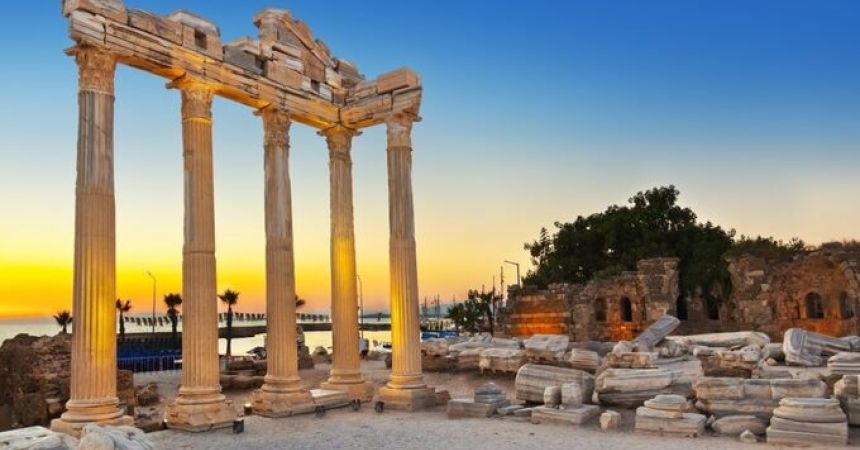
Perge, Aspendos and Side can be explored without the physical stress associated with summer heat, while cooler conditions often make long periods outdoors far more manageable. The trade-off is greater weather variability and shorter daylight, but neither necessarily diminishes the experience when the itinerary is sensibly structured.
The difference is psychological too.
In July, visitors may leave an ancient site because the heat is tiring.
In November, they are more likely to leave because they have actually finished exploring it.
That is a better reason.
The Coast Still Matters, Just Differently
It would be a mistake to remove the Mediterranean from the November story entirely.
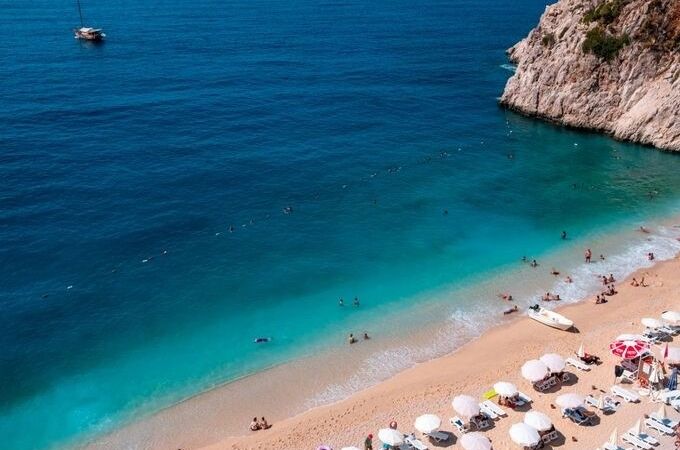
The coast remains one of Antalya’s defining visual elements, but its role becomes scenic rather than recreational for most visitors. A walk along Konyaaltı, time beside the old harbour or a coastal road trip can be excellent on clear days, especially when visibility towards the mountains is strong.
The sea becomes something that shapes the setting rather than dictating the schedule.
That is a very different relationship from October, when swimming and beach days can still be central enough to influence the whole trip.
What Moves Forward in November?
| Experience | November Importance | Why |
| Archaeological sites | Very High | Cool conditions improve exploration |
| Kaleiçi | Very High | Longer comfortable walking |
| Museums | High | Weather-independent cultural value |
| Food experiences | High | Meals gain more space in the itinerary |
| Waterfalls | High | Wetter season can add interest |
| Coastal walks | Medium–High | Scenic rather than swimming-focused |
| Boat trips | Variable | More weather and operator dependent |
| Beach lounging | Low | No longer the main seasonal value |
| Resort pools | Variable | Facilities and temperatures matter |
This is the most important November table because it explains how the destination’s internal hierarchy changes once the beach stops leading.
Rain Makes Nature More Relevant, Not Less
November belongs more clearly to Antalya’s wetter seasonal pattern, which naturally affects outdoor plans.
Yet rain is not simply a negative variable.
Waterfalls can gain stronger flow, vegetation can begin looking fresher after the dry summer months, and the broader landscape can feel more active than it did at the end of summer.
A wet morning may complicate archaeology, but it can make a later waterfall visit more rewarding.
This is one reason November works best when travellers stop thinking in terms of “good weather versus bad weather” and instead ask what each type of weather makes more interesting.
The Mountains Become Part of the Experience Again
By November, the contrast between the Mediterranean coast and higher parts of the Taurus Mountains becomes more noticeable.
The coast may remain relatively mild while elevations turn much colder, especially during unsettled periods. This creates a strong visual and climatic split that summer often disguises.
Travellers heading inland or higher should therefore treat the coast forecast as only one layer of information.
A mild day in Antalya itself does not mean the same clothing or conditions will apply across the wider region.
November is a month when geography becomes visibly seasonal.
The November Food Shift
Food also changes position in the itinerary.
During summer, lunch can function as a practical break from heat, while dinner often belongs to long outdoor evenings.
In November, meals can occupy more cultural space.
Travellers can sit longer without feeling that they are sacrificing ideal beach weather. Local restaurants, regional dishes and neighbourhood dining become easier to prioritise, particularly on days when rain or cooler conditions interrupt outdoor exploration.
The meal stops being a pause from Antalya.
It becomes another way of experiencing Antalya.
November Gives Museums More Value Without Turning the Trip Indoors
Antalya Museum becomes particularly useful in this season, but not merely because it has a roof.
The museum helps connect the archaeological sites scattered across the region, giving historical depth to what visitors may have seen at Perge, Aspendos or other ancient locations.
That makes November a good month to integrate museum time deliberately rather than treating it as emergency bad-weather programming.
A cultural trip works better when indoor and outdoor history reinforce one another.
The November Day Should Be Built Around One Strong Idea
Peak summer can encourage highly segmented days because the weather forces activity changes.
November can be simpler.
Choose one central idea and let the day develop around it.
An archaeology day can remain an archaeology day. A Kaleiçi-and-city day can include the museum, local food and walking without needing to add the beach. A nature-focused day can combine waterfalls and scenic areas depending on conditions.
This is one of the benefits of removing beach pressure.
The itinerary stops multitasking.
Antalya in November: What Depends on Weather?
| Experience | Weather Sensitivity | November Planning Style |
| Perge / exposed ruins | High | Prefer dry forecast |
| Kaleiçi walking | Medium | Works in shorter chapters |
| Museum | Low | Easy anchor |
| Waterfalls | Medium | Can benefit from recent rain |
| Coastal drive | Medium | Better with good visibility |
| Long lunch | Low | Strong all-weather option |
| Boat excursion | High | Check actual operation and marine conditions |
The month does not need a backup itinerary.
It needs several different types of worthwhile day.
November Is Strong for Repeat Visitors
Visitors who have already experienced Antalya in summer may appreciate November more than first-time beach travellers expect.
The obvious holiday structures disappear.
There is less pressure to spend every good afternoon by the sea, which creates more space for the old city, museums, archaeology, local restaurants and regional road trips.
The destination becomes easier to revisit because the agenda changes.
You are not repeating the summer trip under cooler weather.
You are seeing a different Antalya.
Resort Travel Becomes More Property-Specific
November is one of the months when visitors should stop treating “Antalya resorts” as one uniform category.
Some hotels continue operating extensively with indoor facilities, spa services, restaurants and year-round programmes. Others reduce seasonal services or may close particular outdoor areas.
The weather alone cannot answer whether a resort suits a November holiday.
The property itself matters.
Before booking, travellers should check exactly which facilities operate during their dates, especially if heated pools, indoor pools, kids’ services or entertainment are essential.
November Works Well for Culture-First Travellers
This is where Antalya November tours fit naturally.
Travellers who came for historical sites, city exploration and regional landscapes can use November conditions to spend more meaningful time on land without the scheduling pressure of peak heat or the psychological pull of beach weather.
The month rewards visitors who want to explore Antalya rather than consume its summer version.
That distinction is small in wording and large in experience.
November Can Be the Cultural Coast in a Longer Turkey Journey
For travellers moving through several destinations, Antalya no longer needs to perform as the “beach chapter” of the itinerary.
Instead, it can become the Mediterranean cultural chapter.
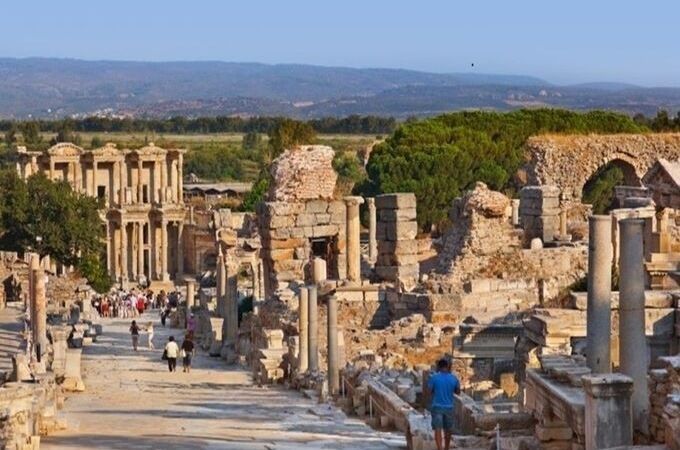
Broader Turkey off-season tours can connect Istanbul, Cappadocia, Ephesus and Antalya without requiring the southern coast to offer swimming in order to justify its place.
Antalya contributes archaeology, Roman history, Mediterranean landscapes, waterfalls and a slower urban rhythm.
That is enough.
November Is Not December
The boundary here matters.
December will own “Winter by the Sea.”
By then, the Mediterranean winter identity itself becomes the subject: shorter days, cooler conditions, rain, city-and-coast winter rhythm and what Antalya feels like when winter is fully part of the destination.
November is still autumn.
Its story is not winter.
Its story is what happens after beach pressure disappears.
That distinction protects both months.
The Sea Steps Back, and Antalya Gets Larger
At first glance, losing beach certainty sounds like a reduction.
In practice, November can make Antalya feel larger.
The old city gains hours.
Archaeology gains attention.
Food gains space.
Road trips become more interesting, and the coast becomes scenery that can be appreciated without being used.
This is why November should never be sold as a cheap or quiet version of summer.
It is not trying to be summer at all.
Once the beach stops leading the itinerary, Antalya begins revealing everything that was standing behind it.
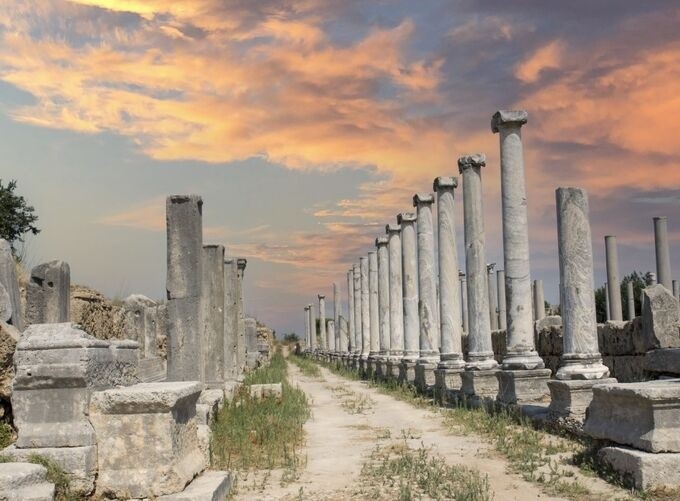
November Is a Better Fit for Some Travellers Than Summer
The strongest November visitors are usually not people trying to recreate July under cooler conditions.
They are travellers who genuinely enjoy cities, archaeological sites, food, museums, coastal drives and slower days in which the Mediterranean is present without needing to dominate every decision.
That distinction matters because November rewards curiosity more than beach ambition.
A traveller who would happily spend three hours at Perge, continue to lunch without watching the clock and then wander Kaleiçi until evening may discover that the month suits them unusually well. Someone whose ideal Antalya holiday depends on reliable swimming and daily pool time is choosing against the season rather than with it.
Who November Really Suits
| Traveller Type | November Fit | Main Advantage |
|---|---|---|
| Archaeology enthusiast | Excellent | Cooler conditions suit exposed sites |
| History-focused couple | Excellent | Longer cultural days feel natural |
| Repeat Antalya visitor | Excellent | Different rhythm from peak season |
| Food-focused traveller | Very good | Meals gain more space |
| Urban explorer | Very good | Kaleiçi and city streets become easier |
| Nature-oriented visitor | Good | Wetter-season landscapes add variety |
| Family focused on culture | Good | Indoor and outdoor options can alternate |
| Resort-first traveller | Property dependent | Winter facilities matter |
| Beach-first visitor | Limited | Swimming is no longer the main seasonal strength |
This is not a ranking of travel styles.
It is a reminder that November has a much clearer cultural identity than a resort identity.
A Four-Day November Trip Can Be More Coherent Than a Four-Day Summer Trip
Summer often encourages travellers to divide each day into fragments because heat, swimming and evening activity compete for the same hours.
November allows broader themes.
One day can belong to ancient cities.
Another can stay almost entirely within Antalya itself.
A third can follow waterfalls and landscape, while a fourth remains flexible enough to respond to weather or personal interests.
The benefit is continuity.
You spend less time switching modes and more time understanding the places already in front of you.
November Is Good for Thematic Travel
This is one of the month’s underrated advantages.
Instead of collecting unrelated attractions, travellers can organise days around ideas.
A November Theme Map
| Day Theme | Natural Components |
| Roman Antalya | Perge, Aspendos, museum context |
| Old Antalya | Kaleiçi, harbour, historic streets |
| Water & Landscape | Waterfalls, coast, viewpoints |
| Regional History | Side or another archaeological zone |
| Food & City Life | Markets, neighbourhood meals, cafés |
| Flexible Weather Day | Museum, shorter walks, long lunch |
This format belongs especially well to November because the trip no longer needs to repeatedly return to the beach as a default activity.
November Is One of the Better Months for Travellers Who Like Long Lunches
That may sound trivial until you consider how travel days actually feel.
A long lunch in midsummer can create anxiety because the best beach hours are disappearing outside. In November, there is much less pressure to consume the day continuously.
That allows meals to become part of the destination.
Regional dishes, local restaurants and conversations can take more time without creating the sense that sightseeing has stalled.
For food-oriented travellers, this change can noticeably improve the entire pace of the trip.
Resort Holidays Need a Different Kind of Research
A November resort should be chosen according to what remains valuable when outdoor summer facilities are no longer the central attraction.
An indoor pool, spa, strong restaurant programme, comfortable common areas and year-round services may matter more than a large beach club or multiple outdoor pools.
This changes the booking logic.
November Resort Value
| Facility | Summer Importance | November Importance |
| Beach access | Very High | Moderate |
| Outdoor pools | Very High | Weather/facility dependent |
| Indoor heated pool | Low–Medium | Very High |
| Spa / hammam | Medium | High |
| Indoor restaurants | Medium | High |
| City / excursion access | Medium | Very High |
| Comfortable indoor spaces | Low | High |
| All-day outdoor entertainment | High | Lower |
The hotel does not become less important.
Different parts of the hotel become important.
November Can Work Very Well for Couples
Couples who enjoy a city-break rhythm may find November particularly natural.
There is enough variety for several distinct days, while fewer beach expectations create more room for restaurants, historical sites and spontaneous stops.
A rainy afternoon does not necessarily damage the trip if both travellers are happy to spend longer over lunch, move a museum forward or shorten the outdoor portion of the day.
The month rewards people who enjoy the destination more than the schedule.
Families Need a Different November Formula
Families can also enjoy Antalya during November, although success depends less on resort entertainment and more on how well the days alternate.
Several hours at an archaeological site may interest adults while exhausting younger travellers. A museum can provide cultural depth but should not automatically be followed by another information-heavy interior.
Waterfalls, short coastal walks, food stops and open spaces can provide useful contrast.
The family itinerary should therefore be varied rather than simply indoor.
November vs October vs December
This is the most important cluster boundary for the final part of the article.
| Month | Core Ownership | Coast's Role | Land's Role |
| October | Long Mediterranean Goodbye | Still a major holiday component | Strong and improving |
| November | Coast Without Beach Pressure | Scenic and optional | Main travel value |
| December | Winter by the Sea | Part of winter atmosphere | Culture + winter city rhythm |
October still asks whether summer can continue.
November stops asking.
December will go further and make Mediterranean winter itself the subject.
That gives each month a different job.
November Is Not an “Empty Antalya” Month
Lower seasonal intensity can create the mistaken impression that the destination has somehow closed.
Antalya remains a major city, and the historical, archaeological and cultural reasons for visiting do not disappear because beach demand falls.
What changes is the tourism layer around them.
Some resort services may reduce, boat operations may become more weather dependent and beach facilities may feel quieter.
The city itself continues.
That difference is important for realistic expectations.
12 FAQs About Antalya Weather in November
1. Is November a good time to visit Antalya?
November can be an excellent choice for travellers interested in archaeology, history, Kaleiçi, food and regional sightseeing rather than a traditional beach holiday. Cooler conditions make long outdoor cultural days more manageable, although rain and shorter daylight mean the strongest itineraries benefit from flexibility and a mixture of indoor and outdoor experiences.
2. How warm is Antalya in November?
November is generally mild compared with colder European destinations, but conditions vary considerably between sunny afternoons, wet periods, coastal wind and cooler evenings. Visitors should expect autumn rather than summer and pack adaptable layers instead of assuming daytime warmth will continue unchanged after sunset.
3. Can you swim in Antalya in November?
Some visitors may still swim during mild periods, but November should not be chosen for dependable recreational swimming. Sea conditions and personal tolerance vary, while beach-focused facilities may also operate differently from peak season. The coast is better viewed as an atmospheric bonus than the main reason for the trip.
4. Does it rain a lot in Antalya in November?
Rain becomes a more significant part of Antalya’s seasonal pattern in November, although individual trips can vary greatly. Some stays may include several bright days, while others experience unsettled periods. Practical rain protection and flexible excursion planning are therefore more useful than expecting either constant sunshine or continuous wet weather.
5. Is November good for Perge and Aspendos?
Yes. November can be one of the more comfortable periods for exploring major archaeological sites because peak summer heat is absent. Dry conditions are preferable, especially for uneven or exposed areas, but cooler weather allows visitors to spend longer at the sites without structuring the visit around shade or midday heat.
6. Is Kaleiçi worth visiting in November?
Very much so. November can be particularly rewarding for Kaleiçi because the old town becomes easier to explore slowly without summer heat or constant beach pressure. Its streets, harbour, restaurants and historical architecture can form a substantial part of the day rather than merely an evening stop after coastal activities.
7. Are Antalya resorts open in November?
Many hotels remain open, but operations vary considerably by property. Some resorts maintain indoor pools, spas, restaurants and year-round programmes, while others reduce seasonal outdoor services. Travellers should verify the exact facilities important to them rather than assuming every resort operates exactly as it does during summer.
8. What should I wear in Antalya in November?
Layered clothing works best because daytime conditions can be mild while mornings, evenings and wet or windy periods feel noticeably cooler. Comfortable walking shoes, a practical outer layer and rain protection are useful for cultural sightseeing, while travellers heading to higher elevations should prepare for significantly colder conditions.
9. Is November suitable for families visiting Antalya?
Yes, particularly for families interested in history, museums, waterfalls and city exploration rather than swimming-focused holidays. The strongest family itineraries alternate cultural visits with lighter experiences and keep some flexibility for rainy periods. Choosing accommodation with useful indoor facilities can also improve the trip substantially.
10. Are boat trips available in November?
Some boat excursions may continue, but availability becomes more dependent on weather, marine conditions and individual operators. November visitors should avoid building the entire trip around a specific boat experience without checking current operations. Coastal scenery can still be enjoyed through road trips, viewpoints and harbour areas if sailing conditions are unsuitable.
11. Is November quieter than summer in Antalya?
Generally, beach and resort areas feel less intense than during peak summer, although Antalya remains a large working city and major attractions do not become empty. The quieter seasonal rhythm can appeal to travellers who prefer cultural exploration, longer meals and historical sites without the strongest summer tourism atmosphere.
12. Is November or December better for Antalya?
Choose November if you want late-autumn sightseeing with archaeology and city exploration at the centre of the trip. December moves more clearly into Mediterranean winter and will suit travellers who are comfortable with a stronger winter-city rhythm. Neither month should be selected primarily for guaranteed beach conditions.
November Makes Antalya More Honest
When the beach stops carrying the marketing image, the destination has to stand on everything else it possesses.
Antalya does this surprisingly well.
Roman cities remain scattered across the region. Kaleiçi still contains centuries of history. Museums provide context, waterfalls connect the city to its wetter seasonal landscape, and the Mediterranean continues shaping the horizon even when nobody expects to spend the afternoon swimming in it.
The trip simply becomes less distracted.
October can still tempt travellers into measuring the holiday by how many summer-like days they receive.
December will ask them to accept the coast fully as a winter destination.
November sits between those two attitudes and removes the argument altogether.
You can look at the sea without needing to enter it.
You can choose an archaeological day without feeling that the beach was wasted.
You can spend longer over lunch because the destination is no longer competing with a pool.
Once that pressure disappears, Antalya becomes less obviously a resort destination and much more clearly a Mediterranean cultural region.
For the right traveller, that is not what remains after summer.
It is what summer was hiding.

A travel professional specializing in tailor-made travel planning, guest experience management, and multi-destination tourism operations.
With over 23 years of experience in the travel industry, he designs and manages private and cultural tours for international travelers across Türkiye, Greece, Egypt, Jordan, Morocco, and other destinations.
He has strong expertise in both online and face-to-face guest communication, sales processes, and end-to-end travel operations.
Working closely with hotels, travel agencies, and local partners, he ensures smooth coordination and high-quality travel experiences at every stage of the journey.
His focus is on delivering personalized, reliable, and seamless travel experiences for international guests worldwide.