Istanbul Weather in September: Warm Days & Changing Evenings
Last Updated: August 9, 2026
September is difficult to describe with one photograph of Istanbul.
Take that photograph near the beginning of the month and you might capture people lingering beside the Bosphorus in distinctly summery conditions, restaurants still making full use of outdoor tables and travellers arranging their days around warm afternoons and long evenings.
Return several weeks later and the city may be telling a slightly different story. Daylight is gradually shortening, mornings can feel fresher, sightseeing on foot may become increasingly attractive, and carrying an additional layer begins to make more sense than it did during the height of summer.
Neither version is the “real” September.
They both are.
That is what makes this month unusually interesting for Istanbul: instead of belonging completely to one season, September allows travellers to experience summer gradually loosening its grip while autumn approaches without fully taking control.
September Has Two Addresses
The first address belongs to summer.
It faces the Bosphorus, stays outside after dinner and still treats shade as something worth noticing during warmer afternoons. The wardrobe remains relatively light, the waterfront continues to play an important role in the day, and the city can feel surprisingly close to its August personality.
The second address sits slightly further inland.
Here, walking becomes increasingly tempting for longer periods, historical sightseeing can feel less physically demanding, and the traveller starts thinking less about managing summer conditions and more about how much of Istanbul can comfortably be explored on foot.
The transition between these two versions is gradual rather than scheduled. Weather does not turn autumnal simply because a particular date appears on the calendar, which is why travellers should resist treating September 15 as an invisible seasonal border.
Early September Still Has Summer in Its Voice
Visitors arriving during the first part of September should not assume they have avoided Istanbul's summer character entirely.
Warm conditions can continue, direct sunshine may remain influential during long outdoor periods, and visitors who are sensitive to heat may still appreciate the summer habits that worked well in July and August: sensible hydration, sun protection, geographically efficient sightseeing and avoiding unnecessary physical effort.
The difference is that the city is beginning to offer more flexibility.
A long historical morning may feel easier to extend. An afternoon walk that would have required more careful consideration during peak summer can become increasingly appealing, while evenings still retain enough warmth to preserve much of Istanbul's outdoor atmosphere.
This combination explains why early September can suit travellers who want summer without necessarily choosing the heart of summer.
Then Something Begins to Shift
The change is often more noticeable in behaviour than in statistics.
You realise that you walked farther than expected without actively looking for shade. Lunch no longer needs to perform such an important recovery function, and a route involving several historical districts feels less ambitious than it might have several weeks earlier.
The Bosphorus remains appealing, but it no longer needs to rescue the itinerary from the intensity of the land-based day.
This is the September shift.
Summer experiences do not disappear; they simply stop dominating every planning decision.
The Two-Address September Guide
| Travel Question | Earlier September | Later September |
|---|---|---|
| Overall feeling | Late summer | Transitional |
| Long walking days | Increasingly manageable | Often more appealing |
| Midday sun awareness | Still important | Usually less dominant |
| Bosphorus time | Strong summer character | Scenic + transitional |
| Outdoor dining | Highly relevant | Still attractive, weather dependent |
| Evening layer | Often unnecessary | Increasingly useful |
| Rain flexibility | Sensible | More important |
| Sightseeing rhythm | Summer-influenced | More balanced |
This is not a forecast table.
An unusually warm late-September day can feel more summery than a cloudy afternoon earlier in the month, while individual weather systems can temporarily reverse the general seasonal progression.
The table describes the direction of travel rather than promising conditions for a specific date.
Historical Istanbul Starts Asking for More Time
One of the strongest advantages of September is that major historical districts can gradually become easier to explore at greater depth.
During peak summer, travellers often make sensible compromises because long periods outdoors, repeated hills and direct sunshine accumulate. As September progresses, those compromises may become less necessary, allowing the historical peninsula and surrounding districts to receive more continuous attention.
Travellers who want greater context rather than simply moving between landmarks can explore Istanbul cultural tours, particularly when guided sightseeing connects monuments with the streets, neighbourhoods and historical transitions around them.
September increasingly supports that kind of continuity.
The attraction is not merely seeing more.
It is needing fewer environmental interruptions while seeing it.
The Bosphorus Refuses to Leave Summer Behind
If the streets begin hinting at autumn, the Bosphorus often keeps September connected to the season that is ending.
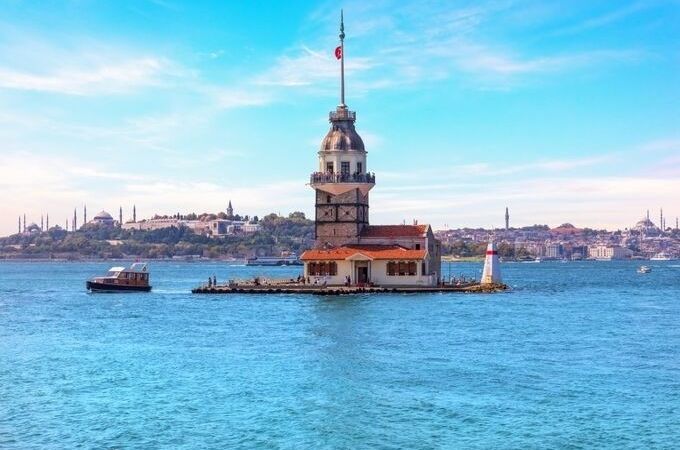
Ferries remain central to the experience, waterfront neighbourhoods continue to reward unstructured time, and pleasant conditions can make dedicated Bosphorus sightseeing experiences particularly appealing.
Yet the role of the water begins changing.
In July, the Bosphorus helps travellers manage the physical intensity of summer. In August, it creates breathing room inside a deliberately selective itinerary.
September allows the water to become less strategic and more indulgent.
You take the ferry because you want to be on the Bosphorus, not because your itinerary needs recovery.
That subtle change is important for keeping the monthly cluster distinct.
September Is a Walking Month With a Summer Memory
This is perhaps the month's most useful contradiction.
As conditions gradually moderate, Istanbul's enormous network of walkable historical and residential districts becomes increasingly attractive. At the same time, enough of summer can remain that the trip does not yet feel like an autumn city break.
A traveller can spend the morning exploring historical streets, cross the Bosphorus during the afternoon and still finish with an outdoor evening that feels connected to summer.
Few months balance those experiences quite the same way.
Don't Pack for the Month; Pack for Your Dates
September punishes generic packing advice.
Someone arriving during the first week may need a wardrobe very close to summer travel, while a visitor near the end of the month can benefit more from an additional layer, particularly during mornings, evenings and exposed Bosphorus periods.
The sensible solution is not bringing a dramatically larger suitcase.
It is checking the forecast shortly before departure and packing pieces that work together.
Light clothing remains useful, but an adaptable outer layer becomes increasingly valuable as the month advances. Comfortable footwear is essential throughout because September often encourages considerably more walking than travellers originally expect.
Practical rain protection also deserves consideration rather than assuming that the end of summer guarantees uninterrupted dry weather.
The Calendar Is Less Useful Than the Forecast
Travellers frequently ask for the exact week when Istanbul becomes cooler.
There is no reliable answer.
Seasonal transitions do not operate like hotel check-in.
One year may preserve distinctly warm conditions deep into September, while another may introduce cooler or wetter periods earlier. Climate patterns can describe the month broadly, but they cannot guarantee the experience of a particular travel week.
For actual itinerary decisions, the short-range forecast becomes increasingly valuable as departure approaches.
The calendar tells you what is likely.
The forecast tells you what may actually happen.
September Can Change the Rest of a Turkey Trip
The transitional nature of the month becomes even more important for travellers continuing beyond Istanbul because Turkey's regional climates do not shift at the same pace.
Coastal destinations may retain a stronger summer character, while inland or elevated regions can produce noticeably different mornings and evenings. Travellers considering Turkey September trips should therefore treat each destination as its own weather environment rather than packing according to Istanbul alone.
This can actually be one of September's strengths.
A multi-stop journey may combine a city becoming increasingly comfortable for cultural exploration with regions where summer-style travel remains very much alive.
September's Best Itinerary Leaves the Season Undecided
Do not force the month to behave like summer.
Do not rush autumn either.
If the day is warm, use the Bosphorus, waterfront and outdoor evening as though summer has no intention of leaving. When conditions are fresher, walk farther, spend longer in historical districts and allow the city to become more active rather than searching for a summer rhythm that no longer fits.
September rewards responsiveness more than seasonal certainty.
This is precisely what separates it from August, where established summer conditions encourage careful selection and sustainable pacing, and from October, when autumn will become a much clearer part of the city's identity.
September belongs to the transition itself.
For a few weeks, Istanbul effectively keeps two addresses, and travellers do not need to choose between them before arriving.
The September Permission List
Summer changes the way people negotiate with Istanbul.
You check how far the next attraction is, notice whether a route climbs uphill and occasionally reject an interesting detour because the additional walking does not seem worth the effort. None of this prevents a good trip, but established summer conditions make travellers more selective about where they spend their physical energy.
September gradually begins returning some of that freedom.
Not all at once, and certainly not on an identical date every year, but enough that travellers can start saying yes to experiences they might have questioned several weeks earlier.
This is the September permission list: not a catalogue of attractions, but a collection of small decisions that become easier as Istanbul moves away from peak summer.
Permission to Take the Longer Route
Imagine you have finished around Sultanahmet and need to reach Eminönü.
There is an efficient transportation option, but there is also a walking route that allows the historical city to gradually change around you. During more demanding summer conditions, efficiency may win without much debate.
September makes the argument more interesting.
When conditions are comfortable, the longer route can become part of the sightseeing rather than simply the distance separating two places. Streets that would have seemed like additional effort become opportunities to understand how districts connect.
This is one of the first signs that the seasonal balance is shifting back towards active urban exploration.
Permission to Add One Unplanned Neighbourhood
A carefully designed itinerary protects the experiences that matter most, but Istanbul becomes far more personal when something unplanned is allowed to interrupt it.
Perhaps you intended to pass through Karaköy and instead remain for an hour. A ferry delivers you to Kadıköy for lunch, but the surrounding streets become interesting enough to keep you there until late afternoon. You notice a waterfront route and decide that the next scheduled stop can wait.
September increasingly makes these decisions physically easier.
The important point is not adding more sightseeing to an already crowded day. It is replacing a rigid activity with something the city itself suggested.
Permission to Walk Without a Landmark at the End
Tourists often walk differently from residents.
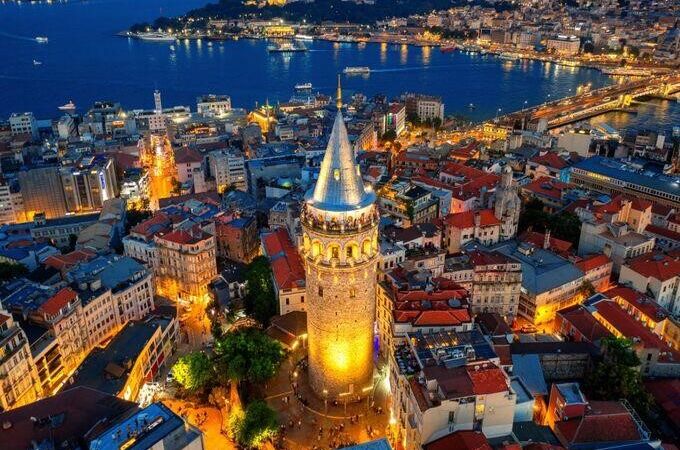
A visitor walks to Hagia Sophia, to Galata Tower or to the Grand Bazaar because the destination validates the journey. Wandering without a named attraction can initially feel like valuable travel time being wasted.
September is an excellent month to abandon that logic.
Choose a district where ordinary streets are part of the appeal and allow an hour to develop without a famous monument at the finish. The experience may produce fewer recognisable photographs, but it often provides a much clearer sense of how Istanbul actually fits together.
What September Gives Back
| Summer Habit | September Possibility | Why It Matters |
|---|---|---|
| Shorten exposed walks | Extend interesting routes | More street-level discovery |
| Prioritise physical efficiency | Accept useful detours | Better neighbourhood context |
| Use ferry mainly as recovery | Use ferry for curiosity | Bosphorus becomes less strategic |
| Protect energy for evening | Let afternoon expand | More flexible sightseeing |
| Seek frequent shade | Follow interesting streets | Geography becomes freer |
| Keep itinerary compact | Add spontaneous exploration | City feels less controlled |
These are possibilities rather than guarantees because individual September days can still feel distinctly summery.
The weather decides how much permission you actually receive.
Permission to Let Lunch Move
Summer lunch can become structurally important because it provides a useful recovery period during the day.
September gradually allows it to become less strategic.
You may eat earlier because you happen to find somewhere interesting, or continue sightseeing because nobody feels an urgent need to stop. Lunch can return to being part of the journey rather than a carefully positioned piece of weather management.
This sounds like a small difference, but it creates a much more fluid itinerary.
The day begins responding to appetite and geography rather than environmental necessity.
Permission to Stay on the European Side
The Bosphorus remains one of Istanbul's defining experiences throughout September, but travellers do not need to use it as a solution to every intensive sightseeing day.
When conditions support comfortable walking, spending a substantial afternoon around Karaköy, Galata, Beyoğlu or another European-side district can be completely satisfying without immediately searching for the relief or contrast of a ferry crossing.
The water remains available.
It simply stops functioning as an itinerary requirement.
Permission to Cross the Bosphorus for No Practical Reason
The reverse is equally valid.
Take a ferry because you want tea in Kadıköy.
Cross to Üsküdar because the visibility looks good.
Return later because there was no reason to rush.
When the day's physical demands become easier to manage, transportation decisions can become more emotional and less strategic.
This is one of Istanbul's great pleasures, and September increasingly gives travellers enough flexibility to enjoy it.
Permission to Say Yes to the Hill
Galata has not become flatter.
Neither have Istanbul's other slopes.
What changes is the calculation.
When sunshine and summer warmth are less influential, a climb can become something you accept because the neighbourhood above is worth reaching on foot. You may still prefer the funicular or another transport option, particularly after a long sightseeing day, but the decision becomes more about personal energy than seasonal survival.
That distinction is surprisingly liberating.
Permission to Change Tomorrow
September weather should discourage travellers from locking every day into an inflexible structure before arrival.
If tomorrow looks warmer, give more space to the Bosphorus and outdoor evening life. If conditions appear cooler or cloudier, consider extending historical walking routes or neighbourhood exploration.
A trip does not need to be redesigned completely every morning.
Small exchanges are enough.
The attraction planned for Tuesday can become Wednesday's activity, while a neighbourhood afternoon moves in the opposite direction.
This is why a little unscheduled space remains valuable even outside peak summer.
Permission to Stop Thinking About Weather
Perhaps this is September's greatest luxury when conditions cooperate.
You leave the hotel, begin sightseeing and several hours later realise that nobody has discussed the temperature.
The weather has not disappeared; it has simply stopped demanding attention.
For travellers arriving after months of reading about summer heat, humidity and itinerary pacing, that can feel like a significant seasonal change.
It allows Istanbul to move back into the foreground.
September Returns Choice
The month does not guarantee cooler conditions, uninterrupted sunshine or one perfectly predictable version of Istanbul. Its strength lies in gradually returning choices that peak summer can make more complicated.
Walk farther when the day invites it, remain beside the Bosphorus when summer seems determined to continue, or allow an ordinary neighbourhood to consume the hour originally reserved for something famous.
The most useful permission September gives is not permission to do more.
It is permission to decide later.
In a city with as many possible directions as Istanbul, that freedom is worth considerably more than another attraction squeezed into the schedule.

A travel professional specializing in tailor-made travel planning, guest experience management, and multi-destination tourism operations.
With over 23 years of experience in the travel industry, he designs and manages private and cultural tours for international travelers across Türkiye, Greece, Egypt, Jordan, Morocco, and other destinations.
He has strong expertise in both online and face-to-face guest communication, sales processes, and end-to-end travel operations.
Working closely with hotels, travel agencies, and local partners, he ensures smooth coordination and high-quality travel experiences at every stage of the journey.
His focus is on delivering personalized, reliable, and seamless travel experiences for international guests worldwide.