
Mykonos Weather in June: How to Use the Long Summer Days
Last Updated: August 2026
At 9:00 in the morning, Mykonos can still feel unhurried.
Chora is awake but has not reached its busiest part of the day. The light is already strong, cafés are filling gradually, and walking through the lanes remains comfortable enough that you can keep going simply because the next corner looks interesting.
By 2:00 p.m., the island has changed character. The coast becomes the obvious place to be, swimming finally feels like an uncomplicated part of the holiday, and lunch can stretch beside the water without the uncertainty that accompanies the cooler sea in May.
Then comes the part of June that is easy to underestimate.
The day refuses to end.
There is enough light left after the beach to return to the hotel, slow down for a while and still reach Chora before sunset gives way to dinner. The evening develops gradually rather than arriving immediately after sightseeing.
This rhythm is what makes June different.
Mykonos has entered its complete summer season, yet it has not necessarily reached the combination of peak heat, visitor density and high-season intensity associated with the heart of July and August. Beaches work, swimming is established, restaurants and seasonal businesses are operating, and the long daylight allows the island's different personalities to occupy the same day.
June is therefore less about asking what you can do.
Almost everything is available.
The better question is when to do it.
8:00–10:30 AM: Mykonos Before the Beach Takes Over
Travelers who sleep late in June are not doing Mykonos incorrectly. The island has a famous evening culture for good reason.
Still, an early start reveals a useful contrast.
Chora's lanes are easier to explore before midday activity increases. The whitewashed architecture catches cleaner morning light, and the famous windmills can be approached without organizing your visit entirely around sunset.
This is also a sensible period for anyone who wants photographs in the old town without constantly waiting for groups to pass through the frame.
A morning walk through Mykonos Town can cover Little Venice, the windmills and the maze of central lanes before the day shifts naturally toward the coast.
There is no need to rush.
June gives the time back later.
10:30 AM–1:00 PM: The Island Still Belongs to More Than Its Beaches
This is where many summer itineraries make an unnecessary mistake.
They leave Chora and go directly to a sunbed.
That works if the entire purpose of the holiday is the beach, but June conditions remain comfortable enough to use part of the morning for inland Mykonos without feeling punished by the heat.
Ano Mera is the obvious anchor, though the drive itself deserves attention. The interior shows dry-stone walls, scattered churches and a landscape that is beginning to move away from spring green toward its summer palette.
Temperatures are warm, but the strongest afternoon heat has not yet arrived.
A Mykonos villages and countryside route fits naturally into this part of the day because it connects the town with the coast rather than forcing you to choose between them.
By lunchtime, you can still be beside the sea.
1:00–5:30 PM: Now Give the Beach Its Time
June is when Mykonos beaches stop requiring qualifications.
You no longer need a paragraph explaining that the air may feel warmer than the sea or that swimming depends heavily on personal tolerance. The water has warmed substantially from spring, and beach time becomes a dependable part of the holiday for most visitors.
Typical daytime temperatures often sit around 24–28°C, although warmer periods occur. Nights generally remain comfortable at roughly 18–21°C.
These are conditions designed for long afternoons outside.
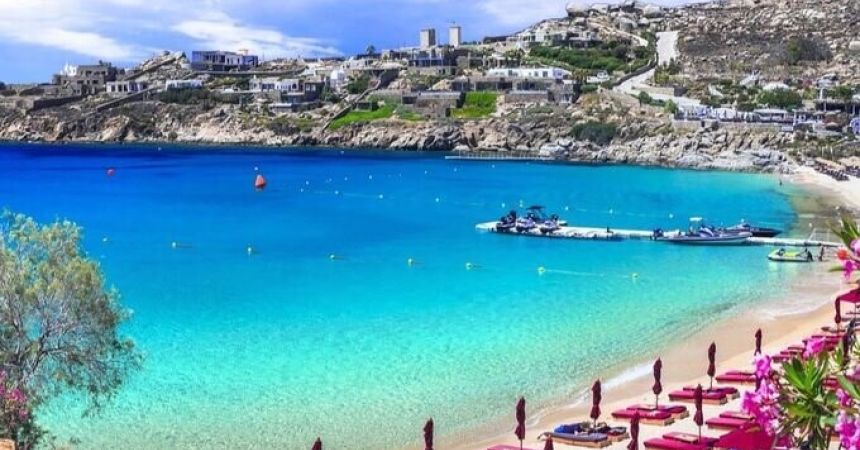
Ornos, Platis Gialos, Psarou, Elia and the island's other beach areas now operate as summer destinations rather than landscapes waiting for summer to begin.
June Changes According to the Clock
| Time | Best Use of the Island | Why |
|---|---|---|
| 08:00–10:30 | Chora | Cooler streets, softer light |
| 10:30–13:00 | Ano Mera / countryside | Comfortable exploration |
| 13:00–17:30 | Beach | Warmest part of the day |
| 17:30–19:30 | Swim / late coast | Long daylight continues |
| 19:30–21:00 | Sunset / aperitif | Day transitions slowly |
| After 21:00 | Dinner / Chora | Summer evening atmosphere |
This is not a schedule that needs to be followed minute by minute.
It is an explanation of why June can hold so much without feeling rushed.
You Don't Need to Leave the Beach at Five
One of June's luxuries is the late afternoon.
Travelers accustomed to shorter spring days sometimes begin packing up too early, as though dinner needs to start immediately.
It does not.
The sun remains high enough for the coast to stay attractive well into the afternoon, while the hottest part of the day begins easing. This can be an especially pleasant period for swimming because the beach has already absorbed hours of warmth.
There is another advantage.
Some visitors who arrived early begin leaving.
Staying later can therefore change the atmosphere without changing beaches.
A long summer beach day in Mykonos makes sense in June precisely because the daylight gives you permission not to hurry toward the evening.
Chora will still be awake when you arrive.
June Is Not Yet the Article About Wind
Mykonos remains a windy island, and June certainly experiences breezy days.
However, this cluster needs discipline.
The July article will deal specifically with the Meltemi, beach orientation and how to choose between more exposed and sheltered coastal areas during stronger summer winds.
June's relationship with wind is simpler.
A breeze can make a warm afternoon more comfortable. Stronger conditions may affect swimming, boat activities or individual beach choices, so the forecast still deserves checking.
What June should not do is turn every beach decision into a wind-direction exercise.
For most travelers, the dominant story remains reliable summer warmth and the ability to spend substantial time beside the sea.
Sea Temperature Stops Being the Main Question
In May, travelers repeatedly ask whether the water is warm enough.
By June, the question usually changes to where they want to swim.
That transition matters.
The Aegean has had additional weeks to warm, and while people accustomed to tropical water may still describe it as refreshing, swimming generally becomes comfortable for a much broader range of visitors.
This allows beach selection to depend on atmosphere rather than tolerance.
Do you want restaurants nearby?
A social setting?
Something relatively relaxed?
Easy access from Chora?
A beach that can occupy most of the afternoon?
Those questions are finally more useful than “Will I actually get into the water?”
June Gives First-Time Visitors an Easier Version of Mykonos
There is a reason June works particularly well for people visiting the island for the first time.
You do not need to understand its seasonal compromises.
Hotels are operating, ferry connections are extensive, restaurants are open, beaches function normally and nightlife has returned. The island presents the version visitors expect when they book Mykonos.
At the same time, June can retain more breathing room than the absolute peak of summer.
That does not mean it is empty.
Mykonos is already busy, particularly in popular areas, and major venues can require reservations. Prices have also moved firmly into summer territory.
The advantage is not solitude.
It is completeness without maximum intensity.
The Midday Heat Is Useful if You Let It Be
Travel guides often discuss midday summer heat only as something to avoid.
June offers another possibility.
Use it.
If the early afternoon is the warmest part of the day, that is precisely when swimming becomes most attractive. There is little reason to schedule a long exposed inland walk at 2:30 p.m. when the beach is available.
This is where timing improves the holiday more than adding attractions.
Explore earlier.
Swim when the day is hottest.
Return to town when temperatures ease.
The island's natural rhythm already solves much of the weather problem.
You simply need to stop fighting it.
Dinner Moves Later Without Feeling Late
June evenings are long enough that traditional northern-European dinner timing can feel strangely premature.
If you sit down at 6:30 p.m., the island may still look as though the afternoon has not finished.
There is nothing wrong with eating early, of course, but June rewards allowing the day to develop.
Return from the beach, shower, have a drink, watch the light change and let dinner begin later.
Chora becomes increasingly animated as darkness approaches, and outdoor dining is now a dependable part of the experience rather than something determined by whether the evening happens to be mild enough.
This is when Mykonos's summer identity starts making complete sense.
The beach did not end the day.
It merely occupied the middle of it.
June Weather: What Actually Needs Packing?
Packing becomes straightforward.
Lightweight summer clothing will handle most daytime conditions. Bring swimwear, sunscreen, sunglasses and a hat, together with comfortable footwear for Chora's uneven lanes.
A light shirt or thin layer remains useful for breezy evenings, boat trips or visitors who feel cooler after sunset.
Heavy rain gear is unlikely to deserve much suitcase space, although checking the forecast before departure remains sensible.
Good sunscreen matters considerably more.
June's long daylight means you may spend far more time exposed to the sun than you realize, particularly when a breeze keeps temperatures comfortable enough to disguise how strong the radiation is.
Reapply after swimming.
That advice is less glamorous than recommending another beach.
It is considerably more useful.
June vs July: Don't Compare Them Only by Temperature
Travelers deciding between June and July often look at average highs and conclude that the months are nearly interchangeable.
They are not.
| Choose June | Choose July |
| Long summer days are the priority | Peak summer energy matters |
| Warm sea is enough | Maximum swimming season preferred |
| You want full operation without absolute peak | You enjoy high-season intensity |
| Inland sightseeing still matters | Beach time dominates |
| Slightly softer summer rhythm appeals | Strong summer social scene appeals |
| Timing the whole day interests you | Beach choice around Meltemi matters more |
July's dedicated issue will be the Meltemi and how summer wind affects different parts of the coast.
June owns something broader: how to use a complete Mykonos summer day before high season starts dictating more of your decisions.
A June Day Can Hold Three Different Mykonos
Morning Mykonos is architectural.
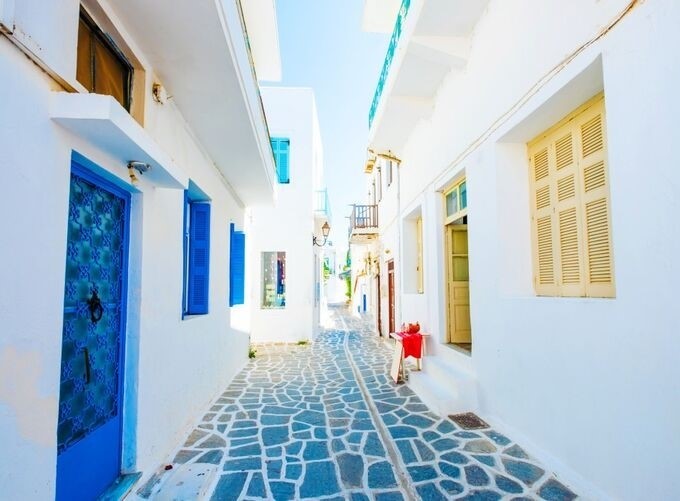
You notice Chora's lanes, church walls, blue doors and the quiet around the windmills before the streets fully wake.
Afternoon Mykonos is coastal.
The sea becomes the obvious destination, lunch stretches longer and swimming occupies time without needing to justify itself.
Evening Mykonos is social.
People return to Chora, restaurants fill, music begins appearing from open doors and the old town becomes something entirely different from the place you walked through ten hours earlier.
The interesting thing is that June allows you to experience all three without forcing them together.
The daylight is long enough.
The weather is warm enough.
The sea is ready.
And the island is fully operating.
There is no need to manufacture a more complicated reason for choosing the month.
June works because Mykonos finally has enough summer to fill the whole day.
Where Should Your June Hours Actually Go?
June creates an unusual problem: almost every part of Mykonos is now competing successfully for your time.
The beaches are warm enough to justify long afternoons, Chora deserves more than an evening visit, and the interior remains comfortable enough to explore before the stronger heat of high summer. Add a boat trip and suddenly a four-night holiday looks much shorter than it did while booking.
The solution is not fitting more into every day.
It is deciding what deserves uninterrupted time.
A beach afternoon loses something when you leave after ninety minutes simply because three other places are waiting. Chora becomes equally superficial if you see it only while walking between dinner and a bar.
June gives you enough daylight to avoid that kind of travel, provided you do not mistake long days for unlimited days.
Three Nights: Keep the Island Simple
With three nights, resist the urge to complete Mykonos.
Give one substantial period to Chora and another to the coast. Use the remaining time to add either Ano Mera and the countryside or a boat-based experience, depending on your interests.
Trying to include several famous beaches, Delos, a boat trip, Ano Mera, two sunset locations and every corner of Chora will technically fill the itinerary.
It will not necessarily improve it.
A first visit should leave enough room for an afternoon to become longer than expected. If you find a beach you genuinely enjoy, stay there rather than leaving simply because another famous beach name appears on the schedule.
Four Nights: The June Sweet Spot
Four nights provide a much easier balance.
There is enough time for a proper beach day, Chora, broader island exploration and either another coastal experience or a boat excursion without making every day dependent on exact timing.
This also provides useful weather flexibility.
June is generally dependable, but a breezier day may be better for inland sightseeing than the boat trip you originally imagined. With an extra night, moving activities around is easier.
How Much Mykonos Fits Without Rushing?
| Stay | Beach Time | Chora | Inland Mykonos | Boat/Delos | Pace |
|---|---|---|---|---|---|
| 2 nights | Limited | Essential | Optional | Difficult to combine | Fast |
| 3 nights | 1 strong beach period | Good | Choose selectively | One major extra | Moderate |
| 4 nights | 1–2 substantial periods | Plenty | Easy to include | Fits comfortably | Balanced |
| 5 nights | Multiple beach choices | Unhurried | Full flexibility | Easy | Slow |
| 6+ nights | Beach-led holiday | Repeat visits possible | Explore freely | Several options | Very relaxed |
For many first-time visitors, four nights allow Mykonos to feel like an island rather than an itinerary.
Five Nights: Stop Counting Beaches
The temptation with a longer stay is to expand the checklist.
There is no need.
Five nights allow repetition, which is often more enjoyable than variety for its own sake.
Return to the beach you liked best. Have dinner twice in Chora. Spend an afternoon doing almost nothing beside the water rather than turning every free period into another excursion.
This is particularly appropriate in June because conditions are already good enough to trust the beach as a central part of the holiday.
A longer stay should create less planning, not more.
A Boat Day Uses More Energy Than It Appears To
A boat trip looks effortless on paper.
You board, spend time on the water, swim and return.
In reality, sun exposure accumulates quickly because light reflects from the sea, shade can be limited and the breeze often disguises how warm the day actually is. By the time you return, the energetic evening you planned in Chora may feel considerably less attractive.
This does not make boat trips a bad idea.
June is an excellent month for them.
Just treat a substantial boat excursion as the day's main activity rather than something occupying an empty square between breakfast and dinner.
Check current schedules, sea conditions and inclusions with the operator, particularly if the trip involves Delos or several swimming stops.
Delos Deserves Better Than Being Squeezed In
Unlike winter, June generally provides a much stronger operational environment for visiting Delos, with seasonal boat connections established and summer weather supporting regular excursions.
Still, check current schedules and archaeological opening arrangements for your travel dates.
The mistake is assuming that proximity makes Delos a minor side trip.
Its archaeological significance deserves attention, and summer sun can make exposed exploration tiring. Bring water, sun protection and appropriate footwear, and allow enough time that the visit does not become a race back to Mykonos for a beach reservation.
A morning archaeological excursion followed by a slower afternoon can work extremely well.
Trying to attach half the island afterward is unnecessary.
June Sun Is More Serious Than June Heat
Because June temperatures can remain comfortable compared with the hottest part of summer, travelers sometimes underestimate sun exposure.
A coastal breeze reinforces the mistake.
You may sit beside the water for several hours without feeling excessively hot while receiving strong sunlight throughout that period. Add swimming, walking through Chora and an outdoor lunch, and total exposure becomes substantial.
Use high-SPF sunscreen, reapply it after swimming, carry water and consider a hat during prolonged outdoor periods.
Shade is useful even when you do not feel overheated.
This is particularly important for boat trips, where reflection from the sea can increase exposure while wind makes conditions feel deceptively comfortable.
Reservations Begin to Matter — Selectively
June Mykonos is fully operational, and that means demand has returned as well.
Popular hotels, restaurants and experiences can book ahead, particularly around weekends or special events. Travelers with specific priorities should reserve them rather than assuming June remains a quiet shoulder month.
That does not mean planning every meal before arrival.
What Is Worth Reserving in June?
| Experience | Booking Approach |
| Preferred hotel | Reserve well ahead |
| Famous restaurant | Advance reservation sensible |
| Specific beach venue | Reserve if essential |
| Private tour | Pre-book |
| Delos/boat experience | Book ahead in busy periods |
| Ordinary lunch | Usually flexible |
| Chora wandering | Never needs scheduling |
| General beach visit | Keep some flexibility |
Protect the experiences you care about.
Leave the rest of Mykonos room to surprise you.
Don't Make Sunset a Daily Appointment
Sunset has become one of the island's most marketable experiences, particularly around Little Venice and the windmills.
Seeing it once from a classic viewpoint makes sense.
Doing exactly the same thing every evening does not necessarily improve the holiday.
June's long evenings allow you to experience changing light from the beach, a restaurant, the road back from Ano Mera or wherever you happen to be when the day begins softening.
Sometimes the most enjoyable sunset is the one you did not spend ninety minutes positioning yourself for.
The island faces west in enough interesting places that you can occasionally let the evening happen without treating it as a reservation.
June Works Particularly Well for Mixed-Interest Couples
One person wants beaches.
The other becomes restless after two hours on a sunbed.
June makes that disagreement easier to solve.
Spend the morning exploring together, use the warmest afternoon period for swimming and return to Chora when the day cools. Neither traveler needs to surrender an entire day to the other's preferred activity.
Families and small groups with different interests benefit from the same flexibility.
The combination becomes harder when peak heat makes midday sightseeing uncomfortable or when the entire purpose of the trip revolves around high-season beach culture.
June still leaves room for compromise.
Twelve FAQs About Mykonos Weather in June
1. Is June a good time to visit Mykonos?
June is one of the strongest months for travelers wanting established summer weather, comfortable swimming, long daylight and fully operating tourism services. It can already be busy and expensive, but generally offers a more balanced summer experience than the absolute peak of July and August.
2. How hot is Mykonos in June?
Daytime temperatures commonly reach approximately 24–28°C, with warmer periods possible. Nights often remain around 18–21°C. Coastal breezes can make afternoons feel comfortable, although strong sunshine means heat and UV exposure should not be judged by air temperature alone.
3. Is the sea warm enough to swim in June?
Yes, June generally provides comfortable swimming conditions for a broad range of visitors. The Aegean remains refreshing rather than tropical, particularly earlier in the month, but the uncertainty surrounding spring swimming has largely disappeared and beach time becomes a dependable part of the trip.
4. Does it rain in Mykonos in June?
Rain is relatively uncommon compared with winter and spring, although occasional unsettled conditions remain possible. Most June itineraries can be built around substantial outdoor time, with sun exposure, heat and wind generally becoming more relevant planning considerations than prolonged rainfall.
5. Is Mykonos windy in June?
Breezy conditions are common on Mykonos and stronger winds can occur during June. However, this month's main travel advantage remains its long, warm summer days. The more detailed relationship between seasonal Meltemi winds and individual beach choice becomes particularly important during July.
6. Is Mykonos crowded in June?
June is firmly within the summer tourism season and popular parts of the island can be busy, especially later in the month. It generally remains less intense than peak July and August, making it attractive to travelers wanting full seasonal operation without necessarily choosing maximum crowds.
7. Are Mykonos beach clubs open in June?
Yes, the main beach season is established by June, with famous beach areas and seasonal venues generally operating. Individual businesses and event schedules should still be checked directly when a particular club or event is important enough to influence your travel dates.
8. What should I wear in Mykonos in June?
Pack lightweight summer clothing, swimwear, comfortable walking shoes, sandals, sunglasses, a hat and reliable sunscreen. A light extra layer can still be useful for breezy evenings or boat trips, but heavy clothing is generally unnecessary under typical June conditions.
9. How many nights should I spend in Mykonos in June?
Three nights can cover the principal experiences, while four usually provide a better balance between beaches, Chora, inland exploration and an optional boat or Delos excursion. Five nights suit travelers wanting a slower beach-oriented holiday without needing to schedule every day heavily.
10. Is June good for visiting Delos?
June is generally well suited to Delos excursions because seasonal boat operations are established and rain is less likely to disrupt plans. The archaeological site is exposed, however, so visitors should prepare carefully for strong sunshine with water, appropriate footwear, a hat and sunscreen.
11. Is June expensive in Mykonos?
June prices are firmly within the summer range and can be high, particularly for desirable hotels, famous restaurants and premium experiences. Earlier booking generally provides better choice. Travelers should not approach June expecting the lower prices associated with the island's true off-season.
12. Is June or July better for Mykonos?
Choose June for long days, warm swimming conditions and a complete summer experience with somewhat less peak-season intensity. July suits travelers wanting the heart of summer and who are prepared to plan beach choices around stronger seasonal wind patterns and greater visitor demand.
June Doesn't Need a Headline Event
Some months in Mykonos require an explanation.
January needs the traveler to understand why the island is worth visiting without beach life. March needs context because spring has arrived before the tourism season. May requires a conversation about whether the sea feels warm enough.
June is easier.
You wake up and Chora is worth exploring. By lunchtime the coast makes sense, and the water is warm enough that swimming no longer feels like a seasonal experiment. The afternoon can stretch beside the sea because daylight remains generous, while dinner does not need to begin simply because sightseeing has finished.
Nothing needs to be forced.
That may be June's most useful quality.
You can spend half a day on a beach without losing Mykonos Town. You can visit Ano Mera without sacrificing the best swimming conditions of the trip, and you can devote a morning to Delos without feeling that the remaining day has disappeared.
July will introduce another layer of decision-making as the Meltemi becomes more relevant to where and how you use the coast. August will bring the island's social season to maximum intensity.
June sits before both.
For a brief part of summer, the days are extremely long, the sea is ready and Mykonos asks surprisingly little planning from you beyond deciding where those hours should go.

A travel professional specializing in tailor-made travel planning, guest experience management, and multi-destination tourism operations.
With over 23 years of experience in the travel industry, he designs and manages private and cultural tours for international travelers across Türkiye, Greece, Egypt, Jordan, Morocco, and other destinations.
He has strong expertise in both online and face-to-face guest communication, sales processes, and end-to-end travel operations.
Working closely with hotels, travel agencies, and local partners, he ensures smooth coordination and high-quality travel experiences at every stage of the journey.
His focus is on delivering personalized, reliable, and seamless travel experiences for international guests worldwide.
