March in Petra Is When the Site Begins to Feel Larger Again
Author: Kenan Ungur
Article Date: 15.09.2024
Reading Time: 13 min

March in Petra Is When the Site Begins to Feel Larger Again

Updated: August 2026

Winter changes Petra by narrowing the margin for error. Rain can affect routes, cold mornings slow the start of the day, and some visitors naturally keep their plans closer to the main archaeological corridor.

March begins changing that psychology.

The weather is still transitional. Cool mornings remain possible, occasional rain has not disappeared, and a single unsettled system can temporarily make the site feel much more like February than spring. Even so, daytime conditions generally begin moving toward a milder pattern, and the idea of spending longer periods on foot starts feeling more realistic.

That is what gives March its own place in the Petra weather cluster.

The month is not yet the settled long-distance walking environment we will reserve for April. Instead, March is about range returning: the point when travelers can begin thinking beyond the core route more confidently, while still respecting the fact that spring has not fully stabilized.

The Main Route Stops Feeling Like the Natural Limit

During winter, it can be sensible to think in terms of a strong core experience first, with additional sections treated as optional depending on conditions.

March gradually loosens that approach.

When the day is dry, visibility is good and the ground is in reasonable condition, travelers may feel more comfortable extending beyond the most familiar visitor corridor. The archaeological site begins to feel less like a sequence of protected highlights and more like a large landscape waiting to be explored in layers.

This does not mean every March visitor should pursue the longest route possible.

It means the distance question changes.

Instead of asking whether you should avoid overextending in winter, you can begin asking which additional areas genuinely deserve your time and physical effort.

March Makes Route Ambition More Meaningful

Longer walking should not become a badge of achievement.

The value of extending a Petra day lies in what the extra distance reveals.

A broader route can deepen your understanding of how the city is organized, how monuments relate to each other and how the landscape itself influenced urban development. The more of Petra you cover thoughtfully, the less the site feels like a collection of famous façades.

For travelers on a March Petra exploration, this is the moment when adding distance can begin adding context rather than simply adding fatigue.

That distinction matters.

The question is not “How far can I walk?”

It is “What will I understand better if I keep going?”

The Site Starts Offering More Route Choices Again

March is useful because more ambitious plans begin to feel reasonable without yet becoming automatic.

Route Style March Character Traveler Consideration
Main corridor only Still fully worthwhile Best for shorter or slower visits
Main route + one extension Increasingly practical Good balance for many visitors
Longer walking day More realistic in settled conditions Requires energy and daylight
Higher or steeper section Weather-dependent Check current route conditions
Multiple extensions Possible but easy to overdo Prioritize quality over distance

This table is deliberately about route ambition, not temperature, rain or generic packing.

March's value lies in helping visitors decide how much of Petra they want to physically connect in one day.

The Return Journey Still Has to Be Counted

Petra encourages forward momentum.

Every additional section makes you curious about what lies ahead, and the landscape has a habit of making the next monument feel close enough to justify continuing.

March is exactly when travelers can begin overestimating how much of the site should fit into one day.

The outward journey is only half the calculation.

Every extra climb, side route or extension eventually becomes part of the return. A route that feels manageable under bright midday conditions can feel substantially longer once fatigue accumulates later.

This is why a spring walking day in Petra should be designed with a turnaround point in mind rather than allowing curiosity alone to determine how far you go.

Milder Weather Can Hide Physical Effort

Cooler spring conditions often make walking feel easier than it is.

You do not overheat quickly, which means your body gives fewer immediate signals that the day is becoming demanding. Petra's distance, steps and uneven surfaces still add up, however.

A traveler who feels excellent at noon may simply have spent energy more comfortably.

That is still energy spent.

March therefore benefits from a steady pace. Allow time to stop, drink water, look carefully and recover before another extension rather than treating pleasant air as permission to walk continuously.

Water Still Belongs in the Bag

Because March is cooler than summer, visitors sometimes underestimate hydration.

That is a mistake.

Petra remains a physically active archaeological site, and several hours of walking through dry air can add up even when the temperature feels mild. Carrying water should remain routine, particularly if your route extends significantly beyond the central corridor.

The month is transitional in another sense too: you may begin the day in cooler conditions and finish under much brighter spring sunshine.

Hydration should therefore follow the length of the route, not the apparent coolness of the morning.

The Morning Still Doesn't Tell the Whole Story

March mornings can feel much cooler than the afternoon, especially earlier in the month.

This creates a clothing challenge similar in appearance to winter, but the logic is different.

January required adaptable layers because sun, shade and movement created sharp thermal contrasts inside Petra. March needs layers because a longer archaeological day may begin in one seasonal mood and finish in another.

Wear clothing that can be adjusted easily without becoming a burden during extended walking.

A bulky winter layer may feel justified near the entrance and deeply inconvenient several hours later.

March Is the Month to Add One More Thing—Carefully

This may be the simplest way to understand the month.

If a winter Petra day encourages caution, March begins giving travelers permission to add one more element to the plan.

One additional archaeological section.

One longer walking loop.

One more substantial route beyond the core.

Not everything.

One more meaningful layer of the site.

For travelers on a Petra spring heritage journey, that is often enough to transform the visit from “I saw Petra” into “I began to understand how large Petra actually is.”

Don't Turn March Into April Yet

March remains transitional.

Rain is still possible. Cooler spells can return. Recent weather may influence trail conditions, and a long route that looks straightforward on a monthly climate chart may not be the right choice on your specific day.

April will own the more settled idea of Petra as a full long-walking archaeological day.

March's role is to show the shift toward that experience.

The site begins expanding again in practical terms, not because new monuments have appeared, but because weather and walking conditions increasingly allow visitors to consider more of them in one connected day.

March Owns the Return of Range

February taught visitors to read Petra through water, runoff and route conditions after winter weather.

March changes the problem.

The question is no longer mainly whether the ground allows you to continue. It becomes whether your time, energy and interests justify going farther.

That is March's exclusive semantic territory:

Petra in March is the point where archaeological range begins reopening—when the main route stops feeling like the obvious boundary and longer walking becomes a more natural way to connect the ancient city, provided you still respect the transitional character of spring.
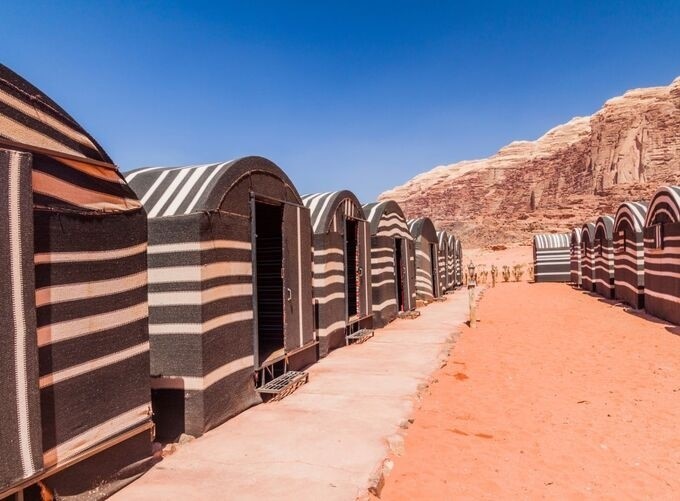
Wadi Rum's awe-inspiring natural rock formations and desert landscapes

March Is Better Planned Around a Turnaround Point Than a Finish Line

Once walking conditions become more inviting, Petra creates a particular temptation: every additional section seems to suggest that you should continue just a little farther.

That is where a turnaround point becomes useful.

Rather than beginning the day with a rigid goal of completing every possible extension, decide how much time and energy you want to preserve for the return. As the day develops, compare that reserve with how you actually feel, because a pleasant spring temperature can make the outward journey seem deceptively effortless.

This approach gives March the flexibility it deserves. On a comfortable, settled day, your turnaround point may move farther into the archaeological landscape. If conditions or energy are less favorable, stopping earlier does not diminish the visit; it simply leaves more time to explore the areas you have already reached with greater attention.

One Meaningful Extension Is Often More Valuable Than Several

Petra rewards ambition, but it does not necessarily reward accumulation.

Adding one substantial extension to the main archaeological route can create a far richer day than attempting several secondary routes and moving through each too quickly. The additional distance should reveal another dimension of Petra rather than merely increase the number of locations visited.

This is particularly relevant in March because the season begins encouraging longer exploration before the visitor has necessarily adjusted expectations to Petra's physical scale.

Choose the extension that interests you most, allow enough time for it, and treat anything beyond that as genuinely optional.

Use Your Energy Where Petra Becomes More Interesting to You

Different visitors become absorbed by different parts of the site. Some want monumental façades, others are drawn to Nabataean engineering, elevated perspectives, religious architecture or the relationship between the ancient city and its surrounding landscape.

March gives you increasing freedom to follow that interest physically.

If you discover that one area deserves another hour, spend it there rather than sacrificing the experience to preserve a prewritten schedule. Longer spring walking conditions are valuable precisely because they create more room for curiosity.

The objective is not maximum geographical coverage.

It is having enough physical and climatic flexibility to follow Petra when something catches your attention.

How Far Should Your March Petra Day Expand?

A useful decision can be made from four factors rather than from temperature alone.

Ask Yourself Why It Matters in March
How are conditions today? Spring remains transitional
How much energy do I have now? Comfortable weather can disguise accumulating fatigue
How much return distance remains? Every extension adds to the journey back
Does the next section genuinely interest me? Extra distance should add experience, not simply mileage

This is a deliberately different table from February's ground-condition framework. March is no longer centered on whether rain has changed the route; it is about deciding how far a good day deserves to expand.

Don't Spend the Entire Day Looking at the Clock

Turnaround planning should create freedom rather than make the visit mechanical.

Once you have a reasonable understanding of distances and your return requirement, stop checking the time every few minutes. Petra is precisely the kind of place where an unexpected detail can justify slowing down.

A carved façade looks different when you have time to study the surrounding cliff. A route becomes more meaningful when you notice how it connects one part of the ancient city with another. Even a rest can contribute to the experience when it gives you an opportunity to look across the landscape rather than immediately moving onward.

March offers more walking range, but that additional range should produce more Petra, not simply more steps.

The Afternoon Should Still Have Something Left in It

A common mistake on increasingly comfortable spring days is spending nearly all available energy before recognizing how much of the site remains between you and the exit.

A better Petra day finishes its farthest extension while you still feel capable of enjoying the return.

This matters because retracing part of the route is not wasted time. The archaeological landscape changes according to direction and light, while features passed quickly earlier can become more noticeable on the way back.

Preserving energy for that journey turns the return from an endurance exercise into the final chapter of the visit.

12 Questions About Petra in March

1. What is the weather like in Petra in March?

March is a transitional spring month, generally bringing milder daytime conditions than winter while cooler mornings and occasional unsettled weather remain possible. Conditions vary between individual days, so short-range forecasts remain important when deciding how ambitious your walking route should become.

2. Is Petra still cold in March?

Cool conditions can certainly occur, particularly during mornings, later in the day or during unsettled weather. However, daytime walking can feel considerably milder when conditions are settled, making adaptable clothing more practical than dressing exclusively for the coolest moment.

3. Does it rain in Petra in March?

Rain remains possible because March has not fully left the wetter part of the year behind. Rather than allowing rainfall to define the entire month, check the actual forecast and current route information, particularly if you intend to explore beyond the principal archaeological corridor.

4. What should I wear in Petra in March?

Choose layers that remain comfortable across a long walking day and can be removed without becoming cumbersome. Supportive walking footwear remains essential, while sun protection and water should stay in your day bag even when the morning initially feels cool.

5. Is March suitable for longer walks in Petra?

Settled March conditions can make longer archaeological exploration increasingly practical. The month remains transitional, however, so route ambition should reflect current weather, ground conditions, available daylight and your physical energy rather than being decided entirely before arrival.

6. How much walking should I plan in Petra?

There is no single distance appropriate for everyone. Begin with the archaeological areas most important to you, then add one meaningful extension when conditions and energy support it, remembering that every additional section also increases the distance you eventually need to return.

7. Do I need water when Petra feels cool?

Yes. Comfortable spring temperatures can reduce the sensation of thirst without eliminating the hydration needs created by several hours of walking. Carry water according to the physical demands and duration of your route rather than judging solely by morning temperature.

8. Should I try to see all of Petra in one day?

Trying to complete every major route can turn an extraordinary archaeological experience into a physical checklist. March's improving walking conditions are better used to explore selected areas more deeply and add distance where it genuinely contributes to your understanding of Petra.

9. Are Petra's higher routes accessible in March?

Accessibility depends on current weather, trail conditions, maintenance and official decisions rather than the month alone. Check locally before undertaking higher or more demanding routes, particularly when unsettled weather or recent rainfall has affected the archaeological landscape.

10. Is the return walk difficult after a long Petra day?

It can feel substantially longer once fatigue accumulates, particularly if you have added climbs or route extensions earlier. Plan the farthest point of your day while you still have enough energy and daylight to appreciate the return rather than simply endure it.

11. Does March require winter clothing or spring clothing?

Neither label is particularly useful on its own because March is transitional. Adaptable layers work better than committing entirely to one season, allowing you to respond comfortably as a cool morning develops into a milder and potentially much longer walking day.

12. What makes March different from February in Petra?

February focuses on rain, runoff, wet surfaces and route judgment following winter weather. March owns the return of archaeological walking range, when improving spring conditions increasingly allow visitors to extend beyond the core route and decide how much farther into Petra their interests, energy and available time should take them.

Kenan Ungur
Author

A travel professional specializing in tailor-made travel planning, guest experience management, and multi-destination tourism operations.

With over 23 years of experience in the travel industry, he designs and manages private and cultural tours for international travelers across Türkiye, Greece, Egypt, Jordan, Morocco, and other destinations.

He has strong expertise in both online and face-to-face guest communication, sales processes, and end-to-end travel operations.

Working closely with hotels, travel agencies, and local partners, he ensures smooth coordination and high-quality travel experiences at every stage of the journey.

His focus is on delivering personalized, reliable, and seamless travel experiences for international guests worldwide.
Join The Newsletter

To receive our best monthly deals

Magnificent Travel Logo

Magnificent Travel
Usually responds the same day

Magnificent Travel
Welcome to the Magnificent Travel

How may i help you?
Today
+905324935198
X