Turkey in 3 Days: What Can You Realistically Experience?
Last Updated: August 10, 2026
Three days in Turkey sounds like an itinerary problem. In reality, it is a time-management problem.
With only 72 hours available, the temptation is to look at a map, circle Istanbul and Cappadocia, perhaps add Ephesus, and then search for flights that somehow connect everything. On paper, it can work. In practice, much of the trip disappears into airports, transfers, hotel check-ins and waiting for the next departure.
There is a better way to think about a short visit.
If this is your first time in Turkey and you genuinely have only three days on the ground, Istanbul is usually the strongest single base. Not because the rest of the country is less interesting, but because changing regions carries a much higher time cost on a short trip than it does on a week-long journey.
Three days are enough to experience several very different sides of Istanbul: the monumental old city, the Bosphorus, lively neighborhoods, markets, local food and an evening or two when you are not watching the clock. What they are not enough for is a meaningful tour of Turkey as a whole.
That distinction matters. A good 72-hour trip should feel short when you leave, not rushed while you are there.
The 72-Hour Rule: Protect Your Usable Time
Travel itineraries often count days too generously.
Suppose you arrive in Istanbul at 10:30 in the morning on Monday and depart at 17:00 on Thursday. Technically, you might call that a four-day trip. Your usable sightseeing time tells a different story.
You still have immigration, baggage collection and the journey from the airport on arrival day. On departure day, you need to leave the city early enough to reach the airport comfortably. The middle two days are the only completely uninterrupted ones.
This is why short Turkey trips should be planned around usable hours rather than calendar days.
| Part of the Trip | What Usually Happens | Effect on Your Time |
|---|---|---|
| Arrival morning | Airport procedures + transfer + check-in | Part of the day disappears |
| Full day | No major transport required | Highest-value sightseeing time |
| Hotel change | Pack + check-out + transfer + check-in | Breaks the day's rhythm |
| Domestic flight | Transfers + airport time + flight | Often consumes several hours |
| Departure day | Check-out + airport transfer | Only partly usable |
The lesson is not that domestic travel in Turkey is difficult. It is that an airport has the same queues whether your holiday lasts three days or three weeks.
On a longer journey, losing part of a day to a flight may be perfectly reasonable. During a 72-hour visit, the same transfer can consume a substantial share of your available experience.
One Base Is Usually Better Than Two
For a first three-day visit, staying in Istanbul for all three nights is the most practical choice.
It removes a surprising amount of friction. You unpack once. There is no second hotel check-in. You are not planning a day around a domestic departure. If rain changes your plans or you spend longer than expected over lunch, the rest of the trip does not unravel.
More importantly, Istanbul has enough variety to make three days feel like a journey rather than a long city break.
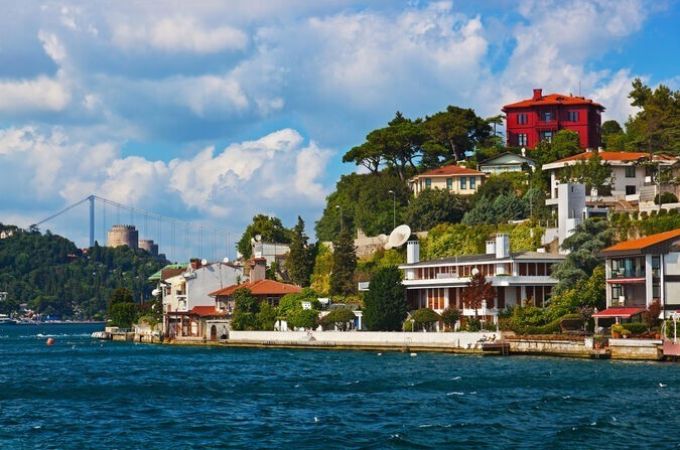
The historic peninsula alone contains layers of Roman, Byzantine and Ottoman history within walking distance. Cross the Golden Horn and the atmosphere changes. Take a ferry to the Asian side and it changes again. Spend an hour on the Bosphorus and Istanbul becomes a waterside city rather than a collection of monuments.
That variety is useful when time is limited.
Travelers who would rather have the logistics organized can look at a short Istanbul tour experience when planning their stay, particularly if they want to cover the historic center efficiently without spending their limited time working out transportation and entrance arrangements.
The point, however, is not to fill every hour with guided sightseeing. Three days work best when structure and free time are deliberately mixed.
What Should Actually Fit Into Three Days?
A useful way to plan Istanbul in 72 hours is to stop thinking in terms of a checklist.
Instead, divide the city into experiences that naturally belong together.
The historic peninsula deserves one substantial block of time. Hagia Sophia, the Blue Mosque, Hippodrome and surrounding streets sit close enough together that you can explore them without repeatedly crossing the city. Topkapi Palace or the Basilica Cistern can be added according to your interests, but trying to give every major monument equal time usually makes the day worse.
Another block should belong to the water and the neighborhoods around it. A Bosphorus cruise changes the scale of the city completely: palaces, wooden waterfront houses, mosques, fortifications and modern districts become part of one continuous landscape. Combine that with Karaköy, Galata or the Asian side rather than immediately returning to another museum queue.
Then leave space for Istanbul itself.
That might mean breakfast that takes longer than planned, tea overlooking the Bosphorus, wandering through Kadıköy Market, stopping at a bakery because something in the window looks good, or sitting down for dinner without having another attraction scheduled afterward.
Those unscheduled hours are not wasted time. On a three-day trip, they are often the moments that stop the visit from feeling like a layover.
The Hard Question: Should You Add Cappadocia?
Cappadocia is usually the first place travelers try to add to a short Istanbul stay. It is easy to understand why. The landscapes are unlike Istanbul, flights connect the regions, and the possibility of a sunrise balloon flight makes the combination particularly attractive.
But “possible” and “good use of three days” are different questions.
Adding Cappadocia means getting to an Istanbul airport, checking in for a domestic flight, flying to Kayseri or Nevşehir, transferring onward to Cappadocia and checking into another hotel. The return journey creates another transport block.
You may still see both destinations. What you lose is depth.
There is another issue: a hot-air balloon flight cannot be treated as a guaranteed event. Operations depend on weather and aviation conditions. If the balloon is the main reason you are making the detour, building an extremely short trip around a single morning gives you very little flexibility if flights are cancelled.
For most first-time visitors, I would keep Cappadocia for a longer trip.
There are exceptions. Perhaps you have visited Istanbul before. Perhaps Cappadocia is the only reason for your stop in Turkey. Or perhaps your international flight schedule makes an efficient connection unusually easy. In those cases, the calculation changes.
But if you are trying to experience both Istanbul and Cappadocia properly for the first time within 72 hours, the schedule is likely to dictate the holiday.
Istanbul Only vs Istanbul + Cappadocia
| Question | Istanbul Only | Add Cappadocia |
| Hotel bases | One | Two |
| Domestic flights | None | At least one connection required |
| Transfer pressure | Low | High |
| Flexibility | High | Limited |
| Variety | One city in depth | Two very different regions |
| Risk of feeling rushed | Lower | Considerably higher |
| Best suited to | First short visit | Travelers with a specific Cappadocia priority |
If Cappadocia is non-negotiable, it is worth examining a compact Cappadocia travel option rather than improvising individual transfers at the last minute. The key is to know exactly how much usable time remains once every flight and airport transfer has been accounted for.
What About Ephesus, Pamukkale or Antalya?
This is where restraint becomes more valuable than itinerary ambition.
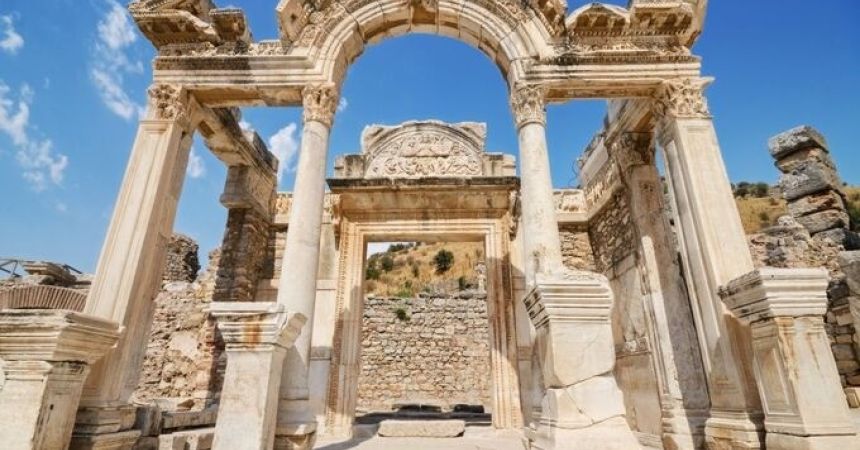
Ephesus is extraordinary, but it belongs to western Turkey. Pamukkale introduces another geographical move. Antalya takes you south to the Mediterranean. None of these destinations becomes less worthwhile because your trip is short; they simply become expensive in terms of time.
Trying to visit Istanbul, Cappadocia and Ephesus in three days is a good example of an itinerary that can look impressive in a list while being disappointing on the ground.
You may collect photographs from three regions. You will also collect boarding passes.
For a 72-hour visit, use a simple test before adding anywhere outside your main base:
Does this destination justify the door-to-door travel time required to reach it?
Not the flight duration shown on the airline website. Door to door.
That includes packing, leaving the hotel, reaching the airport, arriving before departure, flying, collecting luggage when necessary, transferring at the other end and checking in again.
Once you calculate travel that way, many “quick additions” stop looking quick.
A Better Way to Decide What to Skip
Short trips become easier when you rank experiences instead of attractions.
Before you arrive, choose three priorities. They might be Ottoman and Byzantine history, food and the Bosphorus. Or architecture, photography and neighborhood life. Someone else may care almost entirely about museums.
Then protect those priorities.
Everything else becomes optional.
This approach works particularly well in Istanbul because major attractions are not evenly distributed across the city. If history is the priority, several important places can be explored within the same part of the historic peninsula. If food and contemporary city life matter more, there is little reason to spend every daylight hour moving between monuments.
The mistake is assuming that a first visit requires completing a standard list.
It doesn't.
Your first three days in Turkey do not need to contain everything Turkey is famous for. They need to contain enough of the right things that you actually remember being there.

A Three-Day Plan That Leaves Room to Enjoy Istanbul
Once you accept that Istanbul should usually be the only base, planning becomes much simpler. You no longer need to ask how many Turkish destinations can be squeezed into three days. The more useful question is how to arrange Istanbul without spending half the visit crossing back and forth between neighborhoods.
The following is not meant as a minute-by-minute schedule. Opening hours change, queues vary, weather interferes, and people travel at different speeds. Think of it as a geographical framework.
Day 1: Keep the Historic Center Together
Use your first substantial sightseeing day for the Historic Peninsula.
Hagia Sophia, the Blue Mosque and the Hippodrome naturally belong in the same walking area. Depending on your interests and available time, the Basilica Cistern or Topkapi Palace can become the day's larger additional visit.
There is no prize for doing both.
Topkapi, in particular, deserves enough time to make the visit worthwhile. If you spend several hours there, accept that something else may move to another day. Trying to compensate by rushing through every remaining attraction defeats the point of staying in one city.
The Grand Bazaar can fit naturally into this side of Istanbul, but it should not be treated like a museum where you have to follow a fixed route. Go in, wander, look around and leave when you have had enough. Some travelers stay twenty minutes; others disappear inside for two hours.
That unpredictability is exactly why a short itinerary needs breathing room.
By evening, stop sightseeing.
Have dinner somewhere you actually want to eat rather than choosing a restaurant because it happens to sit beside the final attraction on your checklist.
Day 2: Let the Bosphorus Change the Perspective
The second day should feel different from the first.
After a monument-heavy opening day, spend part of the morning or afternoon on the Bosphorus. Seeing Istanbul from the water explains the city in a way that maps rarely do. Europe and Asia sit opposite one another, while palaces, mosques, fortresses, waterfront mansions and modern neighborhoods unfold along both shores.
Afterward, stay on this side of the experience rather than immediately returning to Sultanahmet.
Karaköy and Galata work well with a Bosphorus day because they shift the emphasis from monumental Istanbul to the lived-in city. Cafés, steep streets, small shops, older buildings and the constant movement around the waterfront give the day a looser rhythm.
If you still have energy, continue toward Istiklal Avenue and the surrounding streets. If not, stop.
That last sentence matters more than it sounds.
A short trip does not have to be exhausting to be successful.
Day 3: Cross to Asia or Follow Your Own Interest
By the third day, you will know what you want more of.
If you have spent most of the first two days around Istanbul's European side, take a public ferry across the Bosphorus. Kadıköy is particularly easy to explore without an elaborate plan. Walk through the market area, have lunch, follow streets that look interesting and enjoy the fact that you are no longer moving between internationally famous landmarks.
Alternatively, use the final day for something you deliberately left out earlier.
Perhaps that is Topkapi Palace. Perhaps you want more time around the bazaars. Maybe you would rather explore Dolmabahçe Palace, revisit the Bosphorus or spend a slow morning in a neighborhood you liked on the first day.
For visitors who prefer to have the key logistics arranged while retaining some independent time, a private Istanbul sightseeing day can also make sense during such a compressed stay. The value on a three-day visit is not seeing more places at any cost; it is reducing the amount of limited time spent working out how to reach and sequence them.
Your Arrival Time Changes the Entire Plan
Not every “three-day trip” contains three full days.
This is one of the most important differences between planning from home and actually arriving in Turkey.
If your flight lands early in the morning, you may have most of the afternoon available after reaching your hotel. That creates useful flexibility. You could explore your immediate neighborhood, take an easy Bosphorus cruise or move one lighter activity away from the following day.
A 16:00 arrival is different. By the time you leave the airport and reach central Istanbul, your first day may realistically be an evening.
That should not be considered a failed sightseeing day.
Go for a walk. Eat well. Get your bearings. Start properly the next morning.
Trying to “recover” lost hours by packing extra attractions into Day 2 usually creates a worse trip.
How Much of Your Three Days Is Actually Usable?
| Flight Pattern | Realistic Trip Shape | Planning Approach |
|---|---|---|
| Early arrival + late departure | Nearly 3 full days | Full 72-hour framework |
| Afternoon arrival + late departure | About 2.5 usable days | Keep arrival evening light |
| Late arrival + afternoon departure | About 2 full days | Prioritize aggressively |
| Late arrival + early departure | Less than 48 useful hours | Treat it as a two-day visit |
Check your flights before copying any three-day itinerary online.
The number printed on the itinerary is less important than the hours you actually have between airport transfers.
Where You Stay Matters More on a Short Trip
On a two-week holiday, an extra twenty or thirty minutes of daily transportation may not fundamentally change the experience. During a three-day stay, repeated journeys add up quickly.
Location therefore deserves more weight than usual when choosing a hotel.
If your priorities are Hagia Sophia, the Blue Mosque, Topkapi Palace and the Basilica Cistern, staying around Sultanahmet or nearby can make the first part of the trip exceptionally convenient.
If you prefer restaurants, evening activity and easier access to neighborhoods around Galata, Karaköy and Beyoğlu, staying north of the Golden Horn may suit you better.
There is no universally correct neighborhood.
The practical question is: where will you spend most of your limited time?
Choose accommodation around that answer rather than selecting a hotel first and designing the itinerary afterward.
Three Days Done Well vs Three Days Overloaded
A successful short trip often looks surprisingly modest on paper.
| Three Days Done Well | Three Days Overloaded |
| One hotel base | Multiple hotel changes |
| Neighborhoods grouped geographically | Crossing the city repeatedly |
| One or two major visits per block | Continuous attraction checklist |
| Time for meals and wandering | Eating around transport schedules |
| One flexible period | Every hour pre-booked |
| Istanbul explored properly | Istanbul + multiple distant regions |
| Departure time protected | Sightseeing squeezed before airport |
The left-hand column may generate fewer pins on your map. It will usually produce a more coherent trip.
There is also a practical benefit to leaving some flexibility. Istanbul is a city where an unplanned hour can easily become one of the best parts of the visit. You might find a small mosque you had never heard of, stay for another glass of tea, follow a street downhill toward the water or simply decide that lunch deserves ninety minutes instead of forty.
A rigid itinerary treats those moments as delays.
A good short itinerary makes room for them.
Who Should Not Follow This Three-Day Plan?
The one-base approach is designed primarily for first-time visitors who want to use a very short stay well.
It is not a universal rule.
If you have already spent several days in Istanbul on a previous journey, there is little reason to repeat the same structure. Three days based entirely in Cappadocia, for example, could make much more sense.
The same applies if your trip has one very specific purpose. An archaeology-focused traveler might prioritize western Turkey differently. Someone visiting friends or attending an event will naturally build the trip around different constraints.
And if three days are only the beginning of a longer journey, you should not use this article to plan the entire trip. Browse the broader Turkey tour itineraries instead and treat Istanbul as one part of a larger route.
The advice here is deliberately narrow: you have roughly 72 hours in Turkey, it is your first visit, and you want those hours to feel like a trip rather than a transfer exercise.
Under those circumstances, doing less is usually the smarter choice.
The Trip You Leave for Next Time
There is an odd pressure attached to visiting Turkey for the first time. The country has so many recognizable destinations that leaving Cappadocia, Ephesus, Pamukkale or the Mediterranean coast untouched can feel like missing something.
You are missing something.
That is unavoidable.
Three days cannot solve a country of this size, and trying to pretend otherwise only changes what you miss. Instead of missing destinations, you begin missing the experience of being in the destinations you did reach.
Spend the three days well.
Walk through the old city before it becomes busy. Give a palace enough time. Take the ferry rather than treating the Bosphorus as scenery in the distance. Sit down for lunch. Cross to another neighborhood simply because you are curious about what is there.
Then leave Cappadocia, Ephesus, Pamukkale and the coast for a journey that gives them the time they deserve.
A three-day visit does not need to be a miniature version of a two-week Turkey itinerary.
It can simply be three very good days.
Frequently Asked Questions About Spending 3 Days in Turkey
Is three days enough for a first trip to Turkey?
Three days is enough for a rewarding introduction, but not for seeing Turkey broadly. First-time visitors will generally get more from concentrating on Istanbul than dividing 72 hours between distant regions. The aim should be a coherent short experience rather than collecting several destinations in limited time.
Should I spend all three days in Istanbul?
For most first-time visitors, yes. Istanbul has enough historical sites, neighborhoods, food experiences and waterfront scenery to fill three days without repetition. Staying in one city also removes domestic flights, additional airport transfers and hotel changes that can consume a disproportionate amount of a short visit.
Can I visit Istanbul and Cappadocia in three days?
It is technically possible, but the logistics can dominate the trip. Reaching airports, checking in, flying and transferring to Cappadocia all require time beyond the flight itself. The combination makes more sense when Cappadocia is a specific priority or you have previously explored Istanbul.
Is a Cappadocia hot-air balloon worth adding to a three-day trip?
Only if the balloon experience is one of your main reasons for visiting Turkey. Balloon operations depend on suitable conditions, so a very short schedule provides little flexibility if a flight is cancelled. First-time visitors should consider whether the substantial travel commitment justifies reducing their Istanbul time.
Can I visit Ephesus during a three-day Turkey trip?
You can, but it rarely makes sense to combine Ephesus with Istanbul and additional distant destinations within only three days. Ephesus deserves more than being treated as a quick geographical checkbox. If archaeology is your primary interest, however, you could build the short trip specifically around western Turkey.
How many major attractions should I plan each day?
Avoid setting a fixed number. Two substantial visits plus nearby streets, meals and smaller stops can create a fuller day than five major attractions reached in a hurry. Group places geographically and allow important sites such as Topkapi Palace enough time rather than counting attractions completed.
What is the biggest mistake when planning three days in Turkey?
The most common mistake is underestimating travel time. A one-hour domestic flight does not consume only one hour; airport transfers, check-in and onward transportation expand the commitment considerably. With just three days, repeated transfers can quietly remove a significant percentage of your usable holiday time.
Where should I stay in Istanbul for a three-day visit?
Choose your area according to what you most want to experience. Sultanahmet is convenient for major historic sights, while Karaköy, Galata and nearby districts suit travelers prioritizing restaurants, evening atmosphere and broader neighborhood exploration. On a short stay, reducing unnecessary daily transportation is especially valuable.
Do I need a detailed hour-by-hour itinerary?
Usually not. A better approach is to group activities geographically and give each day a broad purpose. Keep at least one flexible period for weather, queues, longer meals or spontaneous discoveries. An hour-by-hour schedule can become frustrating when one delayed attraction affects everything planned afterward.
What should I save for a longer Turkey trip?
Cappadocia, Ephesus, Pamukkale, Antalya and the Aegean or Mediterranean coast all deserve consideration on a longer journey. Rather than squeezing one into a 72-hour first visit, save them for an itinerary where transportation does not consume the experience you traveled so far to have.

A travel professional specializing in tailor-made travel planning, guest experience management, and multi-destination tourism operations.
With over 23 years of experience in the travel industry, he designs and manages private and cultural tours for international travelers across Türkiye, Greece, Egypt, Jordan, Morocco, and other destinations.
He has strong expertise in both online and face-to-face guest communication, sales processes, and end-to-end travel operations.
Working closely with hotels, travel agencies, and local partners, he ensures smooth coordination and high-quality travel experiences at every stage of the journey.
His focus is on delivering personalized, reliable, and seamless travel experiences for international guests worldwide.