
Best Time to Visit the Middle East: Finding the Right Season for More Than One Country
Updated: August 2026
Searching for the best time to visit the Middle East sounds straightforward until you begin planning an actual journey and discover that the answer changes depending on which countries, landscapes and activities you intend to combine.
A traveler spending most of a holiday beside the Red Sea has very different priorities from someone expecting to walk extensively through Petra, explore archaeological sites along the Nile and then continue to Istanbul. Even within the same itinerary, you may move between Mediterranean coastlines, elevated inland cities, desert landscapes and intensely hot archaeological regions, which makes the idea of one universally perfect Middle Eastern travel month rather misleading.
For multi-country journeys involving destinations such as Jordan, Egypt and Turkey, spring and autumn generally provide the easiest overall balance. They tend to avoid the most demanding summer heat in desert and archaeological areas while offering more comfortable conditions for long sightseeing days.
That does not mean every traveler should automatically choose April or October.
The better approach is to look at the most weather-sensitive part of your itinerary first, then decide which season creates the best compromise across the entire journey. Once you start planning this way, the question changes from “When is the Middle East at its best?” to something far more useful:
When will my particular Middle East trip work best?
There Is No Single Middle Eastern Climate
The phrase “Middle East weather” can create the impression that countries across the region experience similar conditions at roughly the same time.
In practice, geography makes the picture considerably more complicated.
Jordan combines elevated cities, desert environments, the Jordan Valley and the Red Sea coast around Aqaba. Egypt's major cultural journeys may connect Cairo with Upper Egypt, where daytime temperatures can be considerably more demanding, before moving toward a coastal resort. Turkey adds another climate pattern entirely, particularly when an itinerary moves between Istanbul, Cappadocia, the Aegean region and Mediterranean destinations.
This matters because multi-country travelers are not choosing weather for a single afternoon.
They are choosing conditions for perhaps two or three weeks of movement through very different environments.
A month that produces excellent temperatures for archaeological sightseeing in southern Egypt may feel cooler than expected in parts of Turkey. A period that seems ideal for a Turkish coastal extension may already be considerably hotter around Luxor or Petra.
The best season is therefore usually a compromise rather than a meteorological sweet spot shared perfectly by every destination.
Choose Your Travel Month by the Hardest Part of the Trip
This is one of the most useful principles when choosing dates for a multi-country journey.
Do not begin with the destination whose weather is easiest to manage. Start with the section where uncomfortable conditions would have the greatest effect on what you intend to do.
Suppose your itinerary includes Istanbul, Cappadocia, Petra, Wadi Rum, Cairo and a Nile cruise.
Istanbul can be enjoyed under a fairly broad range of conditions because much of the experience combines indoor and outdoor sightseeing, restaurants, neighborhoods and museums. Petra is different because exploring the site usually involves substantial outdoor walking. Upper Egypt is different again, since major archaeological visits can expose travelers to heat for extended periods.
The most climate-sensitive days should therefore carry more weight when selecting your dates.
This does not mean ignoring the rest of the itinerary. It means recognizing that a warm afternoon in Istanbul and an excessively hot archaeological day in Luxor do not affect the holiday equally.
Optimize the difficult part first, then check whether the rest remains comfortable enough.
Spring Works Because Several Different Climates Become Compatible
Spring is popular for multi-country Middle East travel for a practical reason: destinations with very different climates often become reasonably compatible during the same period.
Jordan's archaeological and desert sightseeing can be comfortable, Egypt may be more manageable than during the height of summer, and much of Turkey is moving into a pleasant sightseeing season as winter conditions recede.
For travelers who expect to spend substantial time outdoors, this combination is valuable.
A Jordan itinerary may involve long walks in Petra, open-air exploration at Jerash and time in Wadi Rum. An Egypt extension can add extensive archaeological sightseeing, while Turkey may introduce walking-heavy days in Istanbul, Ephesus or Cappadocia.
A moderate temperature does not merely make these days more pleasant.
It can change how much you are willing to do.
There is, however, a difference between early and later spring. Conditions evolve throughout the season, and travelers combining several countries should consider the complete date range rather than assuming that everything between March and May behaves identically.
Spring can also be popular, which makes advance planning sensible when preferred hotels, particular room categories or more specialized travel arrangements matter.
Autumn Solves a Different Version of the Same Problem
Autumn is equally attractive for many regional journeys, although it should not be treated as spring with different calendar dates.
After the height of summer, temperatures begin moving toward more comfortable sightseeing conditions across many parts of the region. At the same time, Turkey can remain appealing for cultural travel, particularly during the earlier portion of autumn.
This creates an excellent overlap for travelers combining archaeological touring with cities and landscapes.
The timing within autumn matters, however.
A September itinerary and a late-November itinerary can produce quite different experiences, especially when Turkey forms a substantial portion of the journey. Travelers considering later autumn should therefore look carefully at the northernmost and highest-altitude portions of their route rather than assuming that conditions will remain similar throughout all three countries.
For combinations centered heavily on Egypt and Jordan, later autumn may remain attractive for cultural sightseeing, while itineraries with a substantial Turkish component require a more balanced assessment.
Autumn's strength lies in compromise.
It can bring demanding hot-weather destinations into a more comfortable range without pushing the northern parts of a multi-country journey too deeply into winter.
Turkey and Jordan Need a Different Seasonal Decision From Jordan and Egypt
This is where broad “best time to visit the Middle East” advice often becomes too generic to be useful.
A Turkey and Jordan journey contains a north-south climate relationship that can make spring and autumn particularly attractive, but the exact month should reflect which parts of Turkey are included.
An itinerary centered on Istanbul, Cappadocia and Jordan does not have the same seasonal priorities as one combining Jordan with Antalya and Turkey's Mediterranean coast. Altitude also matters, particularly when Cappadocia forms part of the journey.
The goal is to find a period when Jordan remains comfortable for outdoor archaeological sightseeing while Turkey's selected regions provide the experience you expect from them.
Travelers considering this combination can continue from seasonal research into Turkey and Jordan Journeys once dates and trip duration begin taking shape.
The commercial decision comes after the seasonal one.
That order matters because choosing an itinerary first and forcing it into unsuitable dates can create unnecessary compromises later.
Egypt and Jordan Reward Travelers Who Think About Outdoor Hours
Jordan and Egypt appear easier to combine climatically because both contain desert environments and famous archaeological sites.
That similarity can be deceptive.
What matters is not simply the temperature shown on a weather app, but how many hours you expect to spend outside and what you will be doing during them.
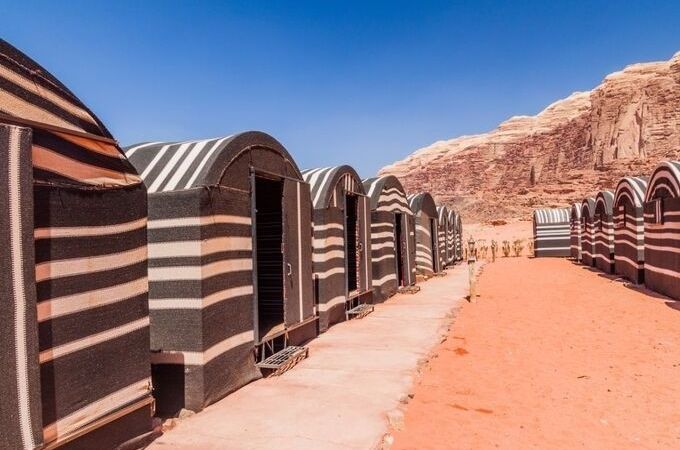
Petra can involve considerable walking. Wadi Rum introduces desert exposure of a different kind. Egypt may add Cairo sightseeing, temple visits in Luxor, archaeological excursions around Aswan and other open-air experiences where shade and timing influence comfort.
The strongest season for this combination is therefore one that supports repeated outdoor sightseeing, not merely one pleasant afternoon.
Travelers who dislike heat should place considerable weight on this when choosing dates, while those who tolerate warm weather well may accept a broader seasonal window in exchange for other advantages.
For travelers moving from research toward itinerary planning, Egypt and Jordan Adventures can provide the relevant commercial route without turning this seasonal guide into another package page.
Turkey and Egypt Create the Most Obvious Climate Trade-Off
Combining Turkey and Egypt makes the compromise especially visible because the conditions travelers want in each country may pull the calendar in different directions.
Choose a cooler period primarily for Egypt and some Turkish destinations may feel considerably cooler than expected.
Move toward warmer weather for Turkey and the archaeological portions of Egypt may become increasingly demanding.
Neither outcome automatically makes the trip unsuitable.
The correct choice depends partly on what you intend to do in each country.
If Egypt contains intensive cultural sightseeing while Turkey is mainly Istanbul and other urban destinations, prioritizing comfortable Egyptian conditions may make sense. If the Turkish portion includes coastal leisure and outdoor activities, the balance may shift toward a warmer overlap.
This is why a multi-country seasonal decision should never be made by averaging two monthly temperature charts.
The activities matter as much as the destinations.
What Happens When You Combine Turkey, Jordan and Egypt?
Three-country journeys make the concept of a perfect travel month even less realistic, but they also make good seasonal planning more valuable.
Consider the contrasts contained in a route connecting Istanbul, Cappadocia, Petra, Wadi Rum, Cairo, Luxor and Aswan.
One part of the journey may require a jacket in the morning while another calls for sun protection and lighter clothing. Cappadocia's elevation creates different expectations from the Nile Valley, while desert evenings can feel quite different from daytime sightseeing.
The objective should not be finding fifteen consecutive days during which every destination produces identical temperatures.
You are looking for a period when none of the important parts becomes unnecessarily difficult.
For many travelers, shoulder seasons perform this job particularly well because they reduce climatic extremes while maintaining enough flexibility across the region.
This is also where a professionally coordinated Multi-Country Middle East Tours itinerary can become useful, since seasonal planning should work alongside flight schedules, hotel availability, sightseeing sequences and the amount of time allocated to each country.
Summer Is Not Automatically a Bad Time to Visit the Middle East
Statements such as “never visit the Middle East in summer” are too broad to be genuinely useful.
Summer travel can work.
The more important question is what kind of trip you are planning and how comfortable you are with heat.
A resort-oriented journey behaves differently from an archaeology-heavy itinerary. Travelers who expect long days walking through exposed historical sites may find high temperatures considerably more demanding than visitors whose schedule includes shorter excursions, air-conditioned transportation and substantial hotel or coastal time.
Timing within the day also becomes more important.
Early sightseeing can reduce exposure to stronger midday heat, although this may require earlier starts and a travel rhythm that not everybody enjoys. Families with young children, older travelers and anyone who finds heat physically draining should consider this particularly carefully.
Summer may also suit travelers whose available dates are fixed by school holidays or work schedules.
In that situation, the goal is not proving that summer is ideal.
It is designing a trip that respects summer.
Winter Should Not Be Dismissed as the “Wrong” Season
Winter presents the opposite planning problem.
Travelers sometimes assume that the Middle East remains uniformly warm throughout the year and are surprised when parts of Jordan or Turkey feel genuinely cold.
That does not make winter a poor travel season.
For certain itineraries, particularly those emphasizing cultural sightseeing in Egypt and Jordan, cooler daytime conditions can be very appealing. Crowding patterns and travel atmosphere may also differ from busier shoulder-season periods.
The challenge is clothing and regional variation.
A traveler moving between Cairo, Petra and Istanbul may need to pack for noticeably different conditions rather than relying on one type of clothing throughout the journey. Higher-altitude destinations require particular attention, and desert environments can produce substantial differences between daytime and evening comfort.
Winter therefore rewards travelers who are willing to pack intelligently and accept that “Middle East” does not mean “summer clothes every day.”
Do Not Choose the Season Around the Red Sea Unless the Red Sea Is the Main Reason for Traveling
The Red Sea complicates seasonal planning because coastal relaxation and underwater activities can remain attractive during periods when intensive inland sightseeing requires a different calculation.
If a multi-country itinerary contains twelve cultural days and two nights beside the sea, it makes little sense to choose the entire travel period according to those two coastal nights.
Reverse the priorities.
Select dates that make the archaeological and walking-intensive portion comfortable, then determine how the coastal experience fits within those conditions.
If the holiday is primarily a diving or beach trip with only limited cultural touring, the weighting can legitimately change.
The principle is simple: the activity occupying the greatest or most demanding part of your journey should influence the calendar most strongly.
This sounds obvious, yet travelers often select dates according to one photographically appealing portion of an itinerary rather than the physical reality of the complete trip.
Desert Weather Is About More Than Daytime Heat
Wadi Rum and other desert environments remind travelers why a daily maximum temperature tells only part of the story.
Daytime conditions may be warm while evenings become noticeably cooler. Wind, sun exposure and the timing of activities can also affect comfort, particularly when a desert overnight is included.
Packing therefore needs to account for changes within the same day.
This becomes even more relevant on multi-country trips because travelers may already be carrying clothing for Istanbul, archaeological sightseeing and perhaps coastal destinations. Rather than packing separate wardrobes for every environment, layers usually provide greater flexibility.
The desert also changes how travelers experience heat.
Walking through an exposed archaeological site, traveling through a desert landscape and relaxing beside a resort pool may occur at similar temperatures while feeling completely different.
Seasonal planning should consider activity, shade, movement and duration alongside the forecast.
Ramadan Changes Rhythm More Than It Changes the Map
Ramadan deserves consideration when planning travel across Muslim-majority destinations, but it should not automatically be treated as a reason to cancel or avoid a trip.
Daily rhythms can change, particularly around meal times, local business patterns and the period leading up to the evening breaking of the fast. Tourist services in established destinations generally continue, although the precise experience varies by country, location and year.
Travelers should approach the period with awareness and respect rather than anxiety.
Ramadan follows the Islamic lunar calendar, so its dates move each year. If your planned journey overlaps with it, check the exact dates and current local arrangements for the countries on your itinerary rather than relying on an old travel article.
This is particularly important on multi-country trips because local practices and tourism operations should not be assumed to function identically everywhere.
The season may affect the rhythm of travel without making the journey less rewarding.
Spring Versus Autumn: Decide According to What Bothers You More
When both seasons fit the itinerary, personal preference can become the deciding factor.
Some travelers dislike the possibility of cooler or more variable conditions and would rather accept warmer afternoons.
Others find heat exhausting and happily pack an extra layer if it means spending longer at archaeological sites comfortably.
A traveler who photographs landscapes may care about seasonal appearance and light, while somebody interested primarily in museums, historical sites and food may place less importance on those differences.
School holidays, work schedules and airfare can also matter more than a relatively small climatic advantage.
Once you have eliminated periods that are genuinely unsuitable for your priorities, stop searching for meteorological perfection.
The difference between two good months may be much less important than the difference between a well-paced and badly paced itinerary.
Your Travel Pace Can Compensate for an Imperfect Season
Travel dates are not always flexible.
Perhaps you can travel only in July. Maybe an anniversary fixes the trip in November, or family commitments leave a narrow window that does not coincide with the theoretical ideal.
The itinerary can compensate.
During warmer periods, sightseeing can begin earlier, exposed sites can be sequenced more thoughtfully, and the middle of the day can be used differently where practical. During cooler periods, departure times and outdoor activities can be arranged around daylight and temperature, while clothing becomes part of the planning.
This is an important point because “best time to visit” articles can accidentally imply that traveling outside two favored months will ruin the holiday.
It will not.
Season influences the design.
It does not automatically determine the quality.

A travel professional specializing in tailor-made travel planning, guest experience management, and multi-destination tourism operations.
With over 23 years of experience in the travel industry, he designs and manages private and cultural tours for international travelers across Türkiye, Greece, Egypt, Jordan, Morocco, and other destinations.
He has strong expertise in both online and face-to-face guest communication, sales processes, and end-to-end travel operations.
Working closely with hotels, travel agencies, and local partners, he ensures smooth coordination and high-quality travel experiences at every stage of the journey.
His focus is on delivering personalized, reliable, and seamless travel experiences for international guests worldwide.